Tibetan people
Tibetan Customs
Major Festivals in Tibet
Tibetan Language
If you’re looking for a unique travel experience that combines adventure, culture, and history, look no further than Tibet’s inspiring history tour. This journey through time takes you on a magical ride through the heart of Tibet, where ancient traditions and vibrant culture have been preserved for centuries. From the stunning landscape of the Himalayas to the majestic Potala Palace, this tour offers a glimpse into a world that will leave you awe-inspired and spiritually rejuvenated.
The history of Tibet stretches back over 14000 years, and throughout this time, the region has been shaped by dynasties, empires, and spiritual leaders. The Tibet history tour takes you on a journey through time, where you’ll explore the ancient ruins of the Yarlung Valley, the birthplace of Tibetan civilization, and the Norbulingka Palace, the summer palace of the Dalai Lama. You’ll also visit the Jokhang Temple, one of the holiest sites in Tibetan Buddhism, and the Samye Monastery, one of the oldest in the region. These historic sites are a testament to Tibet’s rich history and the resilience of the Tibetan people.
Tibet’s rich cultural heritage is deeply rooted in its spiritual traditions, and the history tour provides a unique opportunity to immerse yourself in this culture. From witnessing the intricate art of thangka painting to learning about the importance of prayer flags, every experience on this tour is designed to connect you with the essence of Tibetan culture. You’ll also have the chance to meet with local artisans and nomads, whose unique way of life has been preserved for generations. Through these experiences, you’ll gain a deeper understanding of the Tibetan way of life and the spirituality that underpins it.
Tibet, is a region rich in history and culture. It is home to numerous historical monuments, palaces, burial sites, and ruins that offer a glimpse into Tibet’s fascinating past. Here are some popular tours that include these sites:
This tour takes you through the capital city of Tibet, Lhasa, and its historical monuments. Visit the iconic Potala Palace, the former winter residence of the Dalai Lama, and explore its magnificent halls, chapels, and tombs. Explore the Jokhang Temple, one of the most sacred sites in Tibetan Buddhism, and the bustling Barkhor Street surrounding it. You can also visit the Norbulingka Palace, the summer residence of the Dalai Lama, and witness its beautiful gardens and traditional Tibetan architecture.
This tour takes you to the cities of Gyantse and Shigatse, where you can explore ancient palaces and burial sites. In Gyantse, visit the Gyantse Kumbum, a stunning multi-story chorten (Buddhist shrine) adorned with intricate murals and statues. Explore the Gyantse Dzong, a historical fort overlooking the city. In Shigatse, visit the Tashilhunpo Monastery, the seat of the Panchen Lama, and explore its grand halls and chapels. You can also visit the ruins of the Shalu Monastery, known for its unique blend of Tibetan and Chinese architectural styles.
This adventurous tour takes you to the remote Ngari region, known for its ancient ruins and the sacred Mount Kailash. Visit the ruins of the ancient Guge Kingdom, located in the barren desert landscape, and admire its well-preserved murals and temples. Explore the Tholing Monastery, one of the oldest monastic complexes in Tibet. Take a pilgrimage trek around Mount Kailash, considered sacred by Buddhists, Hindus, Jains, and Bon followers.
This tour takes you to the eastern part of Tibet, where you can explore ancient Tibetan cities and burial sites. Visit the Samye Monastery, the first Buddhist monastery built in Tibet, and witness its unique architecture. Explore the Yumbu Lhakhang, the oldest known dwelling in Tibet and a former palace of the legendary first Tibetan king, Nyatri Tsenpo. Visit the burial site of King Songtsen Gampo and his two wives in Chonggye County.
These are just a few examples of the many Tibet tours that include visits to Tibetan historical monuments, palaces, burial sites, and ruins. Each tour offers a unique perspective on Tibet’s rich cultural heritage and allows you to immerse yourself in its fascinating history.
Tibet, the “Roof of the World,” beckons with a timeless allure that stretches across centuries. Towering Himalayan peaks rise into an endless blue sky, while prayer flags ripple in the wind like colorful carriers of hope and blessings. Across this vast land, ancient monasteries cling to cliffs and hillsides, standing as quiet witnesses to a civilization shaped by isolation, resilience, and deep spiritual devotion.
To travel through Tibet is to walk through history itself. It is to follow the footsteps of early Tibetan kings, to stand within the remains of once-great palaces, and to listen to the rhythmic chants of monks whose traditions have endured for more than a thousand years. This is far more than a journey—it is an immersion into Tibet’s inspiring past, where legendary ruins, powerful kingdoms, and vibrant culture come together in a living story.
This Tibet history tour offers a deep exploration of one of the world’s most unique cultural landscapes. Over 10 to 15 days, the journey moves across key regions that shaped Tibetan civilization. From the ancient Yarlung Valley to the monumental city of Lhasa, and onward to the remote ruins of western Tibet, each destination reveals a different layer of history.
Along the way, cultural experiences bring this history to life. Sharing butter tea with local families, witnessing the unveiling of giant thangka paintings during festivals, and observing daily rituals offer a direct connection to Tibetan traditions. These moments transform historical knowledge into personal experience.
Tibet’s history is a story of unity, transformation, and endurance. According to legend, the Tibetan people originated from the union of a monkey and a demoness, symbolizing a balance between compassion and strength.
By the 2nd century BCE, the Yarlung Valley had become the center of early Tibetan society. It was here that Nyatri Tsenpo established the first royal lineage.
The 7th century marked a turning point under Songtsen Gampo, who unified the plateau and introduced Buddhism through royal marriages with princesses from Nepal and China. This period saw the creation of Tibetan script, the rise of monasteries, and the expansion of a powerful empire.
After a period of fragmentation in the 9th century, Buddhism experienced a revival during the “Second Diffusion” in the 10th and 11th centuries, especially in western Tibet. Later, the rise of the Dalai Lamas in the 17th century established Lhasa as both the spiritual and political center.
Despite challenges such as invasions, internal conflicts, and harsh geography, Tibetan culture endured and flourished, preserving its spiritual traditions, art, and philosophy.
The journey begins in the Yarlung Valley, where Tibet’s earliest history took shape along the Yarlung Tsangpo River.
Dominating the landscape is Yumbulagang Palace, believed to be the first palace ever built in Tibet. Perched on a hilltop, it overlooks fertile fields and offers sweeping views of the valley. Once a royal residence, it remains a symbol of Tibet’s early kings and their legacy.
Nearby, Trandruk Monastery stands as one of the region’s oldest religious sites. Its famous pearl thangka, made from thousands of pearls and gemstones, reflects extraordinary craftsmanship and devotion.
Scattered across the valley are the Chongye burial mounds, ancient tombs of Tibetan kings. These sites connect visitors to a time before Buddhism, when the indigenous Bon tradition shaped spiritual beliefs and practices.
At an elevation of 3,650 meters, Lhasa stands as the heart of Tibetan culture and spirituality.
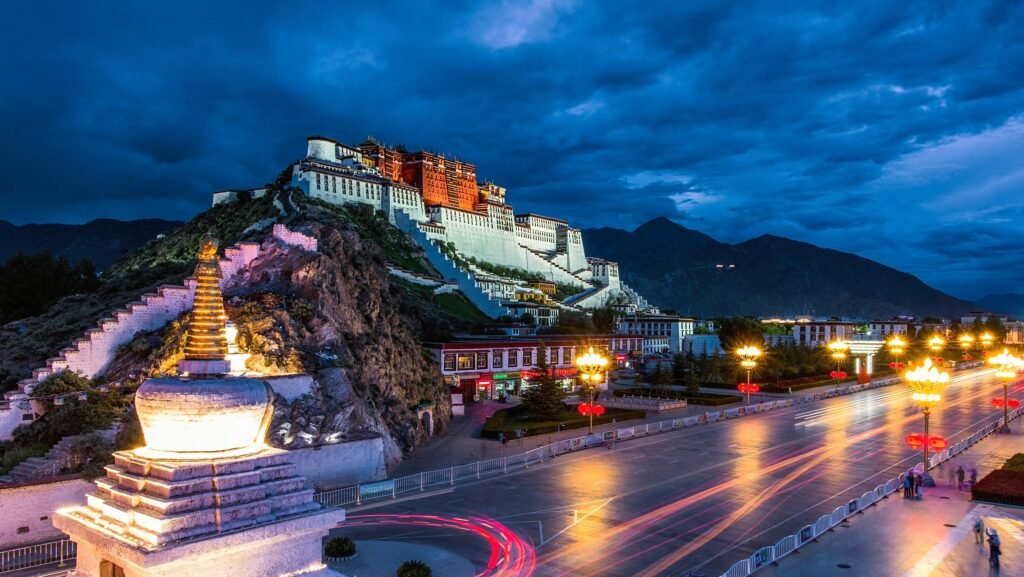
The skyline is dominated by the magnificent Potala Palace, built on Red Hill. With its towering structure and golden roofs, it once served as the winter residence of the Dalai Lamas and remains one of the most iconic landmarks in Tibet.
In the old city, Jokhang Temple draws pilgrims from across the plateau. Built in the 7th century, it houses the sacred Jowo Shakyamuni statue. Surrounding it, Barkhor Street forms a lively kora path filled with devotion, trade, and daily life.
Monastic traditions continue at Drepung Monastery and Sera Monastery, where monks study, debate, and preserve centuries-old teachings.
South of Lhasa lies Samye Monastery, founded in the 8th century during the reign of Trisong Detsen.
Its design reflects a cosmic mandala, representing the Buddhist universe. The monastery combines Tibetan, Indian, and Chinese architectural elements, symbolizing early cultural exchange. Within its walls, ancient murals and chanting monks continue traditions that have lasted for more than a millennium.
In the historic town of Gyantse, the Pelkor Chode Monastery and its Kumbum Stupa stand as remarkable examples of Tibetan architecture and art. The multi-level structure contains dozens of chapels filled with detailed murals.
Further west, Shigatse is home to Tashilhunpo Monastery. Its grand halls and towering Buddha statue reflect both religious importance and artistic achievement.
In the remote region of Ngari, the Guge Kingdom Ruins reveal the remains of a once-thriving kingdom.
Founded in the 10th century, Guge became an important center during the revival of Buddhism. The ruins stretch across a vast clay fortress, with hundreds of rooms carved into cliffs. Temples such as the Red and White Temples preserve detailed murals influenced by Central Asian and Kashmiri styles.
Nearby Tholing Monastery continues to reflect this rich spiritual heritage.
Tibetan history is deeply connected to daily life. Prayer wheels spin continuously, inscribed with sacred mantras. Colorful prayer flags carry blessings across valleys and mountains.
Nomadic communities maintain traditional lifestyles, herding yaks across high grasslands. Their daily diet includes butter tea, tsampa, momos, and noodle soups, reflecting both practicality and cultural identity.
Art also plays a vital role. Thangka paintings, sand mandalas, and traditional performances preserve spiritual teachings and cultural expression.
Festivals bring Tibetan culture to life through shared rituals and celebration.
These festivals are not performances but living traditions that connect generations.
Traveling in Tibet requires careful planning due to high altitude and remote conditions.
Respect local customs, especially in monasteries, and follow guidance from local experts throughout the journey.
Tibet’s inspiring history is not confined to the past. It lives in its landscapes, its monasteries, and its people. From the ancient stones of Yumbulagang to the artistic legacy of Guge, every step reveals a story shaped by resilience, devotion, and cultural strength.