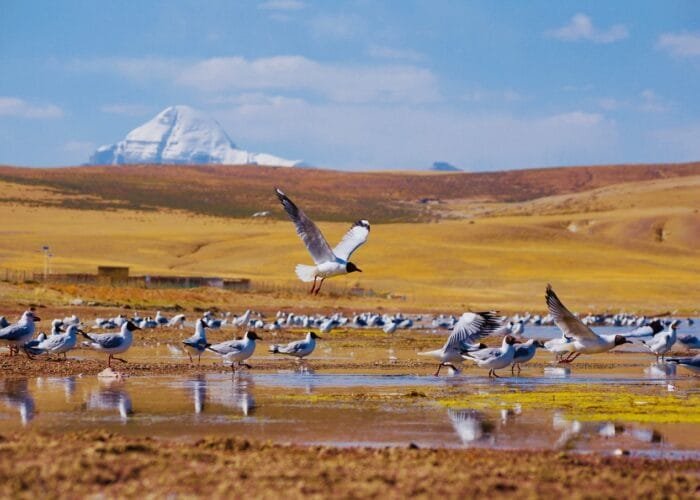
If Mount Everest is often called the “Roof of the World,” then Mount Kailash is widely regarded as its spiritual heart. For centuries, this remote peak in western Tibet has drawn pilgrims from across religions—Hinduism, Buddhism, Jainism, and Bon—all of whom consider it a sacred center of the universe.
In 2026, the significance of this pilgrimage reaches an even higher level. According to the Tibetan calendar, it is the Year of the Horse, one of the most auspicious cycles for undertaking the Kailash Kora—the ritual circumambulation of the mountain. It is believed that completing the Kora during this year multiplies spiritual merit thirteen times. This belief alone transforms the journey into something far greater than travel. It becomes a once-in-a-lifetime spiritual opportunity.
With this heightened importance comes increased demand, larger crowds, and a powerful shared sense of devotion. Understanding the practical aspects of the journey—from logistics and routes to local shopping and preparation—becomes essential for a smooth and meaningful experience.

The Unique Nature of Shopping Around Mount Kailash
Unlike the culturally rich markets of Lhasa, where handcrafted art and traditional crafts dominate, the trading culture around Mount Kailash is shaped by survival and spirituality. The region’s extreme altitude, remoteness, and religious importance influence what is available.
Here, shopping is less about decorative souvenirs and more about functional gear and sacred items. The two main hubs that define this experience are Taklakot (Purang) and Darchen.
Taklakot (Purang): The Historic Gateway to Kailash
Taklakot, also known as Purang, serves as a key entry point for pilgrims traveling from Nepal or via the Lipulekh Pass from India. This small yet vibrant town has been a crossroads of trade and culture for centuries, linking Tibetan, Indian, and Nepalese communities.
The Purang Market: A Living Legacy of Trade
The Purang Market is more than a place to shop—it is a reflection of ancient Himalayan trade traditions. For generations, traders exchanged salt, grain, wool, and everyday goods here, creating a rich cultural exchange that continues today.
One of the most iconic items found in this market is the traditional wooden bowl.
These Purang wooden bowls are carved from birch or vine roots. Each bowl features unique natural grain patterns, making every piece distinct. Durable and practical, they are traditionally used for drinking butter tea or eating tsampa. For pilgrims, they are not just utensils but symbols of Tibetan daily life.
Tibetan Wool and Nomadic Textiles
Because Taklakot is closely connected to nomadic communities, it offers access to raw and authentic wool products. Compared to urban centers, the prices here are often more reasonable.
Travelers can find:
- Traditional “Pulu” wool fabric
- Handwoven textiles
- High-quality cashmere products
These items reflect the resourcefulness of Tibetan nomads, who rely on wool for warmth and survival in harsh climates.
Supplies for Pilgrims
Taklakot also caters to the practical needs of pilgrims, especially those coming from India.
Shops commonly stock:
- Camphor used in rituals
- Incense for offerings
- Small copper vessels known as lotas
These vessels are particularly important for collecting sacred water from Lake Mansarovar, one of the holiest lakes in the region.
Darchen: The Starting Point of the Kailash Kora
Darchen is a small settlement at the base of Mount Kailash. Every pilgrim passes through this village before beginning the Kora. Though modest in size, Darchen plays a crucial role in the journey.
The Gear Market: Final Preparation Point
Darchen serves as the last opportunity to purchase essential trekking equipment. Given the extreme altitude and unpredictable weather, proper gear is critical.
Available items include:
- Trekking poles for stability
- High UV-protection sunglasses
- Insulated jackets for cold conditions
- Oxygen canisters for altitude support
Even experienced travelers often rely on Darchen to fill gaps in their preparation.
Spiritual Items and Sacred Keepsakes
In addition to practical gear, Darchen offers items that hold spiritual meaning.
Pilgrims often purchase:
- Rudraksha prayer beads
- Small stone carvings of Shiva Lingams
- Tsa-tsa, which are small clay votive offerings
Tsa-tsa are particularly meaningful. Some pilgrims leave them along the Kora route as offerings, while others bring them home as reminders of their journey.
Routes to Mount Kailash for Indian Pilgrims
Traveling to Mount Kailash requires careful planning due to strict regulations. There are three main routes available for Indian pilgrims, each offering a different balance of cost, convenience, and experience.
Government Route (MEA)
Organized by the Government of India, this route is the most structured and affordable option.
Advantages:
- Lower cost compared to private tours
- Organized logistics
Challenges:
- Selection is based on a lottery system
- Physically demanding journey
Via Nepal (Private Route)
This route offers more flexibility and shorter travel time.
Advantages:
- Guaranteed departure dates
- Helicopter transfers available from Hilsa
- Faster access to Kailash
Challenges:
- Higher overall cost
- Additional procedures such as biometrics in Kathmandu
Via Lhasa (Fly-In Route)
Traveling via Lhasa provides a more gradual acclimatization process.
Advantages:
- Better adjustment to high altitude
- Opportunity to visit landmarks such as Potala Palace
Challenges:
- Highest cost among all routes
- Requires a longer travel duration
Essential Requirements for the 2026 Pilgrimage
Preparation for the Kailash pilgrimage involves meeting several important requirements.
- Valid Passport: Your passport must be valid for at least six months beyond your planned travel date.
- Tibet Travel Permit: This permit is mandatory for entering Tibet and is arranged by your tour operator. It usually takes 20 to 30 days to process.
- Group Tourist Visa: Unlike regular visas, pilgrims must obtain a special group visa specific to the Kailash region.
Medical Fitness Certification
Due to the extreme altitude, physical fitness is essential. Pilgrims must provide a medical certificate issued by a qualified doctor.
Many operators now enforce BMI limits, typically between 25 and 27, to ensure safety during the journey.
This is especially important when crossing Dolma La Pass, which stands at 5,630 meters and represents the most challenging section of the Kora.
Key Experiences to Plan for in 2026
Full Moon Pilgrimage at Lake Mansarovar
Experiencing Lake Mansarovar under a full moon is considered highly auspicious. Many pilgrims plan their journey around these dates.
Due to high demand, bookings should be made well in advance—often at least six months ahead.
Saga Dawa Festival
Saga Dawa Festival is the most sacred time of the year in the Kailash region. In 2026, it falls on May 31.
During this period:
- A large prayer flagpole known as Tarboche is raised
- Pilgrims gather in massive numbers
- The spiritual atmosphere becomes intensely vibrant
However, travelers should be prepared for heavy crowds and limited resources.
Practical Tips for a Smooth Pilgrimage
Choose Responsible Souvenirs
While walking the Kora, it may be tempting to collect stones or natural items. However, this practice is discouraged as it disturbs the sacred environment.
A better option is to purchase locally made handicrafts in Taklakot. This supports the local economy and respects the spiritual landscape.
Carrying Holy Water from Lake Mansarovar
Many pilgrims bring back holy water as a blessing.
To do this safely:
- Use tightly sealed containers
- Double-pack them to prevent leakage
- Store them in checked luggage
Proper preparation ensures safe transport without damage.
Understanding the Journey Beyond Travel
The Mount Kailash pilgrimage is not defined only by distance or physical challenge. It is shaped by intention, belief, and preparation. In 2026, the Year of the Horse amplifies these elements, drawing pilgrims into a shared spiritual experience unlike any other.
From the historic markets of Taklakot to the quiet basecamp of Darchen, every stage of the journey carries meaning. Even the simplest items—a wooden bowl, a prayer bead, or a small clay votive—become symbols of connection to this sacred land.
As you prepare for the journey, every decision—from route selection to what you carry and what you bring back—becomes part of the pilgrimage itself.