
Tibet, a land of breathtaking landscapes and deep spiritual calm, is more than just snow-capped mountains and sacred monasteries. Sitting high on the Tibetan Plateau—often called the “Roof of the World”—this region is home to some of the rarest and most fascinating wildlife on Earth. Extreme altitude, harsh weather, and vast open spaces have shaped unique animal species found nowhere else, making Tibet a dream destination for wildlife lovers and nature explorers.
Snow Leopard: The Ghost of the Mountains
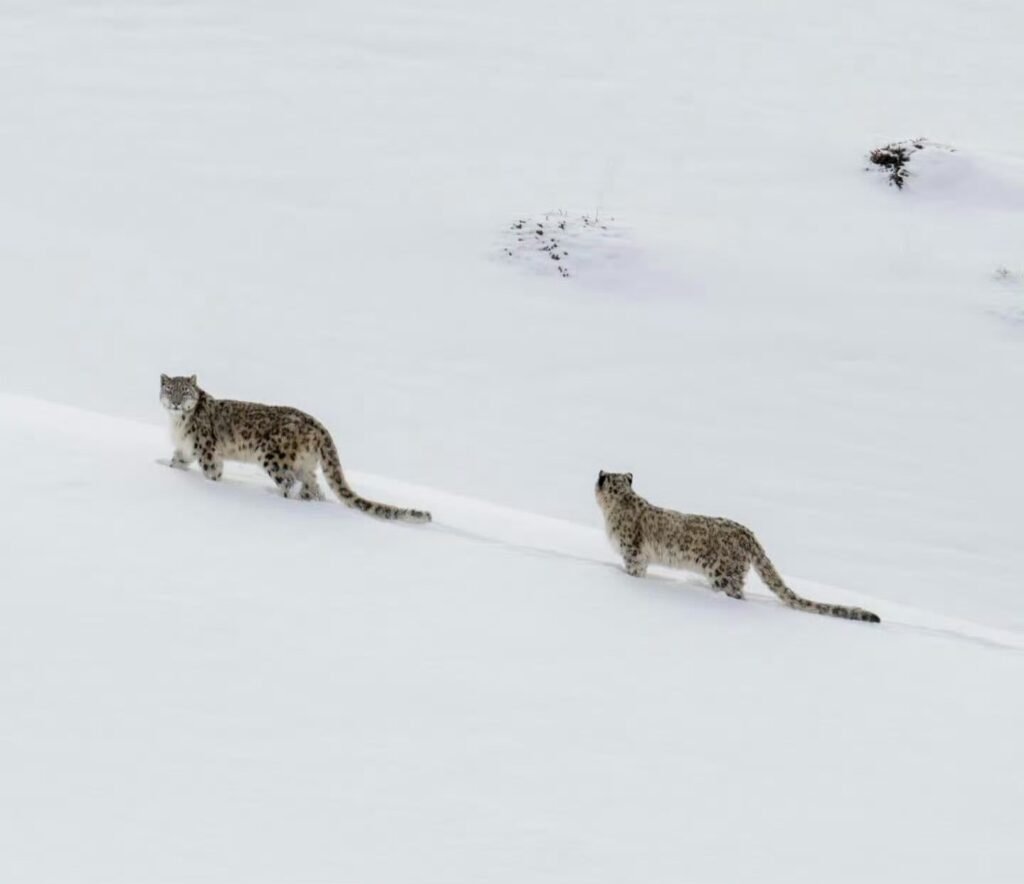
Among Tibet’s most iconic animals is the snow leopard, often called the “ghost of the mountains.” Living in remote alpine regions, this elusive predator is perfectly adapted to survive in freezing temperatures and rugged terrain.
Its thick grey-white fur, marked with dark rosettes, provides excellent camouflage against rocky slopes. Snow leopards are rarely seen, even by experienced trackers, as they prefer solitude and move silently across cliffs with remarkable agility. Spotting one in the wild is considered a once-in-a-lifetime experience.
Eurasian Lynx: The Silent Forest Hunter
The Eurasian lynx (Lynx lynx) is a medium-sized wild cat adapted to the forested and rocky edges of the Tibetan Plateau, especially in eastern Tibet. With its thick fur, powerful limbs, and distinctive tufted ears, this elusive predator is perfectly built for cold, rugged environments.
An expert ambush hunter, the Eurasian lynx mainly preys on hares, marmots, and young ungulates. It relies on stealth rather than speed, patiently stalking its prey before launching a sudden attack. Although less commonly seen than the snow leopard, the lynx is an important part of Tibet’s predator hierarchy. Spotting one in the wild usually requires long hours of quiet observation in protected nature reserves.
Pallas’ Cat: The Ancient Feline of the Plateau
The Pallas’ cat, also known as the manul, is one of the most distinctive wild cats found on the Tibetan Plateau. With its flat face, round ears, and thick fluffy fur, it looks almost prehistoric. This small but resilient predator survives in cold, arid grasslands and rocky terrain, where it hunts pikas and small rodents.
Pallas’ cats are solitary and extremely shy, spending much of their time hidden among rocks. Their dense fur helps them withstand Tibet’s freezing temperatures, making them perfectly adapted to high-altitude life.
Tibetan Wolf: A Keystone Predator
The Tibetan wolf (Canis lupus chanco) is a hardy subspecies of the gray wolf, perfectly adapted to the cold, open grasslands of the Tibetan Plateau. With a thick coat and strong build, it can survive extreme temperatures and long winters where food is scarce. Living and hunting in packs, Tibetan wolves prey on large ungulates such as Kyang (Tibetan wild ass) and Tibetan antelope, while also feeding on smaller animals like pikas and marmots. By controlling herbivore populations, they play a vital role in maintaining the ecological balance of the plateau.
Although generally shy and cautious around humans, conflicts can occur in pastoral areas where wolves may prey on livestock. Despite this, Tibetan wolves remain an essential part of Tibet’s fragile ecosystem. Sightings are most likely in the remote northern plateaus or during seasonal wildlife migrations, especially in protected grassland regions.
Tibetan Fox: The Plateau’s Clever Survivor
The Tibetan fox (Vulpes ferrilata) is one of the most distinctive and well-adapted predators of the Tibetan Plateau. Known for its square-shaped face, narrow eyes, and thick, pale fur, this fox is perfectly suited to life in the cold, open grasslands at high altitudes. Unlike forest-dwelling fox species, the Tibetan fox prefers vast alpine meadows and rolling plateaus. Its diet mainly consists of pikas, making it closely tied to the health of grassland ecosystems.
Tibetan foxes are typically solitary and highly cautious around humans, which makes close encounters rare. However, they are sometimes spotted near pika colonies or following larger animals that disturb small prey. With their sharp intelligence and specialized hunting strategy, Tibetan foxes play a quiet but important role in maintaining ecological balance on Tibet
Himalayan Brown Bear: The Plateau’s Powerful Giant
The Himalayan brown bear is one of the largest land mammals found in Tibet. With its massive body, strong limbs, and thick fur, it is well equipped to survive harsh winters and high elevations.
These bears are omnivores, feeding on roots, insects, small animals, and occasionally livestock, which can lead to human-wildlife conflict. Protecting their natural habitat and reducing human interference are key to ensuring their survival on the plateau.
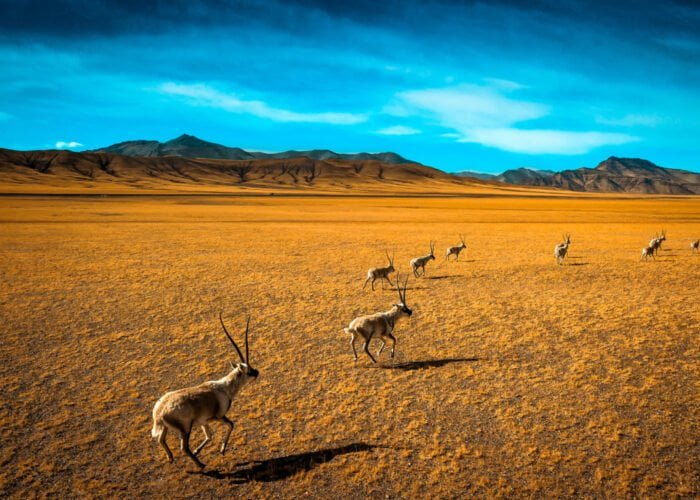
Tibetan Antelope (Chiru): Grace of the High Grasslands
The Tibetan antelope, locally known as the chiru, roams the vast grasslands of the plateau with elegance and speed. With a slim body and long, curved horns, this animal is built for long-distance migration in high-altitude environments.
Its soft undercoat, called shahtoosh, once made it a target for illegal poaching. In response, strict conservation laws and anti-poaching measures have been enforced across Tibet. These efforts have played a vital role in protecting this endangered species and restoring hope for its future.
Tibetan Gazelle: A Swift Grassland Dweller
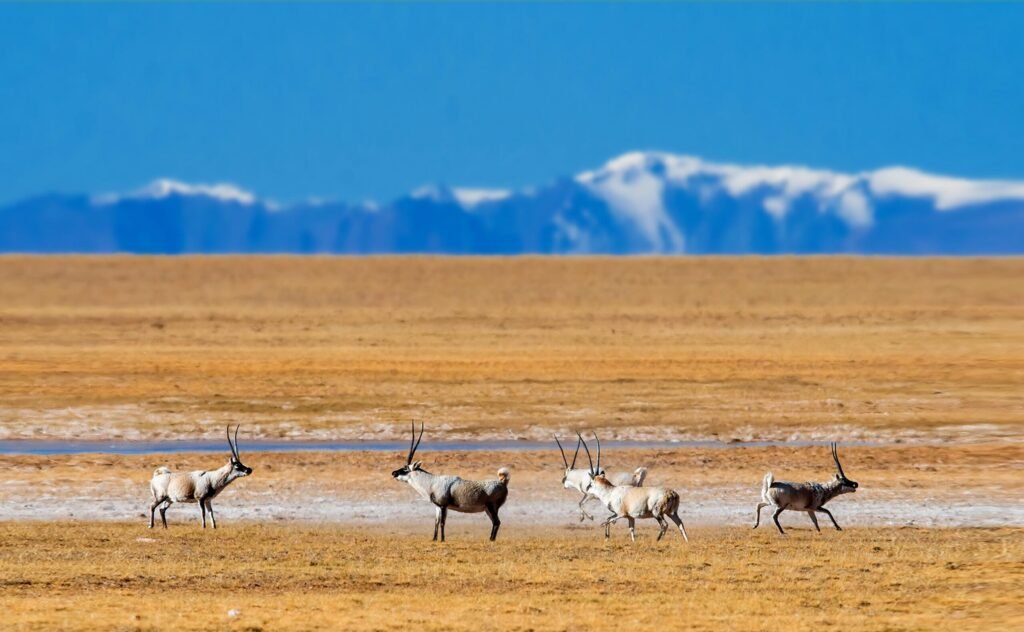
The Tibetan gazelle is a slender and agile antelope species native to Tibet’s open plains and semi-desert grasslands. Known for its speed and alert nature, it relies on sharp senses and quick movements to escape predators.
Unlike larger antelope species, Tibetan gazelles usually live in small groups or alone. Habitat loss and human activity have reduced their range, making conservation efforts essential to protect this graceful symbol of Tibet’s grasslands.
White-lipped Deer (Thorold’s Deer): Giant of the Alpine Meadows
The white-lipped deer, also known as Thorold’s deer (Cervus albirostris), is one of the largest and rarest deer species in the world and is endemic to the eastern Tibetan Plateau. It gets its name from the distinctive white muzzle and lips, which stand out against its dark brown coat.
This impressive herbivore inhabits high-altitude alpine meadows and open grasslands, often at elevations above 3,500 meters. Grazing on grasses and sedges, white-lipped deer play an important role in maintaining plateau ecosystems. Due to habitat loss, poaching, and human disturbance, the species is classified as endangered, and sightings in the wild are now extremely rare, even within protected areas.
Alpine Musk Deer: The Elusive Forest Dweller
The alpine musk deer (Moschus chrysogaster) is a small, shy ungulate found in the forested highlands of the Himalayas and Tibet. Unlike true deer, musk deer do not have antlers. Instead, males possess long, fang-like tusks that curve downward from the upper jaw.
This species is best known for its musk gland, historically prized in traditional medicine and perfumery, which has made it a major target for illegal poaching. Alpine musk deer prefer dense forests and steep terrain, relying on camouflage and stealth to avoid predators. Their secretive nature makes them difficult to observe, but they are a key indicator of healthy mountain forest ecosystems.
Tibetan Red Deer: The Plateau’s Grassland Grazer
The Tibetan red deer (Cervus canadensis wallichii) is a subspecies of red deer adapted to the open grasslands and valleys of the Tibetan Plateau. It is recognizable by its reddish-brown coat, strong build, and impressive antlers in males.
Once widespread, Tibetan red deer populations declined sharply in the past due to hunting and habitat pressure. Thanks to recent conservation measures, some populations are slowly recovering. These deer are typically seen grazing in small herds, especially during early morning and late afternoon.
Other Deer Species of Tibet
In addition to these iconic species, tufted deer can be found along forested edges and mountainous woodlands, particularly in eastern Tibet. Though smaller and more secretive, they contribute to the region’s rich ungulate diversity and highlight the ecological complexity of Tibet’s transition zones between forest and plateau.
Together, these deer species reflect the fragile beauty and biodiversity of Tibet’s high-altitude ecosystems, underscoring the importance of continued conservation efforts across the plateau.
Tibetan Macaque: The Forest Giant of Tibet
The Tibetan macaque (Macaca thibetana) is the largest macaque species in the world, easily recognized by its thick brown fur, powerful build, and short tail. It inhabits subtropical and temperate forests at elevations of roughly 800–2,500 meters, mainly in eastern Tibet.
Highly social and intelligent, Tibetan macaques live in large troops with strict hierarchical social structures. Within these groups, individuals communicate through facial expressions, vocalizations, and grooming, forming strong social bonds. While generally wary of humans, they can become habituated in tourist areas, which highlights the importance of responsible wildlife viewing and conservation management.
Rhesus Macaque: The Adaptable Neighbor
The rhesus macaque (Macaca mulatta) is smaller and far more adaptable than the Tibetan macaque. It is commonly found in lower-altitude regions, especially near human settlements, temples, and farmlands.
Thanks to its high intelligence and flexible diet, the rhesus macaque thrives in environments altered by humans. However, this adaptability can also lead to conflicts, particularly where food is easily accessible. In Tibet, rhesus macaques are most often seen in river valleys and warmer forested areas.
Assamese Macaque: A Quiet Forest Dweller
The Assamese macaque (Macaca assamensis) closely resembles the rhesus macaque but is generally more shy and forest-dependent. It inhabits southern border forests of the Tibetan region, preferring dense woodland and mountainous terrain.
Compared to other macaques, the Assamese macaque has a more restricted distribution and is less tolerant of human disturbance. As a result, habitat loss poses a significant threat to its long-term survival, making forest protection especially important.
Other Primates Near Tibet
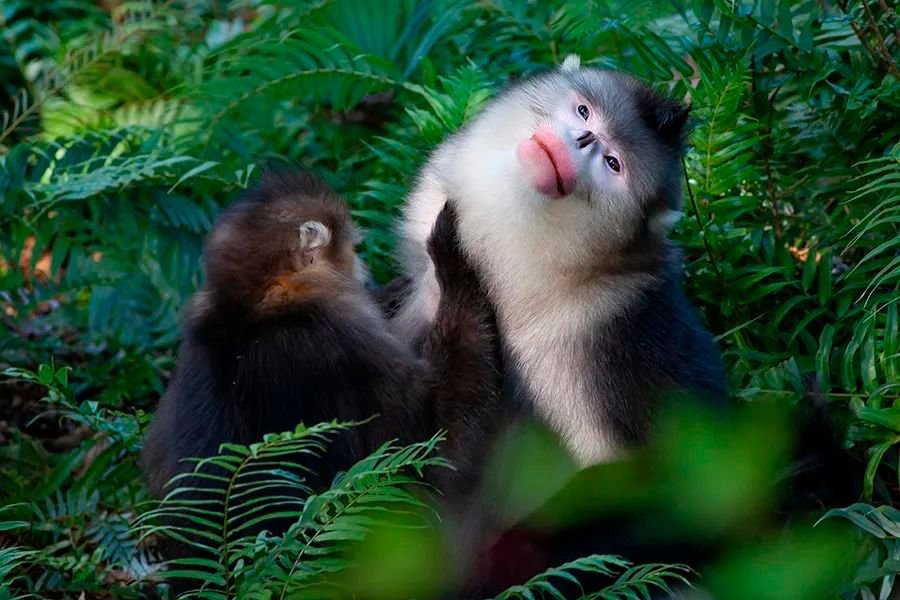
While snub-nosed monkeys are not native to most of Tibet itself, they are found in adjacent regions of Yunnan and Sichuan, where dense high-altitude forests provide suitable habitat. These neighboring species further highlight the extraordinary primate diversity of the greater Himalayan region.
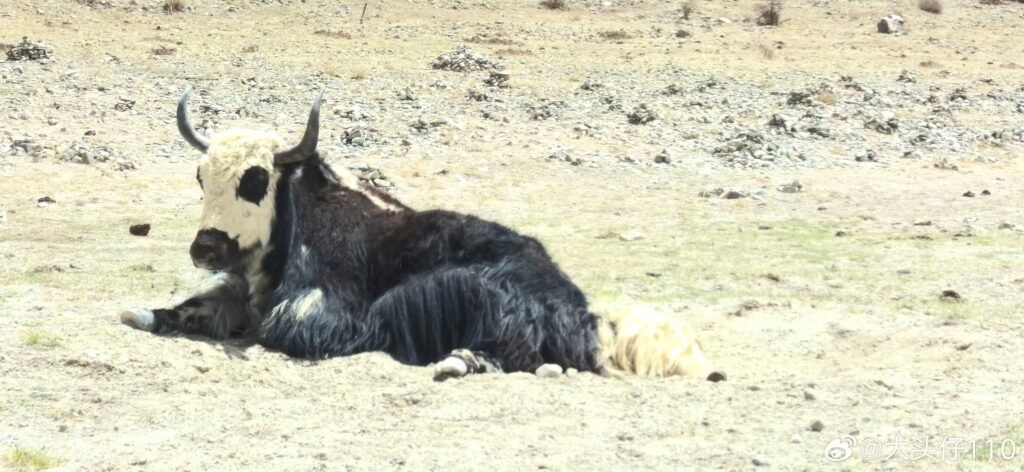
Tibetan Wild Yak: Guardian of the Plateau
The Tibetan wild yak is one of the strongest and most resilient animals of the high plateau. Covered in thick, shaggy fur and armed with massive horns, it can survive extreme cold and fierce winds.
Wild yaks live in close-knit herds led by dominant males and are fiercely territorial. Due to habitat loss and illegal hunting, their population has declined, making conservation efforts increasingly important. The wild yak remains a powerful symbol of Tibet’s raw natural beauty and ecological balance.
Blue Sheep (Bharal): Masters of the Rocky Slopes
The blue sheep, or bharal, is a mountain-dwelling ungulate commonly seen on steep cliffs and rocky hillsides across Tibet. Despite its name, it is more closely related to goats than sheep.
Blue sheep are excellent climbers, using rugged terrain to evade predators such as snow leopards and wolves. They play a vital role in the food chain and are a key prey species that helps maintain ecological balance in Tibet’s high-altitude ecosystems.
Black-Necked Crane: A Sacred Bird of the Plateau
The black-necked crane holds a special place in Tibetan culture, symbolizing longevity, harmony, and good fortune. Found in high-altitude wetlands, this elegant bird is easily recognized by its black neck, white body, and graceful movements.
During the breeding season, black-necked cranes perform elaborate courtship dances, creating a stunning natural spectacle. Against Tibet’s dramatic mountain backdrop, their flight is both peaceful and awe-inspiring.
Tibetan Eared Pheasant: The Forest Jewel of Eastern Tibet
The Tibetan eared pheasant (Crossoptilon crossoptilon) is a striking bird found mainly in the forested regions of eastern Tibet. Recognizable by its long white ear-like feathers, bright red facial skin, and strong legs, this pheasant is well adapted to cold mountain forests.
It spends much of its time foraging on the ground, feeding on roots, seeds, and insects. Often seen in small groups, the Tibetan eared pheasant is an important indicator of healthy alpine forest ecosystems.
Tibetan Snowcock: A Survivor of Extreme Heights
The Tibetan snowcock (Tetraogallus tibetanus) is a high-altitude gamebird that thrives in some of the harshest environments on Earth. Found above the tree line, often at elevations over 4,500 meters, it lives among rocky slopes and alpine meadows.
Its thick plumage and powerful legs allow it to endure freezing temperatures and thin air. The Tibetan snowcock’s loud calls often echo across mountain valleys, making it more frequently heard than seen.
Golden Eagle: Ruler of the Tibetan Skies
The golden eagle (Aquila chrysaetos) is the top avian predator of the Tibetan Plateau and one of the most powerful raptors in the world. With its impressive wingspan and keen eyesight, it dominates the open grasslands and high-altitude valleys from above.
Golden eagles hunt marmots, hares, young antelope, and even foxes, often striking from great heights with incredible precision. Deeply symbolic in Tibetan culture, the eagle represents strength, freedom, and spiritual power. During migration seasons, they are frequently seen soaring in wide circles over lakes and grasslands, making them a highlight for birdwatching and wildlife photography tours in Tibet.
Himalayan Vulture and Lammergeier: Guardians of the Sky
The Himalayan vulture, also known as the Himalayan griffon, is one of the largest birds found on the Tibetan Plateau. With its massive wingspan, it soars effortlessly over high mountains, searching for carrion. By consuming animal remains, it plays a vital role in preventing the spread of disease.
Sharing the skies is the lammergeier, or bearded vulture, a unique raptor famous for dropping bones from great heights to crack them open. These powerful scavengers hold deep cultural and spiritual significance in Tibetan society, symbolizing the cycle of life and death.
High-Altitude Migrants and Plateau Specialists
Tibet is also home to several remarkable migratory and resident bird species adapted to life at high elevations. The bar-headed goose is especially famous for its record-breaking migration over the Himalayas, flying higher than most aircraft routes. Alongside it, the ruddy shelduck is commonly seen near lakes and wetlands across the plateau.
Other notable species include the snow pigeon, which inhabits rocky cliffs and high valleys, and the ground tit, a unique bird that nests underground and thrives in open grasslands. Together, these birds highlight Tibet’s extraordinary avian diversity and its role as a critical habitat for high-altitude wildlife.