
Shiquanhe: Gateway to Western Tibet
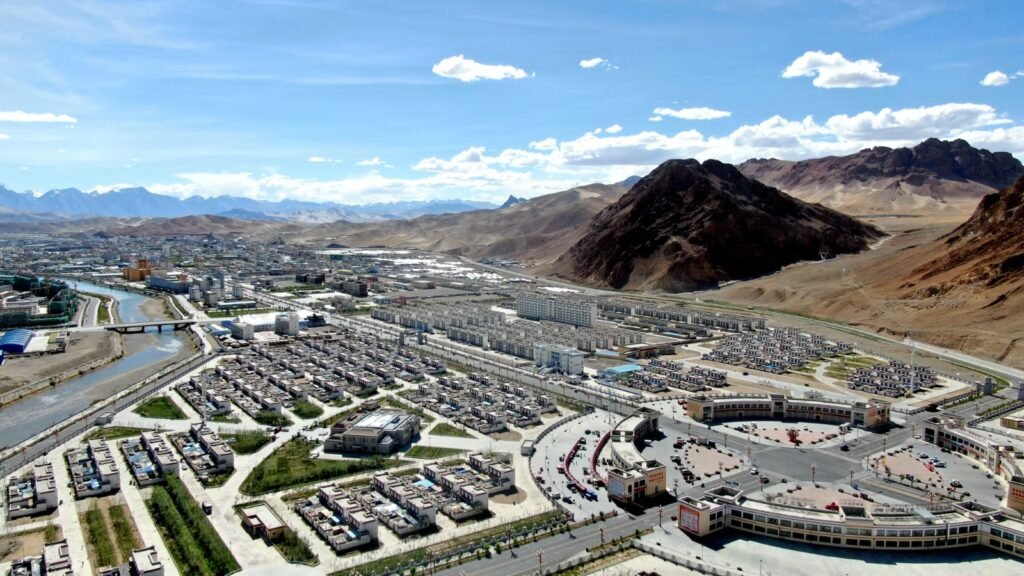
Shiquanhe is a fast-growing town in the far west of Tibet, located along the upper reaches of the Indus River. Its name comes directly from this great river, which has shaped the land and sustained life here for centuries. Before modern development, the area was little more than red willow marshland. Everything began to change in 1964 with the opening of the Xinjiang–Tibet Highway, turning Shiquanhe into a key settlement on the western Tibetan Plateau.
Today, Shiquanhe serves as the administrative center of both the Ali (Ngari) Prefecture and Gar County. It has grown into an important political, economic, cultural, and transportation hub, playing a vital role in connecting western Tibet with surrounding regions.
Location and Geographic Setting
Shiquanhe lies in northern Gar County and occupies a strategic position in Ngari. It borders Ge’gyai County to the east, Purang and Zanda counties to the south, Indian-controlled Kashmir to the southwest, and Rutog County to the north. The town covers an area of about 1,042 square kilometers.
Sitting at an elevation of approximately 4,300 meters above sea level, Shiquanhe is recognized as the highest town in China. As of November 2020, it was home to more than 24,000 residents, making it one of the most important population centers in western Tibet.
Climate of Shiquanhe
Shiquanhe experiences a cold desert climate typical of the high Tibetan Plateau. The region is known for strong solar radiation, long hours of sunshine, and very low annual rainfall, averaging only around 73 millimeters per year. The dry air and clear skies create dramatic landscapes and striking light conditions, but visitors should be prepared for intense sunlight and large temperature differences between day and night.
In December 2021, Shiquanhe was officially recognized as a “National Model Unit for Ethnic Unity and Progress,” highlighting its role in fostering harmony among different ethnic communities.
Urban Development and Infrastructure
Since being formally established as a town in 1999, Shiquanhe has undergone steady and organized development. Today, it offers essential public services, including government administration, schools, postal and telecommunications services, electricity, street lighting, and a reliable water supply.
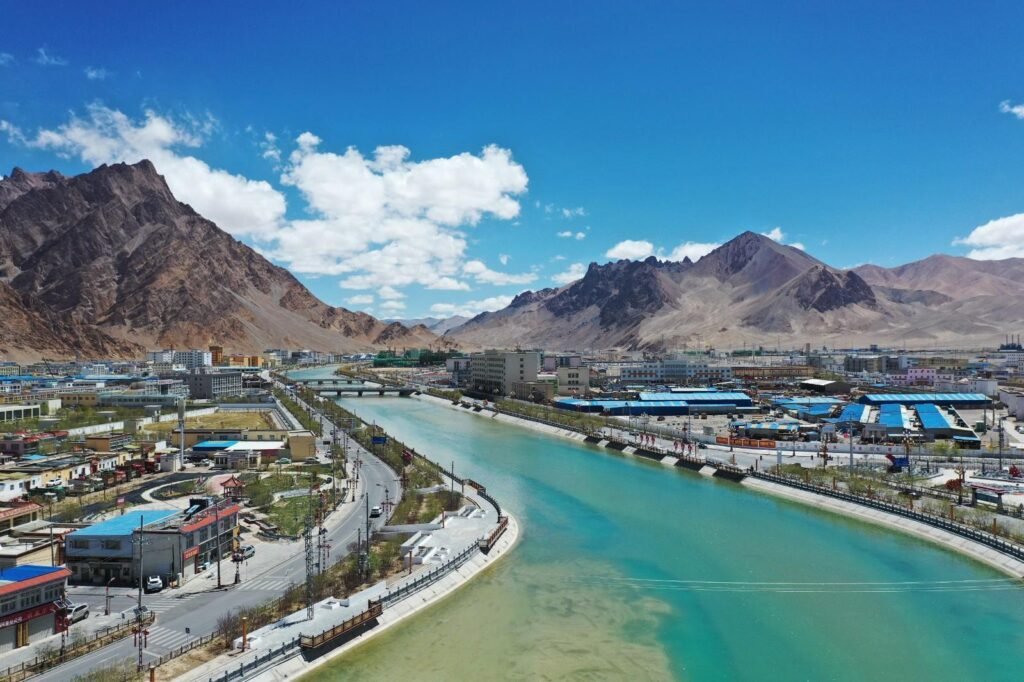
The town’s layout is easy to navigate. A central lion statue marks the heart of Shiquanhe, from which four main roads extend outward. To the south lies the main commercial street filled with shops and restaurants. Government offices and military areas are located to the east and west, while the northern road leads toward Rutog County and Xinjiang.
Daily Life and Local Markets
Shiquanhe’s streets are lively and practical, reflecting its role as a regional hub. Shops sell daily necessities, travel supplies, and local products. One highlight is the market for Tibetan handicrafts, where visitors can find items made by descendants of the ancient Guge Kingdom, offering a tangible link to Ngari’s rich history.
The Shiquanhe Comprehensive Market and the South Bank Trade Market are especially popular. In summer, fresh fruits transported from Xinjiang appear on market stalls, adding color and variety. The markets are also known for valuable medicinal herbs, including saffron and other traditional Tibetan remedies.
Transportation Within Shiquanhe
Getting around Shiquanhe is simple due to its compact size. Taxis are widely available and operate on a fixed fare of 5 RMB within the town during the day, increasing to 10 RMB after 9 p.m. Longer trips can usually be negotiated directly with drivers.
Minibuses provide another convenient option, charging around 2 RMB per ride. However, many visitors prefer to explore Shiquanhe on foot, as most key areas are within walking distance and strolling through town offers a closer look at daily Tibetan life.
Communication and Banking Services
Despite its remote location, Shiquanhe is well connected. The town has modern communication facilities, including mobile networks and internet access. National banks operate here as well, making it easy for travelers to withdraw cash or handle financial matters while exploring Ngari.
Cultural and Natural Attractions Nearby
Beyond the town itself, Shiquanhe is surrounded by sites of historical and natural interest. About 25 kilometers away lies Re La Hong Fort, a scenic ruin that offers insight into the region’s past while rewarding visitors with expansive plateau views.
In recent years, large-scale greening projects have been carried out around Shiquanhe to combat desertification. These efforts have gradually improved the local environment, adding patches of green to the otherwise stark landscape and enhancing the town’s livability.
A Vital Hub on the Tibetan Plateau
With its strategic location along major transport routes, deep historical roots, and steadily improving infrastructure, Shiquanhe stands out as one of the most important towns in western Tibet. It functions not only as the administrative heart of Ngari but also as a meeting point for culture, commerce, and daily life on the high plateau.
For travelers heading toward Mount Kailash, Zanda Earth Forest, or the ancient ruins of the Guge Kingdom, Shiquanhe is often the first and last major stop. Its blend of rugged environment, modern services, and living Tibetan culture gives the town a unique energy that reflects the spirit of western Tibet.