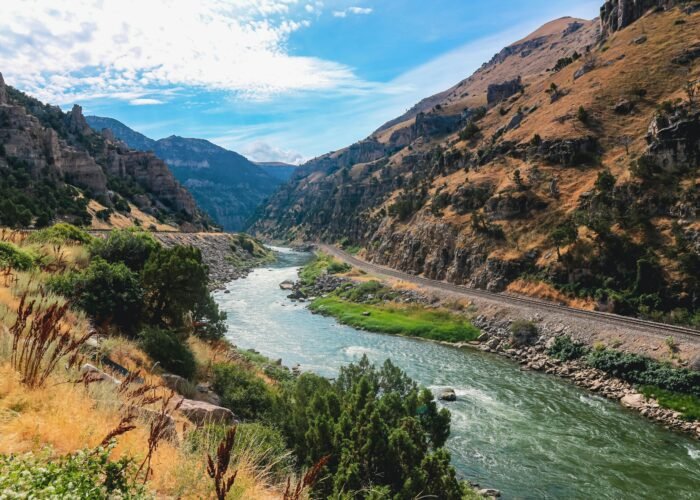
In the far west of Tibet, where snow mountains meet vast grasslands, rivers shape both the land and the lives of those who live alongside them. Gar County, located in the heart of Ngari Prefecture, is home to several important plateau rivers that nourish high-altitude ecosystems, ancient cultures, and traditional pastoral life. Among them, Gar Tsangpo, Sengge Tsangpo (Lion River), and Langchu Tsangpo stand out as lifelines flowing through one of Tibet’s most dramatic landscapes.
Gar Tsangpo: The “Camp River” Flowing from the Gangdise Mountains
Southwest of Shiquanhe Town, the administrative center of Gar County, Gar Tsangpo quietly begins its journey from the southern slopes of the Gangdise (Kailash) Mountains. Known in Tibetan as “Gar Tsangpo,” meaning “Camp River,” it is also referred to as Gar Qu or Gar Tang Qu in local usage.
Stretching approximately 196 kilometers with a basin area of 6,060 square kilometers, Gar Tsangpo flows through regions such as Kunsar, Gar shin, Namuga, and Sudo. Its wide valleys form natural alpine pastures, making the river basin an ideal grazing ground for yaks, Tibetan sheep, bison, and Tibetan antelopes.
For travelers, the Gar Tsangpo valley offers a gentle introduction to Ngari’s high-altitude scenery—open grasslands, distant snow peaks, and the quiet rhythm of nomadic life unfolding along the riverbanks.

Sengge Tsangpo: The Mighty “Lion River” of Ngari
Birthplace Near Mount Kailash
The most powerful river in Gar County is Sengge Tsangpo, known as the “Lion River” in Tibetan. It is also widely called Shiquanhe, Sengge Zangbu, or Sengkai Tsangpo. The river rises near Sengge Khabab, on the northern slopes of Mount Kailash, at an elevation of 5,164 meters—one of the most sacred and dramatic river sources in the Himalayas.
From its source, Sengge Tsangpo flows south to north, then turns west near Pangong, eventually merging with Gar Tsangpo near Zashigang. Beyond Tibet, it continues into Kashmir as the Indus River, finally reaching the Indian Ocean after a journey of more than 3,180 kilometers.
Within Tibet alone, the river runs for 419 kilometers, descending 1,264 meters and draining a massive basin of 27,450 square kilometers, making it the principal river system of Ngari.
Broad Valleys and Endless Grasslands
After cutting through a gorge between Ge’gyai County and Shiquanhe Town, Sengge Tsangpo opens into expansive valleys and basins. Near Shiquanhe, the river plain widens to more than 10 kilometers, creating one of western Tibet’s most impressive grassland landscapes.
The basin is a natural paradise of prairies, rolling hills, snow-capped mountains, wetlands, and open skies. It also serves as a refuge for wildlife, including:
- Tibetan schizothoracin (high-altitude fish species)
- Triplophysa stoliczkai
- Plateau zokor and other endemic animals
For nature lovers and photographers, the Sengge Tsangpo basin offers classic “Roof of the World” scenery—vast, raw, and untouched.
Exploring the Wonders of Sengge Tsangpo
Rich Natural Resources
The Sengge Tsangpo basin is rich in mineral deposits, geothermal energy, and solar resources, reflecting the powerful geological forces that shaped the Tibetan Plateau. These resources highlight the region’s long-term potential while also underscoring the importance of sustainable development.
A Wetland Wonderland on the Tibetan Plateau
Surrounding Sengge Tsangpo is one of the largest wetland systems on the Tibetan Plateau. Framed by snowy mountains, alpine lakes, and green meadows, the wetlands change color with the seasons—lush greens in summer, golden tones in autumn, and icy blue-white landscapes in winter.
This area is a haven for birds, wildlife, and travelers seeking eco-tourism experiences in western Tibet.
Cultural and Historical Sites Along the River
The river basin is also rich in cultural heritage. Notable sites include:
- Jiraka Kama ruins
- Dingzhong Zetao pottery remains
- Zashigang Monastery, an important religious landmark
These sites offer insight into ancient settlement patterns, early craftsmanship, and the deep spiritual traditions tied to Tibet’s rivers and mountains.
Langjiu Tsangpo: The Gentle “Valley End River”
Flowing southeast of Gar County, Langjiu Tsangpo is a quieter tributary of Sengge Tsangpo. Its Tibetan name means “Valley End River,” perfectly reflecting its calm and intimate character.
The river winds through Gama, Langjiu, and Nagugu, stretching 75 kilometers with a basin area of 2,300 square kilometers. Known for its diverse fish species, Langjiu Tsangpo also supports fertile grazing land where yaks and Tibetan sheep roam freely.
Compared to the vast openness of Sengge Tsangpo, Langjiu Tsangpo offers a more serene and pastoral atmosphere, ideal for travelers seeking peaceful landscapes and authentic rural life in Ngari.
Rivers That Shape the Soul of Western Tibet
Together, Gar Tsangpo, Sengge Tsangpo, and Langjiu Tsangpo form a vital river network that sustains the grasslands, wildlife, and communities of Gar County. These rivers are not only geographical features but also cultural symbols—woven into Tibetan history, belief systems, and daily life.
For travelers exploring Ngari, Mount Kailash, and western Tibet, following these rivers is one of the most rewarding ways to experience the region’s raw beauty, ecological richness, and timeless connection between nature and culture.