
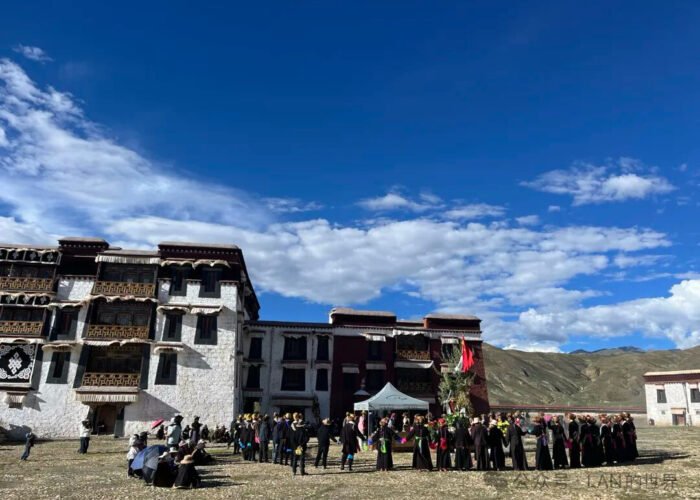
Apai (Ngapoi) Butler Manor in Gongbo’Gyamda:
Nestled in Gongbo’Gyamda County in southeastern Tibet, the Apai (Ngapoi) Butler Manor stands as a remarkable reminder of the region’s aristocratic past. Built around 1926, this historic estate carries more than 90 years of history and reflects the political, cultural, and architectural sophistication of old Tibet.
Overseen by the respected butler Pema Tsering during its early years, the manor once symbolized authority, organization, and high social standing within Tibetan society. Today, it remains one of the most fascinating heritage sites in Gongbo’Gyamda County, offering visitors a rare look into Tibetan aristocratic life.
Where Is Ngapoi (Apai) Manor Located?
Ngapoi Manor lies approximately 8 kilometers east of Gongbo’Gyamda County town, in the fertile Nyang River valley at an elevation of around 3,000 meters above sea level.
The surrounding landscape features:
- Subtropical forests
- Flowing rivers
- Snow-capped mountains
- Agricultural valleys
Because of its lush greenery and scenic beauty, Nyingchi is often called the “Switzerland of Tibet.” The manor’s location within this rich valley highlights the historical importance of Gongbo’Gyamda as both a political and agricultural center.
Historical Background: The Ngapoi Family Legacy
Ngapoi Manor has served as the generational home of the influential Ngapoi family since the Qing Dynasty. It is most closely associated with Ngapoi Ngawang Jigme.
Ngapoi Ngawang Jigme was a prominent Tibetan official who held military and political positions before and after 1951. He played a key role in negotiations related to Tibet’s peaceful integration with China and later served in high-level governmental positions.
Through this connection, the manor is not just an architectural landmark — it is a site deeply linked to modern Tibetan political history.
A Three-Story Fortress with 24 Rooms
The existing structure of Ngapoi Butler Manor is a three-story fortified building with 24 rooms. The design reflects the traditional Tibetan fortress-style architecture often associated with noble residences.
Key structural features include:
- Thick stone walls for stability and defense
- A compact fortress layout
- Carefully planned room divisions
- Elevated design for visibility and protection
The manor’s layout demonstrates both functionality and prestige, emphasizing the social importance of its former residents.
A Rare Skywell-Style Roof in Tibetan Architecture
One of the manor’s most unique architectural features is its skywell-style roof — a rare design seldom seen in traditional Tibetan buildings.
A skywell typically refers to an open vertical shaft or courtyard space that allows natural light and airflow into the structure. This feature not only improves ventilation but also enhances interior brightness, showing advanced architectural planning for its time.
This uncommon element makes Apai (Ngapoi) Butler Manor especially valuable from an architectural history perspective.
Exquisite Wood Carvings and Interior Craftsmanship
Inside the manor, most internal partitions are made of wood, showcasing detailed carvings and decorative craftsmanship.
The intricate woodwork reflects:
- Skilled local artisanship
- High social status of the butler
- Wealth and cultural refinement
Such decorative elements were not common in ordinary homes, highlighting the manor’s aristocratic identity.
The Mysterious Murals: An Unsolved Artistic Puzzle
Among the manor’s most intriguing features are its vibrant murals depicting five nobles. These murals stand out for their:
- Naturalistic facial expressions
- Lifelike posture and gestures
- Detailed artistic execution
What makes them even more fascinating is the presence of mysterious scripts within the artwork. These inscriptions are neither Chinese, Tibetan, nor Sanskrit, and their meanings remain undeciphered.
This mystery adds an air of intrigue to Ngapoi Butler Manor, attracting historians, researchers, and curious visitors alike.
Inside the Manor: A Glimpse into Aristocratic Life
The manor includes purpose-specific rooms that reveal the organized lifestyle of its former residents. These include:
- A council hall for meetings and decision-making
- Reception rooms for guests
- Scripture halls for religious practices
The structured layout reflects a household that balanced political responsibility, religious devotion, and social interaction.
The elegance of the residence illustrates the grandeur and authority associated with the Apai (Ngapoi) estate during its prime.
Cultural Significance of Apai (Ngapoi) Butler Manor
Ngapoi Butler Manor is more than an old building — it is a cultural landmark that reveals the social hierarchy and governance systems of traditional Tibetan society.
Through its architecture, murals, and room layout, the manor tells a story of:
- Tibetan aristocracy in the early 20th century
- The administrative role of high-ranking butlers
- Artistic traditions in southeastern Tibet
- The blend of political and religious life
For travelers interested in Tibetan history and heritage, this estate offers a deeper understanding of how elite families lived and governed at the local level.
The Earliest Fruit-Bearing Forest in Tibet
One of the lesser-known yet remarkable aspects of Ngapoi Manor is its orchard area, considered the earliest fruit-bearing forest in Tibet. This highlights the agricultural richness of the Nyang River valley and the estate’s role as a productive aristocratic residence.
The fertile land surrounding the manor contributed to its prosperity and influence in the region.
One of the 12 Major Manors of Tibet
Ngapoi Manor is recognized as one of the 12 major manors in Tibet, representing the feudal nobility and hierarchical social structures of traditional Tibetan society.
The manor provides valuable insights into:
- The administrative role of noble families
- Land ownership systems
- Religious and political integration
- The lifestyle of Tibetan aristocracy
As a preserved cultural relic, it reflects ongoing efforts to protect Tibetan historical landmarks amid growing eco-tourism development in Nyingchi.
Why Visit Apai (Ngapoi) Butler Manor?
Visiting Ngapoi Butler Manor offers:
- Insight into Tibetan aristocratic culture
- Rare architectural features like the skywell roof
- Historic murals with mysterious scripts
- Convenient access from Gongbo’Gyamda town
As southeastern Tibet continues to grow as a cultural and eco-tourism destination, sites like Apai (Ngapoi) Butler Manor provide meaningful historical depth beyond natural scenery.
For those exploring Nyingchi and Gongbo’Gyamda County, this hidden architectural gem reveals a refined chapter of Tibetan history rarely seen elsewhere.