The Hidden Meanings Behind Lhasa’s Street Names: History, Nature, and Culture on Every Road
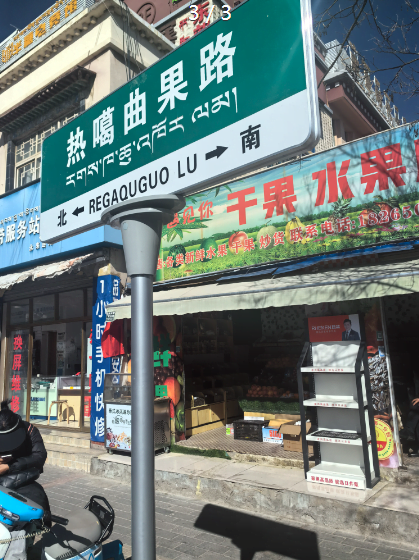
Lhasa’s streets are far more than simple routes for daily travel. They are living records of the city’s geography, history, culture, and collective memory. Recent updates and repairs to road signs across Lhasa have sparked renewed interest among residents and visitors alike. Why are some street signs blue while others are green? What stories lie behind names like Duodi Road (དོག་སྡེ་ལམ།)? And why was the racecourse built at Cisongtang (ཚེས་གསུམ་ཐང་།)?
Behind many of Lhasa’s street names—often preserved through Tibetan transliteration—are fascinating clues to the city’s natural landscape and historical past, quietly waiting to be rediscovered.
Street Names as Windows into Old Lhasa
Long before modern buildings reshaped the skyline, Lhasa’s geography defined daily life. Many street names preserve vivid descriptions of the land as it once was.
Take Jiacuo Road (རྒྱ་མཚོ་ལམ།), meaning “sea” in Tibetan. Located north of Norbulingka at the end of the Lhasa River, this area was once filled with lakes and wetlands, earning its poetic name. Since Lhasa sits in a river valley surrounded by mountains, many place names reflect what locals describe as the region’s “mountain and water colors.”
Even as urban development has altered the physical landscape, these names continue to echo the city’s original environment.
Natural Landscapes Preserved Through Language
Some of Lhasa’s most intriguing street names offer hints of landscapes that no longer exist.
Barku (བྲག་རི་ཁུག།) translates to “rocky ravine,” while Najin Road (རྔ་ཆེན་ལམ།) refers to a landform once said to resemble an elephant’s trunk. Today, Najin is a lively urban area, and Jiacuo’s lakes have given way to paved roads. Yet the names remain, preserving memories of Lhasa’s natural beauty in everyday language.
These names act like quiet storytellers, reminding residents and visitors of what the land once looked like beneath the city streets.
Roads That Reflect History and Cultural Life
Not all street names in Lhasa are tied to geography alone. Many reflect important cultural practices and historical moments.
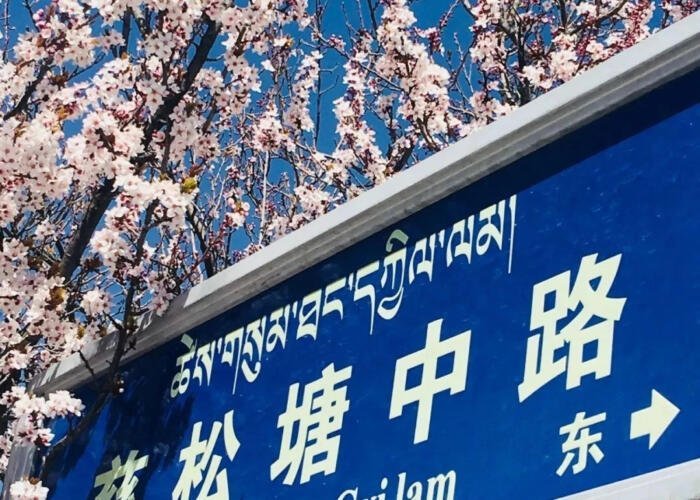
Cisongtang (ཚེས་གསུམ་ཐང་།) takes its name from traditional horse racing events held on the third day of the first Tibetan lunar month. Dosenge Road (རྡོ་སེང་གེ་ལམ།) commemorates a historical event deeply rooted in local memory.
These names connect modern urban life with centuries-old traditions, turning ordinary streets into markers of cultural continuity.
Transliteration vs. Translation: A Local Debate
As Lhasa modernizes, discussions around street naming have become increasingly thoughtful. Some residents feel that pure transliteration fails to explain the rich meanings behind Tibetan names. Others worry that literal translations could sound awkward or unfamiliar, especially to older generations who have known these places by their original names for decades.
Many locals believe that careful transliteration strikes a balance—preserving sound, history, and identity while allowing Lhasa’s multicultural character to shine through. For some, these names add a sense of romance and uniqueness to the city’s urban landscape.
Why Are Lhasa’s Street Signs Blue and Green?
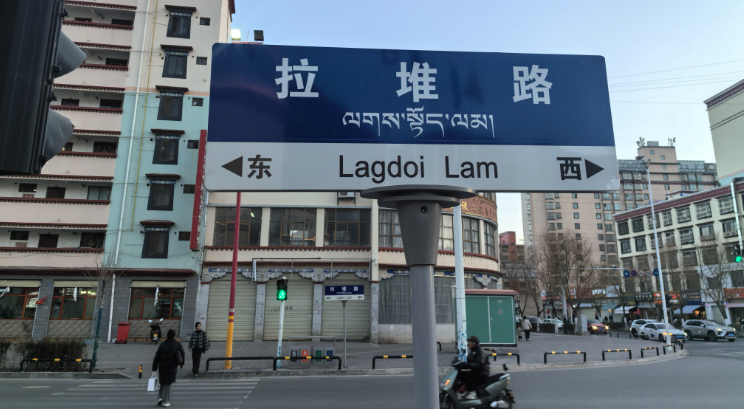
The recent update of street signs has also drawn attention to their color differences. According to national standards for place name signage:
- Blue signs with white text indicate east–west roads
- Green signs with white text indicate north–south roads
This system follows guidelines set by the state’s quality and technical supervision authorities, helping both locals and visitors navigate the city more easily.
Strict Standards Behind Lhasa’s Place Naming
The naming and management of streets in Lhasa follow the “Regulations on the Administration of Place Names” issued by the State Council. These regulations emphasize that place names should:
- Reflect local geography, history, and culture
- Respect the wishes of local residents
- Incorporate expert and scholarly input
- Serve daily life while promoting traditional culture and core values
As a multi-ethnic city with diverse languages and pronunciation habits, Lhasa prioritizes preserving historical names while using standardized transliteration for clarity and consistency.
Continuous Improvement of Street Signs in Lhasa
As part of a broader urban and rural environmental improvement campaign, the Lhasa Civil Affairs Bureau conducted a comprehensive review of street signage across the city. Officials identified 873 issues, including damaged, duplicated, missing, unclear, or incorrectly labeled signs. All have now been repaired or replaced, with plans for ongoing maintenance and upgrades.
These efforts ensure that Lhasa’s place names remain accurate, readable, and meaningful for future generations.
Unique Local Street Names You’ll Find in Lhasa
Lhasa’s streets beautifully blend Chinese and Tibetan scripts, reflecting the city’s linguistic and cultural diversity. Some distinctive examples include:
- Xuezi Avenue — སློབ་མའི་ལམ་ཆེན།
- Yuga Road — གཡུལ་ཁ་ལམ།
- Xincun Road — གྲོང་གསར་ལམ།
- Jiarong Road — ལྕགས་རོང་ལམ།
- Naru Road — གླང་རུ་ལམ།
- Gongbutang Road — སྐུ་འབུམ་ཐང་ལམ།
- Gure Road — གུར་ར་ལམ།
- Weiba Road — དངུལ་པར་ལམ།
- Sangdong Lane — ཟམ་གདོང་ལམ།
- Naga Road — ན་བཀག་ལམ།
- Zhuokang Lane — སྤྲོ་ཁང་སྲང་ལམ།
- Bailin Park — དཔལ་གླིང་སྤྱི་གླིང་
Each name carries layers of meaning, shaped by geography, history, religion, and everyday life in Lhasa.