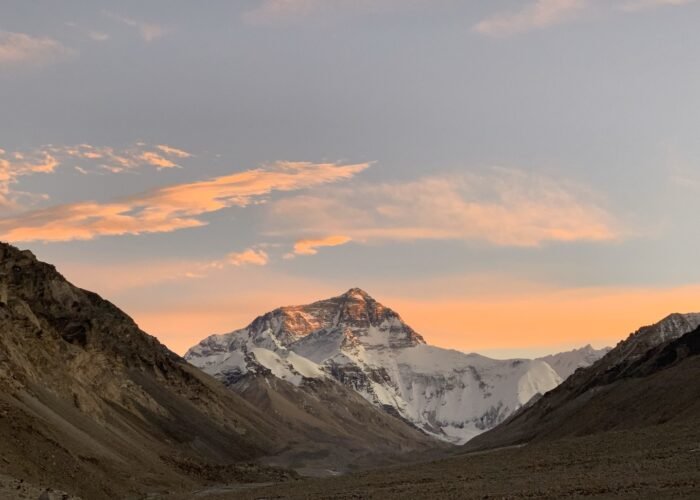
The Mount Everest National Nature Reserve, officially known as the Qomolangma National Nature Preserve, is one of the most extraordinary protected areas on Earth. Centered around Mount Everest, the world’s highest peak, this reserve covers vast regions of Tingri, Dinggyê, Gyirong, and Nyalam counties in Tibet. Established in 1988 and approved as a national nature reserve in 1994, it holds the distinction of being the highest nature reserve in the world.
The core protected zones are located in Tashizom Township and Qudang Township of Tingri County, where conservation efforts focus on preserving fragile alpine and plateau ecosystems.
Boundaries and Vast Expanse of the Reserve
Spanning an impressive 33,819 square kilometers, the Mount Everest National Nature Reserve stretches from the international border in the south to the Yarlung Tsangpo River basin in the north. From east to west, it encompasses multiple watershed divides and river systems, including tributaries of the Yarlung Tsangpo River and high-altitude valleys shaped by glaciers and ancient tectonic movements.
With a relative altitude difference of up to 7,408 meters, the reserve showcases some of the most dramatic elevation changes anywhere on the planet, making it a vital region for studying high-altitude geography and climate systems.
Global Recognition and Environmental Significance
In 2001, the reserve was included in China’s Man and the Biosphere Program, and in 2004 it gained international recognition as part of UNESCO’s World Network of Biosphere Reserves. That same year, a monument was erected in Gangkar Town, Tingri County, bearing an inscription by Jiang Zemin to commemorate the Qomolangma National Nature Preserve.
The monument, measuring 21 meters in length and 8.848 meters in height, symbolically reflects the elevation of Mount Everest and represents the concept of the Earth’s Third Pole, emphasizing the global importance of the Himalayan ecosystem in the 21st century.
Conservation Goals and Protected Ecosystems
The Mount Everest National Nature Reserve is a comprehensive conservation area designed to protect:
- Rare alpine and plateau ecosystems
- Unique natural landscapes and glaciers
- Geographical relics of high scientific value
- Tibetan historical and cultural heritage
Management strategies vary across different ecosystems, including forests, wetlands, shrubs, grasslands, and desert landscapes, with particular emphasis on maintaining forest, shrub, and grassland stability.
Himalayan Landscapes and Geological Diversity
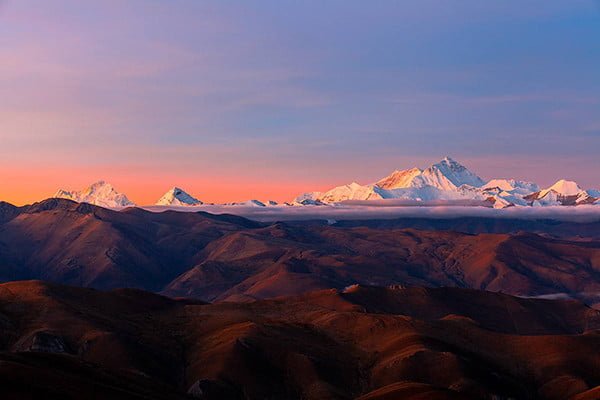
Dominated by the Himalayan mountain range, the reserve features a remarkable range of geomorphic forms. These include plateau basins, wide valleys, rivers, lakes, glaciers, periglacial zones, and wind-shaped (aeolian) landscapes. The Himalayas within the reserve are considered the youngest and tallest mountain range in the world, offering invaluable insights into plate tectonics and mountain formation.
The World’s Highest Concentration of Majestic Peaks
Often called the “Roof of the World,” the Mount Everest National Nature Reserve contains one of the densest collections of high peaks on Earth. Within its boundaries rise five mountains over 8,000 meters, including:
- Mount Everest (8,844.43 meters)
- Lhotse (8,516 meters)
- Makalu (8,463 meters)
- Cho Oyu (8,201 meters)
- Shishapangma (8,012 meters)
In addition, the reserve is home to 38 peaks above 7,000 meters and countless summits between 5,000 and 6,000 meters, forming a dramatic skyline unmatched anywhere else.
Climate Conditions at Extreme Altitudes
Most of the reserve lies on the northern slopes of Mount Everest, where the climate is classified as cool, semi-arid continental plateau climate. Average elevations range from 4,000 to 5,000 meters, with an annual mean temperature of about 2.1°C. Temperature extremes can reach 24.8°C in summer and plunge to –46.4°C in winter.
Southern areas such as Zhangmu and Chentang, where elevations drop below 2,000 meters, experience warmer and more humid conditions. The region receives approximately 3,323 hours of sunshine annually, with most rainfall occurring between July and September.
Rich Biodiversity Across High-Altitude Valleys
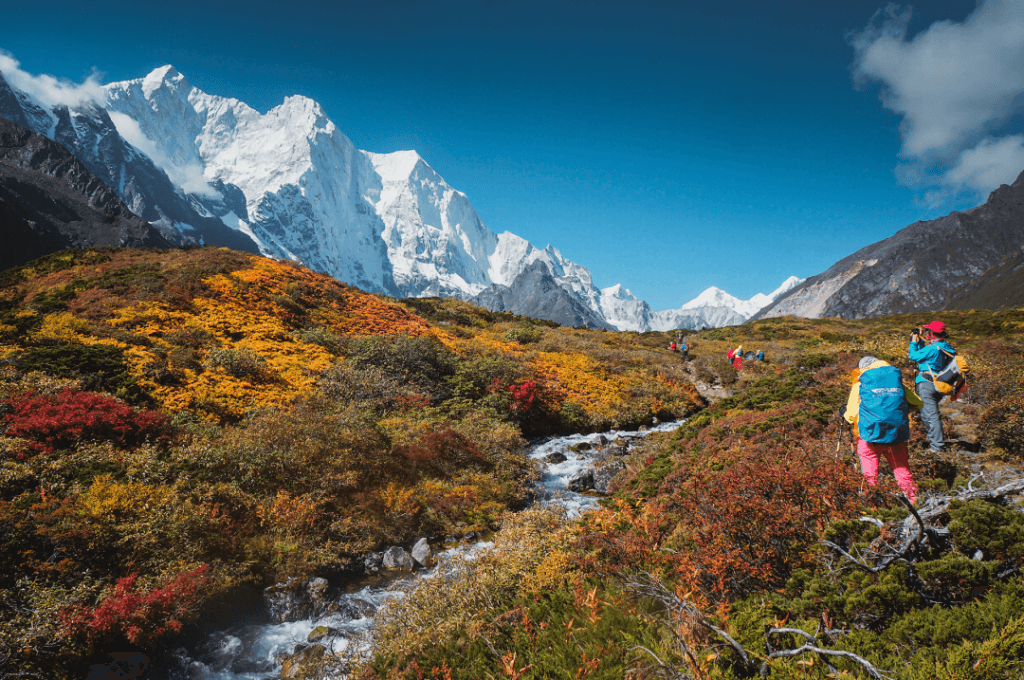
Five major valleys define the ecological richness of the reserve: Chentang Valley, Gama Valley, Rongxar Valley, Zhangmu Valley, and Gyirong Valley. These valleys support diverse habitats and host numerous rare, endangered, and endemic species.
Surveys have recorded:
- Over 160 species of medicinal plants from 50 families
- 53 species of mammals
- 206 species of birds
- 8 amphibians, 6 reptiles, and 10 fish species
Among them, 10 species are under national first-class protection, while 28 species receive second-class protection, highlighting the reserve’s importance for biodiversity conservation on the Tibetan Plateau.
Human Life and Cultural Traditions
Around 90,000 people live within the Mount Everest National Nature Reserve, maintaining rich ethnic traditions closely tied to the land. In Guozha Village, Tingri County, locals observe a unique ritual each year during the fifth month of the Tibetan calendar, selecting a fairy for the mountain god.
The Sherpa communities of Chentang and Zhangmu are known for their traditional clothing, music, and dance, adding cultural depth to the natural grandeur of the region.
Archaeological and Scientific Value
Beyond its living ecosystems, the reserve holds exceptional scientific importance. Discoveries include the world’s highest three-toed horse fossils and alpine oak fossils, offering evidence of dramatic climatic and environmental shifts over millions of years.
The area also contains numerous archaeological sites and dozens of monasteries, making it a prime destination for research in geology, meteorology, paleontology, ancient geography, and anthropology, as well as for exploration and eco-tourism.
Practical Travel Information for Visitors
Restricted Core Zones
Since January 2019, entry into the core area above Rongbuk Monastery has been prohibited for both individual travelers and tour groups. Visitors planning to explore other parts of the reserve must obtain a border pass in advance.
Waste Management and Environmental Protection
Strict waste management rules are enforced throughout the reserve. Local environmental teams manage residential waste, reserve staff clean areas between 5,000 and 6,000 meters, and zones above 6,000 meters are handled by mountaineering associations. Visitors are encouraged to carry out their trash or use designated disposal points to protect this fragile ecosystem.
Local and International Cooperation
The reserve works closely with international and grassroots organizations on conservation and community development projects. One notable initiative is the “Pendeba” project, supported by the American Next Generation Foundation, which focuses on healthcare and income opportunities for local farming and herding communities. Partnerships with the United Nations Development Programme and other organizations have further strengthened sustainable development efforts.
A Nationally Recognized Attraction
In 2006, the Mount Everest National Nature Reserve was officially rated as a national 4A-level tourist attraction. Its extraordinary landscapes, ecological diversity, and cultural heritage continue to attract scientists, mountaineers, explorers, and travelers from around the world.