
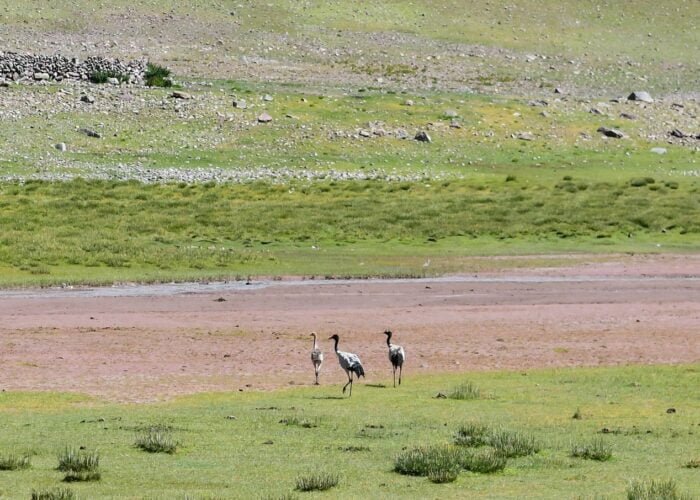
Lhasa River Segment Scenic Belt in Qushui County
The Lhasa River Segment Scenic Belt in Qushui County marks the final stretch where the Lhasa River gently flows into the mighty Yarlung Tsangpo River. This meeting point creates a striking natural landscape that blends rivers, wetlands, and mountain backdrops, making it one of the most peaceful and visually rich areas near Lhasa.
Thanks to growing awareness of ecological conservation and environmental protection, this section of the river has remained remarkably pristine. Over the years, it has transformed into a thriving natural habitat for rare and wild bird species, earning its reputation as a hidden paradise for nature lovers and photographers.
A Haven for Rare and Wild Birds
The scenic belt is especially well known for its birdwatching opportunities. The clean water, wetlands, and quiet surroundings provide ideal conditions for migratory and resident birds alike. Visitors can often spot:
- Common cranes
- Grey cranes
- Bar-headed geese
- Ruddy shelducks
- Peregrine falcons
These birds add life and movement to the landscape, particularly during early mornings and late afternoons. For wildlife enthusiasts, this area offers an authentic glimpse into the rich biodiversity of the Tibetan Plateau.
Rare and Endangered Birds Along the Lhasa River (Kyichu)
Known in Tibetan as “Kyichu”, the Lhasa River is one of the most important waterbird migration corridors and wintering grounds on the Qinghai–Tibet Plateau. Flowing through wetlands, wide river valleys, reservoirs, and marshlands, it supports a rich variety of rare, endangered, and occasionally sighted bird species.
Key bird habitats are concentrated in Lhünzhub County wetlands (Hutou Mountain Reservoir), Lhalu Wetland, the broad valley of the Qushui River segment, and the Zhigong Hydropower Station reservoir area.
The best birdwatching season runs from November to March, when wintering birds gather in large numbers. During summer, a smaller number of rare breeding birds can also be observed.
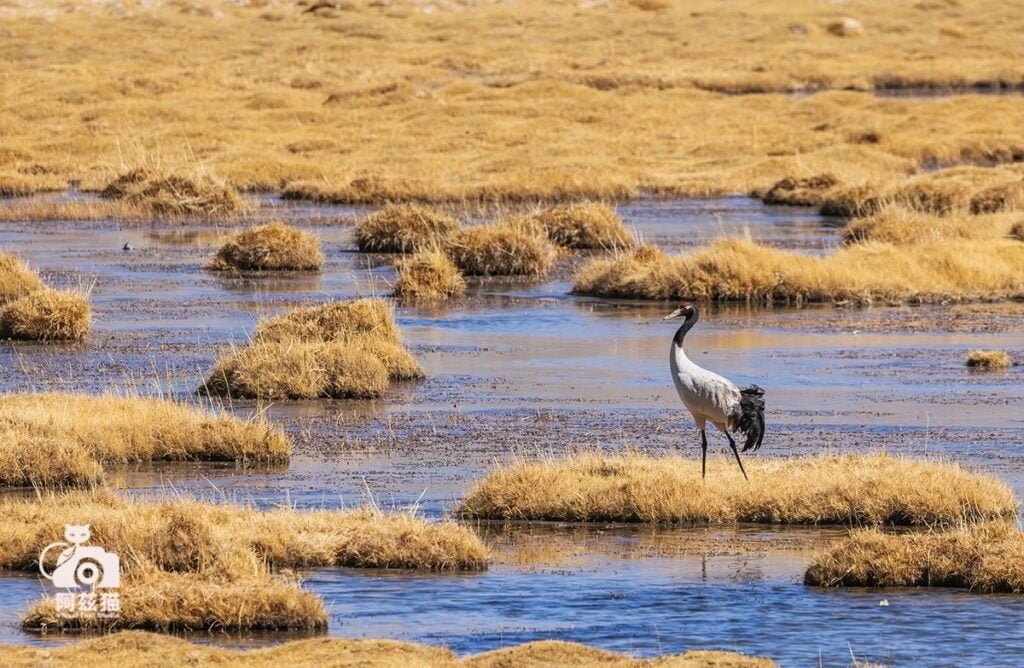
National First-Class Protected Birds: Flagship and Extremely Rare Species
Black-Necked Crane (Grus nigricollis)
The black-necked crane is the most iconic bird of the Lhasa River basin and a true symbol of plateau ecology. It is the only crane species in the world that breeds exclusively on high plateaus.
- Protection status: National Class I protected species; Vulnerable (VU)
- Nickname: “Fairy of the Plateau”
- Appearance: About 130 cm tall, grey-white body, black neck and flight feathers, with a striking red crown
- Distribution:
- Core wintering grounds in Lhünzhub County, especially around Hutou Mountain Reservoir and the Pengbo River basin
- Smaller numbers appear in Lhalu Wetland and Maizhokunggar sections
- Winters from late October to April; recent surveys show over 1,000 individuals wintering in Lhünzhub County alone
- Habits:
- Live in pairs or small family groups
- Feed on barley grains, insects, and aquatic plants in wetlands and farmlands
- Extremely alert—observers should keep a safe distance
White-Tailed Eagle (Haliaeetus albicilla)
One of the largest and most majestic birds of prey occasionally seen along the Lhasa River.
- Protection status: National Class I protected species; Vulnerable (VU)
- Appearance:
- Body length 85–95 cm
- Dark brown body with a pure white tail
- Yellow beak and talons, wingspan up to 2 meters
- Distribution:
- Rare winter visitor in the middle and lower reaches of the Lhasa River
- Historical records include sightings of three individuals in March 1986
- Habits:
- Often perches alone on tall riverside trees or rocks
- Feeds mainly on fish and waterbirds
- Powerful and graceful flight makes it highly distinctive
National Second-Class Protected Birds: Rare but Regular Visitors
Grey Crane (Grus grus)
- Appearance: About 110 cm tall, grey body, red bare skin on the crown, black flight feathers
- Distribution:
- Rare winter sightings in the Qushui river section and Lhalu Wetland
- Mostly migratory stopovers rather than stable wintering populations
- Behavior:
- Prefers open farmlands
- Highly cautious and sensitive to disturbance
Demoiselle Crane (Anthropoides virgo)
- Appearance:
- Smallest crane species (around 98 cm)
- Blue-grey body with elegant black feather plumes behind the eyes
- Distribution:
- Scattered records in Lhünzhub County wetlands
- Extremely rare, mainly seen during migration
- Behavior:
- Often mixes with other crane species
- Known for graceful flight and clear calls
Great Crested Grebe (Podiceps cristatus)
- Appearance:
- About 50 cm long
- Distinctive black crest and golden facial plumes in summer
- Distribution:
- Rare winter visitor to Qushui river sections and Zhigong Reservoir
- Behavior:
- Excellent diver, feeds on small fish and aquatic insects
- Complex courtship displays during breeding season
Common Merganser (Mergus merganser)
- Appearance:
- Males: black head with green sheen, white body
- Females: reddish-brown head, grey body
- Distribution:
- Rare winter sightings in urban Lhasa River sections and Lhalu Wetland
- Rescue and release records noted in January 2024
- Behavior:
- Skilled fish diver
- Often seen in small flocks on calm waters
Northern Lapwing (Vanellus vanellus)
- Protection status: Near Threatened (NT)
- Appearance:
- Greenish-brown body with a distinctive black crest
- White belly and striking wing patterns in flight
- Distribution:
- Rare winter presence along riverbanks and farmland near the Lhasa River
- Behavior:
- Feeds on insects and small invertebrates
- Sharp, piercing calls when disturbed
Near-Threatened, Vulnerable, and Occasionally Sighted Migratory Birds
Ferruginous Duck (Aythya nyroca)
- Protection status: Near Threatened (NT)
- Distribution:
- Occasional winter sightings in the middle and lower Lhasa River
- Prefers reed-filled, enclosed water bodies
- Behavior:
- Dives for aquatic plants and mollusks
- Often mixes with other diving ducks
Little Curlew (Numenius minutus)
- Protection status: Vulnerable (VU)
- Distribution:
- Extremely rare spring migration visitor along Lhasa River mudflats
- Does not overwinter in the area
- Behavior:
- Feeds on small invertebrates in wet mud
- Highly alert and fast-moving
Baikal Teal (Sibirionetta formosa)
- Protection status: Vulnerable (VU)
- Appearance:
- Males display striking green, yellow, and black facial patterns
- Distribution:
- Newly recorded in Tibet’s winter waterbird surveys
- Exceptionally rare along the Qushui section of the Lhasa River, mainly migratory
- Significance:
- Sightings highlight improving wetland conditions and conservation success
Best Birdwatching Spots Along the Lhasa River
- Hutou Mountain Reservoir, Lhünzhub County
Core wintering area for black-necked cranes, with dedicated birdwatching platforms - Lhalu Wetland National Nature Reserve
Located within Lhasa city, ideal for close-up observation of diverse waterbirds - Wide Valley of the Qushui River Section
Occasional sightings of white-tailed eagles and great crested grebes - Zhigong Hydropower Station Reservoir Area
Open waters suitable for observing diving ducks and wintering waterfowl
Best Time for Birdwatching
- Season:
- Winter (November–March): highest species diversity and largest populations
- Daily timing:
- Early morning: 7:30–9:30 AM
- Late afternoon: 4:30–6:00 PM, when bird activity peaks
Birdwatching and Conservation Tips
- Keep at least 50 meters distance from birds
- Never feed, chase, or disturb wildlife
- Avoid flash photography
- Follow all regulations within nature reserves
- Reduce plastic use and protect wetland habitats
With its wide valleys, wetlands, and improving ecological conditions, the Lhasa River Scenic Belt—especially the Qushui County section—has become one of the most important bird habitats in central Tibet, offering rare opportunities to observe plateau wildlife in a natural and respectful way.
Landscapes That Capture the Spirit of Tibet
The Lhasa River Scenic Belt is more than just a river view. It is a harmonious blend of natural beauty and Tibetan cultural elements. Along the riverbanks, travelers will find:
- Towering mountains and winding rivers
- Traditional Tibetan village houses
- Lush groves and open grasslands
- Quiet, mysterious temples and shrines
- Flocks of birds soaring above the wetlands
This combination makes the area an excellent destination for plateau sightseeing, photography, and slow travel, allowing visitors to experience Tibet beyond crowded landmarks.
Chabalong Village: A Peaceful Riverside Escape
Located right beside the Lhasa River, Chabalong Village is a charming countryside retreat that perfectly complements the scenic belt experience. The village lies about 5 kilometers east of Qushui County town and approximately 50 kilometers from Lhasa city center, making it an easy day trip from the capital.
Chabalong Village is known for its agr itainment-style tourism, offering visitors a relaxed way to enjoy rural life in Tibet.
The Largest Fish Breeding Farm in Qushui County
One of the village’s highlights is its vast 450-acre marshy pond area, which functions as the largest fish breeding farm in Qushui County. The wide water surface, reed-filled wetlands, and open sky create a calm and refreshing environment.
Visitors can enjoy:
- Leisurely fishing activities
- Riverside picnics with family or friends
- Quiet walks through the pond and marsh areas
- Moments of relaxation surrounded by nature
The tranquil atmosphere attracts both locals and tourists looking to slow down and reconnect with nature.
Ideal for Leisure, Photography, and Short Getaways
Whether you are interested in birdwatching, countryside photography, or a peaceful picnic, the Lhasa River Segment Scenic Belt and Chabalong Village offer a refreshing contrast to city life. The gentle flow of the river, open wetlands, and distant mountain views create an immersive experience that reflects the serene side of Tibetan plateau life.
With its convenient location near Lhasa, rich wildlife, and unspoiled landscapes, this scenic area continues to draw travelers seeking authenticity, calm, and natural beauty in Tibet.