
Peach Blossom Village: A Hidden Natural Paradise Near Qushui County
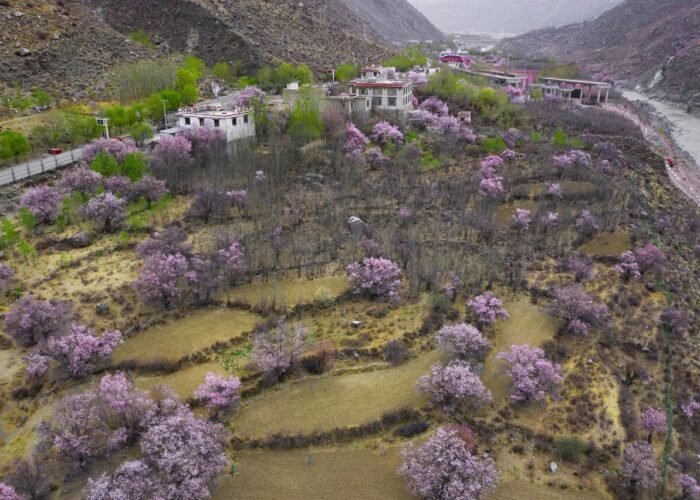
Peach Blossom Village is a charming and lesser-known destination located about 30 kilometers west of Qushui County’s town center. True to its name, the village is famous for its abundant peach blossoms, which transform the landscape into a sea of pink and white each spring. Surrounded by mountains and tucked inside a deep gorge, Peach Blossom Village offers visitors a peaceful escape into nature, far from crowded tourist routes.
Unique Location and Pleasant Microclimate
One of the most distinctive features of Peach Blossom Village is its special geographical setting. Nestled deep within a mountain gorge, the village benefits from a natural microclimate that remains moist, mild, and comfortable throughout much of the year. This favorable climate supports rich plant life and creates ideal conditions for peach trees and other native vegetation to thrive.
The protected valley landscape also shields the area from strong winds, making it especially pleasant for outdoor exploration and leisurely walks.
A Scenic Stop Along the Famous G318 National Highway
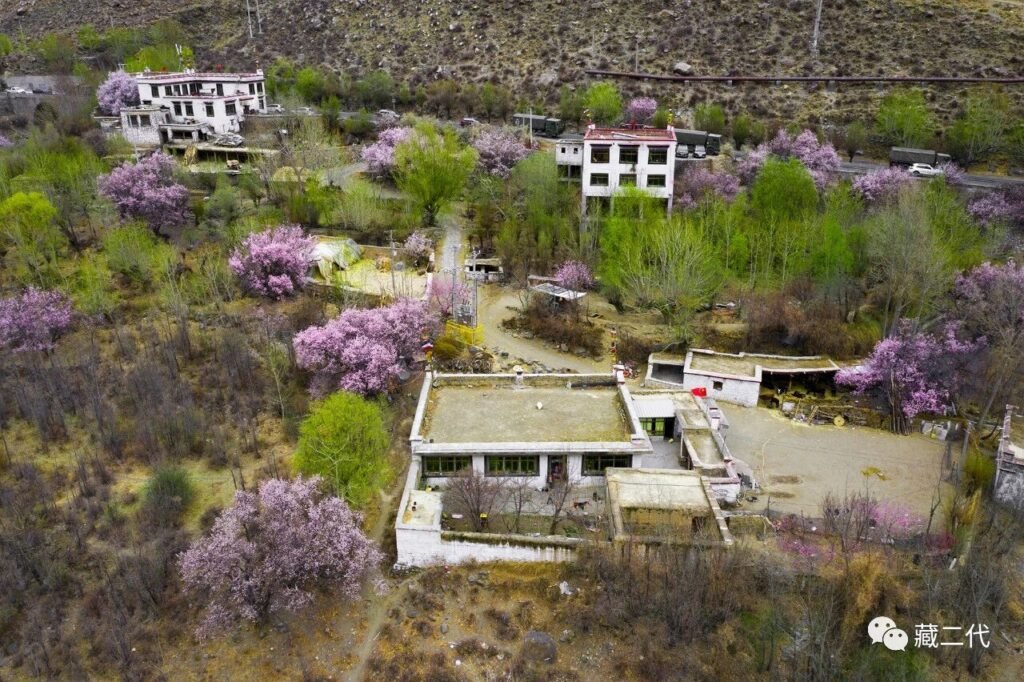
The G318 National Highway, one of the most iconic roads in China and Tibet, runs directly through Peach Blossom Village. Thanks to this prime location, many travelers driving toward Lhasa or Shannan naturally stop here during blossom season.
From the roadside, visitors can look out over farmland and village houses surrounded by peach trees. The blossoms appear like floating pink clouds scattered across the plateau, creating a scene that feels both gentle and powerful against Tibet’s vast landscape.
Snow Mountains, River Mist, and Blossoms in Perfect Harmony
What makes Peach Blossom Village truly special is its dramatic natural setting. In the distance, snow-capped mountains rise silently. Nearby, mist drifts up from the Yarlung Tsangpo River, wrapping the village in a soft haze. Against this backdrop, the blooming peach trees glow even more vividly.
Some blossoms are pale pink or nearly white, appearing elegant and understated, while others are deep pink and striking. Together, they decorate the fields and hillsides of the Tibetan plateau, blending softness with the region’s rugged beauty.
A Sacred Land in Tibetan Folklore
Peach Blossom Village was once known as “Yuqu.” According to Tibetan folk legends, this area is considered a blessed feng shui land left behind by King Gesar, the heroic figure believed to be an emanation of Guru Padmasambhava.
This sense of sacred geography adds spiritual depth to the village, making it more than just a seasonal sightseeing spot. For many locals, the land itself carries history, faith, and protection.
Rich Vegetation and Diverse Forests
Peach Blossom Village boasts an impressive vegetation coverage rate of around 30%, making it one of the greener areas in the region. The village is surrounded by more than 20,000 acres of shrub forest, home to a wide variety of tree species.
Common trees found in the area include:
- Beijing poplar
- Long-stamen willow
- Xinjiang poplar
- Tibetan poplar
- Alpine cypress
This diverse plant life not only enhances the natural scenery but also supports local wildlife, creating a balanced and healthy ecosystem.
Wild Peach Trees and a Way of Life
The peach trees in Sema Village are mostly wild peach trees. Their fruit may be small, but it is known for its rich, sweet flavor. The village is home to just over 200 residents, and almost every household has a close connection with these trees.
In autumn, villagers harvest the peaches and sell them in simple paper boxes along the roadside. For many families, peach sales provide an important source of income.
One villager, Rigsang, now in his 50s, owns more than 40 peach trees. Selling peaches has become his family’s main livelihood. One of his trees is estimated to be over 300 years old. Like many villagers, he cannot say when the trees were first planted—only that they have existed for as long as he can remember.
Remarkably, these trees grow naturally, without pruning or special care. Yet every autumn, they bear abundant fruit, quietly supporting village life year after year.
More Than Flowers: Local Food at Peach Blossom Village
A visit to Peach Blossom Village is not only about enjoying spring scenery—it is also about tasting local flavors. In 1996, two sisters from Sema Village, Pubu Dolkar and Yangchen, noticed the growing number of visitors during peach blossom season. They opened the famous “Peach Blossom Village Liangfen Shop” beside the G318 Highway, under a century-old walnut tree.
During spring, tourists stop here to rest, take photos, and enjoy bowls of refreshing laphing, a traditional cold jelly dish. Over time, the shop has become a well-known stop for travelers passing through the area.
How Traditional Laphing Is Made
The laphing served here is made from mung bean starch, sourced from Tsalna Village along the Lhasa River. Each morning, the starch is mixed with water, poured into boiling water, and stirred continuously until smooth. The mixture is then cooled in large porcelain trays and soaked in cold water to set.
When guests arrive, the laphing is shaved into thin strips using a special tool and served with soy sauce, vinegar, garlic paste, carrot shreds, sesame paste, and chili oil. The process is quick, skillful, and satisfying to watch.
Enjoying this simple yet flavorful dish under the warm spring sun, surrounded by peach blossoms, is a pleasure many visitors remember long after leaving Tibet.
Yuqu Suspension Bridge: History and Scenic Charm
Another highlight of Peach Blossom Village is the Yuqu Suspension Bridge, built in the 1960s. For decades, it has played a crucial role in transporting irrigation water and connecting villagers from different areas of Qushui and Nakartse counties.
In 2012, the bridge was renovated with government funding, improving infrastructure while preserving its historical value. Today, it also serves as a scenic landmark. Prayer flags flutter above the Yarlung Tsangpo River, creating a striking and uniquely Tibetan view that attracts many visitors.
Traditional Willow Weaving: A Living Craft
Sema Village’s Fourth Group is well known for its traditional handwoven willow baskets. This craft has a long history and is admired for its fine workmanship, intricate patterns, and diverse styles.
These baskets have been showcased multiple times at the Lhasa Shoton Festival’s specialty product exhibitions, earning praise from both domestic and international visitors. Out of more than 30 households in the group, over 20 rely on willow weaving as a main source of income, earning an additional 8,000 yuan per household each year.
Peach Blossoms Along the Yarlung Tsangpo Canyon
Many travelers describe Peach Blossom Village as unforgettable. One visitor wrote that the road cuts through steep cliffs like a blade, while more than a thousand peach trees bloom along the southern bank of the Yarlung Tsangpo River. In the spring breeze, petals fall like fragrant rain into the river below.
Driving west after crossing the Yarlung Tsangpo Bridge, the river narrows about 50 kilometers from Qushui County, forming the famous Nyemo Canyon. Peach Blossom Village lies within this canyon area.
Surrounded by high mountains and nourished by river moisture, the village enjoys a unique microclimate. Spring arrives earlier here than in other places at the same latitude, allowing peach blossoms and green barley shoots to appear together.
A Quiet Village With Jiangnan Charm
Thousands of blooming peach trees and fresh green barley fields give Peach Blossom Village an unexpected Jiangnan-style elegance. Walking through the quiet lanes, visitors hear chickens and dogs, and occasionally the distant calls of villagers building new homes.
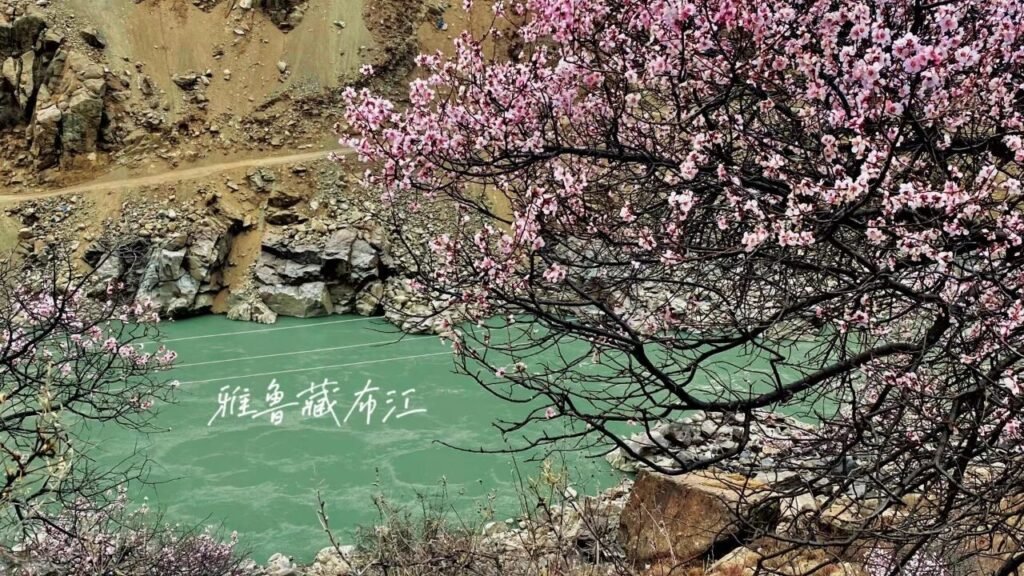
Near the Peach Forest Resort, over 300 peach trees bloom on the southern slopes above the river. Below, the Yarlung Tsangpo roars through the canyon, sending up mist that blends with snow mountains in the distance, creating a poetic and dreamlike scene.
Descending into the valley floor, more than 100 meters below, travelers find calm backwaters where massive rocks form small natural lakes with emerald-green surfaces. Just beyond, the river’s main current crashes through stone barriers with thunderous force—an unforgettable contrast of stillness and power.
This extraordinary blend of blossoms, river, mountains, and village life is what makes Peach Blossom Village one of the most enchanting spring destinations in Tibet.