A Living Folk Tradition from the Heart of Dingri
Deep in the scenic landscapes of Dingri County, Shigatse, a vibrant folk tradition continues to thrive—Dingri Lho-gzhas (Lhoshey), widely known as the Rural Circle Dance of Tibet. This unique Tibetan folk dance is not just a performance; it is a living expression of history, emotion, and community life passed down through generations.
Locally called “Dranyen Shabdro” meaning song and dance accompanied by the Dranyen, Lho-gzhas (Lhoshey) reflects the deep cultural roots of Dingri. Over time, it has absorbed influences from surrounding regions, shaping a rich artistic form that represents both tradition and adaptation within Tibetan culture.
Understanding Lho-gzhas (Lhoshey): The Meaning Behind the Dance
The Tibetan term Lho-gzhas (Lhoshey)translates as “southern song and dance.” Historically, Dingri was known as “Lho,” meaning the south, which explains the name and regional identity of this art form.
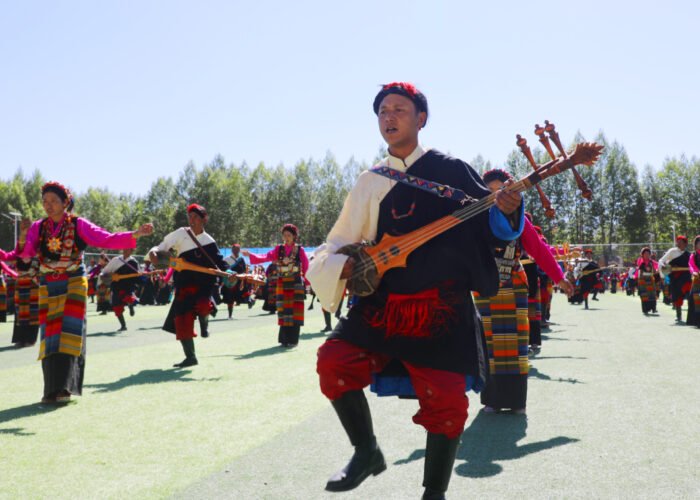
What makes Dingri Lhoshey dance distinctive is its strong connection between music, rhythm, and movement. Dancers wear special foot boots, using rhythmic footwork to express emotion while keeping upper body movement simple and grounded. This balance creates a powerful visual language that communicates joy, labor, love, and celebration without exaggerated gestures.
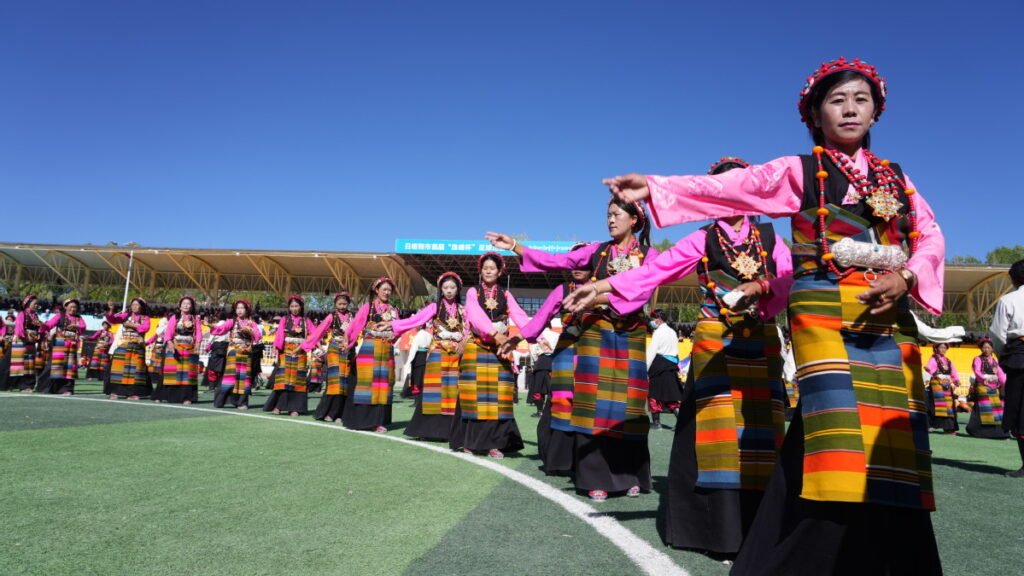
Dingri Dance is not merely danced—it is felt, sung, and shared collectively.
A Vast World of Melodies and Stories
According to local tradition, Lho-gzhas (Lhoshey)includes more than 108 types of melodies, drawn from both upper and lower snow regions of Tibet. Each melody may have multiple variations, allowing performers to adjust the rhythm, steps, and expressions to match the song’s mood.
The themes of these songs closely mirror daily life in Dingri, including:
- Labor and pastoral work
- Love and courtship
- Drinking songs and festive gatherings
- Praise songs and lyrical odes
This wide range of content makes Dingri Lhoshey Dance a cultural archive, preserving the emotions, values, and social life of Tibetan communities through music and movement.
Performance Style: Where Music and Community Meet
A traditional Dingri Lhoshey performance is a collective experience. Music, singing, and dance blend seamlessly, creating an atmosphere of shared joy and participation.
Key elements of the performance include:
- Zhanian guitar, providing strong rhythmic accompaniment
- Tibetan Jinghu, adding melodic depth
- Male performers singing and playing instruments
- Female dancers linking arms and moving in coordinated circular steps
Rather than focusing on individual skill, Lho-gzhas (Lhoshey)emphasizes unity, harmony, and community involvement, making it especially popular during festivals, celebrations, and social gatherings.
Regional Styles and Local Variations
Geography plays an important role in shaping the character of Lho-gzhas (Lhoshey). The Pengqu River serves as a natural dividing line for regional styles:
Southern Style: Pazhu Lho-gzhas (Lhoshey)
Known for its flowing melodies and expressive rhythm, this style highlights emotional singing and steady dance movements.
Northern Style: Qiang-gzhas (Duoi-gzhas)
This variation features stronger rhythms and distinctive melodic patterns, reflecting different historical and cultural influences.
Beyond this north–south distinction, villages and townships across Dingri contribute their own interpretations, creating a rich mosaic of musical and dance traditions within the broader Lho-gzhas culture.
From Ancient Roots to Contemporary Expression
Tanglu: The Ancient Form of Dingri Lhoshey
The earliest form of Dingri Lho-gzhas (Lhoshey) is known as Tanglu. This traditional style relies primarily on drums, without the use of modern string instruments like the six-string guitar or the three-stringed Hu.
Tanglu is characterized by:
- Slow, steady singing
- Powerful running spins and jumps
- Bold rhythmic patterns
- A raw and resonant sound
Despite its slower pace, Tanglu carries strong emotional energy, expressing happiness, vitality, and the rhythm of Tibetan life.
The Modern Evolution of Lho-gzhas
As Lho-gzhas (Lhoshey) evolved, performers began incorporating six-string guitars and the three-stringed Hu, introducing new tuning systems that blend high and low tones. This innovation added depth to the music while preserving the traditional singing style.
The combination of old melodies with new instruments created a distinctive modern sound, allowing Lhoshey to adapt to contemporary stages while staying true to its cultural roots.
Cultural Recognition and Major Milestones
Over the years, Dingri Lho-gzhas has moved from village gatherings to national and international stages.
Notable moments include:
- 2006: Performers from Xieger Town debuted Lho-gzhas in the “Mount Everest Rainbow” performance
- 2007–2008: Appearances in Shanghai and at the Tibet Autonomous Region Spring Festival Gala
- 2013: Featured on CCTV and awarded a Special Honors Award
- 2015: Won the CCTV Tibetan Original Ecology Song and Dance Gold Award
These performances helped introduce Lho-gzhas (Lhoshey) to a wider audience while strengthening pride in Tibetan folk culture.
National Intangible Cultural Heritage Status
On June 7, 2008, Dingri Lho-gzhas was officially recognized by the State Council of China as part of the National Intangible Cultural Heritage List. This designation highlights its cultural value and ensures long-term preservation.
In 2018, artist Ouzhu was named a national representative inheritor of Dingri Lho-gzhas, acknowledging his role in protecting and passing on this important tradition.
The Mount Qomolangma Lho-gzhas (Lhoshey)Cultural Tourism Festival
Since 2005, Dingri County has hosted the annual Mount Qomolangma Lhoshey Cultural Tourism Festival, which has been held more than 18 times.
The festival features:
- Lho-gzhas (Lhoshey) performances
- Bonfire celebrations
- Tibetan opera
- Traditional folk arts and music
This event plays a vital role in keeping Lho-gzhas alive while promoting cultural tourism in the Mount Everest region.
A Tradition That Continues to Grow
Dingri Lho-gzhas (Lhoshey) remains a dynamic cultural expression—shaped by history, enriched by creativity, and sustained by community participation. Through its melodies, rhythms, and shared movements, it continues to reflect the spirit of Dingri and the broader Tibetan plateau.
As both an ancient folk art and a living tradition, Lhoshey keeps evolving—carrying forward stories of the past while adapting to new stages, audiences, and cultural spaces.