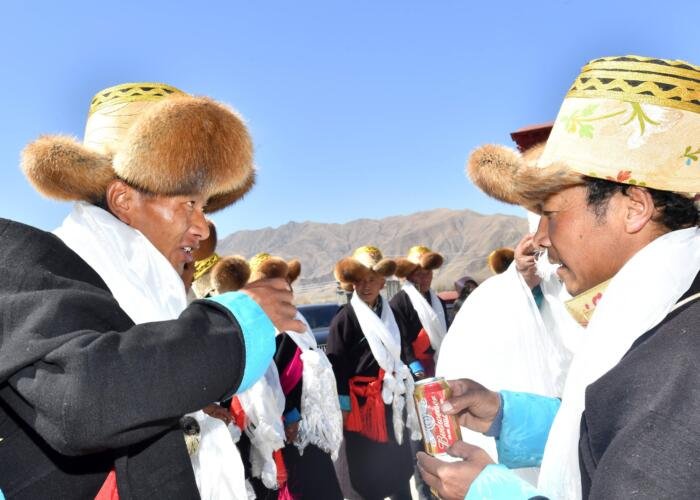
Dingri, located on the high plateau of Tibet, is a land where daily life closely follows the rhythms of nature and spiritual belief. Local festivals are not simply celebrations—they are rituals deeply connected to agriculture, protection, and harmony between humans and the land. Among these traditions, the Tibetan New Year and the Seyang Festival stand out as the most important cultural events in Dingri.
These festivals reflect centuries-old beliefs rooted in Tibetan Buddhism, soul worship, and farming traditions that continue to shape community life today.
Tibetan New Year in Dingri: Cleansing, Protection, and Renewal
The Ritual of Driving Away Evil Spirits
The Tibetan New Year is a time of spiritual renewal and purification. In Dingri, preparations begin on the 29th day of the 11th month of the Tibetan calendar, when families gather for an important ritual designed to remove negative forces from the household.
As night falls, family members sit together to eat “Gutu,” a special dinner made from nine different foods. This meal symbolizes the closing of the old year and the removal of misfortune.
Tsampa Ritual: Transferring Bad Luck
After dinner, the head of the household prepares balls of Tsampa, a traditional dough made from roasted barley flour. Each family member has the dough gently rubbed over their body and clothes. According to belief, illnesses, bad luck, and evil spirits attached to a person are transferred into the Tsampa balls.
These balls, along with leftover Gutu, are then placed into a broken pot, symbolizing an offering to the spirits that must be sent away.
Fire, Shouting, and Letting Go
The ritual reaches its climax when the male head of the household lights a torch and scorches every corner of the home. Fire is believed to force harmful spirits out of hiding. He then runs outside, followed by the female head carrying the pot of “ghost food,” while the rest of the family shouts loudly:
“Ghosts, come out!”
At a nearby crossroads, the torch and pot are discarded, and the family returns home joyfully, marking a clean and protected start to the New Year.
The Sacred White Stone Tradition
In rural Dingri, the ritual includes bringing home a large round white stone after the ceremony. This stone replaces the one from the previous year and represents the arrival of benevolent deities into the household. It later plays an important role in agricultural rituals tied to the Seyang Festival.

The Seyang Festival: Honoring the Soul of the Harvest
Understanding the Meaning of “Seyang”
The Seyang Festival, also known as the Harvest Viewing Festival, centers on the concept of g.yang, which represents blessings, fortune, wealth, happiness, and prosperity. In Dingri belief, all living things—including crops—possess a soul.
Barley and wheat, the region’s most important crops, are thought to have souls that directly influence harvest success.
Calling Back the Barley’s Soul
As barley ripens and turns golden, its soul becomes especially active and may wander away. If this happens, farmers fear poor yields or crop failure. To prevent this, rituals are performed to call back the soul of the barley, keeping it safely within the fields until harvest.
One of the most important ceremonies is the first cutting of barley, which is offered to the mountain gods in a ritual known as “Sacrifice to the Mountain.” This act expresses gratitude and asks for continued protection.
Lado: The Sacred White God Stone of Dingri
Guardian of the Fields
Before spring plowing and after the autumn harvest, Dingri farmers perform rituals at a sacred object known as the White God Stone. Each household places a large round white stone—brought home during the Tibetan New Year—at the center of their fields.
This stone is called “Lado” in Dingri and is believed to be the guardian spirit of the barley’s soul.
A Divine Presence in Agriculture
Locals believe the Lado stone is an incarnation of the Dragon Maiden, a protective deity connected to fertility and abundance. Rituals performed at the stone are meant to ensure stable weather, healthy crops, and family prosperity.
Through these practices, agriculture becomes a sacred act, blending spiritual devotion with everyday farming life.
Festivals Rooted in Land, Faith, and Community
The Tibetan New Year and Seyang Festival in Dingri are deeply tied to the agricultural calendar and the belief that humans, spirits, and nature must remain in balance. These traditions reinforce community bonds, respect for the environment, and the spiritual values passed down through generations.
In Dingri, festivals are not performances for spectators—they are living traditions that continue to guide how people understand the world around them.