Cordyceps from Biru County: A World-Renowned Plateau Treasure
Among all Tibetan specialties, Cordyceps (Ophiocordyceps sinensis) from Biru County stands at the very top. Revered for its rarity and medicinal value, Biru Cordyceps enjoys an exceptional reputation not only across Tibet, but also in the international herbal and health supplement market.
Known locally in Tibetan as “Yartsa Gunbu”, Cordyceps is often called the “King of Tibetan Herbs”. It grows only in pristine high-altitude environments, making Biru County—often referred to as the Hidden Paradise of Naxiu—one of its finest natural habitats.
Core Cordyceps-Producing Areas in Biru
| Area Name | Location | Key Features |
|---|---|---|
| Yagong Grassland | Northern Biru County | Primary Cordyceps-producing area and an important yak habitat; connected to the Medica Grassland |
| Kangqila Mountain Region | Central Biru County | Includes Yangda Valley, Sixiu Valley, and Zhala Valley—world-class high-quality Cordyceps zones |
| Yangxiu Township (Sapukangri Sacred Mountain Area) | Eastern Biru County | Ultra-high-altitude pristine meadows near glaciers and sacred lakes; exceptional Cordyceps quality |
| Baiga Township, Xiaqü Town, and others | County-wide | Cordyceps found across all 8 townships and 2 towns, with wide distribution |
Natural Advantages for Cordyceps Growth
- Climate: Average annual temperature below 0°C, extreme day–night temperature differences (up to 30°C), strong ultraviolet radiation, cold and low-oxygen conditions
- Soil: Deep permafrost layers, selenium-rich soil nourished by glacier meltwater, and zero industrial pollution
- Growth Cycle: A long 4–5 year growth period, which is 1–2 years longer than lower-altitude regions, allowing fuller accumulation of active compounds
Quality Characteristics: The “Gold Standard” of Premium Cordyceps
Visual and Physical Features
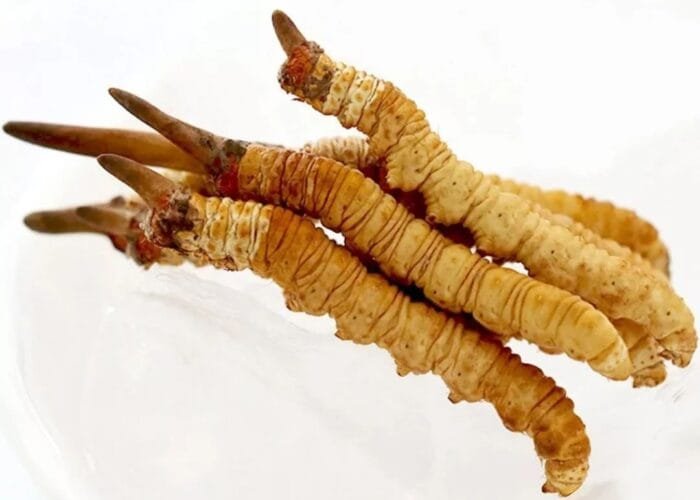
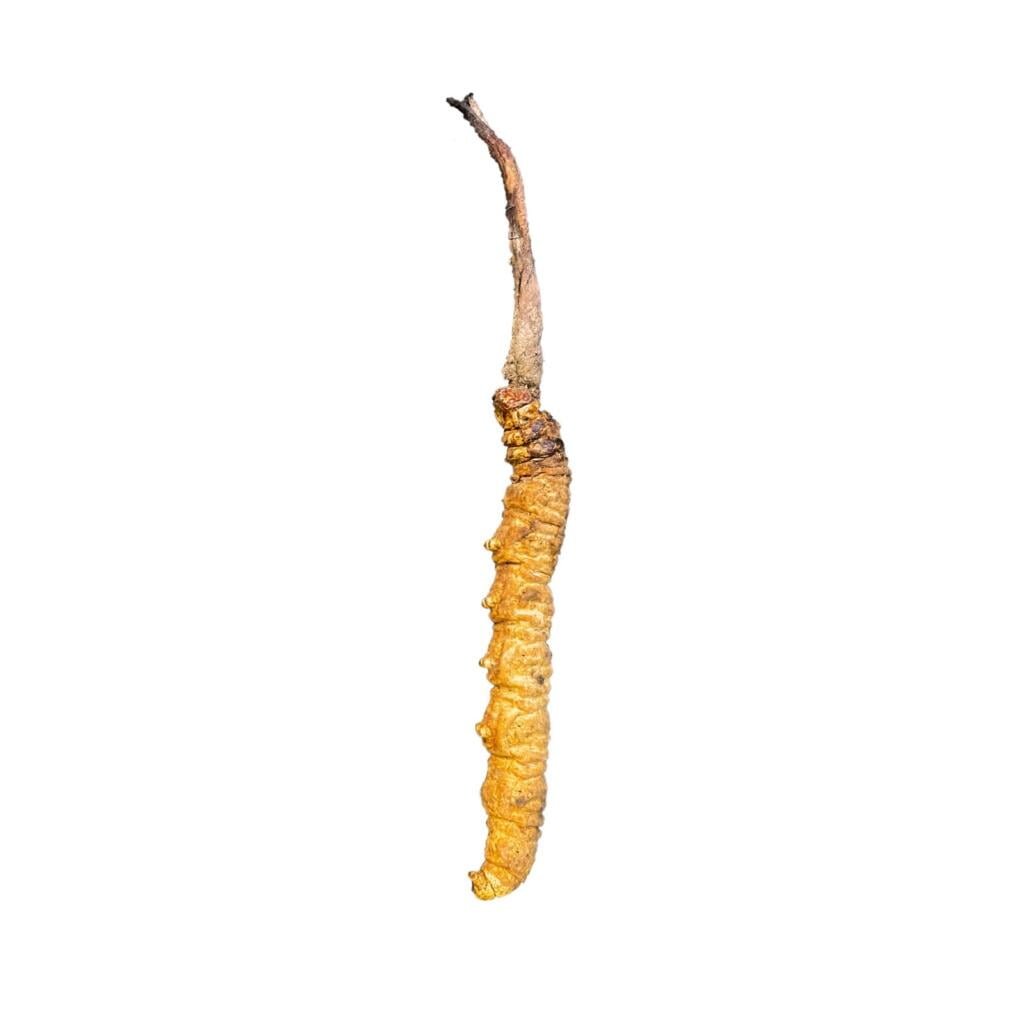
- Color: Deep golden-yellow worm body with a natural oily sheen; grass head shows a gradient from black at the base to brown in the middle and yellow at the tip
- Shape: Thick, plump body with dense and clear ring patterns; slender grass head; overall well-proportioned form
- Size: Length of 3–6 cm, diameter of 4–7 mm
- Texture: Firm and heavy when dried; white cross-section with a solid core
- Aroma: Strong, pure mushroom fragrance with no off-odors
The worm body is covered with fine wrinkles and has eight pairs of legs, with the middle four pairs most clearly visible—an important feature used to identify authentic wild Cordyceps.
Active Compounds and Nutritional Advantages
Authoritative testing shows that Biru Cordyceps contains:
- Cordycepin: ≥0.035%, significantly higher than the industry average of about 0.02%
- Adenosine: ≥0.06%, ranking among the highest across Nagqu production areas
- Other Components: Rich in Cordyceps polysaccharides, amino acids, vitamins, and trace elements, supporting its high medicinal value
What Is Cordyceps? The “Winter Worm, Summer Grass”
Cordyceps is a unique organism formed by the union of an insect and a fungus. It develops from the larva of a ghost moth (Hepialus armoricanus), which lives underground in alpine grasslands.
During winter, the fungal spores infect the larva and gradually consume it from within, turning it into a hardened structure known as a sclerotium. When summer arrives, a slender, dark-brown fungal stalk grows upward from the head of the mummified larva and breaks through the soil surface.
Cordyceps in Tibetan and Traditional Chinese Medicine
Cordyceps is regarded as one of the “Three Great Tonics” in traditional medicine, alongside ginseng and deer antler. For centuries, it has played a vital role in both Tibetan medicine and Traditional Chinese Medicine (TCM).
Traditionally, Cordyceps is used to:
- Nourish the lungs and kidneys
- Tonify Qi (vital energy)
- Improve overall vitality and endurance
It is commonly prescribed for conditions such as:
- Chronic cough and asthma
- Hemoptysis (coughing up blood)
- Spontaneous sweating
- General weakness and fatigue
- Impotence and lower back weakness
Because of its gentle yet powerful effects, Cordyceps is suitable for long-term nourishment rather than short-term stimulation.
Modern Scientific Research on Cordyceps
Modern studies have confirmed the exceptional nutritional and medicinal value of Cordyceps. Research shows that it contains:
- Approximately 7% hydroxyethyl acids
- About 25% protein
- Around 8.4% fat
These components make Cordyceps a high-grade natural health supplement. Scientific research has also identified its potential to:
- Regulate and strengthen the immune system
- Support respiratory and kidney function
- Exhibit anti-tumor properties
- Improve physical endurance and recovery
These findings help explain why Biru Cordyceps remains highly prized in both traditional medicine and modern wellness markets.
Cordyceps Harvesting Season in Biru County
According to regulations for 2025, the official Cordyceps harvesting season in Biru County runs from:
May 15 to July 3 (49 days) — starting five days earlier than some other counties in Nagqu. A widely followed traditional guideline among local herders is the “20 days after snowmelt” rule. Cordyceps collected within this window has just emerged from the soil and contains the highest nutritional concentration. During this period, thousands of local residents head to high-altitude grasslands to carefully search for the precious fungus.
Because harvesting takes place in remote areas and unpredictable weather conditions, safety is a major concern. The Tibet Meteorological Bureau invested 600,000 yuan to establish a Cordyceps Meteorological Service Center in Biru County.
This specialized platform provides:
- Real-time weather forecasts
- Early warnings for sudden storms and temperature drops
- Guidance on optimal harvesting periods
- Monitoring of Cordyceps growth conditions
By combining traditional knowledge with modern technology, the service center helps protect local collectors while supporting the sustainable development of Biru’s most valuable natural resource.
Traditional Harvest Practices
- Preparation: Herders carry small hoes, bamboo tools, and cloth bags; harvesting begins early in the morning to avoid strong sunlight
- Searching: Identification relies on spotting the purplish-red fruiting body protruding from the soil
- Digging: Excavation is done from the side to keep the worm body intact
- Initial Handling: Fresh Cordyceps is wrapped in moist soil to preserve freshness, then cleaned and air-dried at home
Cultural Rules and Taboos
- Do not damage turf or grass roots
- Do not collect immature Cordyceps
- Follow the principle of “harvest the mature, protect the young”
Management Policies and Ecological Protection
Legal Status
Cordyceps in Biru County is classified as a National Class II Protected Wild Plant and falls under the protected “Nagqu Cordyceps” geographical indication.
Key Management Measures
Under the Biru County Cordyceps Harvesting Management Regulations, the following policies are strictly enforced:
- Permit System: Harvesting is allowed only with official licenses
- Zoned Management: Designation of prohibited, restricted, and permitted harvesting zones
- Environmental Requirements: Mandatory soil refilling and grass restoration after digging; use of large destructive tools is prohibited
- Time Restrictions: No harvesting outside the official season; cross-regional harvesting is forbidden
- Responsibility System: County and township governments implement accountability mechanisms and provide ecological education to herders
Ecological Protection Results
Through scientific management and community participation, Cordyceps resources in Biru County have shown signs of recovery in several areas, while maintaining the overall balance of the alpine grassland ecosystem.
Economic Value and Industrial Importance
Market Prices
High-quality Biru Cordyceps typically sells for 120–150 RMB per gram, while premium-grade specimens—characterized by thick bodies and short grass heads—can exceed 200 RMB per gram, far higher than Cordyceps from ordinary regions.
Economic Contribution
- The Cordyceps industry contributes over 60% of average household income for local farmers and herders
- Biru accounts for approximately 20% of Nagqu City’s total Cordyceps output
- The industry stimulates related sectors such as transportation, processing, and trade, driving regional economic growth
Brand Recognition
With its core advantages of high altitude, high quality, and high biological activity, Biru Cordyceps has become a flagship brand of Nagqu Cordyceps, highly valued in domestic and international high-end health markets.
How Biru Cordyceps Differs from Other Regions
| Comparison Item | Biru County Cordyceps | Lower-Altitude Regions (Sichuan, Yunnan) |
|---|---|---|
| Altitude | 4,600–5,100 m | 3,500–4,000 m |
| Growth Cycle | 4–5 years | 2–3 years |
| Worm Body | Thick and plump, fine rings | Slender, coarser rings |
| Color | Deep golden with oily sheen | Pale yellow to yellow-brown |
| Cordycepin Content | ≥0.035% | ~0.02% |
| Market Price | 120–150 RMB/g | 60–100 RMB/g |
Biru County Cordyceps stands out due to its non-replicable high-altitude environment, extended growth cycle, and strict ecological management, making it one of the most prized forms of wild Cordyceps on the Tibetan Plateau.