
The Tibetan Snowcock (Tetraogallus tibetanus) is one of the world’s highest-living birds, thriving in the rugged landscapes of the Tibetan Plateau. Known for its resilience and remarkable adaptations, this alpine gamebird perfectly represents the raw beauty and extreme conditions of Tibet. Found in oxygen-thin air and rocky terrain where few species can survive, the Tibetan Snowcock is a true symbol of mountain endurance.
What Is the Tibetan Snowcock?
Belonging to the pheasant family (Phasianidae), the Tibetan Snowcock is a large, plump bird built for life at altitude. Slightly smaller than the Himalayan Snowcock but equally robust, adults typically measure 50–60 cm in length, with males often larger than females.
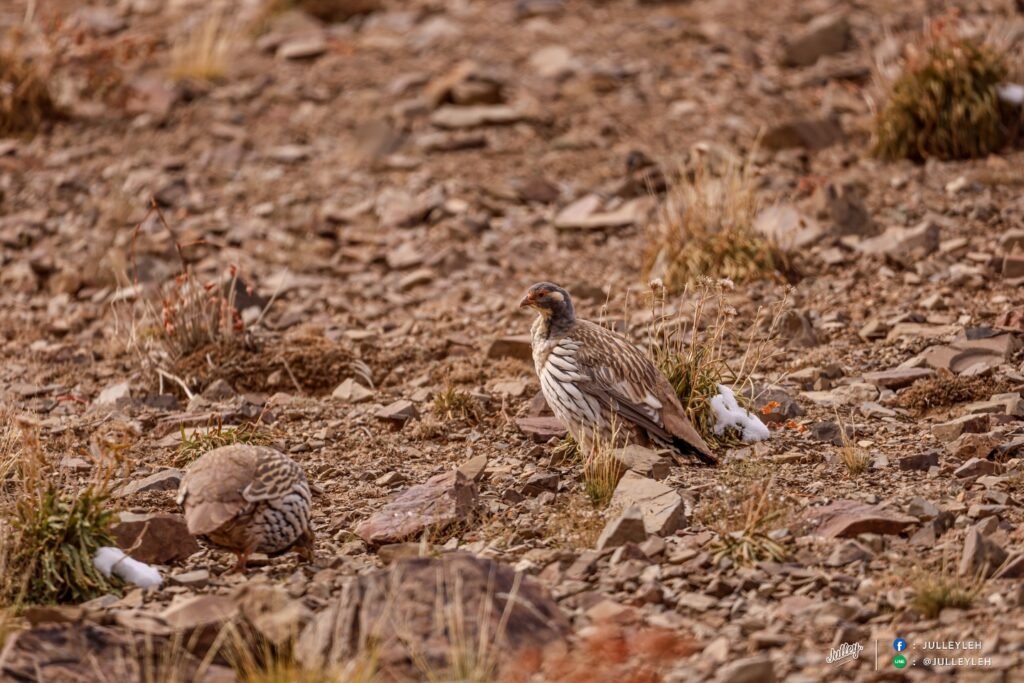
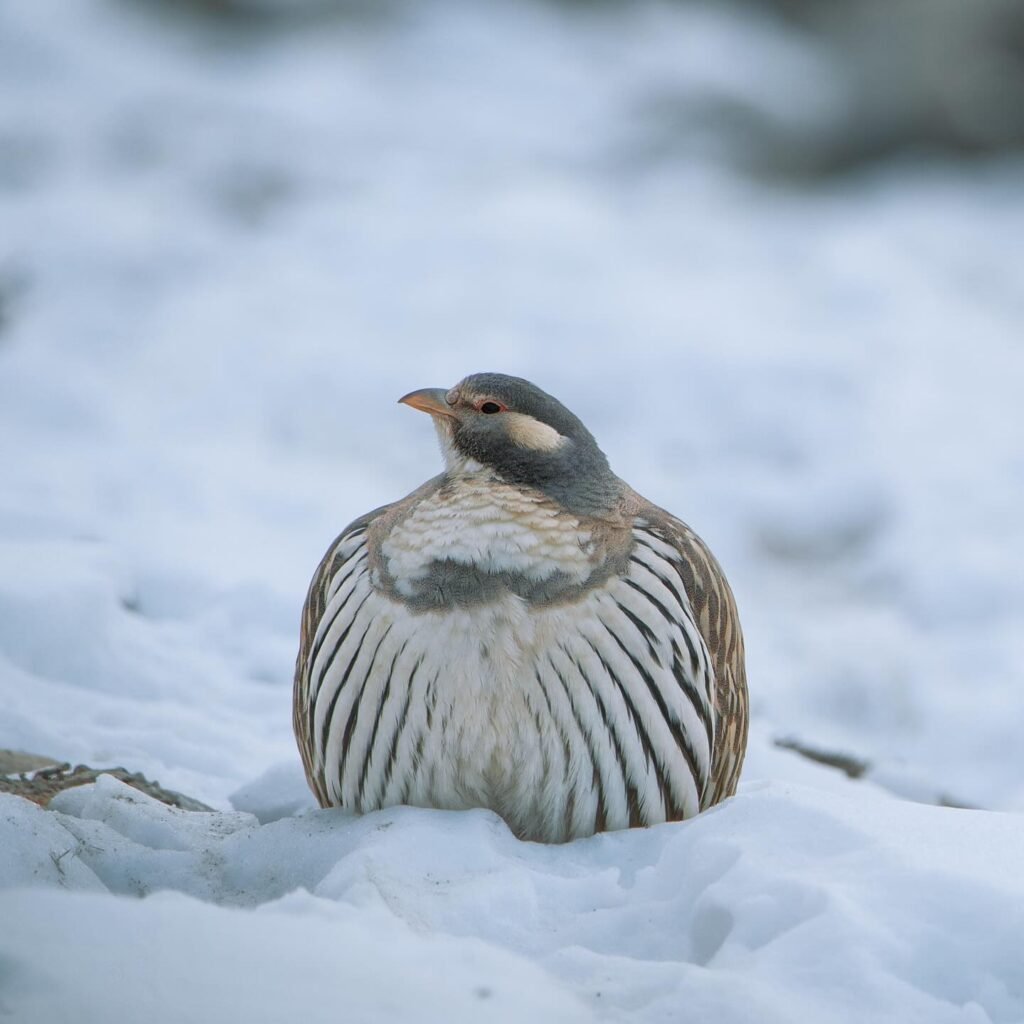
Its natural camouflage allows it to blend seamlessly into rocky slopes and snow patches, making sightings both challenging and rewarding for birdwatchers exploring Tibet.
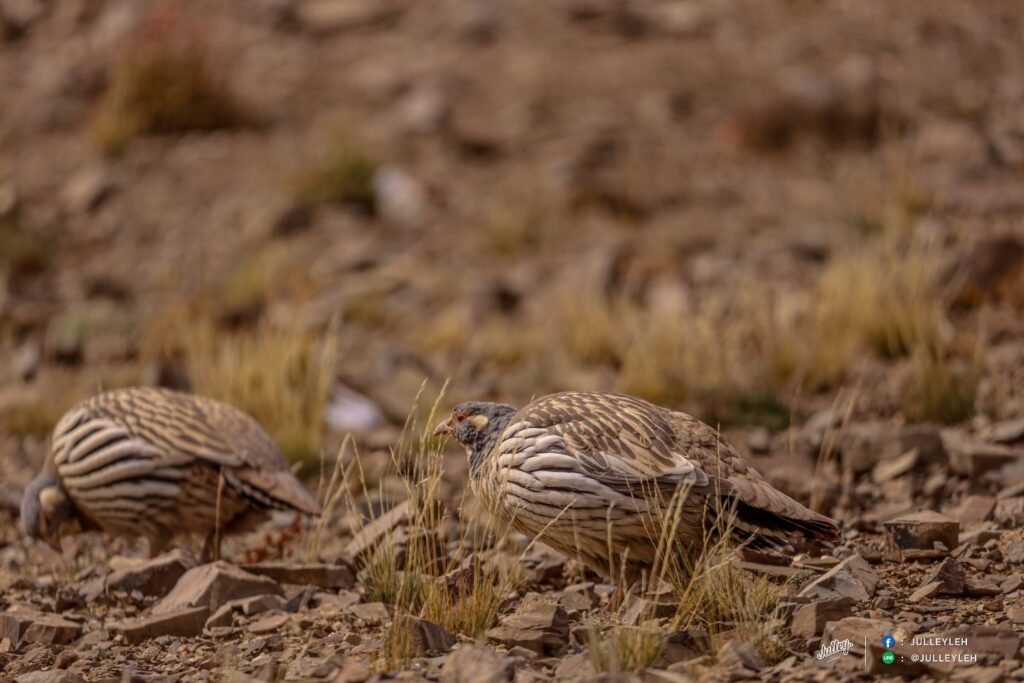
Key Identification Features
Recognizing a Tibetan Snowcock becomes easier once you know what to look for:
- Greyish head and neck with a striking white crescent-shaped patch behind the eye
- Often shows a bright orange bare skin patch near the eye
- Clean white throat and snowy underparts marked with bold black streaks
- Brown upperparts with heavy black-and-white striping
- In flight, the wings reveal a broad white trailing edge, highly visible against alpine terrain
These markings provide excellent camouflage against lichen-covered rocks, scree slopes, and sparse vegetation.
Habitat: Life Above the Tree Line
Few birds occupy such an extreme vertical range. The Tibetan Snowcock typically lives between 3,000 and 6,000 meters, moving closer to the snow line in summer and descending slightly during severe winters.
Preferred Environments
- Alpine tundra
- Open grasslands
- Rocky ridges and boulder fields
- High shrublands
- Gentle slopes with limited vegetation
Their range stretches across the Western Himalayas, including Ladakh, Nepal, Bhutan, and Pakistan, as well as the Pamirs of Tajikistan and vast areas of the Tibetan Plateau.
Two commonly recognized subspecies reflect regional variation:
- T. t. tibetanus – Western populations
- T. t. henrici – Eastern Tibet
Adaptations for Extreme Altitudes
Living at elevations sometimes called the “Zone of Death” demands extraordinary biological advantages.
Low-Oxygen Efficiency
Their blood has a strong affinity for oxygen, enabling them to remain active in air that contains significantly less oxygen than at sea level.
Natural Insulation
Dense plumage protects them from freezing temperatures and powerful mountain winds.
Energy-Saving Movement
Snowcocks often walk uphill in the morning to forage and glide downhill at dusk to roost, conserving energy while minimizing heavy flight.
Camouflage Mastery
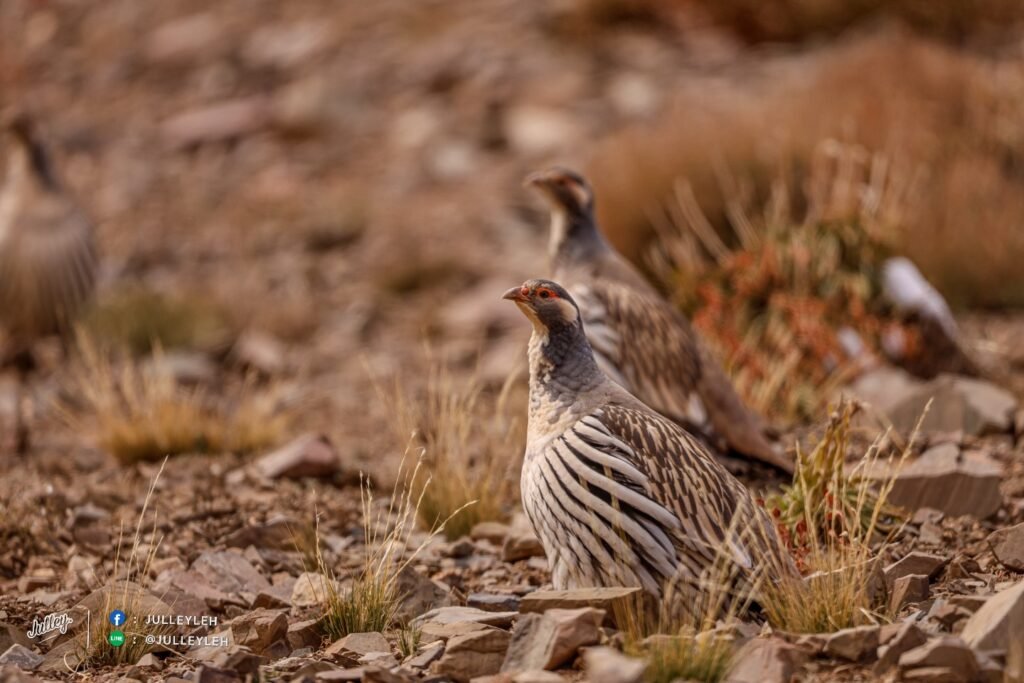
Their mixed grey, buff, and white plumage makes them nearly invisible against rocky slopes—a critical defense against predators such as eagles, foxes, and even snow leopards.
Behavior and Daily Life
Despite the harsh environment, Tibetan Snowcocks are surprisingly social birds.
- Covey Living: They typically gather in small groups of 5–15 birds, foraging together across alpine meadows.
- Built-In Security System: While others feed, one bird often stands guard from a higher rock, scanning for danger.
- Alarm Calls: If threatened, they produce loud, echoing whistles that carry across valleys, alerting the entire group.
- Flight as a Last Resort: Rather than immediately taking off, they prefer running uphill. When forced into the air, they launch from ridges and perform long, controlled glides marked by distinctive wing flashes.
Diet and Feeding Habits
The Tibetan Snowcock is primarily a ground forager, active during daylight hours.
Typical foods include:
- Roots and tubers
- Seeds and grasses
- Bulbs
- Moss and alpine herbs
- Occasional insects
Their feeding strategy aligns perfectly with the sparse vegetation of high-altitude ecosystems.
Breeding Season
Breeding generally occurs between mid-May and July. Chicks are precocial, meaning they can move and feed shortly after hatching—an essential survival trait in unpredictable mountain climates.
Conservation Status
The Tibetan Snowcock is currently listed as Least Concern on the IUCN Red List, thanks to its extensive range exceeding 500,000 square kilometers and no clear evidence of rapid population decline.
Protection and Monitoring
- Classified as a Class II protected species in China
- Included in CITES Appendix I, restricting international trade
Potential Future Threats
- Climate change and shifting alpine habitats
- Glacial retreat
- Overgrazing by livestock
- Localized human expansion
Fortunately, the region’s complex terrain may help preserve microhabitats that support long-term stability.
Birdwatching Tips: How to Spot Tibetan Snowcocks in Tibet
Observing these masters of altitude requires patience, preparation, and a bit of luck.
Best Time to See Them
- Summer (June–August): Peak activity at higher elevations
- Spring and fall: Birds may appear slightly lower
- Early morning or late afternoon: Ideal for sightings and listening for calls
How to Locate Them
- Listen for hoarse, crow-like calls echoing off mountain slopes
- Scan rocky areas using binoculars or a spotting scope
- Maintain distance to avoid flushing the birds
Recent travel reports from 2025–2026 confirm reliable sightings in several protected regions.
Top Places to See Tibetan Snowcocks
Shuksep (Near Lhasa)
Alpine ridges and slopes offer excellent opportunities for close views. Many guided tours report consistent encounters here alongside spectacular plateau scenery.
Kanda Shan and Eastern Tibetan Highlands
Rocky pastures and boulder fields create ideal habitats. Multi-day treks provide immersive wildlife experiences.
Namtso and High Mountain Passes
At elevations around 4,500–5,000 meters, scan open tundra near lakes for distant coveys while enjoying dramatic Himalayan backdrops.
Pro Birdwatching Tips
- Travel with experienced local guides familiar with calls and terrain
- Wear layered clothing to handle sudden weather changes
- Choose earth-tone outfits to blend into the environment
- Stay on designated trails to minimize ecological impact
- Never feed or approach wildlife closely
International visitors should arrange necessary travel permits through authorized Tibet tour operators to combine birdwatching with cultural highlights such as monasteries, sacred lakes, and Everest viewpoints.
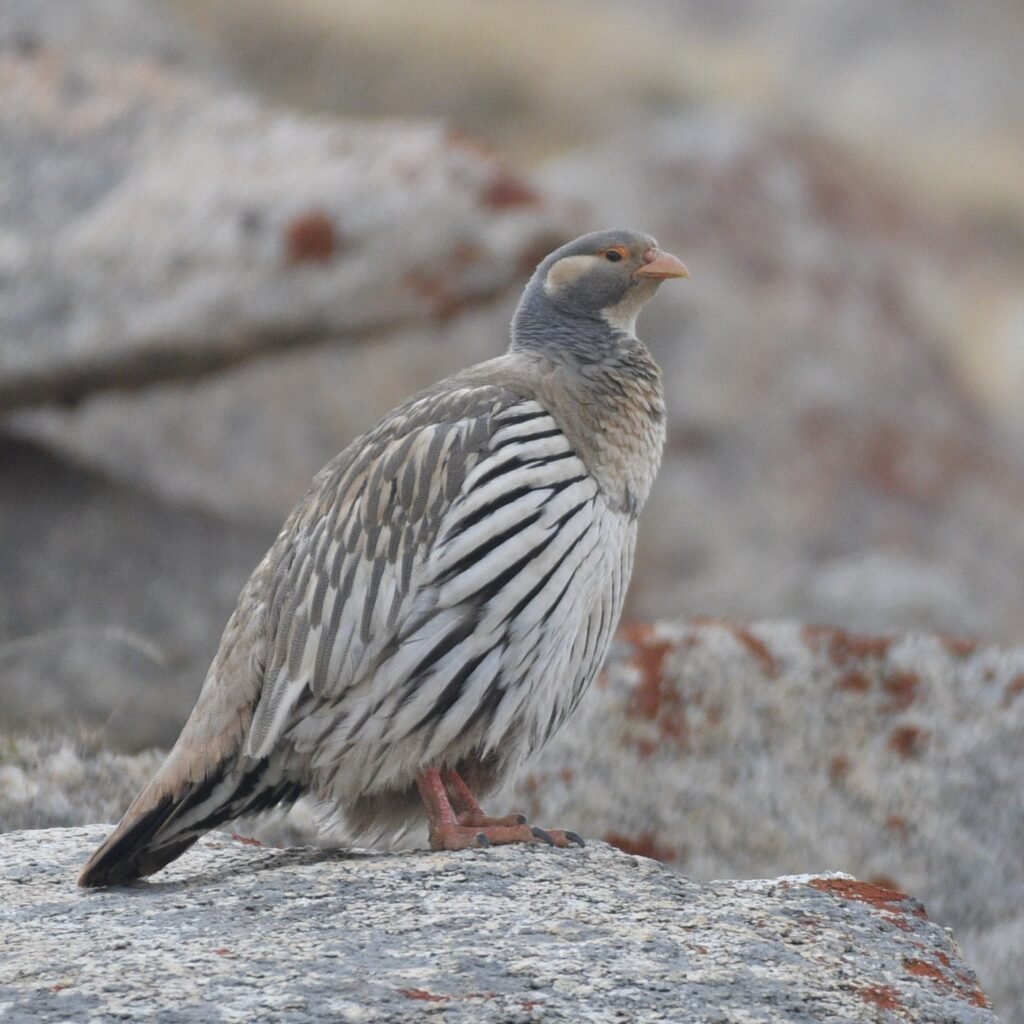
Tibetan Snowcock vs. Tibetan Partridge
Both species share high-altitude habitats, but key differences help with identification:
| Feature | Tibetan Snowcock | Tibetan Partridge |
|---|---|---|
| Size | Large, chicken-sized (50–70 cm) | Smaller (28–31 cm) |
| Underparts | White with bold black streaks | Buff with a dark belly patch |
| Throat | Clean white | Black-and-white facial mask |
Spotting the larger body and streaked underparts usually confirms you’ve found a Snowcock.
Often described as the “Sherpa of the bird world,” the Tibetan Snowcock doesn’t retreat from harsh winters—it embraces them, remaining high above the tree line while many other species migrate downward.