

As winter slowly loosens its grip on the Tibetan Plateau, subtle signs of renewal begin to appear across forests and mountain valleys. Among the most enchanting of these seasonal arrivals is the Indian Blue Robin (Larvivora brunnea)—a small yet brilliantly colored bird whose melodic whistles echo through thawing woodlands. Often grouped with rufous-tailed robins in the Larvivora genus, this secretive flycatcher is widely celebrated as one of spring’s earliest messengers in high-altitude regions.
Despite its modest size, the Indian Blue Robin captivates birdwatchers with its vivid plumage, delicate song, and remarkable migration across the Himalayas. Spotting one in Tibet feels less like a simple wildlife encounter and more like discovering a hidden jewel of the forest.
Meet the Indian Blue Robin
Measuring just 14–15 cm in length, the Indian Blue Robin belongs to the Old World flycatcher family rather than the true robin lineage. What it lacks in size, it more than compensates for in beauty and character.
Striking Sexual Dimorphism
Male and female birds display noticeably different appearances:
- Male Indian Blue Robin: Deep indigo-blue upperparts, a bold white eyebrow stripe (supercilium), black lores, and a warm rufous-orange breast that fades into pale underparts. Rufous flanks add an extra burst of color.
- Female Indian Blue Robin: More understated, with olive-brown tones, pale underparts, and subtle scaling that provides excellent camouflage.
Both sexes frequently flick their tails, a behavioral trait that helps flush insects from leaf litter while making them easier to identify for attentive observers.
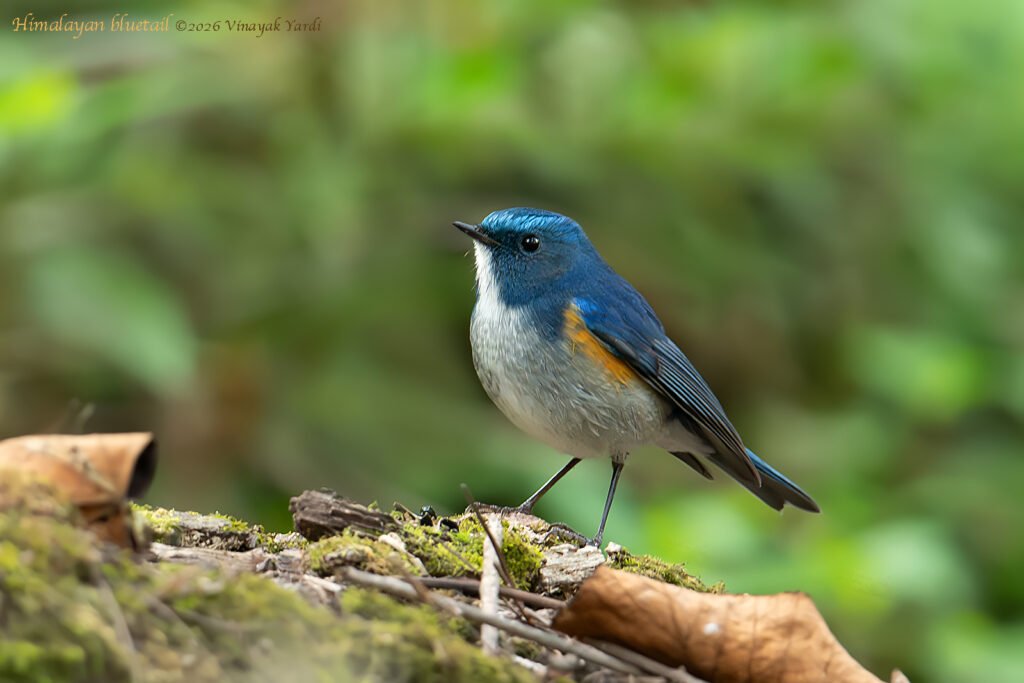
A Secretive Resident of Mountain Forests
The Indian Blue Robin thrives in moist, densely vegetated habitats, particularly:
- Mixed coniferous and deciduous forests
- Rhododendron thickets
- Bamboo groves
- Ravines near streams
Its cryptic coloring and ground-hopping lifestyle allow it to move quietly through tangled undergrowth. Rather than perching high in treetops, this bird prefers staying close to the forest floor, where it gleans insects, larvae, ants, and other small invertebrates.
Because of these habits, birdwatchers often hear the robin long before they ever see it.
The Bell-Like Song That Signals the Thaw
If the cuckoo is considered the loud announcer of spring, the Indian Blue Robin is its melodic heart.
Its song consists of high-pitched, silvery whistles—sometimes described as sounding like a tiny bell ringing through the mountains. These clear notes drift across valleys just as snow begins to melt and trickling streams return to life.
Why Their Song Matters
- Often heard from late March through May, aligning with early spring.
- Most active during the breeding season (May–July).
- Calls can travel surprisingly far in quiet mountain forests.
Yet these birds remain notoriously shy. Their preference for dense cover means even experienced birders may only catch a brief glimpse of a flicking tail before it disappears into foliage.
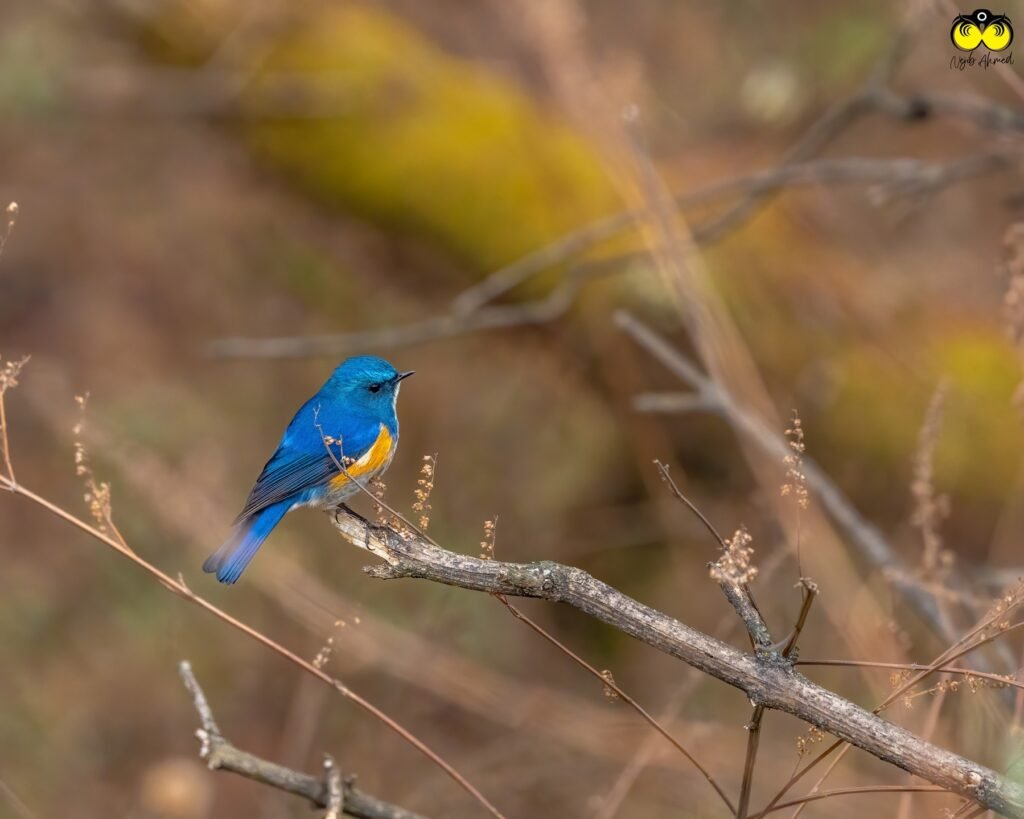
A Migration Marvel Across the Himalayas
The Indian Blue Robin undertakes one of the most impressive migrations relative to its size. Each year, it travels from tropical wintering grounds in southern India, Sri Lanka, and Southeast Asia to breeding territories stretching from northeast Afghanistan across the Himalayas to southeastern Tibet and parts of western China.
These tiny birds fly over some of the highest terrain on Earth to reach breeding elevations between 1,600 and 3,300 meters.
Their arrival coincides perfectly with rising temperatures, emerging insects, and newly accessible forest floors—making them a living symbol of seasonal transition.
Nesting Habits: Hidden Yet Remarkably Close
Indian Blue Robins construct cup-shaped nests using moss, dry leaves, roots, and fine grasses, often lining them with fur or feathers for insulation.
Typical nesting locations include:
- Ground depressions
- Root tangles
- Rock crevices
- Sheltered forest edges
Occasionally, they choose sites surprisingly close to human structures such as buildings, trails, or corridor pillars. In many Himalayan communities, this is viewed as a sign of good fortune.
Females typically lay 3–4 pale blue eggs, incubating them for about 12–14 days while both parents help feed the chicks once they hatch.
Rufous-tailed Robin vs. Indian Blue Robin: How to Tell Them Apart
Because both species inhabit similar environments, they are often confused. Look for these distinguishing traits:
| Feature | Rufous-tailed Robin | Indian Blue Robin (Male) |
|---|---|---|
| Upperparts | Olive-brown with reddish tail | Deep blue head and back |
| Underparts | Buff-white with scaly markings | Bright orange-chestnut breast |
| Face | Plain with pale eye-ring | Bold white eyebrow |
| Overall Impression | Subtle and earthy | Vibrant and unmistakable |
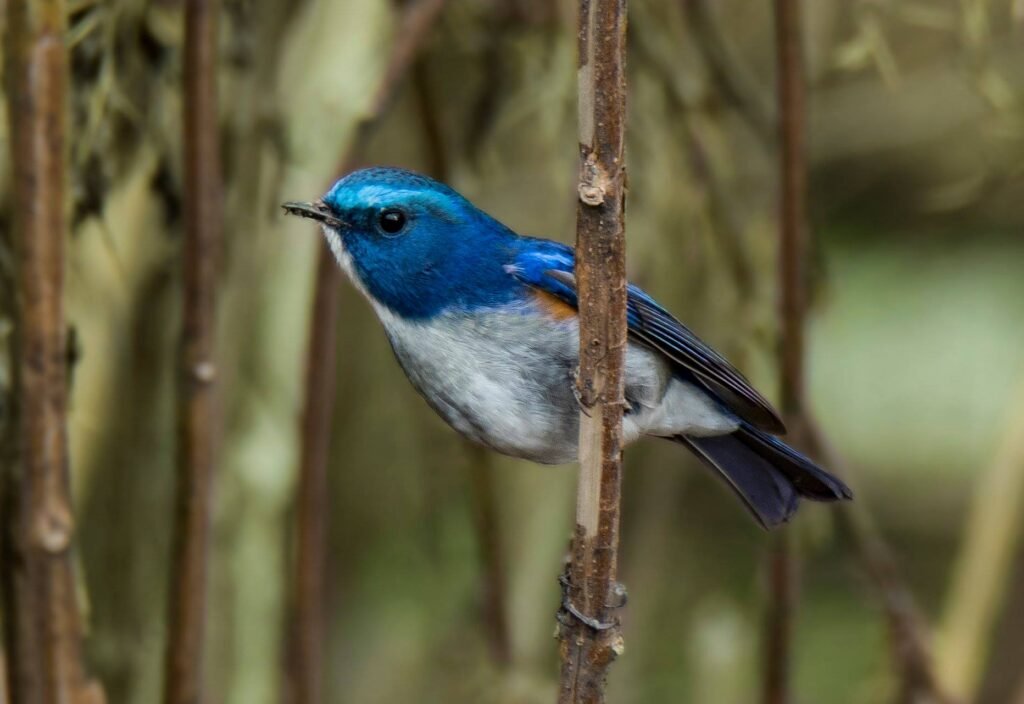
Behavior That Birdwatchers Should Know
- Ground forager: Rarely ventures far above the forest floor.
- Tail flicking: A classic sign of the rufous-tailed group.
- Skulking movement: Prefers hopping through cover rather than flying openly.
Observation Tip
Instead of scanning treetops, focus on shaded ground near dense shrubs. Watch carefully for slight movement or that signature “shivering” tail motion.
Conservation Status and Environmental Pressures
The Indian Blue Robin is currently classified as Least Concern, with a stable global population supported by protected forest habitats. However, like many migratory birds, it faces emerging challenges:
- Deforestation reducing breeding habitats
- Climate change altering migration timing
- Habitat fragmentation across mountain corridors
Protecting high-altitude forests ensures that future springs will continue to resonate with their delicate songs.
Best Places to Spot Indian Blue Robins in Tibet (Spring 2026)
These elusive birds are easiest to find during peak migration and breeding from April to June, when males sing actively at dawn.
Nyingchi Prefecture
Often called Tibet’s “Switzerland,” Nyingchi features lush rhododendron forests and bamboo groves around Basum Lake. Ravines and shaded trails frequently host breeding pairs.
Yarlung Valley
Just a few hours from Lhasa, wooded slopes near ancient temples provide ideal nesting habitats. The mix of culture and nature makes it a rewarding spring destination.
Mount Gongga Region
Near the western Sichuan border, high-altitude scrub and conifer forests attract migrating robins. Guided eco-treks often reveal them near streams and sheltered outposts.
Birdwatching Tips for a Successful Encounter
- Arrive at dawn: Singing peaks in the early morning.
- Listen first: Their bell-like call is often the best locator.
- Wear muted colors: Blend into the forest environment.
- Avoid bushwhacking: Protect fragile habitats.
- Bring binoculars: Essential for spotting movement in dense cover.
Spring weather in Tibet can still be chilly, especially in shaded forests, so layering is recommended.
For international travelers, remember that visiting many Tibetan regions requires a Tibet Travel Permit, typically arranged through licensed operators such as @tourtraveltibet. Pair birdwatching with monastery visits, alpine wildflower seasons, or scenic valley hikes for a richer spring journey.
Why the Indian Blue Robin Defines Spring on the Plateau
More than just a migratory bird, the Indian Blue Robin represents transformation. Its arrival mirrors melting snow, flowing streams, and forests returning to life after months of silence. Hidden in the undergrowth yet filling the air with music, this small flycatcher reminds travelers that some of Tibet’s greatest wonders are not always the most visible—but the most deeply felt.