
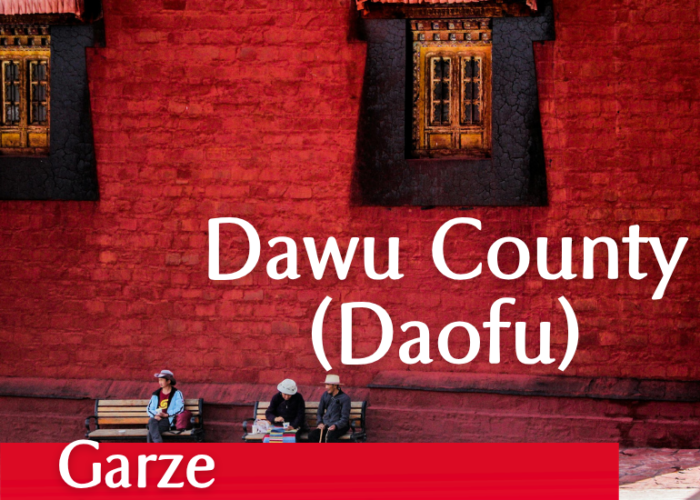
Dawu (Daofu County) – Hidden Beauty Beneath Yala Snow Mountain
Dawu County (རྟའུ་རྫོང་།) is located in northwestern Sichuan Province, China, under the administration of the Garzê Tibetan Autonomous Prefecture. Set on a wide open plateau along the Xianshui River, Dawu stands out as one of the most culturally distinctive destinations in western Sichuan. As you arrive in Xianshui Town, the county seat, the first thing that captures your attention is the iconic Khampa Tibetan houses—an architectural style unique to northern Kham. These fortress-like wooden homes, with bold colors and geometric forms, are more than just buildings. They are living expressions of local heritage.
Covering an area of 7,546 square kilometres, the county had a population of around 46,900 as of 2001. It lies approximately 219 km from Kangding and 585 km from Chengdu, making it an important gateway to the Tibetan regions of western Sichuan. Known for its strategic location and rich Tibetan culture, Dawu County is also marked by geological activity, with overland routes crossing rugged highland terrain. The region experienced a notable earthquake in January 1981, reflecting its position within an active seismic zone.
History of Daofu (Dawu) County
Daofu County, historically known as Dawu (meaning “foal” in Tibetan), has a well-documented historical evolution shaped by cultural exchange and political transformation.
From ancient times the region served as the core territory of the ancient Kingdom before being incorporated into the Tibetan Empire. During this period, it became a strategic crossroads where Tibetan and Han cultures interacted and merged.
In later dynasties, the tusi (native chieftain) system was firmly established. The northern route of the Tea Horse Road passed through this region, strengthening trade and communication. Modern administrative structures began in 1911 with the establishment of a governance office. In 1912, Dawu County was formally created and renamed Dawu County the following year.
After 1950, Dawu was peacefully liberated, and in 1951 the county government was officially established. In 1955, with the dissolution of Xikang Province, Daofu was incorporated into the Garzê Tibetan Autonomous Prefecture.
Dawu County Administrative Divisions
As of 2024, Dawu County administers 7 towns and 12 townships, with the county government located in Xianshui Town.
Towns (7)
| Name (English) | Simplified Chinese | Hanyu Pinyin | Tibetan |
|---|---|---|---|
| Xêqu (Xianshui) | 鲜水镇 | Xiānshuǐ Zhèn | ཤེལ་ཆུ་གྲོང་རྡལ། |
| Pamai (Bamei) | 八美镇 | Bāměi Zhèn | བ་སྨད་གྲོང་རྡལ། |
| Xagzig (Yazhuo) | 亚卓镇 | Yàzhuó Zhèn | བཞག་བརྩིགས་གྲོང་རྡལ། |
| Yukar (Yuke) | 玉科镇 | Yùkē Zhèn | གཡུ་མཁར་གྲོང་རྡལ |
| Zhungnyi (Zhongni) | 仲尼镇 | Zhòngní Zhèn | ཀྲུང་ཉི་གྲོང་རྡལ། |
| Gartar (Taining) | 泰宁镇 | Tàiníng Zhèn | མགར་ཐར་གྲོང་རྡལ། |
| Waxab (Wari) | 瓦日镇 | Wǎrì Zhèn | དབའ་ཞབས་གྲོང་རྡལ། |
Townships (12)
| Name (English) | Simplified Chinese | Hanyu Pinyin | Tibetan |
|---|---|---|---|
| Masur (Mazi) | 麻孜乡 | Mázī Xiāng | མ་ཟུར་ཤང་། |
| Kangsar (Kongse) | 孔色乡 | Kǒngsè Xiāng | ཁང་གསར་ཤང་། |
| Kugqa (Geka) | 葛卡乡 | Gěkǎ Xiāng | ཁུག་ཆ་ཤང་། |
| Zhagtog (Zhatuo) | 扎拖乡 | Zhātuō Xiāng | བྲག་ཐོག་ཤང་། |
| Qatang (Xiatuo) | 下拖乡 | Xiàtuō Xiāng | བྱ་ཐང་ཤང་། |
| Mugri (Muru) | 木茹乡 | Mùrú Xiāng | སྨུག་རི་ཤང་། |
| Jaggang (Jiasikong) | 甲斯孔乡 | Jiǎsīkǒng Xiāng | ལྕགས་སྐང་ཤང་། |
| Qumar (Qimei) | 七美乡 | Qīměi Xiāng | ཆུ་དམར་ཤང་། |
| Yungoin (Yin’en) | 银恩乡 | Yín’ēn Xiāng | གཡུ་སྔོན་ཤང་། |
| Lungdain (Longdeng) | 龙灯乡 | Lóngdēng Xiāng | ལུང་བསྟན་ཡུལ། |
| Sêrka (Seka) | 色卡乡 | Sèkǎ Xiāng | གསེར་ཁ་ཤང་། |
| Xarchong (Shachong) | 沙冲乡 | Shāchōng Xiāng | ཤར་གྲོང་ཤང་། |
Geographic Location
Daofu County is located in northeastern Garzê Prefecture, along the southeastern edge of the Qinghai–Tibet Plateau within the Xianshui River fault zone.
- Coordinates: 100°32′–101°44′ E, 30°20′–31°32′ N
- Area: 7,053 square kilometers
- Dimensions: 116.24 km east–west, 132.44 km north–south
- Average elevation: 3,245 meters
- County seat elevation: 3,007 meters
- Highest point: Yala Snow Mountain (5,820–5,884 meters)
- Lowest point: 2,670 meters
Terrain and Climate of Dawu County
Daofu County is defined by its dramatic highland terrain, where rugged mountains and vast plateaus shape a striking landscape. The region rises higher in the northeast and gradually descends toward the southeast, with the Baizi Mountain range forming a natural watershed that divides the area. Geographically, Daofu can be understood through four distinct zones: the wide valley of the eastern Bamei plateau, the southwestern Nitso-Wari plateau valley, the southern Zhaba alpine canyon, and the expansive high plateau of northern Yuke. Flowing through this varied terrain is the Xianshui River—an important tributary of the Yalong River—while more than 20 northwest-trending fault zones further highlight the region’s complex geological structure.
The climate of Daofu reflects its high-altitude environment, characterized as a cold temperate continental monsoon climate with clear vertical variations and diverse microclimates. The average annual temperature is around 8.3°C, with extremes ranging from -14.3°C to 29.9°C. The region receives approximately 633.6 mm of precipitation each year and enjoys over 2,000 hours of sunshine, along with a frost-free period of about 219 days. Winters are long, dry, and cold, while summers are short and relatively mild. A defining feature of the climate is the significant temperature difference between day and night, which adds to the unique environmental conditions of this highland county.
Economy and Key Industries
Daofu County’s economy in 2024 is driven by a strong service sector, supported by a stable primary industry and a relatively small secondary sector. The county’s GDP reached 2.01 billion RMB, with the tertiary industry contributing 71.6%, followed by the primary sector at 21.1% and the secondary sector at 7.3%. This structure highlights Daofu’s transition toward a service- and tourism-led economy while maintaining its agricultural foundation.
Three key industries define Daofu’s economic growth. Clean energy is expanding rapidly, with large-scale solar and wind projects exceeding 10 million kilowatts and the development of an integrated system combining hydropower, photovoltaic energy, and pumped storage at high altitude. Organic agriculture remains stable, with vegetables and traditional crops generating over 54 million RMB annually, alongside well-known local specialties such as Daofu scallions and yak meat. Eco-tourism is the dominant sector, attracting 1.827 million visitors in 2024 and generating revenue equal to the county’s GDP, making it the backbone of local development.
Top Attractions in Dawu (Daofu)
Bengke Tibetan Houses – The Soul of Kham Architecture
Scattered across hillsides and valleys, the Bengke Tibetan houses are often described as the finest traditional homes in Kham.
Defined by whitewashed walls, reddish-brown wooden frames, and intricate carvings, these homes showcase remarkable craftsmanship. Inside, the interiors are richly decorated with murals featuring dragons, phoenixes, clouds, and the revered Green Tara, painted in vivid colors.
Today, strict forest conservation policies limit the construction of such large wooden structures. This makes every remaining Bengke house a rare and valuable cultural treasure.
Lingque Monastery & Zunsheng White Stupa
Founded in 1662 during the Qing Dynasty, Lingque Monastery is one of the well-known Thirteen Hor Monasteries.
It is especially famous for its detailed butter sculptures, which are displayed during the Tibetan New Year celebrations. Nearby stands the elegant Zunsheng White Stupa, a 13-tiered structure located along the river. With permission, visitors may climb the stupa and enjoy wide views over the Daofu valley.
Huiyuan Monastery – A Mandala on Earth
Located within the Muya Gada Scenic Area, Huiyuan Monastery was commissioned during the reign of the Yongzheng Emperor.
Designed in the form of a large mandala, the monastery reflects harmony and spiritual balance. Visitors can spin prayer wheels, listen to rhythmic chanting, and admire finely painted murals illuminated by soft natural light. In the early morning, when mist surrounds the temple, the setting reveals a calm and almost otherworldly atmosphere.
Bamei Stone Forest (Moshi Park) – A Geological Wonder
The dramatic landscape of Bamei Moshi Park features striking rock formations shaped by geological forces along the Xianshui River fault zone.
These jagged stones shift in color depending on humidity, appearing grey, black, or even green. Carefully designed walkways guide visitors through this unique terrain, where natural formations and Tibetan cultural elements blend into a powerful visual experience.
Yuke Grassland – Pure Highland Serenity
During the summer months, Yuke Grassland becomes a vibrant landscape of green fields and blooming wildflowers.
Yaks and horses graze freely across the open land, while traditional Tibetan homes release gentle trails of smoke into the clear sky. The area remains largely untouched, offering a quiet and authentic highland experience.
Longdeng Grassland – Nomadic Culture Experience
At Longdeng Grassland, visitors encounter one of the most iconic symbols of Tibetan nomadic life—the world’s largest black yak-hair tent.
Inside, travelers can observe and participate in daily traditions, including milking yaks, making butter, and exploring Thangka painting techniques. This hands-on experience provides a deeper understanding of life on the plateau.
Yala Snow Mountain – The Sacred Pyramid of Kham
Rising to 5,884 meters, Yala Snow Mountain is one of the most sacred peaks in the region.
It is often associated with the legendary Epic of King Gesar, where it is described as part of a mythical landscape. The mountain’s pyramid-like shape and snow-covered summit create a striking visual presence.
A scenic route leads to Yala Youcuo Lake, where the mountain reflects clearly in the still waters. From this point, visitors can explore nearby alpine meadows, streams, and valleys.
Why Visit Dawu (Daofu)?
Daofu presents a rare combination of architecture, spirituality, and natural landscapes. From the intricate Bengke houses to sacred monasteries and the imposing Yala Snow Mountain, every element reflects the identity of Kham Tibetan culture.
Whether exploring cultural heritage, observing daily traditions, or experiencing highland scenery, Dawu offers a journey shaped by timeless environments and living traditions.
Transportation
Transportation in Daofu County relies mainly on an extensive road network, making overland travel the primary way to access the region. As of 2024, the total road length reaches 1,594.6 km, with key routes including China National Highway 305 and provincial roads S220 and S314. Daofu is located about 198 km from Kangding and 478 km from Chengdu, connecting it to major hubs in western Sichuan. The ongoing construction of the Luhuo–Kangding Expressway is set to significantly enhance accessibility, reduce travel time, and support tourism and economic growth.
Local Specialties
Daofu is also known for its rich local specialties and highland products. Traditional foods include Daofu scallions, Zhaba fermented pork, yak beef, yogurt, blood sausage, tsampa, and potato-based dishes. The region is famous for wild mushrooms such as matsutake, morels, and Bamei varieties, as well as valuable medicinal herbs like cordyceps, fritillaria, musk, angelica, and notopterygium. Other notable products include highland cold-water fish, apples, citrus fruits, wildflower honey, and black fungus, reflecting the area’s clean environment and diverse natural resources.