

Introduction to the Xinjiang-Tibet Railway Project
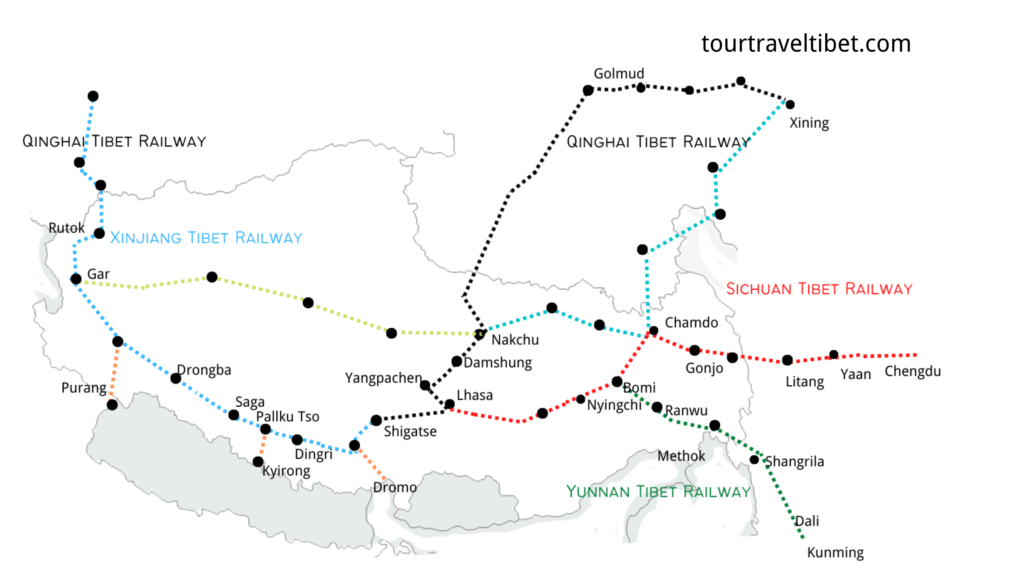
The Xinjiang-Tibet Railway project, commonly referred to as the Hotan-Lhasa railway, is a monumental infrastructure initiative. It aims to link the Xinjiang with Tibet. This ambitious project is a testament to commitment of enhancing connectivity in some of its most remote and challenging terrains. With an overall length of approximately 1,600 kilometers, the railway is poised to significantly reduce travel times and facilitate the movement of goods and people across these vast regions.
This railway formation is part of China’s broader national infrastructure strategy. It will promote economic development in less economically vibrant areas. By connecting Xinjiang to Tibet, the railway will enhance economic integration, bridging gaps between different economic zones. The anticipated influx of resources and economic activities is expected to stimulate local industries. It will boost employment opportunities, and improve living standards for residents in these regions.
The strategic importance of the Xinjiang-Tibet Railway extends beyond mere economic benefits. It is also pivotal for promoting tourism in Tibet, a region rich in cultural heritage and natural beauty. The facilitation of easier access is expected to draw increased visitor numbers, thereby aiding local economies reliant on tourism services.

Project Specifications and Route Details
The Xinjiang-Tibet Railway (Hotan-Lhasa) Project represents a significant addition to rail network, stretching approximately 1,100 kilometers. One of the most noteworthy aspects of this project is the average elevation it will cover, 4,500 meters above sea level. This elevation poses substantial engineering challenges, as the construction requires specialized materials and technologies to ensure safety and durability in such extreme conditions.
The railway traverses a variety of geographic features, including expansive deserts, high mountain passes, and rugged terrains. Construction teams will face the difficulty of building on permafrost and rocky surfaces, necessitating innovative engineering techniques to mitigate the risks associated with such a landscape. Moreover, the project intersects several significant ecological zones, raising the need for careful environmental assessments to minimize the impact on local wildlife and ecosystems.
Key locations along the route include major towns providing critical access and economic opportunities for these areas. Additionally, the railway will pass through perilous mountain ranges such as the Kunlun and the Himalayas. It makes the endeavor technically demanding yet strategically crucial for enhancing regional connectivity.
Development Timeline and Key Milestones
The Xinjiang-Tibet Railway, a monumental infrastructure project has undergone significant development since its conception. Initial proposals for this ambitious railway were put forth in the early 2000s, to enhance connectivity across its vast territory. By 2005, the project gained momentum as feasibility studies were initiated, laying the groundwork for subsequent phases.
In 2008, the project experienced a crucial pivot when the Chinese government officially endorsed the railway’s construction. During this period, the environmental and engineering challenges posed by the harsh geographical landscape of Tibet were meticulously evaluated. By 2010, detailed work plans were finalized, culminating in the issuance of tenders for construction activities.
Construction officially commenced in 2011, marking a significant milestone in the development timeline of the Xinjiang-Tibet Railway. Over the following years, numerous tunnels, bridges, and station infrastructure were successfully constructed, reflecting careful engineering efforts. Progress included milestones such as the completion of key segments and the establishment of necessary stations along the route. In 2018, one of the most pivotal advancements occurred with the completion of the Hotan to Pishan segment, demonstrating the project’s incremental development.
As of 2023, the railway continues to advance, with ongoing construction and upgrades aimed at improving both the trajectory and transportation capabilities. Future milestones include the anticipated completion of the railway will enhance trade and tourism between Xinjiang and Tibet.
Economic Impact and Development Strategy
The Xinjiang-Tibet Railway project, specifically the Hotan-Lhasa segment, represents a pivotal infrastructure initiative within China, anticipated to considerably influence the region’s economic landscape. One of the primary objectives of this undertaking is to enhance freight transport capabilities, making it easier to move goods between the resource-rich regions of Xinjiang and Tibet, and subsequently to other parts of the country. The strategic positioning of the railway is expected to facilitate the swift transportation of various commodities, thereby streamlining supply chains and reducing logistics costs.
Moreover, the railway is poised to provide a significant boost to local industries, particularly in the mining sector. Both Xinjiang and Tibet are abundant in natural resources, including minerals and rare earth elements. By improving access to these resources, the Xinjiang-Tibet Railway will empower companies to increase extraction and production, ultimately leading to job creation and increased local revenue. The development strategy aligns with the national goal of accelerating economic growth in western China, a region that has historically lagged behind its eastern counterparts in terms of infrastructure and industrial development.
Additionally, this railway project is critical for regional integration, reinforcing China’s ‘Western Development Strategy.’ By connecting remote areas to the broader national framework, the railway enhances trade opportunities and promotes economic collaboration among various provinces. The anticipated growth in tourism, driven by improved accessibility to natural wonders in Tibet, is another economic benefit that the railway is likely to stimulate. Overall, the Xinjiang-Tibet Railway project exemplifies the intersection of infrastructure expansion with targeted economic development strategies, presenting a multifaceted approach to enhancing both local and regional economies.
Environmental Concerns and Risks
The construction of the Xinjiang-Tibet Railway (Hotan-Lhasa) project raises several environmental concerns, particularly in relation to the fragile ecosystem of the Tibetan Plateau. This region, characterized by its unique biodiversity and climate, faces potential risks that merit thorough examination. One of the primary environmental risks is the thawing of permafrost, a phenomenon that can lead to soil instability and increased greenhouse gas emissions. As the railway traverses this area, disturbances to the permafrost could exacerbate climate change impacts, disrupting not only local ecosystems but also contributing to global challenges.
Moreover, the introduction of this railway is likely to have adverse effects on biodiversity. The Tibetan Plateau is home to several endemic species, many of which are already threatened by habitat loss and climate change. The construction phase may lead to habitat fragmentation, as well as direct impacts such as pollution and noise, which can disrupt wildlife behaviors and migration patterns. Consequently, the railway could accelerate biodiversity loss in an area that is already vulnerable.
Effects on Natural resources
Water resources also stand to be affected as a result of this ambitious infrastructure project. The Tibetan Plateau serves as a critical water source for several major river systems in Asia. Increased human activity and infrastructure development can contribute to water resource strain, raising concerns regarding the sustainability of water supply for both ecosystems and local communities. Changes in water flow and quality due to construction activities could have cascading effects on the environment.
In response to these concerns, developers have presented various mitigation measures, such as habitat restoration programs and eco-friendly construction practices. However, the effectiveness of these claims remains a subject of debate among environmentalists and researchers. Overall, the environmental risks associated with the Xinjiang-Tibet Railway highlight the need for balanced consideration of infrastructure development and ecological preservation. Understanding these dynamics is essential for fostering sustainable development in the region.
Social and Cultural Implications
The Xinjiang-Tibet Railway project, particularly the segment connecting Hotan to Lhasa, stands as a monumental infrastructure initiative that has far-reaching social implications for local communities. One of the most pressing concerns associated with this railway project is the potential displacement of residents. As infrastructure development often necessitates the appropriation of land, many communities may find their homes and ancestral lands at risk. This displacement can lead to significant challenges, including loss of economic stability, community bonds, and access to traditional livelihoods, particularly for those engaged in pastoralism and other land-dependent activities.
Furthermore, the construction and operation of the railway may contribute to cultural erosion, as outside influences inundate the once secluded communities of the Tibetan Plateau and the adjacent regions. The influx of tourists and migrant workers can accelerate urbanization, leading to the dilution of local customs, languages, and traditions. Nomadic lifestyles, in particular, face threats as increased accessibility to remote areas might compel nomads to abandon their traditional ways of living in favor of more sedentary, urban lifestyles. This shift not only disrupts the age-old practices that define their identity but also risks the extinction of unique cultural heritages.
The impacts on pastoralists, who rely heavily on the delicate local ecosystems for grazing and sustenance, cannot be understated. With the railway potentially altering land use patterns and natural landscapes, these communities might struggle to adapt their practices. As a result, the social fabric of these regions faces significant stress, as traditional coexistence with the land may give way to a more commercialized and less sustainable way of life.
International Relations and Military Implications
The Xinjiang-Tibet Railway (Hotan-Lhasa) project stands as a monumental infrastructure development that holds significant ramifications for international relations and regional dynamics. One of the countries closely monitoring this project is India, which shares a contested border with China. The railway’s construction potentially enhances China’s military logistics and rapid troop deployment capabilities to the sensitive border regions.
The increased accessibility provided by the railway allows for a more efficient mobilization of resources along the Tibetan plateau, which some analysts believe may lead to heightened military tensions in the region. Historically, both India and China have navigated complex geopolitical landscapes, with the border dispute in Ladakh exemplifying the delicate nature of their relations. The railway, while primarily a civilian project, could serve dual purposes, including logistical support for military operations, thereby exacerbating fears of potential conflict.
Moreover, the railway’s geopolitical significance extends beyond bilateral relations between China and India. It also influences the broader dynamics within South Asia and Central Asia. China’s attempts to strengthen connectivity with Tibet align with its Belt and Road Initiative (BRI), which aims to deepen economic ties with neighboring countries. However, such initiatives may be perceived as efforts to exhibit military and economic dominance in the region, leading to an arms race or increased military preparedness by India and its allies.
Technological and Engineering Innovations
The construction of the Xinjiang-Tibet Railway, particularly the Hotan-Lhasa segment, signifies a remarkable achievement in engineering and technology, addressing numerous challenges posed by the region’s unique geological and environmental conditions. One of the primary innovations is the incorporation of high-speed rail technology designed to operate effectively at high altitudes and extreme temperatures. This necessitated the development of specialized rail systems capable of maintaining stability and safety while adhering to rigorous speed standards.
The Tibetan Plateau’s terrain presents a complex mix of steep slopes, a permafrost layer, and frequent seismic activity. To combat these challenges, engineers implemented quake-resistant designs to ensure the structural integrity of the railway. This involved extensive geological survey work, the use of resilient materials, and innovative engineering solutions to absorb shocks caused by earthquakes. The advanced design techniques not only enhance safety but also improve the railway’s longevity and reliability over time.
Moreover, the harsh conditions of the Tibetan region required the development of specialized railway vehicles. These vehicles are equipped with advanced traction systems and heating mechanisms to cope with the cold weather and the potential freezing of components. The railway’s rolling stock features enhanced insulation and protective coatings, allowing it to operate efficiently despite temperature fluctuations and the potential for snow and ice accumulation.
In addition to the physical innovations, the project also integrates state-of-the-art signaling and communication systems. These systems are designed to monitor train movements and enhance operational efficiency, ensuring that the transportation network remains functional even in adverse weather conditions. The combination of these technological advancements and engineering innovations has made the Xinjiang-Tibet Railway a remarkable undertaking, setting a precedent for future infrastructure projects in challenging environments worldwide.
Future Perspectives and Conclusion
The Xinjiang-Tibet Railway project, specifically the Hotan-Lhasa section, is poised to become a vital artery within China’s extensive transportation network. As of 2023, the projected completion timeline for this segment is set for 2025, contingent upon various logistical and environmental factors. This timeline reflects the Chinese government’s commitment to enhancing regional connectivity and infrastructure, as part of its broader strategy to strengthen the socio-economic fabric of its far-western provinces.
The anticipated benefits of the railway for local communities cannot be overstated. By improving transport accessibility, the project is expected to stimulate economic growth through enhanced trade opportunities and increased tourism. Residents of the region will likely experience job creation in various sectors, including construction, hospitality, and transportation services. Furthermore, the railway will facilitate the efficient movement of goods and resources, which may significantly improve local living standards and foster a more integrated economy.
In a wider context, the Hotan-Lhasa railway reinforces China’s authoritatively defined infrastructural ambitions aimed at achieving a well-connected nation by 2035. The railway serves as a pivotal element in the Belt and Road Initiative, which seeks to enhance global trade routes and foster economic collaboration across borders. It also reflects the government’s vision for “socialism with Chinese characteristics,” aiming to bring underdeveloped regions closer to the economic mainstream. Moreover, increased connectivity with Tibet is viewed as essential for fostering cultural exchanges and promoting national unity.