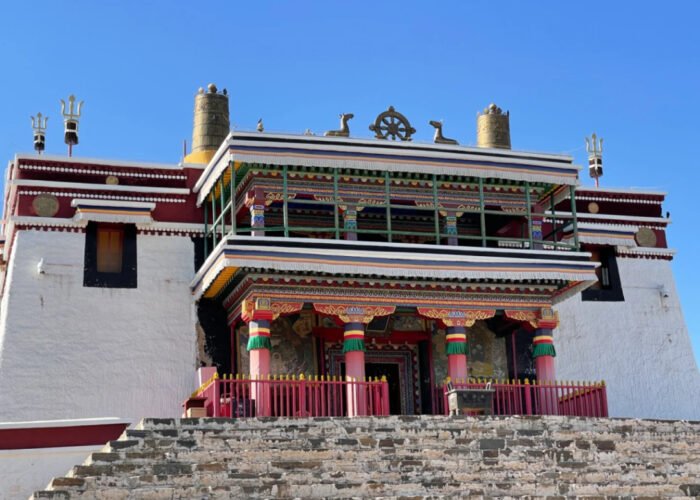
Tirthapuri Monastery is one of the most sacred and mysterious pilgrimage sites in western Tibet. Located in the Ali (Ngari) region, it is widely regarded as a spiritual gateway to Mount Kailash (Gang Rinpoche). For centuries, pilgrims have believed that a journey around Mount Kailash is incomplete without first visiting Tirthapuri, often called “the Collar” or “Gateway of Kailash.”
Surrounded by dramatic high-plateau landscapes, ancient Mani stone mounds, and sacred hot springs, Tirthapuri is both a deeply religious site and an important stop on the Kailash kora route.
Basic Location and Geographic Setting of Tirthapuri
- Official Name: Tirthapuri Monastery (also known as Zhidabu Ri Monastery)
- Location: Menxi Township, Gar County, Ali Region, Tibet
- Distance to Mount Kailash: Approximately 60 km
- Distance to Shiquanhe Town: About 200–260 km
- Nearby Landmark: Xiangquan (Sutlej) River, close to National Highway G219
- Altitude: Around 4,600 meters
Tirthapuri sits west of the Gangdise Mountains along the Xiangquan River valley. Due to its position on the Kailash pilgrimage route, it has long been regarded as a mandatory spiritual preparation site before beginning the circumambulation of Mount Kailash.
Historical Origins and Religious Lineage of Tirthapuri
Foundation in the Nyingma Tradition
Tirthapuri was originally founded in the mid-8th century, during the Tibetan Empire period, by the eminent Nyingma master Dorje Tsalnyen Samphu (Dorje Zha Quni Sambu). According to Nyingma teachings, Tirthapuri was once revered as one of the Eight Subterranean Vajra Yogini (Vajravarahi) sacred sites, making it an extremely important tantric location.
The site is closely associated with Guru Padmasambhava, who is believed to have practiced meditation here. Sacred traces linked to Padmasambhava, Yeshe Tsogyal, and Vajravarahi remain central to the monastery’s spiritual identity.
Transition to the Kagyu School
In later centuries, the monastery came under the administration of the Kagyu school from Bhutan, officially transitioning from Nyingma to Kagyu teachings. After the opening of the Mount Kailash pilgrimage route in the 13th century, Tirthapuri became an essential “blessing and initiation point” for pilgrims.
A popular belief among devotees says:
“Circumambulating Tirthapuri 13 times equals one kora of Mount Kailash.”
Destruction, Reconstruction, and Modern Revival
Tirthapuri has endured repeated destruction and rebirth:
- 1947: Damaged by Kazakh looters
- Rebuilt by: Bidhi Lama Yeshe Palden
- Later Affiliation: Became a branch monastery of Palyul Shelkar Dzong
- Cultural Revolution: Destroyed again
- 1983: Official reconstruction
Today, the monastery is modest in size and is home to two resident lamas and two administrators, preserving its spiritual traditions in a remote high-altitude environment.
Sacred Deities and Holy Relics at Tirthapuri
The monastery enshrines several highly revered figures and relics, including:
- Padmasambhava (Guru Rinpoche)
- Amitabha Buddha
- Shakyamuni Buddha
- Yeshe Tsogyal
- Sacred 8-year-old footprints of Dorje Phagmo (Vajravarahi)
The surrounding area also contains three meditation retreat sites traditionally associated with Padmasambhava, Yeshe Tsogyal, and Dorje Phagmo, making Tirthapuri a powerful tantric practice zone.
The Sacred Hot Spring of Tirthapuri
One of the most distinctive features of Tirthapuri is its natural hot spring, located directly in front of the monastery.
Local belief holds that the spring possesses strong blessing and healing powers. Due to geological changes, the spring now flows above the Xiangquan River, releasing visible steam as the hot water meets the cold air. This has created a natural bathing area where Tibetans traditionally soak, especially in springtime.
Pilgrims often bathe their feet here after completing the Mount Kailash kora, viewing the ritual as purification of both body and karma.
Mani Stones, Sacred Rock Formations, and Pilgrimage Landscape
The Largest Mani Stone Complex in Ali
Tirthapuri is home to the largest Mani stone mound in the Ali region. In front of the main hall stretches a Mani wall over 250 meters long, built from countless engraved stones inscribed with mantras such as Om Mani Padme Hum.
A circular Mani mound, more than 10 meters in diameter, symbolizes the sun and moon, a traditional protective motif seen at Tibetan monastery entrances.
Sacred Stone Formations and “Gangti” Limestone
The area around the monastery features calcified rock formations resembling marble. Pilgrims search for “Gangti” limestone, believed to ward off illness and misfortune.
Weathered stones nearby are said to resemble sacred figures, including:
- Mahakala
- Garuda
- Vajra Yoginis
- Protective deities and legendary beings
Together, these features create a unique sacred landscape rarely seen elsewhere in Tibet.
Architecture and Monastic Layout
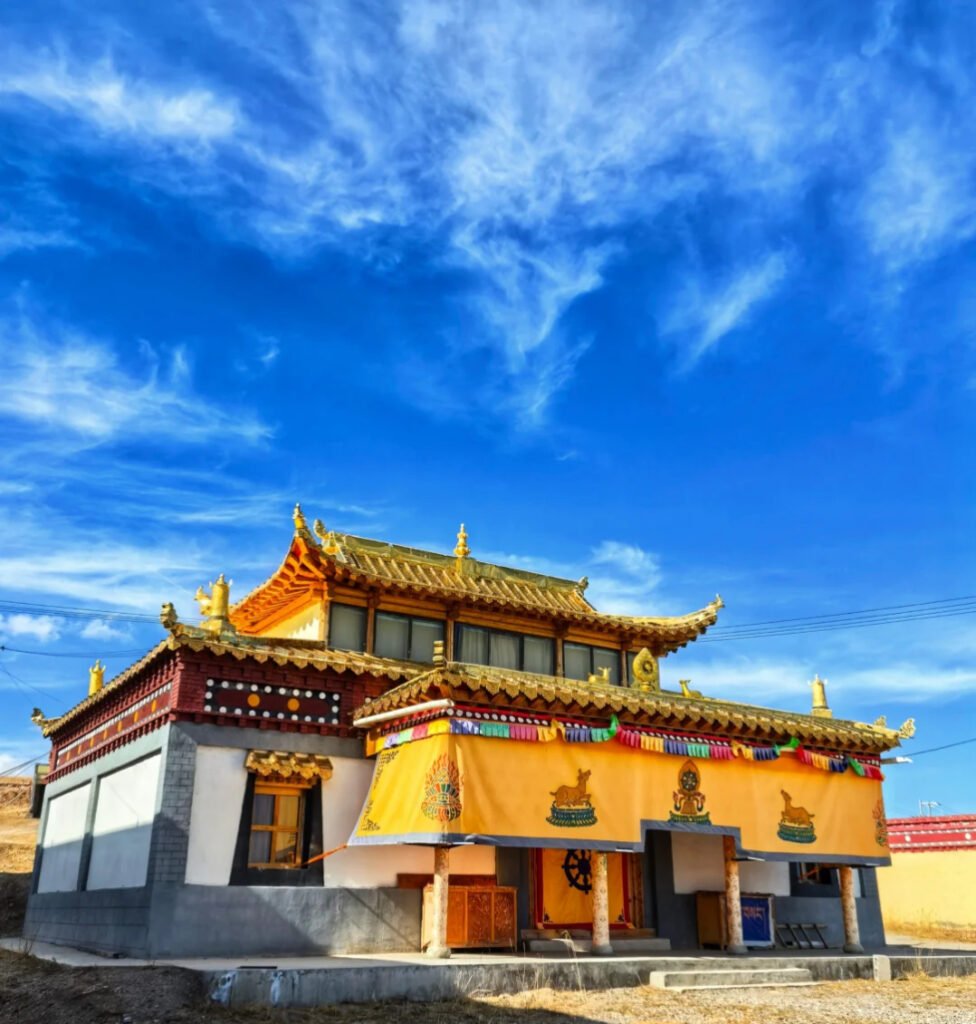
Tirthapuri Monastery follows traditional Tibetan stone-and-wood architecture, including:
- Main assembly hall
- Side chapels
- Scripture hall
- Monk living quarters
Although small, the monastery is carefully arranged and surrounded by open terrain, Mani mounds, the Xiangquan River, and distant mountains—forming a classic Ngari religious panorama.
Practical Travel and Pilgrimage Information
Admission and Opening Hours
- Entrance Fee: Free (donations welcome)
- Opening Hours: 9:30 AM – 5:00 PM
Transportation
- Private Car / SUV: From G219 to Menxi Township, then 8 km on local road
- Distance: About 260 km from Shiquanhe
- Public Options: Shared vehicles from Shiquanhe or Darchen (advance arrangement needed)
Best Time to Visit
- Pilgrimage Season: April–May, September–October
- Tourism Season: May to October
Important Notes
- High altitude precautions are essential
- Dress modestly and follow clockwise circumambulation
- Do not touch statues, relics, or Mani stones without permission
- Photography should be done only after approval
- Hot spring soaking is free but requires proper warmth afterward
Avoiding Confusion: Tirthapuri vs. Gongbu Ri Monastery
Travelers often confuse Tirthapuri with Gongbu Ri Monastery (Pulan Hanging Monastery):
- Tirthapuri:
- Location: Gar County
- On Mount Kailash pilgrimage route
- Ground-level monastery
- Nyingma → Kagyu lineage
- Gongbu Ri (Pulan Hanging Monastery):
- Location: Pulan County
- Built into a cliff
- Drikung Kagyu school
- Known for its dramatic悬空 (hanging) architecture
These are entirely different sites in different counties.
Tirthapuri and the Mount Kailash Pilgrimage Route
Tirthapuri is traditionally visited before or after the Mount Kailash kora. Many pilgrims believe visiting here first is equivalent to receiving the “key” to a successful circumambulation.
Common route combinations include:
- Darchen → Tirthapuri → Mount Kailash Kora
- Mount Kailash → Tirthapuri → Lake Manasarovar
- Combined with Guge Kingdom Ruins, Zanda Earth Forest, and sacred lakes
Tirthapuri remains one of the most spiritually significant yet understated sacred sites in the Ali region, quietly guarding the entrance to Tibet’s holiest mountain.