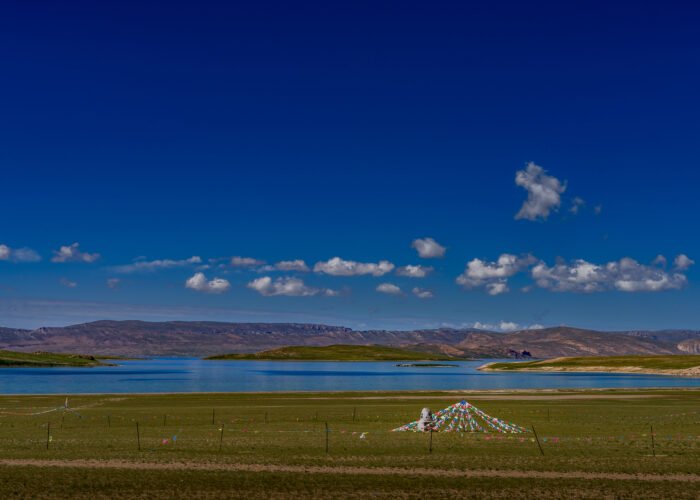
Located in the western part of Gongbo’gyamda County, near Songduo Village and close to National Highway G318, Panggyen Thang (Bangjietang) Grassland is one of the most serene high-altitude grasslands in eastern Tibet. Sitting at an elevation of around 4,700 meters and covering approximately 15 square kilometers, this open plateau offers sweeping views, fresh mountain air, and a deep sense of calm far from crowded tourist routes.
To the east lies the lush, forest-lined Nyang River Gorge, while the majestic, snow-covered Mila Mountain rises to the west. This unique location places Panggyen Thang Grassland between river valleys and alpine peaks, creating a striking natural contrast.
A Living Pastoral Landscape
During spring and summer, Panggyen Thang Grassland (Bangjietang) bursts into life. The wide meadows turn vibrant green, dotted with wildflowers in full bloom, while herds of yaks, cattle, and sheep graze freely across the plateau. From afar, thin trails of smoke rise from scattered pastoral homes, adding warmth and life to the vast landscape.
The harmony of snowy peaks, blue skies, drifting clouds, and endless grasslands creates a scene that feels timeless and untouched. With a mild alpine climate, strong sunshine, and nutrient-rich grass, the area is ideal for livestock grazing. The beef and mutton raised here are known for their tenderness and rich flavor—once offered as tributes to the Kashag government, and today enjoyed as prized local delicacies.
Vast Alpine Grassland Framed by Snow Mountains
Bangjietang (Bangjietang) Grassland unfolds as a gently sloping alpine meadow surrounded by snow-capped peaks. The center of the grassland is flat and lush, while distant mountains rise dramatically against the sky. During summer, gentian flowers and wild alpine blooms scatter across the pasture, creating a colorful contrast with the deep green grass.
Herds of cattle and sheep roam freely, embodying the timeless rhythm of Tibetan nomadic life. On clear days, the combination of blue skies, drifting clouds, snowy mountains, and open grassland creates one of the most iconic highland landscapes along the G318 route.
Mystical Hot Springs of Panggyen Thang (Bangjietang)
Hidden within the grassland are several natural hot springs, long surrounded by local legends. At first glance, the springs appear calm, with only gentle wisps of steam floating above the water. As the water is disturbed, the temperature rises, and the light mist slowly thickens into rolling fog, enveloping the surroundings in a dreamlike atmosphere.
Local herders believe the springs are spiritually responsive, saying the water reacts to loud voices and sudden sounds. Whether taken as folklore or natural phenomenon, these hot springs add a layer of mystery and cultural depth to the Panggyen Thang Grassland experience.
How to Visit Panggyen Thang Grassland
Panggyen Thang Grassland is located about 100 kilometers from Gongbo’gyamda County town. The journey typically takes around 1.5 hours by road, making it an easy stop for travelers moving between Gongbo’gyamda and Lhasa.
Visitors can reach the grassland by:
- Taxi or private car
- Self-driving along G318
- Arranged private tours
The route itself offers scenic views of river valleys, forests, and mountain passes, making the journey as rewarding as the destination.
A Quiet Escape on the Tibetan Plateau
With its wide-open meadows, grazing animals, snow-swept mountains, and mystical hot springs, Panggyen Thang Grassland (Bangjietang) offers a rare chance to experience the authentic pastoral life of Tibet. It is a place where silence feels meaningful, nature remains unspoiled, and the rhythm of life follows the seasons rather than the clock.