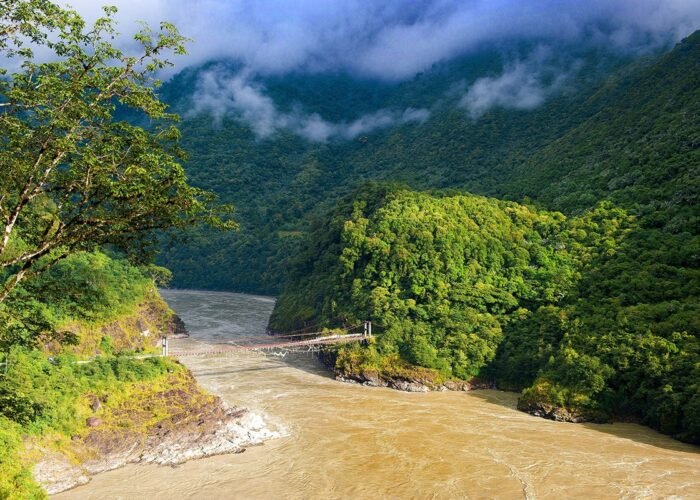
Hidden in the dramatic landscapes of eastern Tibet, Drakgo (Zhagu Xi) West Gorge is one of Mangkang (Markham) County’s most mysterious and spiritually rich natural sites. Located about 4 kilometers north of the area between Upper and Lower Yanjing, this deep canyon is locally known as “Jurong,” meaning “Twisted Valley” in Tibetan. The name reflects both its rugged terrain and the powerful legends woven into its cliffs and stones.
Basic Information About Drakgo (Zhagu) West Gorge
| Item | Core Details |
|---|---|
| English Name | Drakgo West Gorge (also spelled Zhagu Xi Gorge) |
| Tibetan Meaning | Opening the Gate of the Mountain Cliff”; also known as Jurong (“Twisted Valley”) |
| Legendary Origin | Named after the Padmasambhava legend of subduing a demoness |
| Location | Yanjing Naxi Ethnic Township, Mangkang County, Chamdo City, Tibet |
| Distance | ~4 km from Yanjing Village; ~117 km southwest of Mangkang (Markham) County seat |
| Main Access Route | Yunnan–Tibet Highway (G214), near the Lancang River |
| Landform Type | Typical karst gorge, often called the “Ten-Mile Single Thread Sky” |
| Elevation | Approx. 2,300 meters (dry-hot valley zone) |
The Legend of Padmasambhava and the Demoness
Drakgo (Zhagu) West Gorge is closely linked to Padmasambhava (Guru Rinpoche), one of the most revered figures in Tibetan Buddhism. According to local folklore, Padmasambhava once pursued a rakshasi (demoness) who was causing harm in the region. Disguised as a farmer, he chased her into this narrow valley.
At the deepest part of the gorge, Padmasambhava is said to have used a secret spiritual method to pin the demoness beneath a massive stone, immobilizing her forever. From that moment on, the valley became known as Jurong, a place where spiritual power subdued destructive forces. This legend gives the gorge its deep religious significance and lasting sense of sacredness.
A Dramatic Karst Landscape Carved by Nature
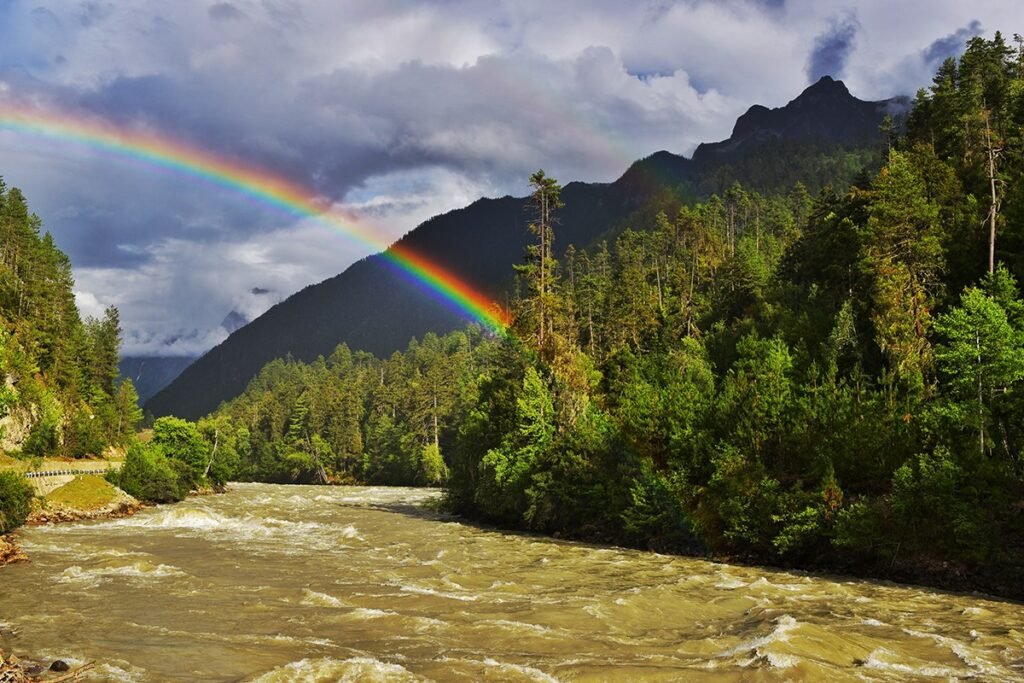
Beyond its legends, Zhagu (Drakgo) West Gorge is a striking example of a fully developed karst landscape. Towering cliffs rise sharply on both sides of the valley, creating an overwhelming sense of scale and isolation.
- Cliff heights reach up to 600 meters
- The narrowest section is only about 100 meters wide
- The sky above appears as a thin ribbon, forming the famous “slit of sky” phenomenon
The opposing mountain peaks seem to face each other across the abyss, while the sheer rock walls plunge straight down, giving visitors a powerful feeling of standing inside the earth itself.
Cliff Caves and the Meditative Past
Scattered across the steep rock faces are natural caverns, which local tradition identifies as former meditation retreats for high monks and lamas. These caves, difficult to access and hidden from view, reflect the long-standing Buddhist practice of solitary meditation in remote and demanding environments.
Their presence adds another spiritual layer to the gorge, suggesting that Zhagu (Drakgo) West was not only a place of legend, but also a genuine center for religious cultivation.
The Temple of Princess Wencheng at the Gorge Base
At the foot of the cliff lies the Temple of Princess Wencheng, an important historical and cultural site within the gorge. Inside the temple rests a massive rock bearing natural stone formations that resemble the figures of:
- Songtsen Gampo, the great Tibetan king
- Princess Wencheng, of the Tang dynasty
These formations are remarkably detailed and lifelike, and locals believe they were shaped not by human hands but by nature itself. The resemblance is considered a natural wonder and a powerful symbol of the historical bond between Tibet and the Tang dynasty.
Tang Dynasty Stone Carvings Hidden in the Cliffs
Within Drakgo (Zhagu) West Gorge, visitors can also find a group of ancient stone carvings believed to date back to the Tang dynasty. According to tradition, these carvings were created by craftsmen who accompanied Princess Wencheng on her journey to Tibet.
The central figure is Songtsen Gampo, flanked by:
- Princess Wencheng
- Princess Tritsun
- A Buddha statue
These carvings are simple yet dignified, reflecting early Tibetan stone art and the spiritual atmosphere of the era.
Padmasambhava’s Prophecy and the Sacred Handprint
Legend says that when Padmasambhava passed through Drakgo (Zhagu) West Gorge, the stone carvings of the Temple of Princess Wencheng were still hidden beneath the rock. He foretold that one day the “doors of the cliff” would open, revealing sacred images to the world.
Today, visitors are shown what is believed to be Padmasambhava’s handprint left on the rock surface. Whether viewed as legend or faith, this mark stands as a powerful symbol of the gorge’s enduring spiritual legacy and its place within Tibetan religious memory.
Zhagu (Drakgo) West Gorge: Where Nature, History, and Faith Meet
Drakgo (Zhagu) West Gorge is more than a scenic canyon. It is a place where geology, legend, Buddhism, and imperial history converge. From its towering karst cliffs and narrow sky corridors to its sacred caves, ancient carvings, and living legends, the gorge remains one of the most evocative cultural landscapes along the ancient routes of eastern Tibet.