Located just 200 meters north of Gatuo Town, the seat of Mangkang (Markham) County in eastern Tibet, Woeser Monastery is one of the most historically important and spiritually active monasteries in the region. Known locally as Weise Monastery (维色寺), this ancient religious complex stands at an altitude of about 3,850 meters in Qamdo (Chamdo) City, overlooking the surrounding valley with quiet dignity.
Covering a total area of 11,817 square meters, Woeser Monastery has long served as a center of Buddhist learning, ritual practice, and community life. With a history spanning more than 580 years, it remains one of the most significant Nyingma sect monasteries in Mangkang County.
Basic Information About Woeser Monastery (维色寺)
- Tibetan Name: དགོན་ཆེན་བུལ་སེའི་གླིང་། (Gonchen Bül Se Ling) འོད་ཟེར་དགོན་ (‘od zer dgon)
- Chinese Name: 维色寺 (Vise Si), 衮钦维色林寺
- English Name: Woeser Monastery, Vodzer Monastery, Gonchen Bulse Ling Monastery
- (Vod-zer-dgon is a commonly used transliteration variant)
- Location: North of Mangkang County Seat (Gatuo Town), Mangkang County, Qamdo Prefecture,
- Founded: 1444 AD, during the Ming Dynasty (Zhengtong 9th year)
- Founder: Gonchen Jamyang Bumba, one of the Eighteen Khutukhtus of Tibet
- Ticket: Free of charge (donations are welcome)
- Opening Hours: Typically 9:00 AM – 5:00 PM (may vary during festivals or religious events)
- Best Time to Visit: During major Tibetan calendar festivals such as the Monlam Prayer Festival, Guru Rinpoche Day, and Tsongkhapa Day
Origins and Historical Importance
Woeser Monastery was founded in 1444 AD by Gonchen Jamyang Bumba, a highly respected religious master recognized as one of the Eighteen Khutukhtus in Tibet. From its earliest days, the monastery played a key role in the spread and consolidation of the Gelug school in eastern Tibet.
Over the centuries, successive Khutukhtu reincarnations served as abbots of the monastery, turning Woeser into an influential religious seat in the Mangkang region. Its long and continuous history has made it a spiritual anchor for local communities as well as a destination for pilgrims from Tibet, Sichuan, and Yunnan.
Architectural Layout and Design
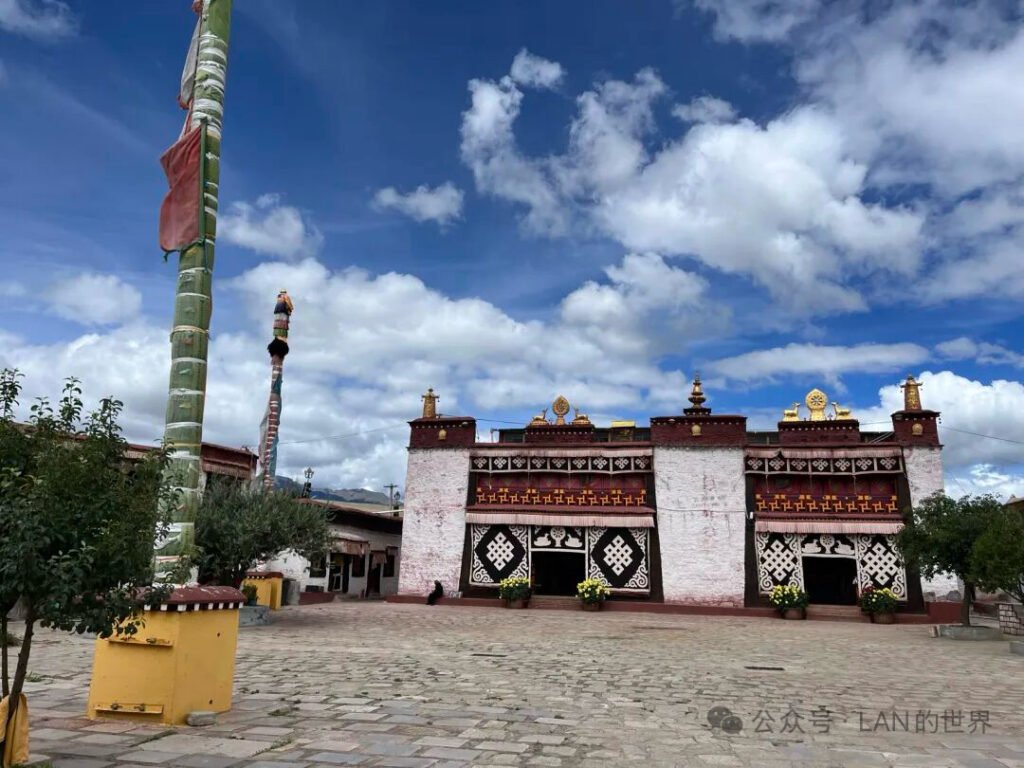
One of the most striking features of Woeser Monastery is its well-organized architectural layout. The overall plan resembles the Chinese character “回”, symbolizing harmony, enclosure, and balance.
Key architectural elements include:
- Main Hall (Cuochin Hall):
A two-story Tibetan-style building located at the rear center of the complex. It features a golden roof and richly colored murals inside, with statues of Sakyamuni Buddha, Tsongkhapa, and other important Buddhist figures. - Monk Quarters:
Residential buildings arranged around the main hall, providing living and study spaces for monks. - Prayer Ground:
A large open courtyard between the main entrance and the central hall, used for assemblies, festivals, Cham dances, and philosophical debates.
The monastery follows a traditional Tibetan stone-and-wood architectural style, characterized by flat roofs, thick stone walls, and decorative elements that reflect Tibetan Buddhist art and symbolism.
Cultural Relics and Artistic Treasures
Woeser Monastery preserves a valuable collection of religious and cultural artifacts that reflect its long history and spiritual depth. These include:
- Ancient Buddha statues and ritual objects
- Precious thangkas depicting Buddhist deities and masters
- Handwritten Buddhist scriptures, including volumes of the Kangyur and Tengyur
- Wall murals illustrating the life of the Buddha, the teachings of Tsongkhapa, and important Buddhist narratives
These relics not only serve religious purposes but also offer insight into the artistic traditions of eastern Tibet.
A Prestigious Khutukhtu Seat in Eastern Tibet
Woeser Monastery holds a special place in Tibetan Buddhistorsu as one of the monasteries associated with a Khutukhtu lineage. The title Khutukhtu (Hutuktu) originates from Mongolian and can be translated as “reincarnated lama,” “saint,” or “long-liver.”
During the Qing Dynasty, this title was officially conferred upon the highest-ranking Tibetan Buddhist lamas. In the religious hierarchy, Khutuktus rank just below the Dalai Lama and Panchen Lama.
Renowned Hutuktu lineages include:
- Jedrung Hutuktu of Gaden Monastery
- Tsemchog Hutuktu of Tsem Monastery
- Rewa Hutuktu of Sera Monastery
- Demo Hutuktu of Drepung Monastery
Within the Qamdo (Chamdo) region, Woeser Monastery is recognized as one of the three major Khutukhtu seats, highlighting its exceptional religious authority. The lineage of the Woeser Rinpoche has continued unbroken and has now reached its 15th reincarnation.
Today, the monastery is home to about 64 monks, who maintain daily rituals, teachings, and community services.
Religious Activities and Annual Festivals
Woeser Monastery functions as the primary religious center for residents of Gatuo Town and surrounding villages. Throughout the year, it hosts important ceremonies and festivals that attract monks, pilgrims, and visitors from across the region.
Monlam Prayer Festival
Held in the first month of the Tibetan calendar, the Monlam Prayer Festival focuses on collective prayers for world peace, harmony, and good fortune. Large gatherings of monks chant scriptures and perform rituals in the prayer ground.
Guru Rinpoche Day
Celebrated on the 10th day of the sixth Tibetan month, this festival honors Padmasambhava, the great tantric master who helped establish Buddhism in Tibet.
Tsongkhapa Day
Observed on the 25th day of the tenth Tibetan month, this day commemorates Je Tsongkhapa, the founder of the Gelug school. Butter lamps are lit, prayers are offered, and devotional rituals fill the monastery.
Cham Dance: A Sacred Ritual Performance
One of the most visually powerful events at Woeser Monastery is the Cham Dance Festival. Cham is a ritual dance performed by monks wearing elaborate masks and ceremonial costumes, accompanied by traditional monastic instruments.
Rooted in pre-Buddhist shamanistic traditions, Cham was systematized by Guru Padmasambhava in the 8th century. The dance combines Vajrayana Buddhist symbolism with local Tibetan cultural elements and serves to purify the sacred space and subdue negative forces.
The slow, solemn, and majestic movements create an atmosphere of awe and reverence, making Cham one of the most anticipated religious events at the monastery.
Butter Lamp Festival and Daily Devotion
During the Butter Lamp Festival, hundreds of lamps made from yak butter are lit throughout the monastery. The glowing lights symbolize wisdom dispelling ignorance and reflect the deep devotion of the local community.
Beyond festivals, Woeser Monastery maintains a steady rhythm of daily religious life. Monks chant scriptures, perform rituals, and engage in philosophical debate sessions, usually held in the afternoon except on Sundays and major religious holidays. These debates are an essential part of Gelug monastic education, though photography may be restricted during sessions.
A Living Center of Faith and Culture in Mangkang County
With its centuries-old history, prestigious Khutukhtu lineage, grand architectural layout, and vibrant ritual calendar, Woeser Monastery stands as a living embodiment of Tibetan Buddhist tradition in eastern Tibet. It continues to shape the spiritual, cultural, and social life of Mangkang County while offering visitors a rare opportunity to experience authentic monastic practices and sacred festivals in a deeply rooted Himalayan setting.