
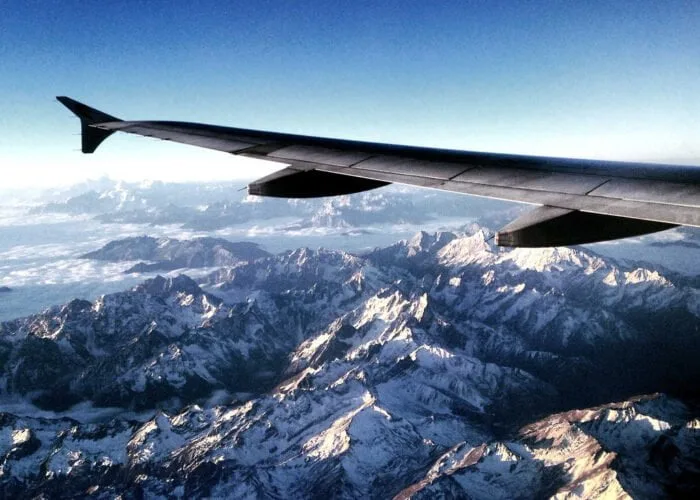
Modern aviation has advanced tremendously. Today’s aircraft can travel faster than the speed of sound, fly long distances across continents, and even operate beyond Earth’s atmosphere. Air travel connects almost every country and region in the world.
However, there are still places on Earth where commercial aircraft rarely fly directly overhead. One of the most notable regions is the Himalayas and the Tibetan Plateau. Despite modern aviation technology, airlines usually avoid flying across this vast high-altitude region unless the flight is specifically heading to Tibetan airports.
Over the years, many explanations have been offered about why aircraft avoid the Himalayas. Some stories mention mysterious forces, ghosts of fallen warriors, or even the legendary Yeti. These ideas belong to folklore and superstition. In reality, the reasons are mostly scientific, geographic, and operational.
Extreme Altitude of the Tibetan Plateau
The most important factor is the extreme elevation of the Tibetan Plateau.
The plateau averages about 4,500 meters (around 14,800 feet) above sea level, making it the highest large region on Earth. On top of this already high plateau stand the Himalayan mountains, many of which rise far above 20,000 feet.
The highest peak, Mount Everest, reaches about 29,000 feet above sea level.
Commercial aircraft typically cruise between 30,000 and 40,000 feet. While this altitude may seem high enough to clear mountains, safe operations require a large vertical margin between the aircraft and terrain. Over the Himalayas, maintaining this safety margin can become difficult because many peaks rise close to the normal cruising altitude of aircraft.
Limited Emergency Descent Options
Another major concern is the lack of safe emergency descent routes.
If a cabin loses pressure during flight, pilots must perform an emergency descent to about 10,000 feet, where passengers can breathe safely with normal oxygen levels. Passenger oxygen masks usually provide only around twenty minutes of oxygen, so the aircraft must descend quickly.
This procedure is known as the drift-down or emergency descent procedure.
Over the Tibetan Plateau and the Himalayas, descending to 10,000 feet may not be possible, because the surrounding terrain is already much higher than that. Mountains and high plateaus leave very little safe airspace for rapid descent.
For airlines, this lack of emergency altitude makes flying directly over the region much more risky than flying over lower terrain.
Thin Air and Reduced Aircraft Performance
High altitude also means thinner air. Thin air affects both aircraft engines and wing performance.
Aircraft engines produce less thrust in thin air, and wings generate less lift. To compensate for this, aircraft must fly at higher speeds and higher power settings.
Although modern aircraft are capable of operating under these conditions, it becomes less efficient and more demanding for pilots. The margin for error becomes smaller compared with flying over lower terrain.
Strong Winds and Mountain Turbulence
Weather conditions above the Himalayas can be extreme and unpredictable.
High-altitude winds often produce powerful jet streams, turbulence, and mountain waves. Mountain waves occur when strong winds flow across large mountain ranges, creating violent air movements that extend far into the sky.
These air currents can cause severe turbulence, which may affect flight comfort and safety.
Storms can also develop quickly in the region, making weather conditions difficult to predict. For airlines planning long international routes, avoiding these conditions is often the safest option.
Lack of Airports and Emergency Landing Sites
Another important factor is the lack of suitable emergency airports.
In many regions of the world, aircraft flying long distances always remain within reach of alternate airports where they can land if a problem occurs.
The Tibetan Plateau, however, has very few airports and limited ground infrastructure. The terrain is mostly mountains, valleys, and high grasslands with very few flat surfaces suitable for emergency landings.
Because diversion airports are far apart, airlines often design flight routes that stay closer to low-elevation cities in Central Asia, India, or eastern China instead of flying directly over Tibet.
Extremely Low Temperatures at High Altitude
The air above the Tibetan Plateau is also extremely cold, especially during long-distance flights at cruising altitude.
At very low temperatures, jet fuel can approach its freezing point. Although modern aircraft systems monitor fuel temperature carefully, airlines still prefer routes where the risk of extreme cold conditions is lower.
This is another reason why many flights choose paths around the plateau instead of directly over it.
Limited Radar and Communication Coverage
Because the Tibetan Plateau is sparsely populated, radar coverage and communication infrastructure are more limited compared with busy air routes over cities and coastal regions.
In an emergency situation, pilots rely on air traffic control radar systems and ground communication to coordinate assistance. Over remote mountainous areas, these systems may not be as dense or as easily accessible.
This makes airlines prefer routes where air traffic support and radar coverage are stronger.
Military Airspace Restrictions
The Himalayan and Tibetan regions also contain military training areas and air bases operated by nearby countries.
Military airspace is often restricted or tightly controlled, which can limit the available routes for commercial aircraft. Because of these restrictions, many international flights simply follow corridors that avoid these areas altogether.
Why Some Flights Still Operate in Tibet
Although airlines usually avoid crossing the Tibetan Plateau during long international flights, aircraft do operate to and from airports in Tibet.
Cities such as Lhasa have high-altitude airports that are specially designed for operations in thin air. Pilots flying to these airports receive special training for high-terrain flying, and aircraft performance is carefully calculated before each flight.
These flights follow specific approach routes and safety procedures designed for the unique conditions of the Tibetan Plateau.
How Airlines Manage High-Terrain Risks
Airlines that operate near the Himalayas rely on careful route planning, advanced navigation systems, and specialized training.
Flight dispatchers analyze terrain, weather patterns, jet streams, and available airports before selecting the safest route. Emergency descent paths and diversion airports are planned in advance.
Modern aircraft also use advanced technology such as:
- GPS navigation and flight management systems
- Terrain awareness and warning systems
- Weather radar
- Pressurization and oxygen systems designed for high-altitude operations
Pilots regularly train in simulators for scenarios such as rapid depressurization or engine failure over mountainous terrain, ensuring they can respond quickly and safely if a problem occurs.
A Unique Landscape That Challenges Aviation
The Himalayas and the Tibetan Plateau form one of the most dramatic landscapes on Earth. Their immense altitude, powerful weather systems, and remote geography create conditions that are very different from most other regions of the world.
For this reason, commercial airlines often choose to route around the plateau rather than directly across it, reducing risk and ensuring safer flight operations.
Despite these challenges, the region remains one of the most fascinating places on Earth—home to the world’s highest mountains, ancient cultures, and breathtaking landscapes.