Tibetan people
Tibetan Customs
Major Festivals in Tibet
Tibetan Language
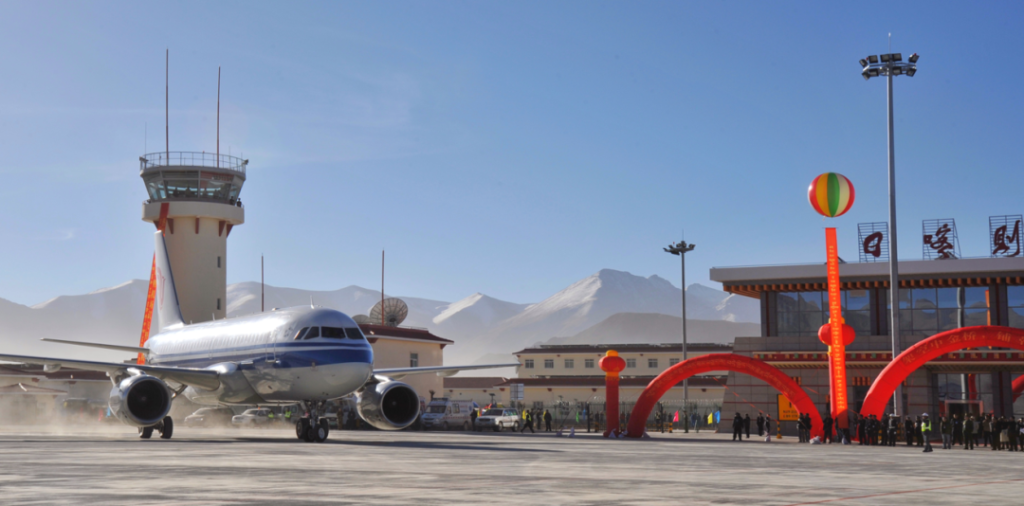
Shigatse Peace Airport is an important aviation gateway connecting Tibet with major cities across China. Located about 43 kilometres from Shigatse’s Samdrup Tse (Sangzhuzi) District, the airport plays a key role in strengthening transportation, tourism, and economic development in the region.
Identified by the IATA code RKZ, the airport sits at an elevation of approximately 3,783 meters, making it one of the high-altitude airports on the Tibetan Plateau. Since its opening for civilian operations in 2011, Shigatse Peace Airport has become an essential entry point for travelers heading toward western Tibet and Mount Everest.
As the fifth civilian airport in Tibet, it serves as a faster and less crowded alternative to flying into Lhasa Gonggar Airport, while improving connectivity between the plateau and major cities in mainland China.
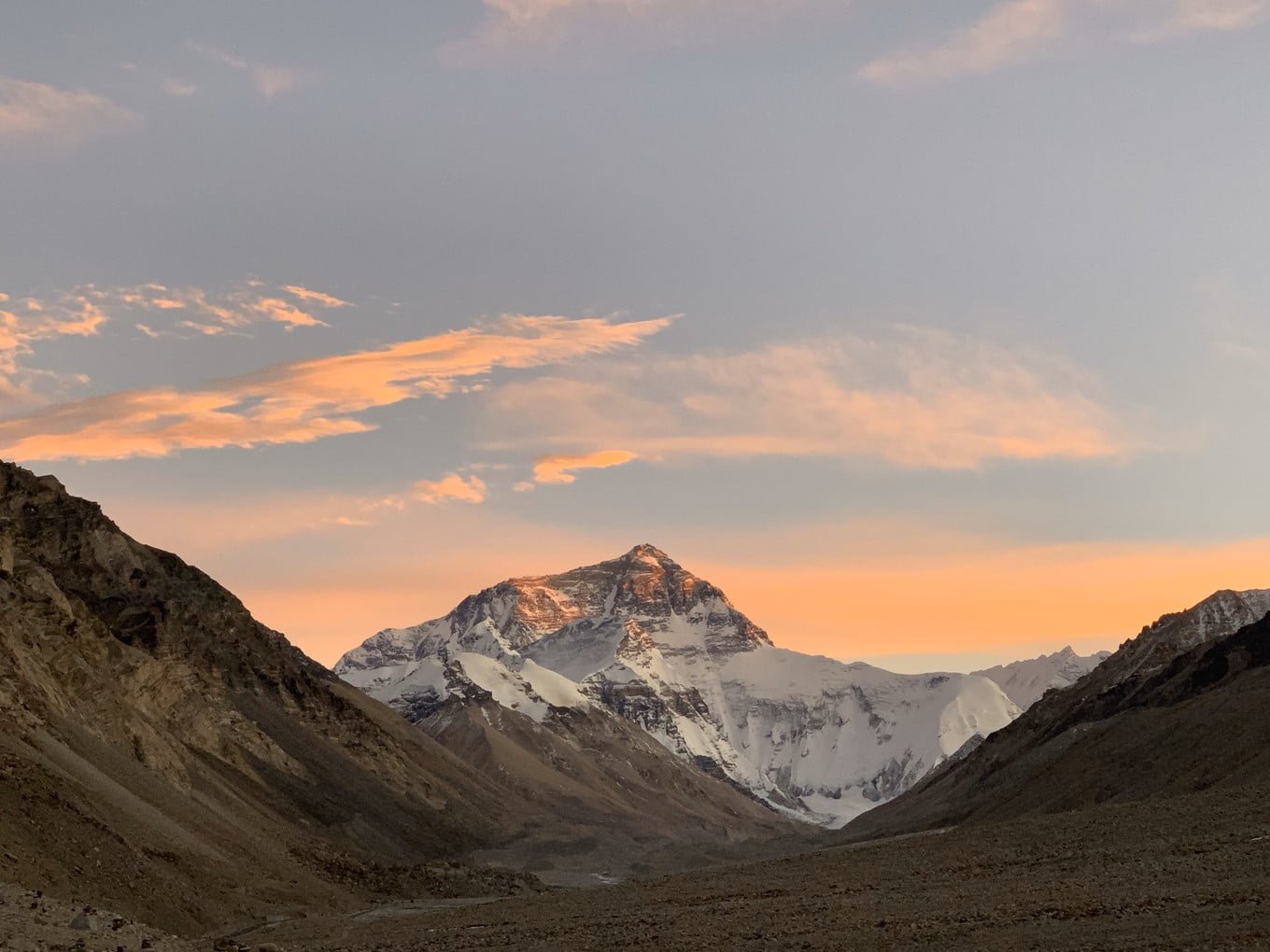
Shigatse Peace Airport is widely recognized as the closest civilian airport to Everest Base Camp in Tibet.
From the airport, travelers can reach the northern Everest region in approximately 7 to 8 hours by road, covering a distance of around 350–380 kilometres. This proximity makes the airport a convenient starting point for visitors heading toward:
Because of this strategic location, travelers focused on Everest exploration or western Tibet journeys often choose Shigatse as their arrival point instead of Lhasa.
The history of Shigatse Peace Airport reflects its gradual transformation from a military airfield into a modern civilian airport.
| Year | Milestone |
|---|---|
| 1968 | Construction of the airport began as a military facility. |
| 1973 | Construction completed and test flights conducted. |
| 2009–2011 | Major upgrades carried out to convert the airport for civilian use. |
| July 8, 2011 | Official opening for civilian aviation. |
| 2023 | Modernization projects launched to expand capacity and improve emergency landing facilities. |
These developments have steadily improved aviation access to western Tibet and strengthened the region’s transportation network.
Shigatse Peace Airport currently operates domestic flights only, with no international routes. The airport’s network has gradually expanded and now connects Shigatse to several major cities in China.
The main airline operating here is Tibet Airlines, while China Eastern Airlines operates selected routes.
As of March 2026, the airport operates roughly 70 nonstop flights per month.
| Destination City | Airport Code | Airlines | Approx. Flight Time | Monthly Flights | Notes |
|---|---|---|---|---|---|
| Chengdu | CTU | Tibet Airlines | ~2.5 hours | ~31 flights | Most frequent route with near-daily flights |
| Xi’an | XIY | Tibet Airlines, China Eastern Airlines | ~3 hours | ~22 flights | Seasonal route (March–October) |
| Chongqing | CKG | Tibet Airlines | ~3 hours | ~9 flights | Regular domestic connection |
| Xining | XNN | Tibet Airlines | ~2 hours | ~8 flights | New route launched in early 2026 |
| Route | Airline | Launch Date | Current Status (March 2026) | Alternative Option |
|---|---|---|---|---|
| Shanghai Pudong International Airport – Shigatse | China Eastern Airlines | May 1, 2025 | Not operating as a regular direct service | Connect via Chengdu or Xi’an |
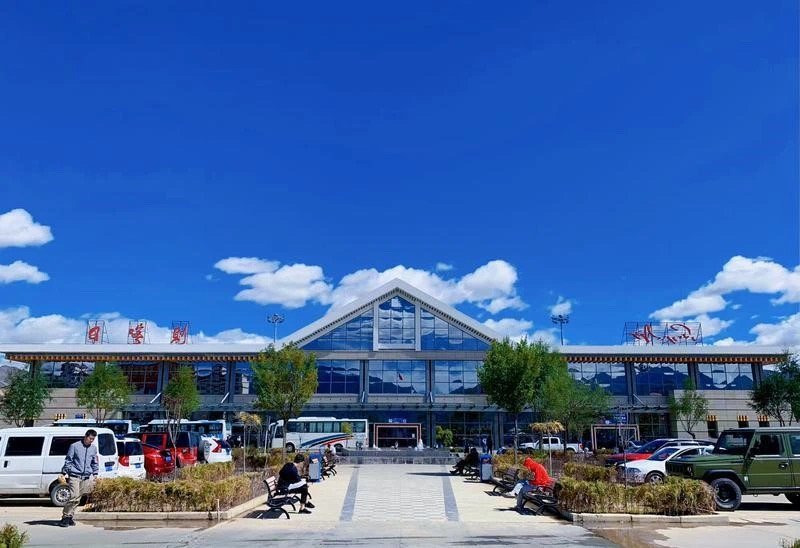
The growth of Shigatse Peace Airport has significantly improved travel access to western Tibet.
Landing in Shigatse allows travelers to head directly toward Everest or the Shigatse region. This avoids the 700+ kilometre journey from Lhasa, which often takes two days by road.
New routes—especially the Xining connection—make it easier to combine Tibet travel with other destinations in China. Travelers can create itineraries linking western China with the Tibetan Plateau.
With more flights arriving in Shigatse, travel routes are becoming more flexible. Visitors can begin or end their journeys outside Lhasa, which helps distribute tourism across the region.
Despite its high-altitude location, Shigatse Peace Airport provides a range of modern services for passengers.
The airport terminal includes six check-in counters, with dedicated facilities for first-class passengers and baggage-free check-in.
Self-service check-in systems have been available since 2019, along with mobile and online check-in options. Travelers using these services still need to confirm their details at the airport counter.
Because of the airport’s high elevation, oxygen systems are installed inside the terminal building. These help reduce altitude-related discomfort for travelers arriving from lower elevations.
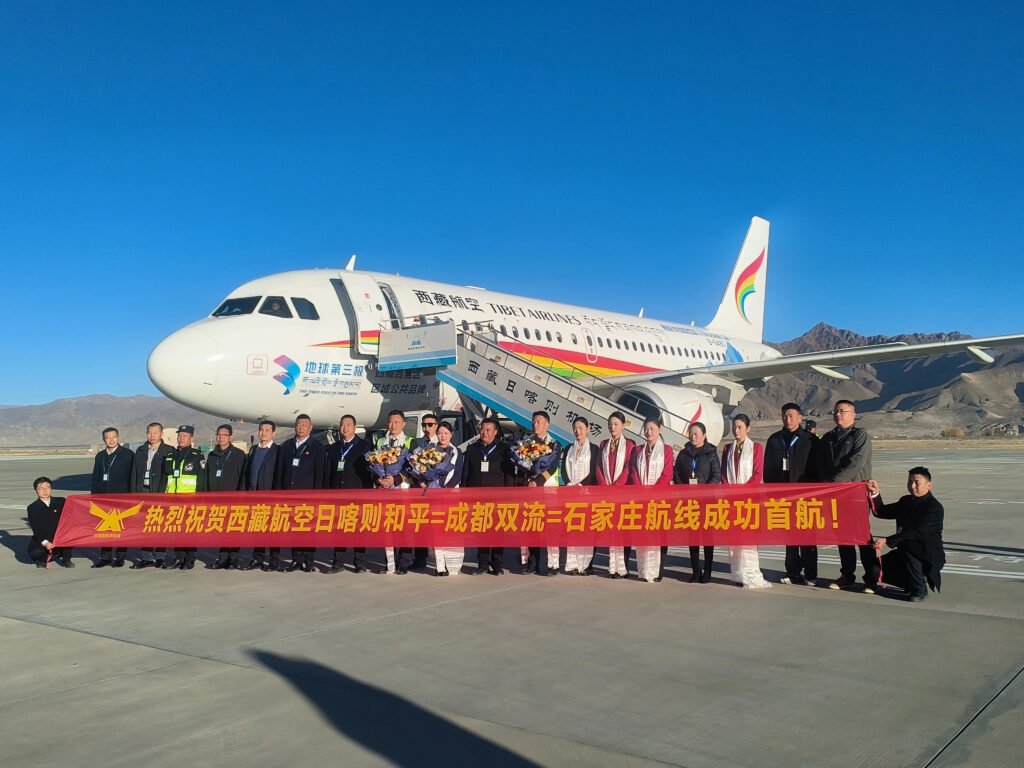
| Airline | Flight No. | Route | Departure Time | Return Time | Days |
|---|---|---|---|---|---|
| Tibet Airlines | TV6090/89 | Shigatse = Xining | 12:20-14:35 | 11:00-13:40 | Mon, Wed, Fri, Sun |
| Tibet Airlines | TV9975/6 | Shigatse = Chengdu = Shijiazhuang | 09:50-11:50; 16:50-19:20 | 20:10-22:40; 06:35-09:10 | Daily |
| West Air | PN6450/49 | Shigatse = Chongqing | 09:50-12:30 | 06:00-09:10 | Tue, Thu, Sat |
Regular shuttle buses operate between the airport and downtown Shigatse.
A dedicated highway connects the airport with Shigatse city, reducing travel time to around 50 minutes. This expressway significantly improves accessibility for visitors and residents.
Shigatse Peace Airport forms a key component of Tibet’s integrated transportation system.
Located along China National Highway 318, the airport connects smoothly with regional roads and transport networks. This strategic positioning supports a broader system that links:
Through this integrated network, the airport supports both tourism mobility and regional economic activity.
The establishment of Shigatse Peace Airport has helped strengthen economic growth across the region.
Improved air access encourages investment and stimulates supporting industries such as:
The airport also helps promote the cultural and natural attractions of Shigatse to a wider audience, increasing visitor numbers and expanding tourism opportunities.
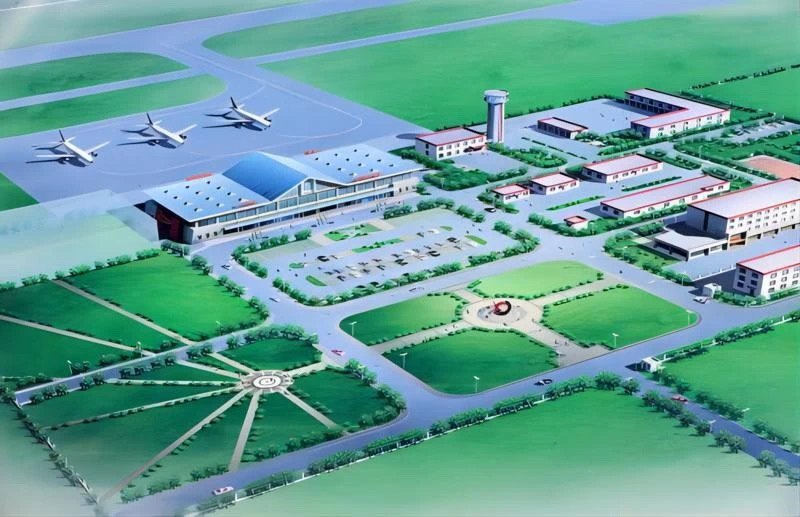
Shigatse Peace Airport was constructed with an investment of approximately 532 million yuan.
The airport infrastructure is designed to accommodate aircraft such as:
These aircraft types are commonly used for high-altitude airport operations and domestic routes within China.
On September 15, 2017, the Shigatse Airport to Rikaze Special Expressway was officially opened.
The expressway spans approximately 40 kilometres and provides a high-quality transportation corridor linking the airport directly with the city. This highway project improved travel efficiency and strengthened Shigatse’s overall transportation infrastructure.
A comprehensive modernization program was launched to further improve the airport’s infrastructure.
The project is part of Tibet’s “3 + 2” airport expansion program, led by the China Construction First Engineering Group.
The upgrade includes:
Completed in August 2024, the project enhances aviation capacity and improves the overall efficiency of the airport.
Travelers planning to use Shigatse Peace Airport should keep a few important points in mind.
Domestic flights only
All flights are domestic. International travelers must first enter China through major hubs such as Beijing Capital International Airport, Chengdu Tianfu International Airport, or Shanghai Pudong International Airport, then transfer to Shigatse.
Travel permits required
Visitors traveling to Tibet must obtain a Tibet Travel Permit, which must be arranged through licensed travel agencies.
Altitude preparation
At nearly 3,800 meters, travelers should rest on arrival and stay hydrated to adapt to the altitude.
Seasonal flight schedules
Flight schedules may vary depending on the season. Travelers should check updated schedules through airline apps or booking platforms before departure. Check The Official Website of Shigatse Peace Airport