In Tibetan Buddhism, few deities carry as much power and significance as Vajrakilaya. Known in Tibetan as Dorje Phurba (རྡོ་རྗེ་ཕུར་བ་), this fierce deity is revered across the Vajrayana tradition as a force of transformation, protection, and purification. His wrathful form may appear intimidating at first, but understanding Vajrakilaya reveals a profound expression of compassion — one that cuts directly through the roots of suffering rather than softening around them.
Who Is Vajrakilaya?
Vajrakilaya is a wrathful manifestation of Vajrasattva — the embodiment of the pure, enlightened mind of all Buddhas. His name comes from two Sanskrit words: “vajra,” meaning indestructible thunderbolt, and “kila” or “kilaya,” referring to the ritual dagger. Together, these words capture his essence: unshakable, penetrating power that pins down and destroys negativity at its root.
In many traditions, he is counted among the Eight Heruka deities, representing the enlightened activity that overcomes ignorance, clears negative karma, and removes obstructing forces on the path to liberation. He is also widely understood as an emanation of Padmasambhava (Guru Rinpoche), who relied on Vajrakilaya practice to establish Buddhism in Tibet by subduing powerful obstacles and binding hostile forces as protectors of the Dharma.
The Power and Purpose of Vajrakilaya Practice
Practitioners turn to Vajrakilaya to clear two distinct categories of obstacles: outer obstacles such as illness, conflict, and disruptive life circumstances, and inner obstacles such as anger, fear, jealousy, and confusion that block meditation and insight.
His role is not destruction for its own sake, but what Tibetan teachers call “wrathful compassion” — a direct, sharp form of kindness that dismantles the very roots of suffering. As a form of Vajrasattva, Vajrakilaya is especially associated with purifying deep karmic patterns and subtle spiritual obscurations, not just surface-level emotions.
Iconography: Understanding Vajrakilaya’s Appearance
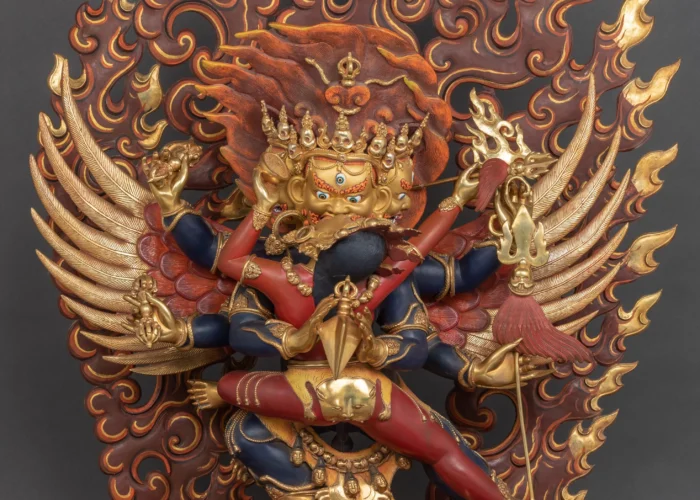
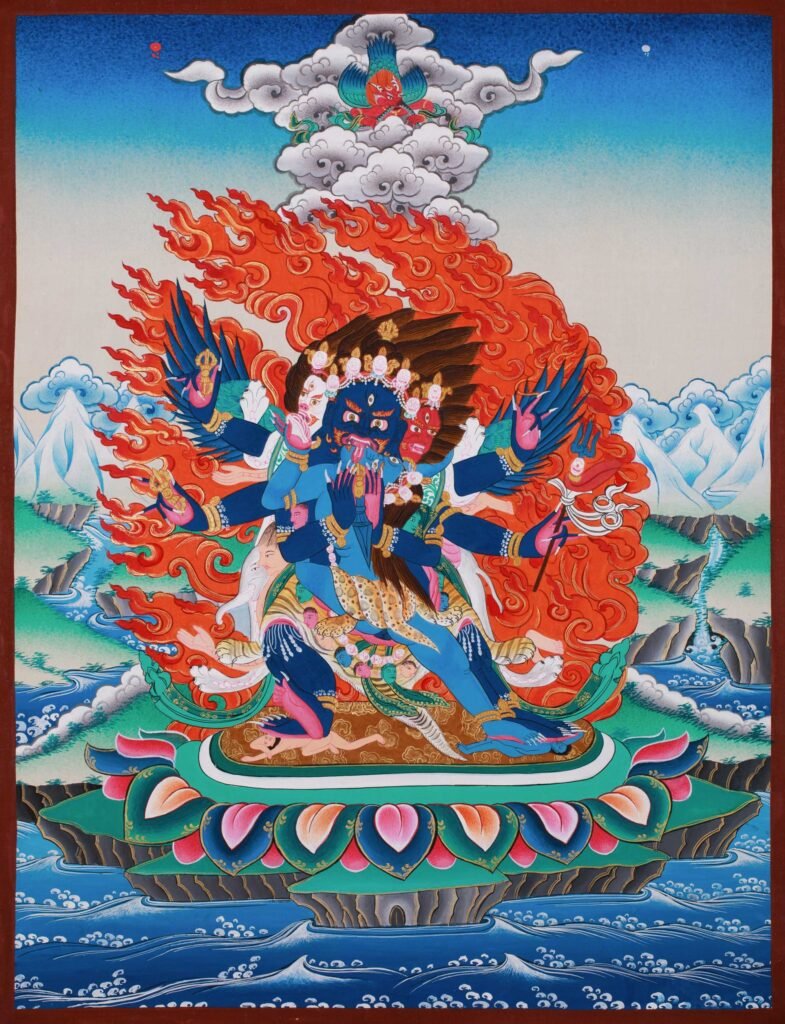
Vajrakilaya is depicted with three faces, six arms, and four legs. Each element of his form carries specific symbolic meaning:
- Three faces: His main face is dark blue, symbolizing his wrathful, indestructible nature. The second face is red, and the third is white. All three are fierce in expression, with fangs and three eyes that represent the ability to perceive past, present, and future simultaneously.
- Six arms: Each arm holds ritual implements, including the phurba dagger, a vajra (thunderbolt), and other sacred objects.
- Crown of skulls: Represents the transcendence of ego.
- Wings: Symbolize swift and pervasive enlightened activity.
- Surrounding flames: Signify the burning away of ignorance and negativity.
The Phurba: Symbol of Transformation
The ritual dagger, or phurba, is the defining symbol of Vajrakilaya’s power. Its three edges represent cutting through the three poisons that lie at the heart of all suffering: ignorance, attachment, and aversion.
When the phurba is ritually “driven” into the earth or a symbolic base, it pins down harmful forces and anchors the mind in unshakable clarity. Importantly, this action does not merely suppress negative energies — it transforms them. What was once destructive becomes fuel for wisdom and compassion. This idea of transformation rather than suppression is central to understanding Vajrakilaya’s role in tantric practice.
Vajrakilaya Across Tibetan Buddhist Traditions
While Vajrakilaya is practiced throughout the Tibetan Buddhist world, he holds particular significance in the Nyingma and Sakya schools. The Nyingma tradition traces its Vajrakilaya lineage directly back to Padmasambhava, who used this practice to overcome the obstacles that threatened the founding of Buddhism in Tibet.
Prominent teachers including Jamyang Khyentse Rinpoche, Dilgo Khyentse Rinpoche, and Dudjom Rinpoche have been closely associated with Vajrakilaya teachings. The Kagyu school also preserves an active Vajrakilaya tradition, reflecting his broad importance across lineages.
How Vajrakilaya Practice Works: A Structured Overview
Vajrakilaya belongs to the Highest Yoga Tantra level of Vajrayana practice. This means the full sadhana (ritual practice) should only be undertaken after receiving empowerment (initiation), oral transmission, and personal guidance from a qualified Vajra master. Without this foundation, practice is considered incomplete and potentially misleading from the perspective of Tibetan lineage holders.
For those properly authorized, a Vajrakilaya practice session generally unfolds in the following stages:
1. Setting the Foundation: Refuge and Bodhichitta
Every session begins by taking refuge in the Three Jewels (Buddha, Dharma, Sangha) and generating bodhichitta — the sincere wish to attain enlightenment for the benefit of all beings. This step establishes the correct motivation: removing obstacles to serve the liberation of all, not for personal gain or to harm others.
2. Purification and Protection
Many Vajrakilaya manuals include an opening purification phase, in which the practitioner visualizes light and nectar from enlightened beings washing away negativity, illness, and spiritual impurity. A luminous protection boundary — known as a vajra circle — is then generated around the practice space, grounded in love and compassion rather than fear.
3. Generation Stage (Kyerim): Visualizing Vajrakilaya
The core of the practice involves visualizing oneself as Vajrakilaya — a three-faced, multi-armed form, typically dark blue or black, holding the phurba and radiating blazing light. This is not an ego-driven identification but a recognition of one’s own body, speech, and mind as inseparable from Vajrakilaya’s enlightened nature. Surrounding the central figure, the practitioner visualizes Vajrakilaya’s complete mandala, including retinue deities, wisdom beings, and lineage masters.
4. Mantra Recitation and the Phurba Visualization
With the visualization stable, mantra recitation becomes the active focus. The practitioner imagines the phurba piercing and pinning down the spikes of ignorance, anger, and attachment — transforming these three poisons into the wisdom of emptiness, compassion, and skillful means. The mantra is recited in sets of 108, 1,000, or more during retreat, while maintaining vivid awareness of the deity’s form and the quality of indestructible clarity.
5. Completion Stage Integration
More advanced practice integrates the generation stage with the completion stage (Dzogrim). After a cycle of visualization and mantra, the practitioner releases the elaborate forms and rests in the natural, open state of the mind — empty, luminous, and aware. This alternation between vivid deity visualization and non-conceptual resting allows the two stages to gradually merge, so that clarity and emptiness become inseparable.
6. Dedication and Closing
Every session closes with a dedication of merit — offering the positive energy generated by the practice to the benefit of all beings, the flourishing of the Dharma, and the liberation of those who suffer. The visualization is gently released, and the practitioner returns to daily life with mindfulness and compassion.
The Vajrakilaya Mantra
The primary mantra of Vajrakilaya is:
Om Vajra Kili Kilaya Sarva Vighnam Vam Hum Phat
Each component carries specific meaning. “Om” represents the awakened mind and the universe. “Vajra” evokes the thunderbolt quality of cutting through negativity. “Kili Kilaya” refers to swift action and the destruction of all obstacles. “Sarva Vighnam” means “all obstacles,” and “Vam Hum Phat” are seed syllables carrying distinct energetic qualities that activate the mantra’s power.
As with all Vajrayana mantras, this should ideally be received through oral transmission from a qualified teacher before being used in formal practice.
Important Guidance for Aspiring Practitioners
Vajrakilaya practice is considered advanced within Tibetan Buddhism. There are two essential requirements before undertaking the full sadhana:
- Empowerment (initiation): Receiving a formal initiation from a recognized Vajrayana teacher is required. This establishes the samaya commitments and transmits the blessings of the lineage.
- Ongoing teacher guidance: A qualified lama can clarify the meaning of the sadhana text, adjust the practice to your current capacity, and help you relate to the wrathful imagery skillfully — without misunderstanding it as aggression or developing unhealthy attachment to the deity’s fierce form.
For those new to Vajrayana Buddhism, a helpful first step is connecting with a local Tibetan Buddhist center, reading introductory texts by reputable teachers, or exploring online resources from established Buddhist organizations. Building a foundational understanding of Vajrayana principles before approaching Vajrakilaya practice will make the experience far more meaningful and safe.
How Vajrakilaya Relates to Other Deities
Understanding how Vajrakilaya fits among other Tibetan Buddhist deities can deepen appreciation for his unique role:
- Vajrapani: Both are wrathful emanations of Buddhas, but Vajrapani is more broadly associated with the Buddha’s power and protection, while Vajrakilaya has a more specific set of practices and iconography centered on the phurba.
- Yamantaka: Both overcome obstacles and destroy negativity, but Yamantaka is primarily associated with conquering death and ego, whereas Vajrakilaya focuses on clearing karmic obstacles and purifying deep spiritual pollution.
- Heruka: Heruka is an umbrella category covering multiple wrathful deities. Vajrakilaya is one specific deity within this broader family, with his own distinct practice, imagery, and lineage.
- Guru Rinpoche (Padmasambhava): Vajrakilaya is considered an emanation of Padmasambhava. This connection is especially significant in the Nyingma school, where both figures are central to the founding history of Tibetan Buddhism.