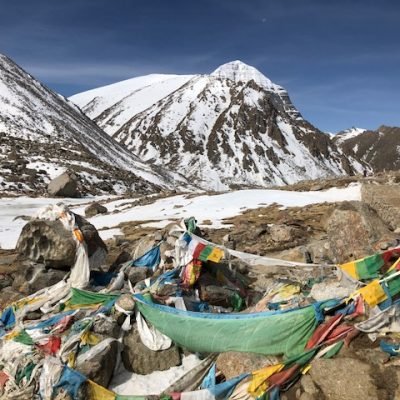
Lhotse, standing tall at 8,516 meters, is the world’s fourth-highest mountain and the fourth-highest in the Himalayas. Intimately linked with Mount Everest both geographically and spiritually, Lhotse is widely known as the “Sister Peak of Everest” and is deeply revered under the Tibetan name, the “Green-Faced Beautiful Fairy.”
The mountain Lhotse (རི་བོ་མཐིང་གི་ཞལ་བཟང་མ་) has an elevation of 8,516 meters.
This mountain is located in the central part of the Himalayan range, on the border between Dingri County in Tibet and Nepal. This snowy mountain is known as Thing-gi Zhalbzangma (མཐིང་གི་ཞལ་བཟང་མ་) (The Blue-faced One), which is one of the Five Sisters of Longevity (Jomo Tsering Che-nga). Nowadays, it is generally referred to by the common name Lhotse (ལྷོ་རྩེ་).
I. Geographic Intimacy and Dual Sovereignty
Lhotse is a crucial component of the Himalayas (“Abode of Snow”) and is situated on the border between China and Nepal, separated from Mount Everest by only about 3 kilometers.
The Sacred Sisterhood
| Aspect | Chinese / Tibetan Side (North Slope) | Nepali Side (South Slope) |
| Geographical Belonging | Dingri County, Xigaze, Tibet, China | Solukhumbu District, Nepal |
| Sister Peak Status | Its proximity to Everest forms a legendary pair, central to the local “Holy Mountain Sisters” belief system. | |
| Physical Features | A dramatic triangular pyramid shape, featuring Lhotse Middle (8,414m) and Lhotse West (8,383m) peaks. |
The Name: The South Peak and the Fairy
- Lhotse (洛子峰): The common name, derived from the Tibetan transliteration, literally means the “South Peak” due to its position immediately south of Everest.
- Dinggye Shésangma (དིན་དཀྱིལ་ཤེས་བཟང་མ་): The culturally rich Tibetan name, translating to “Green-Faced Beautiful Fairy.” This name is central to its status as a Buddhist goddess.
II. The Climbing Challenge and Cultural Reverence
As the fourth-highest peak, Lhotse presents significant technical challenges, but its cultural role is equally powerful, especially in the Tibetan Buddhist cultural sphere.
Extreme Altitude Challenge
- Difficulty Rank: Lhotse ranks as the 4th hardest among the world’s 8000 m peaks.
- Risk Factors: With a fatality rate of approximately 15%, the mountain is known for its steep ice walls and a high risk of avalanches and serac collapse.
- Core Challenge: The ascent includes the notorious “Lhotse Face,” a 60-degree sheer blue ice wall at 8,200 meters, which is a key obstacle on the standard route.
First Ascent and Best Season
- First Summit: The main peak was first successfully climbed on May 18, 1956, by a Swiss team from the Nepali side.
- Climbing Window: The best seasons for climbing, when the risk of icefall and high winds is minimized, are April–May and September–October.
III. Application: Dual Peak Tourism and Goddess Lore
The close relationship between Lhotse and Everest offers unique opportunities for specialized tourism and cultural storytelling.
1. Dual Peak Pilgrimage Tours
- “Everest-Lhotse Sister Peaks Pilgrimage”: A specialized route leveraging both nations:
- China Side: Viewing the “Sister Peaks” together from the Everest Base Camp (EBC) (5,200m) and visiting the Rongbuk Monastery.
- Nepal Side: Trekking in the Solukhumbu region and accessing viewpoints like Gokyo Ri (5,360m) for close-up views of Lhotse.
- Core Marketing: Focus on the “Green-Faced Fairy” cultural narrative: “Encounter two Goddess Peaks, explore the sacred and magnificent sisterhood of the Himalayas.”
2. Cultural and Creative Products
- Cultural Branding: Develop a “Lhotse Fairy Series” of merchandise (postcards, bookmarks, puzzles) featuring the “Green-Faced Fairy” illustration, coupled with its Tibetan and English names and elevation.
- International Forums: Host cross-border cultural events themed “Lhotse: From the ‘South Peak’ to the ‘Green-Faced Fairy’—The Coexistence of Mountaineering and Culture,” inviting experts from both China and Nepal.
IV. Safety and Compliance Guidelines
All engagements in the Lhotse region must prioritize safety, cultural sensitivity, and environmental protection.
- Climbing Compliance: Any ascent from the Chinese side requires securing a High-Altitude Climbing Permit three months in advance through a qualified travel agency. Private, unauthorized climbing is strictly prohibited.
- Cultural Respect: Tourists must respect the sacred nature of the mountain and surrounding areas. It is essential to avoid disturbing prayer flags and Mani stones and to refrain from loud, intrusive behavior in sacred spaces.
- Environmental Stewardship: All teams must adhere to the “Leave No Trace” principle, carrying all non-degradable waste off the mountain due to the fragility of the glacial environment.