
The term “Nyen” (གཉན།) in Tibetan tradition signifies concepts such as ferocity, cruelty, and disaster. The Nyen Gods (གཉན་ཡུལ་ལྷ) represent a significant and relatively well-known category of ancient deities within Tibetan spiritual culture.
The Foundation of Early Tibetan Spirituality
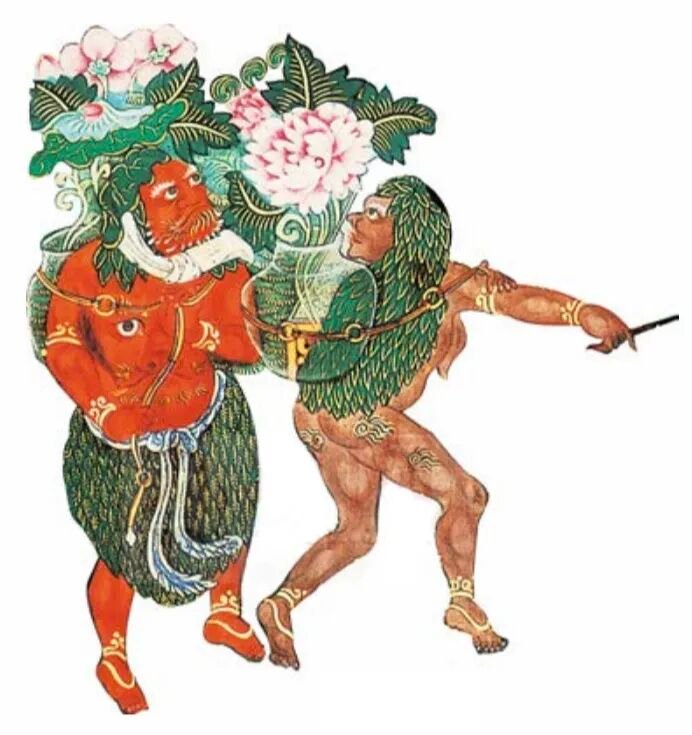
In the original, primordial worship of the Tibetan ancestors, the reverence for the Nyen Gods stood out, arguably forming the very basis of their early spiritual practices. They believed that in Tibet, every single mountain peak was inhabited by a divine spirit—a Nyen God—and these spirits held absolute dominion over people’s fortune, misfortune, auspiciousness, and disaster.
For the ancient Tibetans, the Nyen Gods wielded immense power, controlling the wind, rain, thunder, lightning, and the success or failure of hunting and gathering. The ancient scripture, The Hundred Thousand White Dragon Sutra, records that “The Nyen Gods dwell in the bright places of the sky, yet their magical powers are manifested everywhere across the human world, inciting widespread plagues.”
From Natural Forces to Religious Deities
During the formative period of the original indigenous religion, the highly variable plateau climate, which often brought destructive snow and hail, led the ancestors to a specific belief: they thought these calamities were caused by the Nyen Gods spitting toxic water from within the clouds.
Later, by the era of the Tibetan King Drigum Tsenpo, the indigenous Bön religion formally absorbed the Nyen Gods into its own pantheon. The Bön tradition enhanced their significance, granting these spirits even greater power and influence.
According to Bön practitioners, although “the foundation of the Nyen Gods is in the sky and places of light, their main sphere of activity is in the high mountains and deep valleys.” At this stage, the Nyen Gods controlled not just the weather, but also the prosperity and adversity of the land and timing, the rise and fall of all living things, the safety and death of humans, and even the propagation and elimination of epidemics.
The Mountain as a Divine Nexus
Tibet is a land of mountains, with lofty peaks and towering ranges everywhere. These treacherous mountains were all regarded as places where the divine spirits resided. Bön doctrine offered a specific explanation: “A mountain god becomes a Nyen God because the mountain is the place where the Nyen God is attached.” Even after Buddhism was introduced to Tibet from India, the Nyen Gods continued to be a major spiritual focus and belief system among the common Tibetan people.
The Nyen Gods in Modern Times
The Tibetan people’s belief in the Nyen Gods originated in the ancient era of nature worship. Strikingly, even into modern times, people still experience a deep-seated, inner sense of trepidation and reverence toward these deities.
When traversing the rugged mountain trails or facing precipitous cliffs in Tibet, people remain highly cautious. They dare not cough, whistle, shout loudly, or—most importantly—allow rocks to roll into the valleys, fearing such actions could provoke a sudden storm, landslide, or other disaster brought forth by the Nyen. Spitting into a gorge is also considered a sign of great disrespect to the Nyen Gods.
In the Tibetan regions, various categories of Nyen Gods are held in high esteem, including the Four Great Nyen Gods, the Nine Great Nyen Gods of World Formation, and the Twenty-One Nyen Gods of Kay. These spirits were, and remain, the most revered major deities of the plateau’s ancient inhabitants. In the primordial religion, they were viewed as all-powerful forces that shook the four directions; in folklore, they are the subjects of countless stories that inspire admiration, yearning, and deep respect.
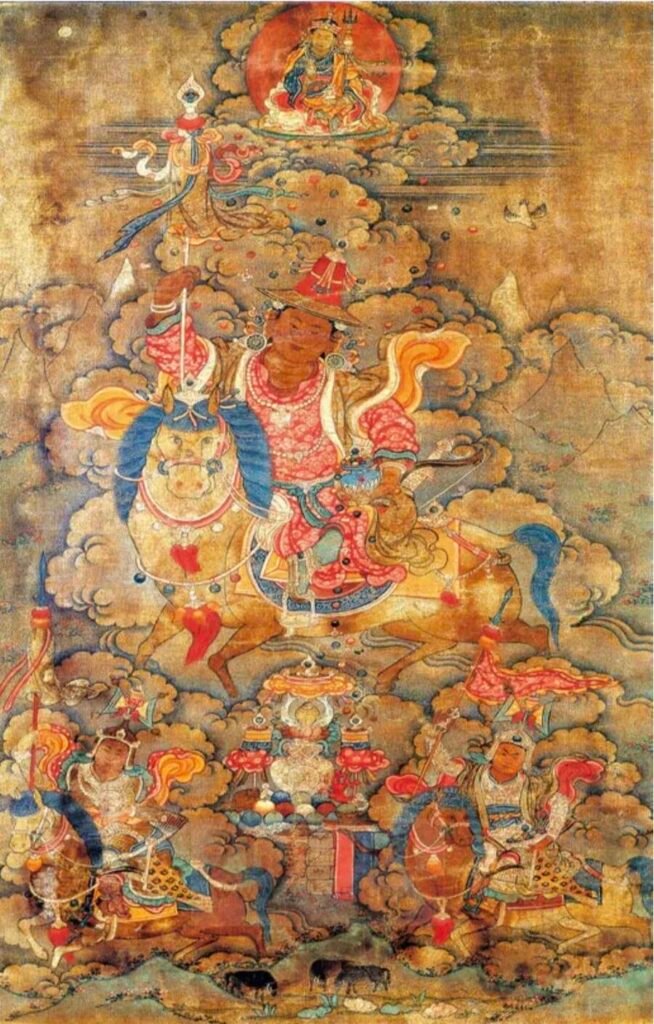
Profiling the Four Great Nyen Gods
The hierarchy of Nyen deities is led by the Four Great Nyen Gods (གཉན་ཆེན་བཞི་), powerful mountain spirits who dominate the celestial and terrestrial realms of the Tibetan plateau.
1. Machin Pomra (Amnye Machin)
Machin Pomra, often affectionately referred to as Amnye Machen, is the foremost of the Four Great Nyen Gods and is located in the East.
Origins and Status of Amnye Machin
Its legendary origin is vividly detailed in the epic King Gesar – Subjugation of the Great Eater. The legend recounts that a frog, dwelling in the Lake of the Dragon God, was thrown into the sky by Brahma. When it fell back to earth, its body was shattered. It became the sacred white mountain of the Mu clan, White Bat Conch, three stone junipers and the thirteen surrounding lakes. This is the Nyen God Machin Pomra of the Ling Kingdom.
In Tibetan literature, Mount Machin Pomra is regarded as the Great Nyen God and the Supreme King of War Gods, acting as the master of the local earth deities. It is a special protector deity specific to the Ganden Monastery. Even Bön followers recognize it as their own spirit and guardian deity.
Appearance and Duties
The Machin Pomra Nyen God is depicted wearing a red-tasselled hat, clad in silver armor, and riding a white horse made of jade dragon. He holds a spear in his right hand and a banner in his left, with a sword hanging from his waist and a bow and arrows across his back. His duties include:
- Patrolling day and night across the void and the human world.
- Controlling the clouds, rain, thunder, and lightning.
- Dispensing both auspiciousness and disaster.
- Rewarding and punishing both humans and spirits.
- Supervising enemies and assigning tasks to other gods and ghosts at night.
Buddhist Integration and Pilgrimage
Tibetan Buddhism regard that the Machin Pomra has accepted Buddhist precepts, devoutly cultivating his spiritual path and no longer concerning himself with mundane human affairs. It is believed that he has attained the Tenth Stage (Bhumi) of the Buddhist path and only descends to the human realm once every Monkey Year.
Consequently, every year, from mid-July to mid-August of the Tibetan calendar, Tibetans from various regions flock here for the Kora (circumambulation), a pilgrimage that takes approximately three to seven days to complete. In every Sheep Year, legend holds that the Nyen Gods from all regions gather here, making the scale of the pilgrimage and worship even grander.
Yizhe Maben (Yishe Mapon)
Maben is synonymous with “Nyen Chen“, meaning “Great Nyen God,” and is generally an honorific title for a mountain god.
Location and Environment
According to Tibetan ritual texts, Yizhe Maben is located in the eastern region of Do-me (Amdo), near the boundary between Tibetan and Han territories. This area is described as possessing the characteristics of the Ten Virtues. The mountain cliffs are said to resemble a raging Rakshasa, with the blue sky above as a canopy. Black clouds churn, red lightning flashes incessantly, and a thousand dragons roar. The mountain peaks are often wreathed in mist, with beams of five-colored rainbow light interweaving. Within the mountain lies a palace manifested through divine powers, filled with countless treasures, where colorful clouds dance and red winds blow.
Appearance and Entourage
The Yizhe Maben Nyen God rides a gray horse, and his body is flame-red, appearing as if on fire.
- Weapons and Attire: He holds a hook in his right hand and a jewel in his left. He wears a tiger-skin cloak and a turquoise breastplate. A banner is tucked into his right arm, and a square sword hangs from his waist. His powerful bow is encased in a leopard-skin quiver, and his arrows, tipped with thunderstones, are housed in a tiger-skin quiver, giving him a majestic and awe-inspiring presence.
- Companions: His consort is Ache Manjie Wangmo, and he is accompanied by eight goddesses and six divine sons.
- Ministers and Armies: He has numerous ministers (including Auspicious White Divine Rock, Powerful White Blue-Head, Friend-Aiding Sigye Nyenpo, and others). Furthermore, he commands vast armies: divine troops filling the sky, Nyen God troops filling the mid-air, Dragon troops covering the earth, along with gatekeepers, servants, the Eight Classes of Gods and Dragons, Gandharvas (fragrance eaters), Asuras (non-gods), and Demon armies, all spread across the great universe.
Extensive Responsibilities
The duties assumed by the Yizhe Maben Nyen God are extensive and multifaceted, primarily including:
- Protecting the longevity of the Guru (Lama) and ensuring the continued prosperity, preaching, and practice development of Buddhist monasteries.
- Safeguarding the Sangha (monastic community) and eliminating all obstacles for Vidyadharas (knowledge-holders/Yogis) during their practice, providing favorable conditions.
- Guarding travelers, offering reception and escort services.
- Eliminating the harm and obstacles caused by enemies and demons.
- Annihilating all dark forces, promoting good, and punishing evil.
- Curing various diseases, increasing wealth, and ensuring bumper harvests for livestock.
- Averting natural disasters such as hail.
- Eliminating unfortunate events (such as imprisonment).
- Granting various accomplishments and spiritual attainments.
3. Tangla Yarshu
Tangla Yarshu, also known as “Kuzhu Nyenchen Tanglha,” is regarded as the Guardian God of Treasure and Wealth. Numerous Tibetan documents contain prayers dedicated to Tangla Yashu, requesting protection of wealth. These prayers also eloquently describe his appearance, lineage, and domain:
Hymn of Invocation and Description
The prayers invoke his lineage and glorious location:
“We pray to your father, Wode Gonggyal. I call upon your mother, Yunjia shuji. We pray to you yourself, The god Yarshu Nyen. I respectfully speak of your dwelling place, Damshung namu. Where the turquoise-green eagle circles, That place is filled with light, And even in winter, it remains as green as spring. Nyen God, How joyful is the land of your dwelling.
The prayers then reveal his names and secrets:
I call your name, your heroic name known to the spirits, The King of the Celestial Musicians, the Gandharvas, Supu Aba. I call your secret name, Dorje Buwai Tsal—The secret name of the Tangla Yarshu Nyen God.
Finally, they describe his divine appearance and steed:
Nyen God, what clothing does your noble body wear? It wears white silk and white cotton cloth. If you are to ride, Nyen God, what do you ride? You ride the divine horse whose four hooves step on snow, Galloping across the Three Realms. Your white robes radiate light, Your right hand holds a rattan staff, Your left hand counts a crystal rosary. You contemplate silently, Which emanation of yourself do you send forth? Thousands of riders, along with your servants and retinue, Come to this place today to accomplish your great enterprise.”
The Retinue and Domain
Some texts state that the Tangla Yarshu Nyen God commands 360 followers. A more commonly accepted belief is that these 360 spirits are, in fact, the mountain gods of the 360 peaks that constitute the entire Tanglha Yarshu mountain range itself, signifying his absolute authority over this vast geographical area.
4. Junchin Tangre སྒྱོག་ཆེན་སྡོང་ར།
Junchin Tangre is positioned in the North and serves as the final deity profiled in the group of the Four Great Nyen Gods.
Appearance and Identity
Junchin Tangre is depicted as a yellow-robed god.
- Attire: He wears the “Leng shu” and clothing made of yellow silk.
- Steed: He rides a swift horse whose mane is the color of turquoise.
- Weapons: He holds a wheel and a long spear with a flag attached (a bound banner staff).
It is sometimes claimed in certain texts that Junqin Tangre and Juewa Juechin (觉瓦觉钦) are actually the same divine entity, suggesting a fluid or interchangeable identity within some spiritual traditions.
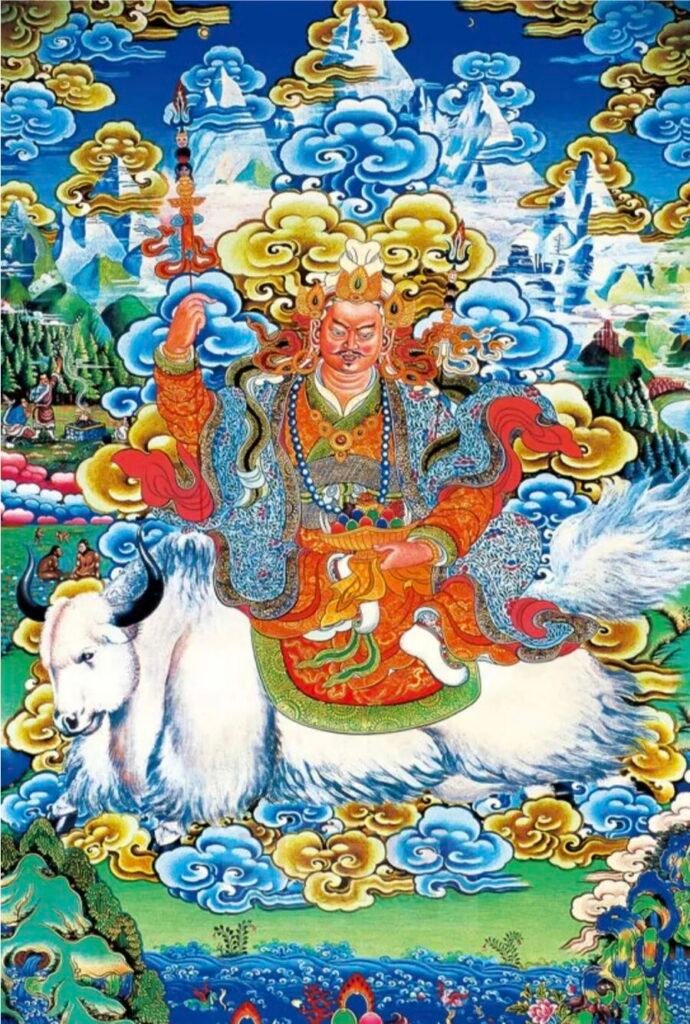
The Nine Great Nyen Gods of World Formation
Beyond the primary four deities, the Tibetan pantheon features the Nine Great Nyen Gods of World Formation (སྲིད་པ་ཆགས་པའི་ལྷ་དགུ་), who are foundational to the spiritual structure of the world.
1. Wode Gongyel (འོ་དེ་དགུང་རྒྱལ)
Wode Gongyel is considered the father of Nyenchen Tanglha and is the lord of the local earth deities in the Nyangpo region. He is regarded as the incarnation of the mountain of the same name in the Ü-Tsang region.
Appearance and Retinue
The Wode Gongyel God is adorned with a silk scarf and a silk cloak, and he wears large turquoise bracelets. He wields a long spear with a flag attached and a rattan branch, riding a horse of pure, excellent quality. His consort is Yunjia Shuji.
Wode Gongyel commands a vast retinue inherited from his ancestors, including numerous Nyen spirits, Ma Sang (མ་སངས་གཉན་) deities, and war gods. Crucially, he is also considered the father of the other eight Great Nyen Gods.
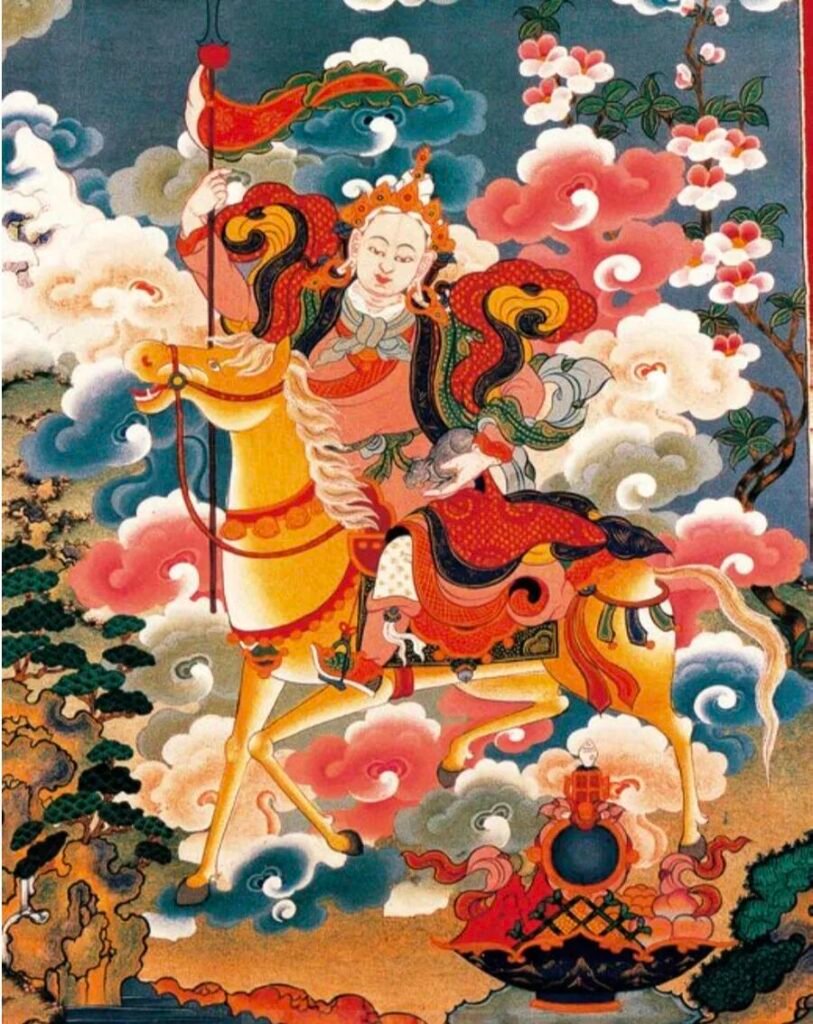
2. Yarla Shampo (ཡར་ལྷ་ཤམ་པོ།)
Yarla Shampo is one of Tibet’s indigenous ancient deities, later adopted into the Buddhist pantheon as a Dharma Protector. He often appears in the form of a gigantic white yak, an incarnation used by Padmasambhava, and is said to constantly spout snow waterfalls from its mouth.
Appearance and Authority
Tibetan historical texts describe Yarla Shampo as a deity whose body is white like a conch shell, dressed in white clothes, who can manifest in animal form. His primary emblems are a short spear bearing a silk banner and a crystal sword. His mount is a divine white yak the size of a mountain, which continuously spouts snow mist from its mouth and nostrils. His great consort is Langmian Tuojie Puyu, and he holds command over one billion war gods.
3. Nyenchen Tanglha (གཉན་ཆེན་ཐང་ལྷ།)
Nyenchen Tanglha is a deity known throughout Tibet. It is said that the Nyenchen Tanglha Nyen God possesses four distinct physical manifestations (rupas):
- Ordinary Form: When he is “hastily moving through the eight directions of the world to avert threats to the Dharma,” he appears in his usual form.
- Peaceful Form: When people call upon him as the “Great Lord Nyen of Existence“, he often manifests as a white man, dressed in white clothing and wearing a white turban. He carries a horse whip in his right hand and a short sword in his left, riding a white horse.
- Wrathful Form: When he assumes his wrathful aspect, he wears a “Bai Wo” turban, displaying a solemn and profound countenance. His body is protected by armor crafted from fine jade and wrapped in black bear skin.
- Warrior Form: The fourth form is depicted wearing a helmet, a crystal breastplate, and wielding a long white crystal spear.
4. Jowo Gyokchen (སྒ་སྟོད་ཇོ་བོ་སྒྱོགས་ཆེན་།)
Jowo Gyokchen is located in the Upper Region of the land. According to the text The Great Treasure, he is described as a yellow-robed god wearing yellow silk clothing.
5. Machen Pomra (རྨ་ཆེན་སྤོམ་ར)
Machen Pomra, previously detailed as the first of the Four Great Nyen Gods, also holds a position among the Nine Great Nyen Gods of World Formation.
Buddhist and Bön Views
- Gelug School: Monks of the Gelug school of Tibetan Buddhism believe that the essence of Machen Pomra is the Lay Deity in White Felt Clothing (Jushi Bai Zhan Shen). He is also specifically one of the guardian deities unique to Ganden Monastery.
- Kagyu School: According to The Kagyu School Incense Offering Book (Gajupai Fenxiang Shu), Maching Pomra has a golden body, wears a breastplate, and is draped in a white cloak adorned with various jewels. He wields a long spear with a flag in his right hand, and his left hand holds a ritual vessel filled with jewels as an offering, with a pouch made of eagle skin draped over his left arm.
- Bön Religion: Bön followers also regard Machen Pomra as their own deity, referring to him as “Ma Nyen Pomra.” They view him as a Bön Protector God and depict him as a white god who brandishes a long spear and rides a lion or a fine steed with a turquoise-colored mane.
6. Jowo Yongyal (ཇོ་བོ་གཡུང་རྒྱལ་།)
Jowo Yongyal is traditionally believed to be a son of the Wode Gongyel Snow Mountain. His form changes dramatically depending on the viewpoint, lending him an air of profound majesty:
- From the East: He resembles a King upon a throne.
- From the South: He looks like a resting elephant.
- From the West: He is akin to a Warrior fully prepared for battle.
- From the North: He appears like an Elderly Monk cloaked in monastic robes, exhibiting great solemnity and power.
7. Shiwu Kari (ཤེལ་དཀར་ཇོ་བོ་རྟ་རྒོད་།)
Shekar Jowo Tago is located within the Seni District of Nagqu. Historical records indicate that is one of the sacred snow mountains blessed by Guru Padmasambhava, and it is considered a holy site for the protectors of the three Yana (Vehicles) of Vajrayana Buddhism and thousands of Dharma-related deities.
According to Tibetan mythology, when the world began, Wode Gongyel and the Nectar Woman gave birth to three sons from three parts of their bodies: Nala Zangbo from the forehead, Nojin Gyalwa Tuoga from the right hand, and Shekar Jowo from the left hand. The Shekar Jowo Tago Nyen God is described as wearing armor and a helmet, riding a black horse, and appearing in both peaceful and wrathful aspects.
8. Kyisho Shokla Chukbo (སྐྱིད་ཤོད་ཞོགས་ལྷ་ཕྱུག་པོ་།)
This magnificent snow mountain is also said to be a son of Wode Gongyal. Like Jowo Yulgyal, its appearance shifts dramatically from different directions:
- From the West: It looks like a majestic lion in its prime.
- From the North: It resembles a giant dragon ascending into the sky.
- From the East: It is like a Mandala piled high with pearls.
- From the South: It takes the shape of a Stupa (reliquary) cast in turquoise jade.
9. Nuoji Kangwa Sangbu (གཙང་གི་གནོད་སྦྱིན་གང་བ་བཟང་པོ་)
Nuoji Kangwa Sangbu is believed to be the Nyen God of the Nuoji Kangsang Mountain near Gyantse. This snow mountain is shaped like a warrior dressed in ancient silver armor, with a particularly distinct form:
- From the South: It resembles a King upon a throne.
- From the East: It looks like a silver lion leaping into the air.
- From the West: It appears like a crystal Stupa.
- From the North: It takes the form of a silver canopy.
The Diverse Classifications of Bön Nyen Gods
The Bön religion features a comprehensive and detailed classification system for the Nyen Gods, grouping them primarily by their elemental domains: the sky (White Nyen) and the earth (Black Nyen).
1. The White Nyen (白念)
The White Nyen generally reside in the sky (celestial realm) and are typically characterized by a yellow body color. They are categorized based on specific celestial or atmospheric phenomena:
| Sub-category | English Translation |
| ཉི་གཉན་ | Sun Nyen |
| ཟླ་གཉན་ | Moon Nyen |
| སྐར་གཉན་ | Star Nyen |
| གཟའ་གཉན་ | Planetary Nyen |
| སྤྲིན་གཉན་ | Cloud Nyen |
| གཞའ་གཉན་ | Rainbow Nyen |
| རླུང་གཉན་ | Wind Nyen |
| མཁའ་གཉན་ | Sky/Heaven Nyen |
2. The Black Nyen (黑念)
The Black Nyen generally reside on or beneath the earth (terrestrial realm). They are categorized based on specific earthly elements and geological features:
| Sub-category | English Translation | Characteristics | Sub-category | English Translation |
|---|---|---|---|---|
| ས་གཉན་ | Earth Nyen | ས་གཉན་གསེར་གྱི་སྦལ་བ་ལ་གཡུའི་བྲང་འབྲུམ་ཅན་ | རྡོ་གཉན་ | Stone Nyen |
| གངས་གཉན་ | Snow Nyen | གངས་གཉན་སེང་གེ་དཀར་མོ་ལ་གཡུའི་རལ་བ་ཅན་ | རྫིང་གཉན་ | Lake Nyen |
| རི་གཉན་ | Mountain Nyen | གཉན་གཡུ་འབྲུག་སྔོན་མོ་གསེར་གྱི་ཟེ་བ་ཅན་ | མེ་གཉན་ | Fire Nyen |
| ཆུ་གཉན་ | Water Nyen | གསེར་གཉན་ | Gold Nyen | |
| མཚོ་གཉན་ | Ocean/Sea Nyen | མཚོ་གཉན་འཕྱོང་གི་ལྕོང་མོ་ལ་དུང་གི་འདབ་མ་ཅན་ | ནགས་ཚལ་གཉན་ | Forest Nyen |
| བྲག་གཉན་ | Cliff Nyen | བྲག་གཉན་གསེར་གྱི་སྤྲེའུ་ལ་དུང་གི་ཐོར་ཚུགས་ཅན | རྫ་བྲག་གཉན་ | Rock Nyen |
| ཤིང་གཉན་ | Wood/Tree Nyen |
Distinction in Nyen Deities’ Manifestations
The Bön Nyen Gods are also differentiated by the form they take and the communities they protect:
- Nyen Gods of Agricultural Regions: They generally appear riding horses and leading dogs, clad in battle armor and wielding weapons like swords and spears.
- Nyen Gods of Pastoral Regions: They are the collective protectors of tribal groups and typically do not inhabit houses or castles. Their dwelling places are the bare grassy mountains or cliffs. They manifest sometimes riding white horses and sometimes as white yaks.
Key Sovereign and Female Nyen Figures
- Nyen Bawa Duton Guoyu Yito Tsochen: Meaning “Snail-Headed One of the Nyen Group with a Jade Topknot,” he is the King of all Nyen. He is crystal-white, adorned with turquoise ornaments, and his main emblem is the “Goose-Headed Victory Banner.”
- The Iron Dagger Self-Arisen Queen, Goddess of Life Cultivation: Also called the “Demon Lord of the Nyen.” She is entirely black, wears a black silk gown, and is decorated with black snakes. She has four hands:
- Upper right hand holds a magic mirror; upper left holds a trident.
- Lower right hand holds a snake lasso; lower left holds an iron dagger (phurba).She wears a lower garment of coarse cloth, a crown made of strung dry skulls, wristlets made of freshly peeled human scalps, and a snake belt. She is adorned with bone ornaments and smeared with the ashes of cremated bodies. Her divine companions include Yeshe Mamo (Wisdom Goddess), Karma Goddess, World Goddess, Mother Dragons, Yakshas, Rakshasis, and Kumbhandas.
The Dual Nature of Tibetan Mountain Gods (Lha)
In the broader context of Tibetan spiritual belief, the Mountain Gods (Lha) are understood to possess a fundamental duality of nature, being capable of both granting blessings and unleashing calamities.
Good vs. Evil Mountain Gods
- Good Gods: Some Mountain Gods govern ranges situated in temperate climates where the land below is fertile and vast. Under their protection, people enjoy rich harvests from hunting and successful pastoralism. These gods are revered and worshipped.
- Evil Gods: Other Mountain Gods preside over ranges in cold, desolate climates where the land is barren. These gods are often lonely and possess a foul temper, easily provoked. Should they become displeased, they unleash fierce winds, thunder and lightning, and devastating hail. These gods are feared and treated with caution.
This dual nature forces people to respect, implore, and submit to them, as the deities can equally bestow fortune or disaster.
Territorial Disputes and the Evolution of the Lha
During the initial period of Tibetan primordial nature worship, the Mountain Gods were strictly territorial. Performing rites across a boundary could provoke inter-tribal conflict. The Epic of King Gesar – The Battle of Hor and Ling recounts a war triggered by such an act:
The Hor tribe set up an obo (stone altar) on Maching Banri Snow Mountain to make offerings. The Ling tribe considered Maching Banri their own revered mountain god and viewed the Hor tribe’s unauthorized altar as an invasion. Consequently, the Ling tribe deployed troops to block the roads and destroy the Hor altar, thus igniting a tribal war.
With the subsequent development of Tibetan society and the expansion of tribal territories, these once independent Mountain Gods gradually merged into regional groups of deities. Figures like the Four Great Mountain Gods, the Five Famous Mountain Gods, and the Six Ridge Mountain Gods (mentioned earlier) are products of this historical evolution. Before the arrival of Buddhism, these were the great deities of their respective regional pantheons, with all smaller peaks and mountains within their jurisdiction serving as their subordinate officials.