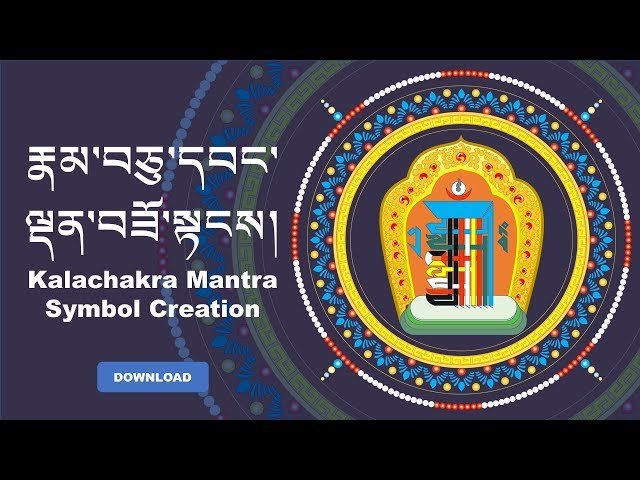
One of the most recognizable and profound calligraphic symbols in Bhutan and across the Himalayan region is the Namchu Wangden (རྣམ་བཅུ་དབང་ལྡན་). This intricate stack of letters is rooted in the Kālacakra cycle of Buddhist teachings—a system renowned for its advanced spiritual depth and its complex integration of cosmology and astrology. As the last major tantric cycle transmitted from India to Tibet, the Kālacakra Tantra remains a cornerstone of spiritual practice across all Tibetan Buddhist schools.
The Anatomy of the Symbol
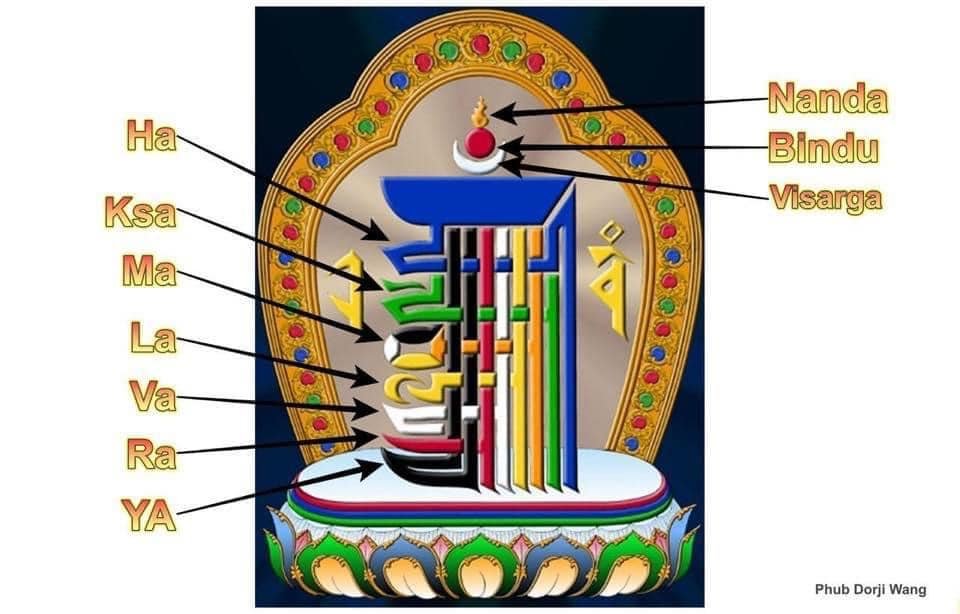
The name Namchu Wangden literally translates to “The One with Ten Powers.” This calligraphic masterpiece contains the Kālacakra mantra written in stylized Lantsa script, a Tibetanized evolution of the ancient Indian Ranjana script. The monogram is meticulously constructed from ten distinct components:
- Seven Syllables: The core mantra sounds ha, kṣa, ma, la, va, ra, and ya.
- Three Celestial Elements: A crescent (indicating the visarga or namched), a disk (representing the anusvara or thigle), and a tapering wisp (symbolizing the nāda character).
Scriptural Origins and the Ten Aspects of Existence
The structure of this monogram is detailed in the Vimalaprabhā (Stainless Light), a seminal commentary attributed to the Shambhala king Mañjuśrīyaśas. According to these teachings, the ten letters correspond to ten sites of articulation and ten aspects of existence: the moon, sun, space, wind, fire, water, earth, the inanimate world, the animate world, and the formless realm.
In a unique departure from standard iconography, the Namchu Wangden reverses certain color associations: the crescent (visarga) is linked to the sun and colored red, while the disk (anusvara) is linked to the moon and colored white.
Interpretation 1: Outer Kalachakra (The External Universe)
The Outer Kalachakra refers to the physical cosmos, including elements, planets, and celestial realms.
| Letter | Color | Meaning | Representation |
|---|---|---|---|
| Ya | Dark Green | Wind Element | Wind mandala, basis of the universe |
| Ra | Red | Fire Element | Heat from wind collision |
| Va | White | Water Element | Rain from fire-generated clouds |
| La | Yellow | Earth Element | Formation of worlds |
| Ma | Multicolor | Desire Realm | Animate existence |
| Ksa | Light Green | Form Realm | Subtle forms |
| Ha | Blue | Formless Realm | Infinite space |
| Visarga | White | Moon Mandala | Lunar energy |
| Bindu | Red | Sun Mandala | Solar energy |
| Nāda | Blue | Rahu | Planetary force |
These ten components describe how the container world and its living beings come into existence.
Symbolic Framing
Beyond these ten components, the monogram is often framed by two additional syllables that serve as the “pillars” of Buddhist philosophy:
- E: Represents Wisdom (the feminine principle).
- Vaṃ: Represents Compassion/Method (the masculine principle).
Together, the entire configuration represents the perfect union required for enlightenment.
Interpretation 2: Inner Kalachakra (The Human Body)
The Inner Kalachakra reflects the adamantine body, showing how human life forms in the same progressive way as the universe.
Formation of the Adamantine Body
- Ya (Wind) – Karmic winds bring parents together
- Ra (Fire) – Heat of desire during union
- Va (Water) – Semen released due to desire
- La (Earth) – Foetus solidifies in the womb
Psycho-Physical Components
- Ma – Six sensory consciousnesses
- Ksa – Aggregates and sense bases
- Ha – Bodily openings and inner pathways
- Visarga – Life force, right channel
- Bindu – Body heat, left channel
- Nāda – Wind and mind, central channel
This shows that body, mind, and universe arise through the same sacred process.
Interpretation 3: Alternative Kalachakra (Enlightened Realms)
The Alternative Kalachakra refers to divine mandalas, deities, and tantric practices associated with Kalachakra meditation.
Key features include:
- Palatial divine mansions
- Enlightened energies and principles
- Tantric meditation practices
- Symbolic representation of enlightenment stages
The Nam Chu Wang Den is drawn on eight layers of seats, symbolizing:
- Four natural elements
- Four celestial bodies
It is often flanked by:
- E – Wisdom
- Vaṃ – Compassion
Together, they express the union of wisdom and compassion, the core of enlightenment.
Presence in Daily Life
The Namchu Wangden is typically depicted on eight layers representing the four natural elements and four heavenly bodies. It is frequently flanked by the syllables E and Vaṃ, symbolizing the union of wisdom and compassion.
Because it is believed to attract blessings and clear away misfortunes, the monogram is ubiquitous in Himalayan culture. It can be found painted on temple walls, carved into amulets, displayed on religious monuments, and in modern times, even printed on everyday items like shirts and caps to provide spiritual protection to the wearer.
Spiritual Protection and Blessings in Tibetan Belief
According to Tibetan Buddhist tradition, the Nam Chu Wang Den is believed to:
- Protect against sudden death and misfortune
- Guard against harmful spirits and negative energies
- Prevent unethical behavior and karmic obstacles
- Reduce suffering and inner disturbances
- Increase merit, harmony, and auspicious conditions
For this reason, it is often installed by lamas during consecration rituals.
The Ten Sacred Letters of Nam Chu Wang Den
The symbol consists of ten Sanskrit syllables, stacked from bottom to top.
Color symbolism is essential—each color completes a Lantsa letter and conveys a specific meaning in Tibetan cosmology.