
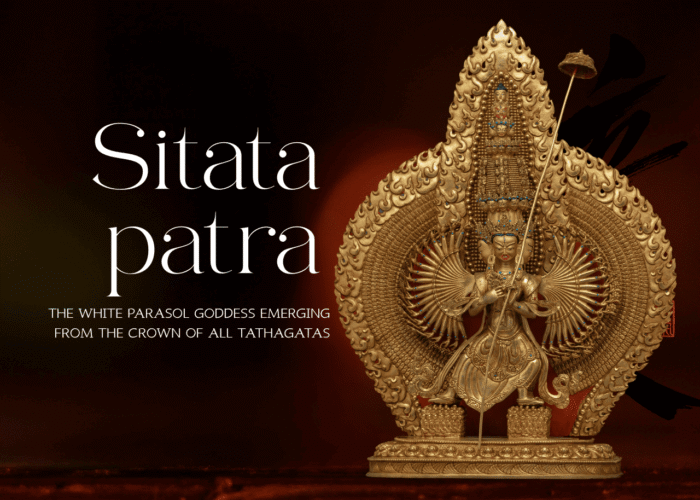
The White Parasol Goddess in Tibetan Buddhist Tradition
In Tibetan Buddhism, the White Parasol Goddess, known in Tibetan as Dukkar (གདུགས་དཀར་), is one of the most powerful and revered protective deities. She is formally titled “The White Parasol Goddess Emerging from the Crown of All Tathagatas”, a name that emphasizes her origin from the enlightened wisdom of all Buddhas.
Dukkar is also honored as the “White Parasol Wheel King” and holds the foremost position among the Five Buddha-Crown Protectors. As a manifestation of supreme Buddha wisdom, she embodies absolute protection, purification, and compassionate vigilance, safeguarding beings from physical, mental, and spiritual dangers.
The Symbolism of the White Parasol: Sitatapatra
The defining emblem of Dukkar is her white parasol, from which her name originates. In Buddhist symbolism, the parasol represents a samaya, or sacred vow, signifying protection, moral discipline, and enlightened responsibility.
Just as Avalokiteshvara’s lotus symbolizes compassion and Vajrapani’s vajra represents power and determination, the white parasol reflects the pure protective activity of awakened wisdom. It shelters all beings equally, free from discrimination.
According to the “Great White Parasol Dharani Sutra,” Dukkar is described as a radiant and resplendent deity whose virtues create a vast canopy of protection, shielding sentient beings from illness, calamities, evil influences, and spiritual obstacles. The sutra contains powerful dharanis and mantras that have been chanted for centuries for protection and longevity.
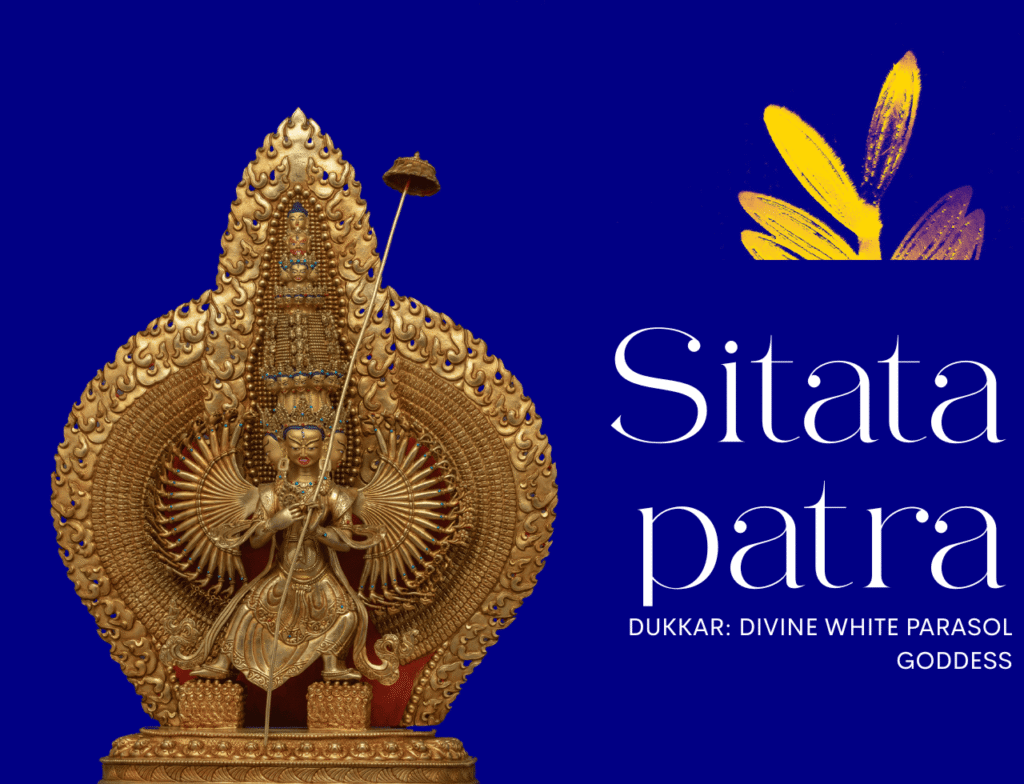
Historical Devotion: Kublai Khan and the White Parasol Goddess (Sitatapatra )
The White Parasol Goddess has long been venerated not only in religious contexts but also in historical and political spheres. Kublai Khan, the founder of the Yuan Dynasty, was a devoted follower of Dukkar.
Historical records state that he placed a white parasol beside his imperial throne, symbolizing his devotion to the Goddess and his wish for divine protection, stability, and longevity of his empire. This act highlights the belief that Dukkar’s protective power extends beyond individuals to nations and realms.
Thangka Depictions: The Thousand-Armed, Thousand-Headed Goddess (Sitatapatra )
In Tibetan Thangka art, the White Parasol Goddess is often portrayed in her awe-inspiring form as the Thousand-Armed, Thousand-Headed Goddess, symbolizing her limitless ability to protect beings in all directions and dimensions.
This form visually communicates her omnipresence, omniscience, and boundless compassion, emphasizing that no being is beyond her protective reach.
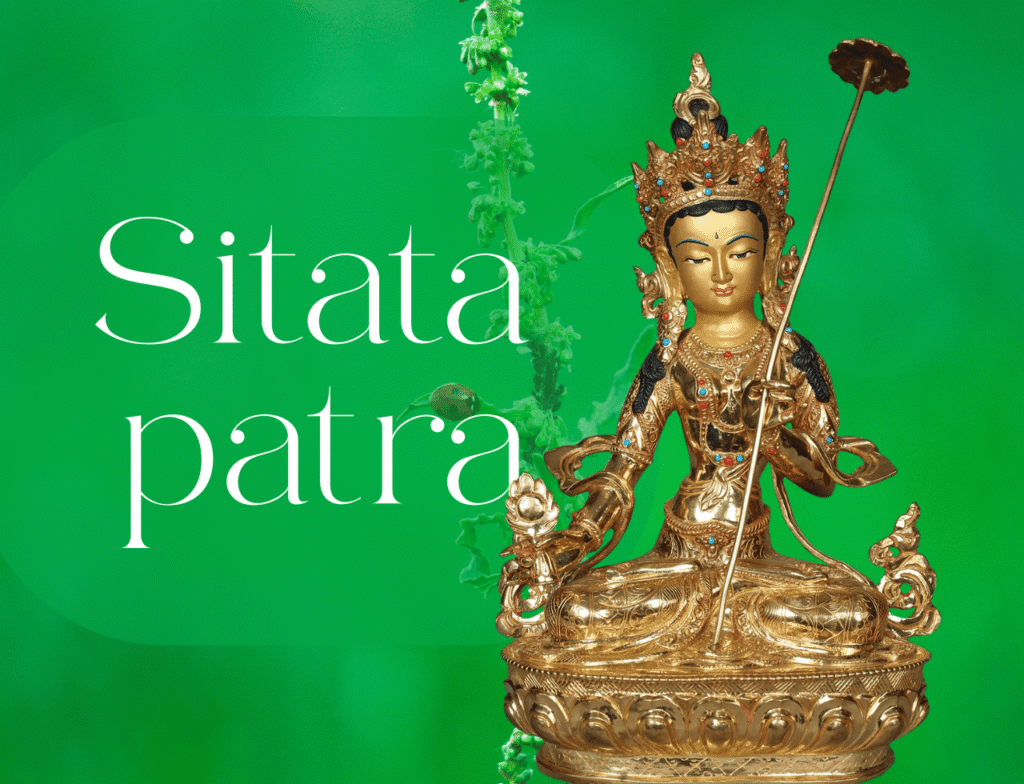
The Profusion of Heads: Symbolism of Enlightened Wisdom
Dukkar’s many heads carry profound symbolic meaning:
- Central 200 white heads represent the primordial source of all forms and pure wisdom
- Yellow heads symbolize enrichment and abundance
- Red heads signify magnetizing power and compassionate activity
- Green heads reflect enlightened action and protection
- Blue heads represent wrathful wisdom that subdues obstacles
Together, these colors embody the Five Dhyani Buddhas, illustrating Dukkar as a complete expression of enlightened qualities.
The Thousand Legs and Arms: Supreme Power of Protection
The depiction of Dukkar with 1,000 arms and 1,000 legs symbolizes her absolute mastery over both natural and supernatural forces.
- 500 right legs trample celestial beings, indicating authority over divine realms
- 500 left legs subdue demonic forces, showing her power to overcome harmful energies
This imagery conveys that her protection is universal, extending across all realms of existence without bias.
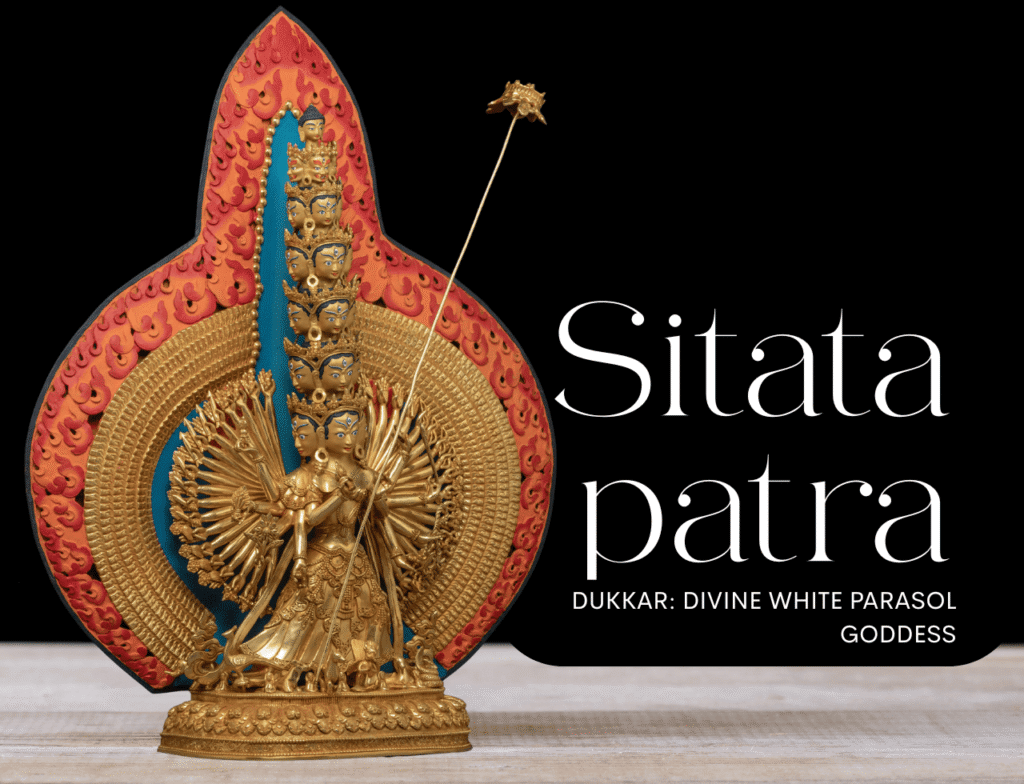
The Symbolic Meaning of Sitatapatra Dukkar’s Sacred Attributes
The Vajra and the White Parasol
In her right hand, Dukkar holds a vajra, symbolizing indestructible wisdom, inner balance, and harmony between body and mind. The vajra represents unwavering truth and the unshakable nature of enlightenment.
In her left hand, she holds the great white parasol, her most iconic attribute. This parasol symbolizes the pure protective canopy of Buddha’s wisdom, shielding beings from suffering, ignorance, and fear.
Attributes Held by Her Other Arms
Dukkar’s many arms hold sacred objects, each carrying specific meaning:
- Dharma Wheel: The path toward enlightenment and righteous conduct
- Bow and Arrow: Penetrating wisdom that destroys ignorance
- Other ritual implements: Represent skillful means, spiritual authority, and compassionate action
Together, these attributes portray Dukkar as a complete guardian of both worldly and spiritual well-being.
Invocation of the White Parasol Goddess (Sitatapatra) for Longevity and Wisdom
Worship of the White Parasol Goddess is traditionally associated with long life, increased wisdom, and spiritual protection. Chanting her mantra is believed to:
- Extend lifespan
- Remove life-threatening obstacles
- Enhance intelligence and clarity
- Protect against negative karmic influences
According to Tibetan tantric scriptures, reciting Dukkar’s mantra on specific lunar days—especially during auspicious astrological periods—multiplies its benefits and supports progress toward ultimate liberation (Nirvana).