
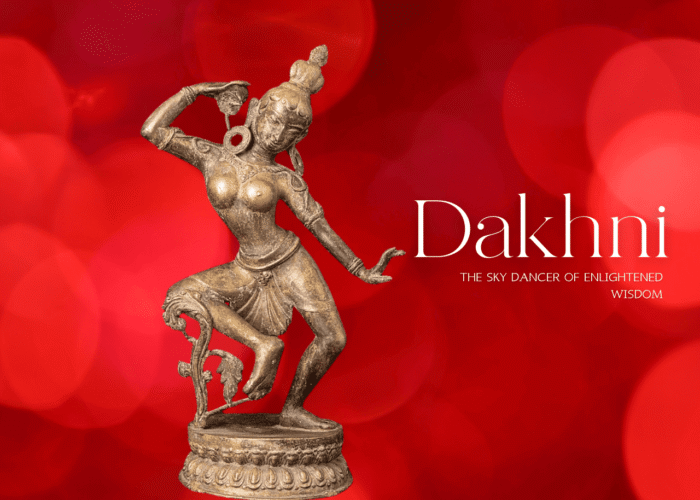
Dakini in Tibetan Buddhism: The Sky Dancer of Enlightened Wisdom
In Tibetan Buddhism, the Dakini, literally meaning “sky dancer” or “space goer,” is a central and deeply revered figure in Vajrayana practice. She is commonly known as the Vajra Dakini or Wisdom Dakini, and in Tibetan she is called Khandro.
Dakinis are not merely symbolic beings; they are considered living expressions of enlightened wisdom, especially the wisdom of emptiness (śūnyatā). They serve as guardians of esoteric teachings, protectors of tantric lineages, and catalysts for spiritual realization. In Vajrayana Buddhism, it is widely believed that without the blessing and guidance of the Dakini, even intense and disciplined practice may fail to produce realization.
Dakini as the Guardian of Esoteric Wisdom
Dakinis are regarded as protectors of secret mantra teachings and guardians of the Buddha’s most profound instructions. They safeguard tantric knowledge from misuse and ensure that it is transmitted only to practitioners who possess proper motivation, devotion, and discipline.
Often appearing in visionary experiences, dreams, or symbolic encounters, Dakinis challenge ego, cut through delusion, and awaken direct insight. Their presence can be gentle and inspiring or fierce and disruptive, depending on what the practitioner needs to overcome attachment and ignorance.
This unpredictable and dynamic quality reflects the Dakini’s role as a force of awakened awareness, unconstrained by conventional logic or dualistic thinking.
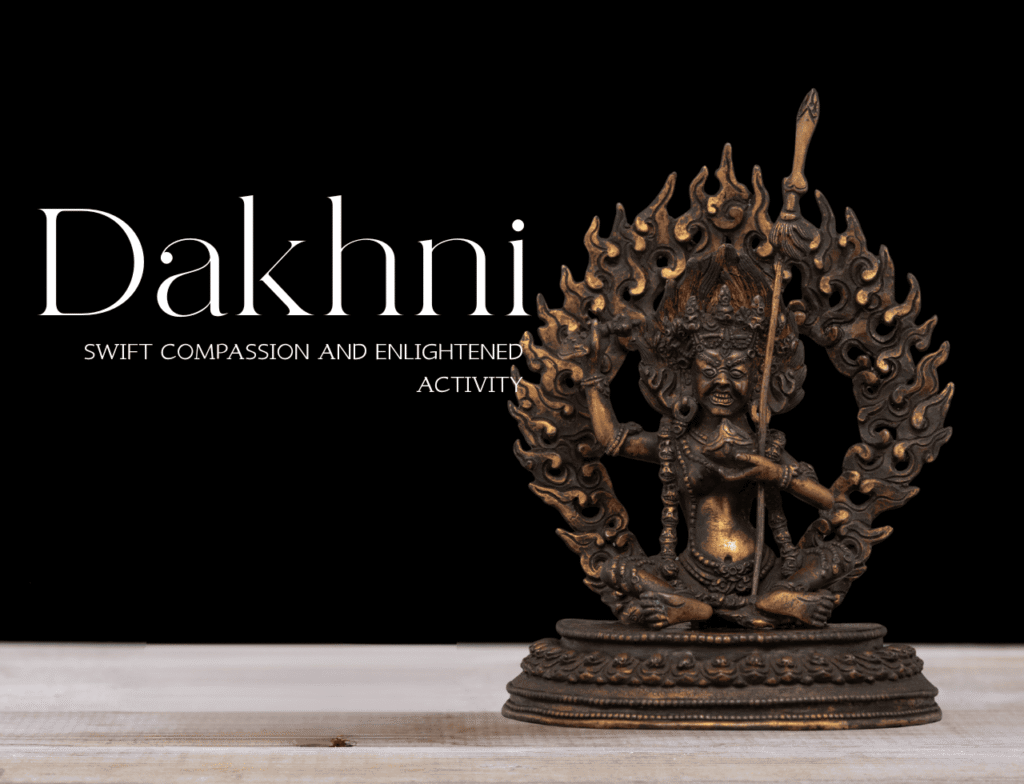
Dakinis in Esoteric Vajrayana Practice
According to classical texts such as “Thangkas of the Mother Deities and Sky Dancers,” all female deities appearing in dualistic mandalas are regarded as manifestations of the Vajra Dakini. This means that goddesses such as Vajravarahi, Samantabhadri, Kurukulla, and others are expressions of Dakini wisdom in different forms.
In Vajrayana Buddhism, Dakinis are traditionally understood through three interconnected levels:
External Dakinis
Externally, Dakinis appear as specific deities in mandalas and Thangka paintings. These forms represent bliss united with emptiness, and they function as meditational supports. Examples include Vajravarahi and Samantabhadri, who embody primordial wisdom and non-dual awareness.
Internal Dakinis
Internally, the Dakini represents a practitioner’s direct realization of bliss and emptiness within their own mindstream. At this level, the Dakini is not external but is experienced as a transformative inner wisdom that reshapes perception, conduct, and understanding of reality.
Secret Dakinis
At the secret level, Dakinis symbolize the dynamic movement of bliss and awareness within the Vajra body. This involves the activation of subtle energy channels (chakras), inner winds, and essences. Through advanced tantric practices, this Dakini energy leads to higher realization, ecstatic awareness, and ultimate liberation.
The Dakini as the Embodiment of Emptiness and Bliss
One of the Dakini’s most important roles is to embody the inseparable union of emptiness and bliss. Unlike philosophical explanations of emptiness, the Dakini reveals this truth through direct experience.
She represents:
- Freedom from conceptual limitations
- Non-dual awareness beyond subject and object
- Spontaneous wisdom that arises naturally
- The playful yet fierce energy of awakened mind
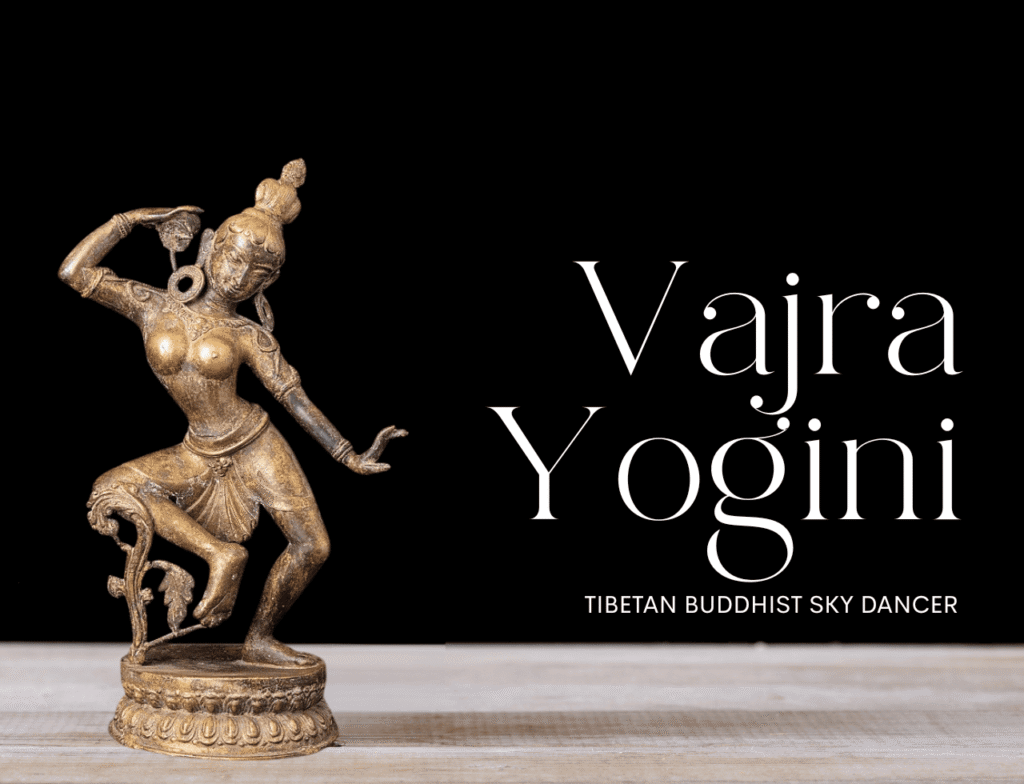
Her dancing posture, often seen in Thangka art, reflects the fluid, dynamic, and liberated nature of reality itself.
Dakinis in Tantric Buddhism and Ritual Practice
In tantric Buddhism, Dakinis guide practitioners through complex rituals, empowerments, and advanced yogic practices. They are frequently invoked during initiations (abhisheka) and serve as guardians of sacred vows (samaya).
Dakinis also play a key role in:
- Termas (hidden treasure teachings)
- Visionary revelations to great masters
- Protecting tantric practitioners from obstacles
- Inspiring spontaneous insight and realization
Many great Tibetan masters describe encounters with Dakinis as turning points in their spiritual lives, marking moments of sudden clarity and deep transformation.
Dakini Iconography in Tibetan Thangka Art
In Tibetan Thangka paintings, Dakinis are depicted in dynamic, dancing postures, often naked or lightly adorned, symbolizing freedom from ego and attachment. Their expressions range from blissful to wrathful, reflecting their skillful means in guiding practitioners.
Common iconographic features include:
- Dancing poses representing awakened activity
- Skull ornaments symbolizing impermanence
- Kapala (skull cup) signifying transformation
- Curved knives (kartika) representing the cutting of ego
These visual elements are not decorative but serve as direct teachings on the nature of mind and reality.
Dakini as a Living Force of Transformation
In Tibetan Buddhism, the Dakini is understood not as a distant deity, but as a living force of wisdom, awareness, and transformation. She appears wherever attachment, rigidity, and ignorance are ready to be dissolved.
Through her guidance, practitioners are led beyond conceptual understanding into direct realization of reality as it truly is—open, luminous, and free.