
Damxung Airport: Where Tibet’s Aviation History Began
Damxung Airport holds a truly irreplaceable place in Tibetan history. As the first airport ever built in Tibet, it marked the dawn of aviation on the “Roof of the World” and opened a bold new chapter in global high-altitude flight history.
Located in Damxung County, north of Lhasa, the airport sits at an elevation of about 4,200 meters above sea level. At the time of its construction, it proudly held the title of the highest-altitude runway in the world, astonishing aviation experts worldwide and symbolizing human determination in one of Earth’s most challenging environments.
Tibet’s First Airport Built Entirely by Hand
In May 1956, construction began on a vast open grassland southwest of Damxung County town. There were no bulldozers, no asphalt machines, and no modern construction tools. Instead, thousands of workers relied solely on manual labor and single-wheel carts to carve out the runway.
After 118 days of continuous effort, the first aviation runway on the Tibetan Plateau was completed. Built from compacted earth, the runway had limited load-bearing capacity, meaning large aircraft could not land. Yet its importance far outweighed its physical limitations.
This hand-built runway became:
- The first runway in Tibet’s history
- The highest-altitude runway in the world at the time
- The foundation of civil aviation on the Tibetan Plateau
For Tibet, Damxung Airport was not just an airstrip—it was the starting point of flight in the skies above the plateau.
A Milestone in World Aviation History
In late May 1956, Damxung Airport achieved what many once believed impossible. On May 26 and May 29, after extensive test flights, elite Chinese pilots successfully landed aircraft at this extreme altitude.
The historic flights included:
- An Ilyushin Il-12 aircraft
- A CV-240 “Beijing” aircraft (No. 401)
Approaching from both northern and southern flight routes, the planes landed safely at Damxung Airport, breaking through what had long been considered an “aerial forbidden zone.”
This achievement stunned the international aviation community and proved that stable, controlled flight operations were possible at extreme high altitudes.
The success was celebrated across Tibet and beyond. The 10th Panchen Lama, Erdeni Choekyi Gyaltsen, sent a congratulatory message, praising the event as:
“A great victory that breaks the history of world aviation.”
The Moment Tibet Entered the Aviation Era
Nearly ten years later, Damxung Airport once again stepped into history.
On March 1, 1965, a flight crew led by Sun Quangui departed Beijing in an Ilyushin Il-18 aircraft. After an overnight stop in Chengdu, the plane continued toward Tibet. At 10:30 a.m. on March 2, it landed safely at Damxung Airport.
This landing officially announced the opening of the Beijing–Chengdu–Lhasa passenger air route, marking the beginning of regular civil aviation services to Tibet.
For the first time, Tibet was connected to the rest of China by air in a reliable, scheduled way—dramatically shortening travel time and transforming communication, transportation, and development on the plateau.
From Historic Runway to Horse Racing Ground
As newer and more advanced airports were later built in Lhasa and other parts of Tibet, Damxung Airport gradually retired from active aviation service.
Today, it no longer functions as an airport, but its legacy remains deeply alive. The original runway has found a new role in local life—it is now used as an annual horse racing ground by local herders.
Each year, the former airstrip echoes not with aircraft engines, but with the sound of hooves, cheers, and celebration. This transformation beautifully blends modern history with traditional Tibetan pastoral culture, turning a pioneering aviation site into a living cultural space.
Flying Over the Potala Palace: A Symbolic Moment
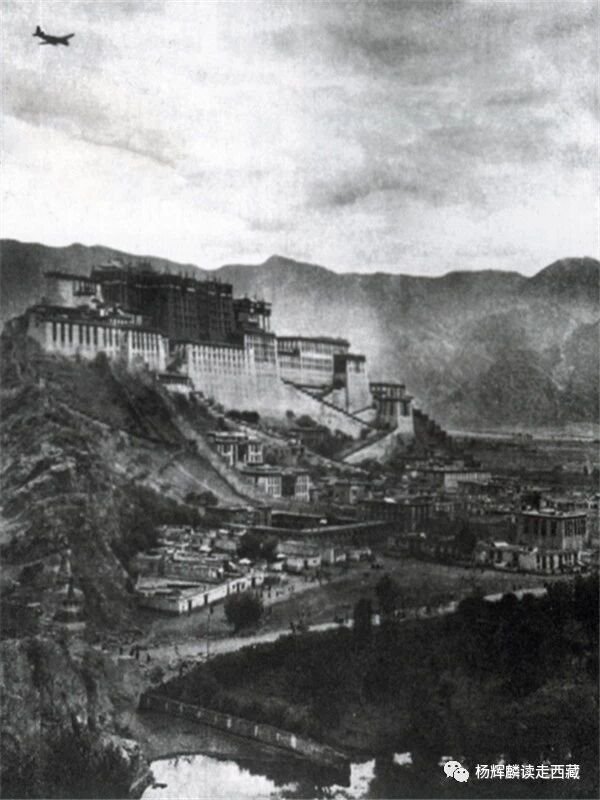
One of the most iconic scenes in Tibetan aviation history took place on May 29, 1956, during the Damxung test flights. The CV-240 “Beijing” aircraft flew directly over the Potala Palace in Lhasa.
An airplane soaring above Tibet’s most sacred landmark became a powerful image—symbolizing the moment when ancient Tibetan civilization and modern aviation technology met in the skies above the plateau.
This single flight captured the spirit of an era: tradition and innovation coexisting, with Damxung Airport standing at the heart of Tibet’s journey into the modern aviation age.