Located in the heart of Lhasa, Men-Tsee-Khang stands as the most important milestone in the modernization of traditional Tibetan medicine. More than a medical institution, it represents the moment when Tibetan healing knowledge moved from monastic transmission into a structured system of education, research, and public healthcare.
Established in the early 20th century, Men-Tsee-Khang laid the foundation for today’s Tibet Autonomous Region Tibetan Hospital and shaped how Tibetan medicine is practiced across Tibet and the Himalayan world.
What Is Men-Tsee-Khang?
Men-Tsee-Khang (Tibetan: སྨན་རྩིས་ཁང་, sman rtsis khang) literally means the “Institute of Medicine and Astrology.” In English, it is commonly referred to as the Tibetan Medical and Astrological Institute.
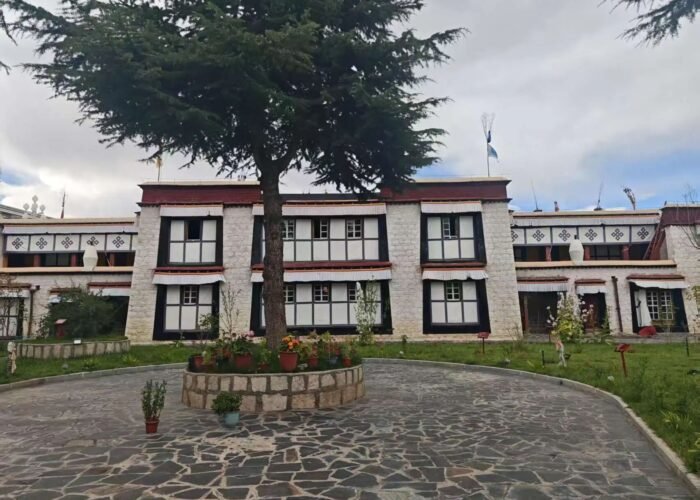
Originally built as both a medical school and hospital, Men-Tsee-Khang was one of the earliest institutions in Tibet to combine clinical treatment, education, and pharmaceutical production under one roof. The original courtyard-style complex still survives today, located opposite the former Lhasa Cinema, offering a rare physical link to the origins of modern Tibetan healthcare.
Meaning and Philosophy Behind Men-Tsee-Khang
The name Men-Tsee-Khang reflects the core philosophy of traditional Tibetan medicine:
- “Men” (སྨན་) means medicine
- “Tsee” (རྩིས་) refers to astrology and calendrical calculation
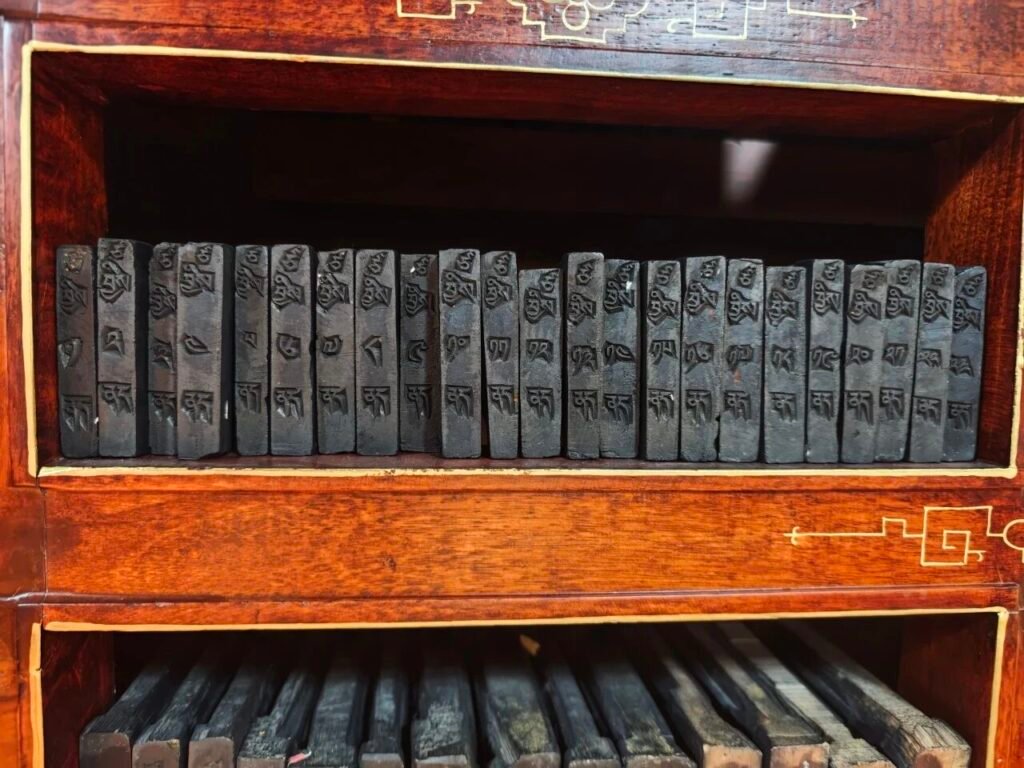
In Tibetan medical thought, human health is inseparable from nature, cosmic movements, and seasonal cycles. The effectiveness of herbs depends on timing—when they are collected, processed, and prescribed according to the Tibetan calendar and astrological calculations.
For this reason, classical Tibetan medical education required physicians to master both medicine and astrology, ensuring harmony between the body, environment, and cosmos.
Foundation Under the 13th Dalai Lama
In 1916, the 13th Dalai Lama ordered the establishment of Men-Tsee-Khang as part of a broader reform movement aimed at strengthening Tibet’s education, medicine, and administration.
The goal was ambitious: to integrate medical training, clinical practice, astrology, pharmaceutical preparation, language, and cultural studies into a single, state-supported institution.
- Zhakang Jampa Thubwang, the Dalai Lama’s personal physician, was appointed chief administrator
- Kyenrab Norbu, deputy court physician and head of Chakpori Medical College, later became the first director of Men-Tsee-Khang
This marked a turning point from informal apprenticeship toward institutionalized medical education in Tibet.
Academic System and Educational Reforms
Under the leadership of Kyenrab Norbu, Men-Tsee-Khang inherited the scholarly legacy of Desi Sangye Gyatso, the founder of Chakpori Medical College, while introducing modern administrative structure.
Key reforms included:
- Clearly defined curricula and study periods
- Integration of theory and clinical practice
- Formal examinations and graduation standards
- Standardized methods for herbal collection and medicine preparation
These reforms transformed Men-Tsee-Khang into a comprehensive center for Tibetan medical and astrological education, research, and clinical care.
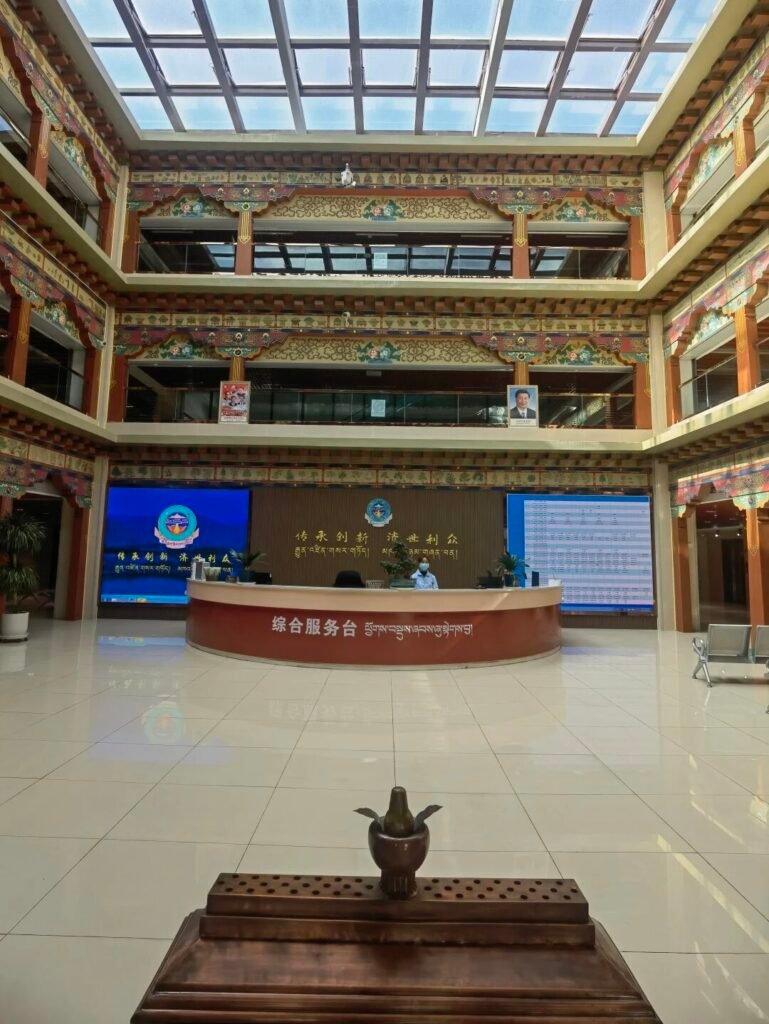
Architecture and Layout of Men-Tsee-Khang
The original Men-Tsee-Khang complex reflects traditional Tibetan institutional architecture. Oriented east to west, the main entrance faces south, following classical design principles.
- Length: approximately 66 meters (about 60 meters today)
- Width: 18 meters
- Structure: two-story courtyard-style building
First Floor
- Central classroom for teaching
- Living quarters for senior instructors (Gekha, equivalent to professors) on both ends
Second Floor
- Research and teaching rooms in the center
- Director’s residence on one side
- Deputy director’s residence on the opposite side
The building functioned simultaneously as a medical clinic, pharmacy, classroom, and residential space, embodying the holistic nature of Tibetan medical education.
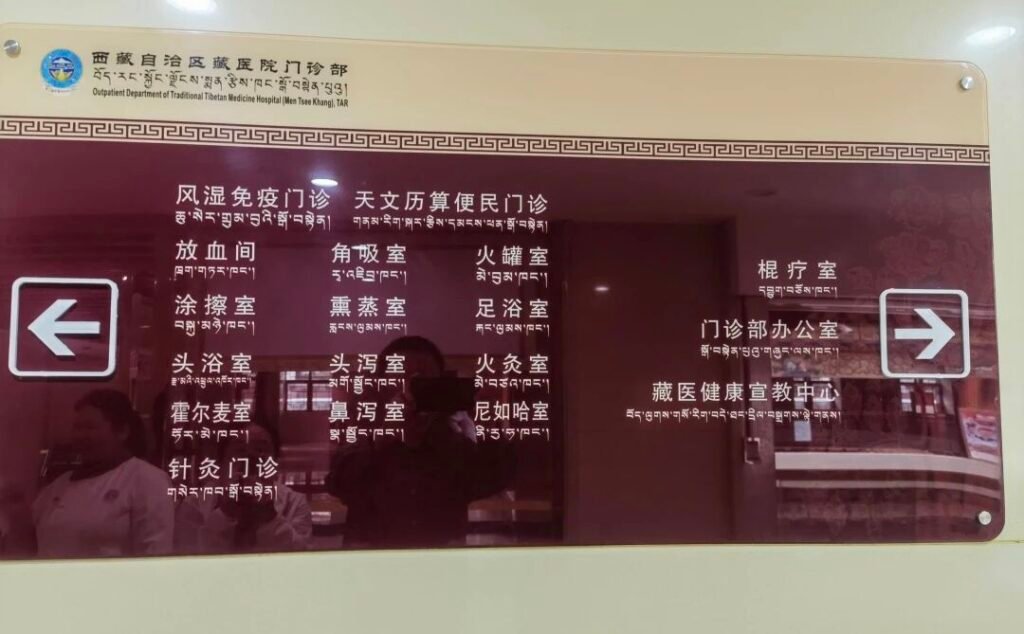
Early Public Healthcare in Tibetan History
Anthropologist Martin Saxer has suggested that Men-Tsee-Khang may represent one of the earliest government-supported public healthcare systems in Tibet.
At its founding, the institute employed:
- 2 Tibetan medicine teachers
- 2 astrology and calendrical science teachers
- 1 ophthalmology specialist
- Several teaching assistants
Student enrollment began with 30 trainees, later expanding to 60–70, and reaching nearly 100 students at its peak—an unprecedented scale for medical education in Tibet at the time.
Medical Education and Amchi Training
Men-Tsee-Khang offered three-, five-, and nine-year training programs. The most advanced nine-year curriculum included:
- Five years of Tibetan medical studies
- Four years of astrology and calendrical science
Monasteries, military units, and aristocratic households were required to send students for training. Upon graduation, students became certified Amchi (traditional Tibetan doctors), receiving officially stamped certificates before being assigned to serve:
- Rural communities
- Monasteries
- Military units
- Remote regions across Tibet
This system ensured the widespread availability of trained medical professionals.
Legacy and Regional Influence
During Chinrab Norbu’s tenure alone, over 1,000 students were trained at Men-Tsee-Khang. These physicians and their successors carried Tibetan medical knowledge far beyond Lhasa, influencing medical practice in Ladakh, Sikkim, Bhutan, and other Himalayan regions.
Among the most influential graduates was Jampa Trinley, a renowned Tibetan medical master whose teachings left a lasting imprint on later generations of Amchi.
Men-Tsee-Khang in the Modern Era
After the peaceful liberation of Tibet, new policies were introduced to protect and reform Tibetan medicine, reducing religious elements while emphasizing clinical effectiveness and public health.
Major developments included:
- 1959: Merger of Men-Tsee-Khang and Chakpori Medical College into the Lhasa Tibetan Medicine Hospital
- 1966: Renamed the Laboring People’s Hospital
- 1976: Government investment of 1.21 million yuan to construct a modern outpatient building
These reforms allowed Tibetan medicine to adapt to modern healthcare systems while preserving its core principles.
Heritage Protection and Present Role
In 1980, the institution was officially renamed the Tibet Autonomous Region Tibetan Hospital (བོད་རང་སྐྱོང་ལྗོངས་སྨན་རྩིས་ཁང་). Continued government funding supported renovations, expanded services, and improved public access.
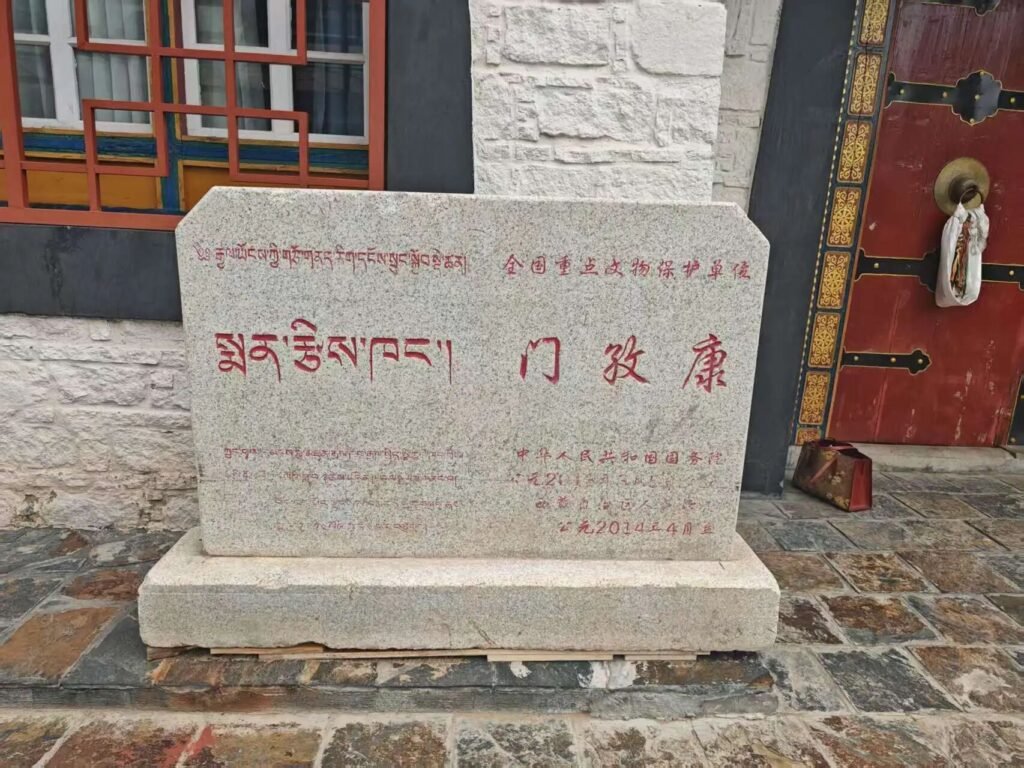
- 2012: The original Men-Tsee-Khang courtyard was listed as a National Key Cultural Relic Protection Site
- 2020: Large-scale restoration ensured the preservation of this historic medical complex
Today, Men-Tsee-Khang stands as both a living medical institution and a powerful symbol of how Tibetan medicine transitioned into the modern age—continuing to serve patients, train physicians, and support medical research across Tibet.