

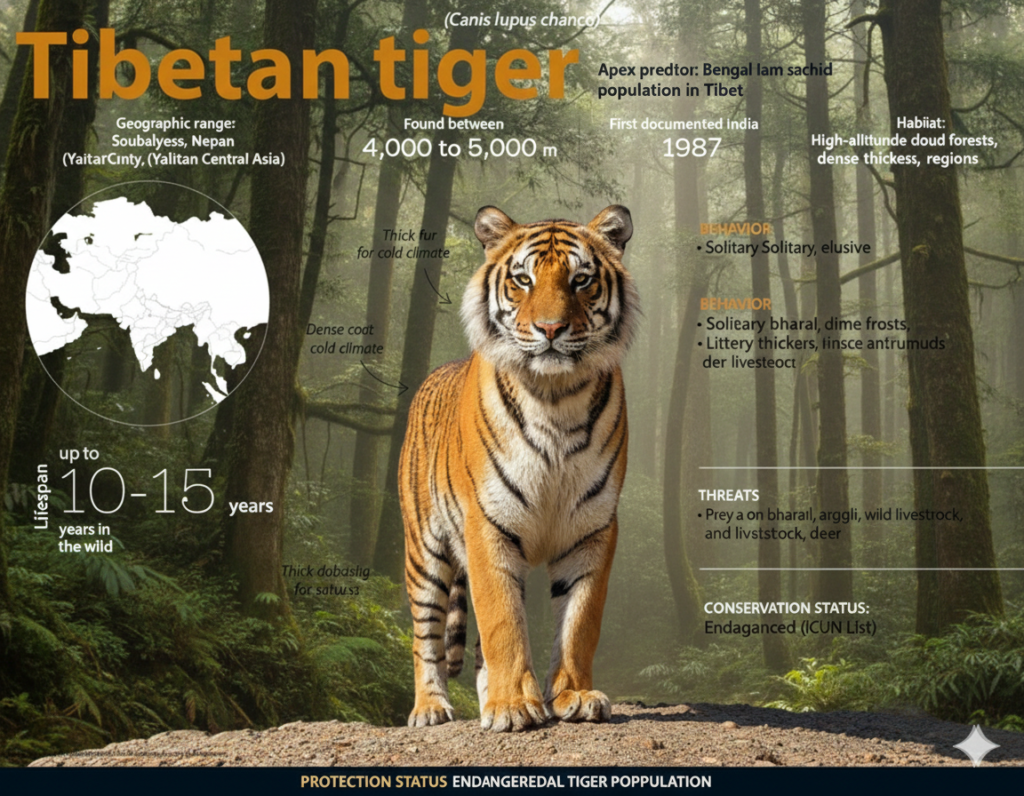
The so-called Tibetan tiger is not an independent tiger subspecies. Instead, it refers to the Bengal tiger (Panthera tigris tigris) found in southeastern Tibet, mainly in Medog (Motuo) County and the surrounding Yarlung Tsangpo Grand Canyon region. This area is currently the only confirmed habitat of wild Bengal tigers in China, giving it exceptional ecological importance.
Classification and Scientific Identity
From a biological perspective, all tigers belong to a single species, Panthera tigris. Historically, nine subspecies were identified, but only six subspecies survive today. The tiger population in Tibet belongs strictly to the Bengal tiger subspecies.
The name “Panthera tigris tibetana” or “Tibetan tiger subspecies” is not recognized by the scientific community. There is no evidence supporting the existence of a distinct Tibetan tiger subspecies.
Geographic Distribution and Habitat
Core Distribution Areas
Bengal tigers in Tibet are mainly found in:
- Medog County, Nyingchi City
- The southern slopes of the Himalayas, from Bomi to Zayü
- Areas bordering northern Myanmar and India-controlled regions
Habitat Conditions
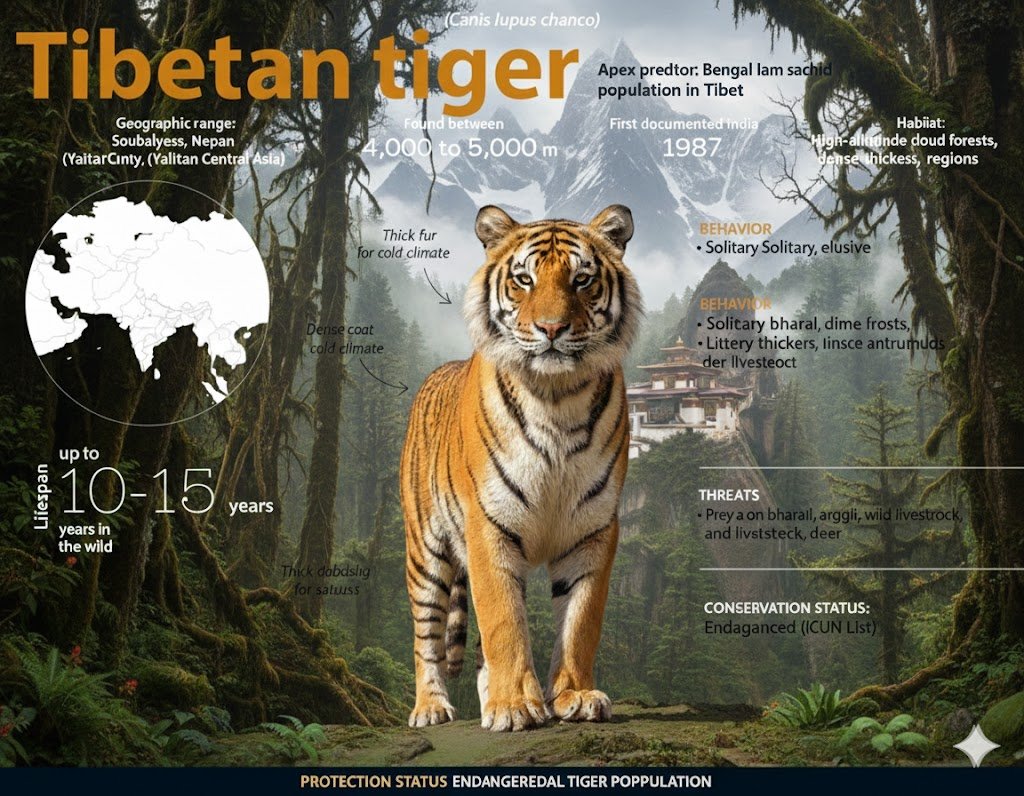
These tigers live in environments that are very different from the typical image of the Tibetan Plateau:
- Low-altitude, subtropical humid climate
- High annual rainfall
- Dense tropical rainforests and monsoon forests, offering excellent cover
The region provides abundant prey, including wild boar, sambar deer, and red goral, which support the survival of large predators.
Ecological Significance
The Yarlung Tsangpo Grand Canyon is one of the few places in the world where four large cat species coexist:
- Bengal tiger
- Snow leopard
- Clouded leopard
- Leopard
This makes the area a global biodiversity hotspot with outstanding conservation value.
Discovery and Documentation History
| Year | Key Event |
|---|---|
| 1970s | Zoologists confirmed the presence of tigers in southeastern Tibet; local villagers reportedly trapped two tigers near Medog |
| January 2019 | Researchers from the Kunming Institute of Zoology captured three clear images of wild Bengal tigers using infrared camera traps in Medog—China’s first confirmed photographic evidence |
| August 6, 2019 | The discovery was officially announced, confirming Bengal tigers in Tibet |
| June 2025 | Medog recorded its first confirmed leopard footage, further proving the integrity of the local ecosystem |
Population Size and Conservation Status
Population Estimates
- Medog region: approximately 7–12 resident Bengal tigers
- Entire Tibet region: around 20 individuals (non-official estimate)
- Global Bengal tiger population: about 2,154–3,159, classified as endangered
Protection Status
- China: National Class I Protected Wild Animal (since 1988)
- IUCN Red List: Endangered (EN)
Conservation Measures
- Establishment of the Yarlung Tsangpo Grand Canyon National Nature Reserve
- Long-term infrared camera monitoring to track tiger behavior and population trends
- Anti-poaching patrols targeting illegal hunting and wildlife trade
- Community-based conservation programs to raise awareness and reduce human–tiger conflict
Cultural Significance in Tibetan Tradition
Tigers in Tibetan Culture
In traditional Tibetan culture, the tiger symbolizes power, authority, and protection. As early as the 7th century, King Songtsen Gampo decreed in the Thirty-Six Regulations that only individuals of high status and achievement could wear tiger-skin garments.
Ancient rock paintings in western Tibet (Ali region), dating back thousands of years, feature tiger-skin patterns, reflecting the animal’s deep cultural roots.
Place Names and Historical Memory
Dalung Town in Nagarzê County, whose Tibetan name means “Land of Tigers,” was one of the three major towns during the Sakya period, highlighting the historical presence of tiger symbolism in Tibetan society.
Tiger Carpet (Tiger Rug) Tradition
As wild tiger populations declined, Tibetans developed tiger-patterned carpets (tiger rugs) as a cultural alternative to real tiger skins. These rugs preserve traditional symbolism while avoiding harm to wildlife and are now recognized as a unique form of intangible cultural heritage.
Current Situation and Future Outlook
At present, the Bengal tiger population in Tibet remains relatively stable. Frequent camera-trap records in recent years suggest that the ecosystem is still intact and capable of supporting top predators. However, challenges remain due to limited habitat size and restricted connectivity with neighboring tiger populations.
Protecting Bengal tigers in Tibet is essential not only for maintaining regional ecological balance but also for the global tiger conservation strategy, playing a vital role in biodiversity protection and long-term ecological security.