
The Eurasian Coot (Fulica atra), often called the Common Coot or White-billed Coot, is a distinctive waterbird easily recognized by its sooty-black body, bright white bill, and bold white frontal shield that extends up the forehead like a smooth bald patch. Though its stern expression can appear comical, this bird is a highly skilled swimmer and one of the most adaptable species found across Tibet’s wetlands.
Belonging to the rail family (Rallidae) rather than the duck family, the Eurasian Coot is more closely related to cranes than to typical waterfowl—an unexpected detail that surprises many birdwatchers.
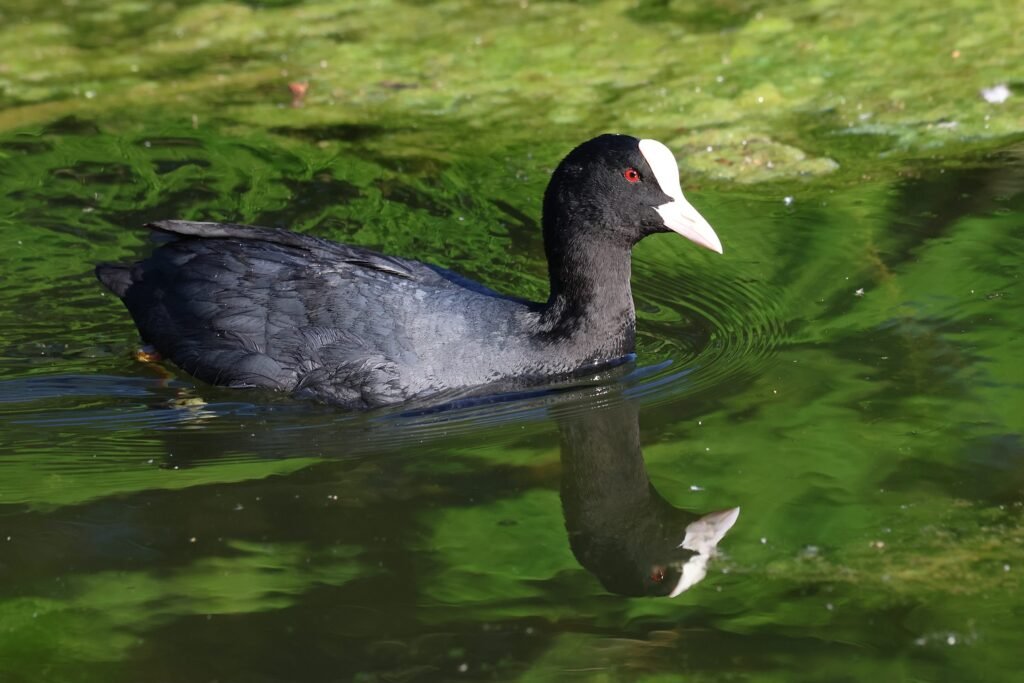
How to Identify a Eurasian Coot
Spotting a Eurasian Coot is relatively simple once you know its defining features:
- Deep black plumage that contrasts sharply with water
- Bright white bill and frontal shield
- Rounded body with a short tail
- Gray-green legs equipped with unusual toes
From afar, they may resemble ducks, but a closer look reveals their unique structure and behavior.
Not Just Another Duck: Lobed Toes Explained
One of the coot’s most fascinating adaptations is its lobed toes. Unlike ducks, which have fully webbed feet, each coot toe features flexible flaps that improve movement both in water and on land.
Benefits of lobed toes include:
- Reduced drag when moving forward underwater
- Strong propulsion when pushing through water
- Better balance on mud, reeds, and floating vegetation
This “all-terrain” design allows the Eurasian Coot to swim efficiently, dive with precision, and walk across soft wetland surfaces without sinking.
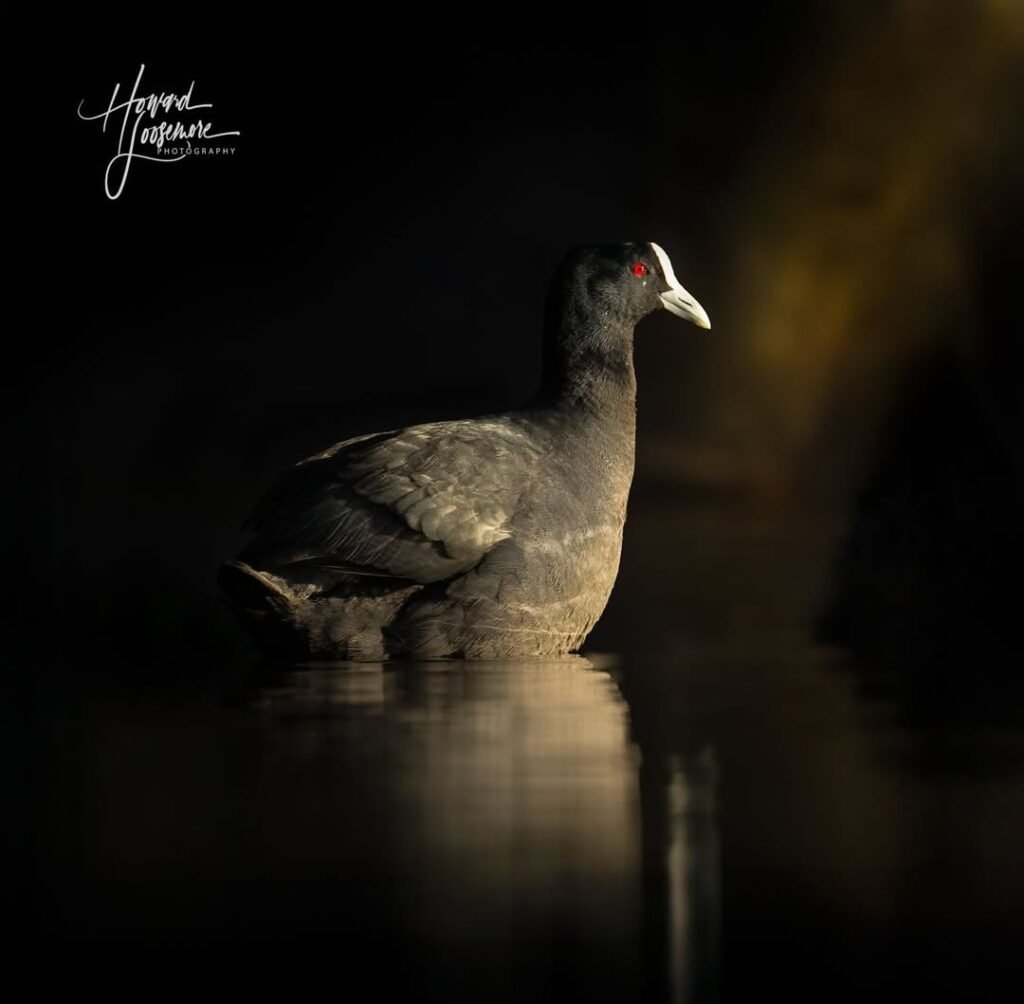
Life at High Altitudes
The Eurasian Coot has an enormous geographic range spanning Europe, Asia, North Africa, and Australasia. On the Tibetan Plateau, it has adapted to extreme elevations of up to 4,650 meters, thriving in locations such as the shores of sacred alpine lakes.
Preferred habitats include:
- Freshwater lakes
- Deep marshes
- Reservoirs
- Slow-moving rivers
- Vegetation-rich wetlands with reeds and rushes
These environments provide both shelter and abundant food sources.
Expert Swimmers and Bold Defenders
Coots spend much of their day gliding across water or diving beneath the surface for up to 15 seconds at a time. Their diet is varied and includes:
- Algae and pondweeds
- Seeds and aquatic plants
- Insects and mollusks
- Small fish
- Occasionally carrion
Despite their calm appearance, Eurasian Coots are famously territorial. When competitors enter their feeding area, dramatic “water fights” may erupt—birds lean back and strike with their powerful feet while splashing aggressively. The white frontal shield also plays a role in communication, often signaling maturity and dominance within social groups.
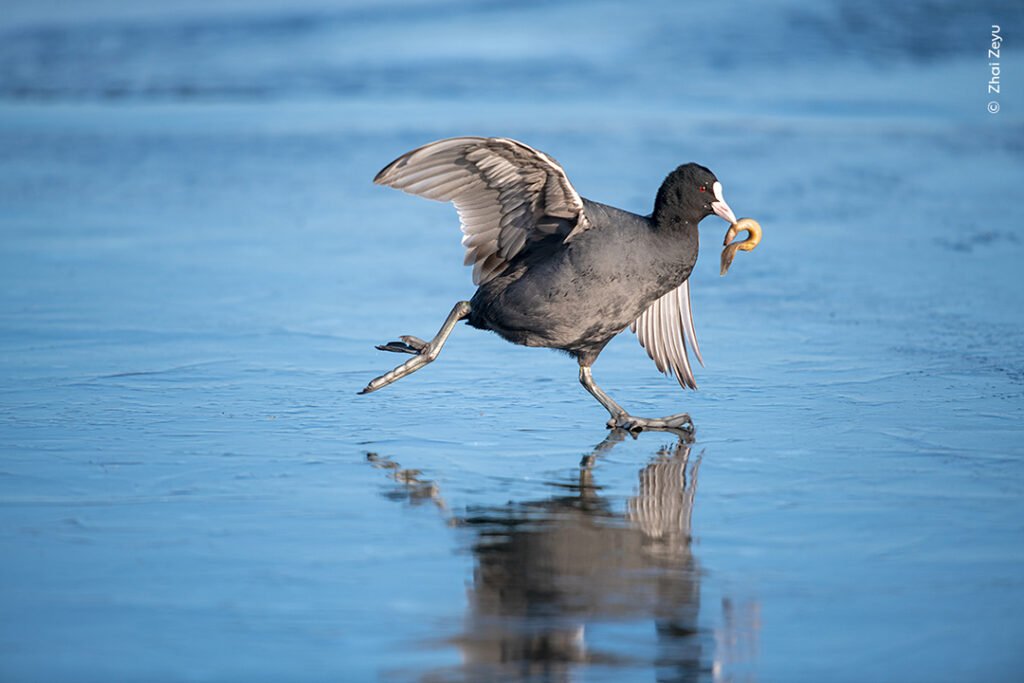
Migration and Breeding on the Tibetan Plateau
Migration patterns vary depending on location. Northern Asian populations typically travel south toward Southeast Asia or the Indian Subcontinent during winter when lakes freeze. However, many Tibetan coots remain year-round residents or make short altitudinal movements to find unfrozen water.
Breeding Season
Breeding usually occurs between mid-May and late June. To cope with cold temperatures and low oxygen levels, plateau populations often produce:
- Smaller clutch sizes (about 4–6 eggs)
- Carefully constructed floating nests woven from reeds
- Hidden nesting sites within dense vegetation
These adaptations improve survival in challenging alpine conditions.
Conservation Status
Globally, the Eurasian Coot is classified as “Least Concern,” with a population exceeding one million birds. In China, it is recognized as a Class II protected species, benefiting from wetland restoration projects.
However, several risks remain:
- Habitat degradation
- Water pollution
- Predation
- Loss of marshland ecosystems
Protecting wetlands is essential not only for coots but also for the broader biodiversity of the Tibetan Plateau.
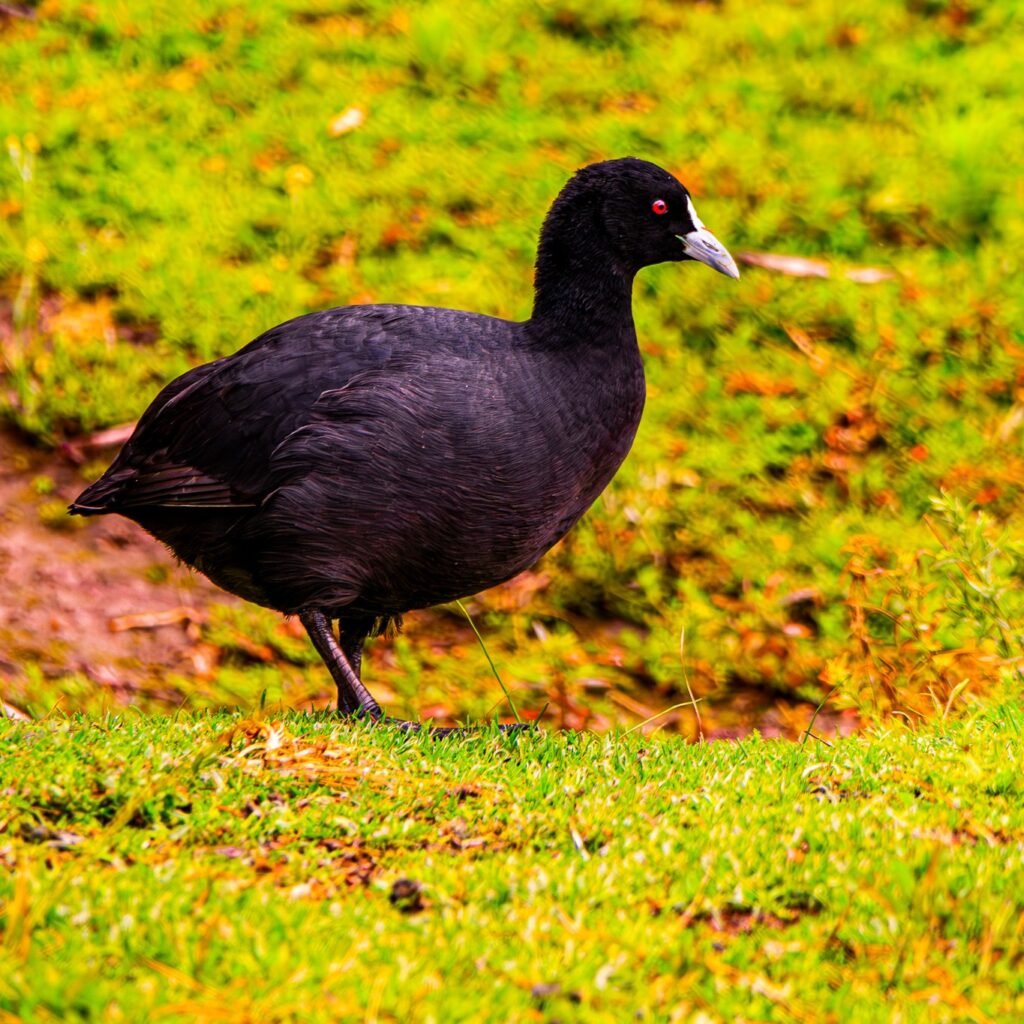
Best Time to See Eurasian Coots in Tibet
These birds can be observed throughout the year, but certain seasons offer better viewing opportunities:
- Summer (May–August): Breeding activity makes them more vocal and visible
- Winter: Flocks gather in unfrozen waters, making them easier to locate
For the best experience, visit wetlands during early morning or evening, when winds are calmer and bird activity increases.
Birdwatching tips:
- Bring binoculars for distant sightings
- Listen for their sharp, explosive calls
- Watch for bobbing black heads and white shields among reeds
- Maintain a respectful distance from nesting areas
Top Places to Spot Eurasian Coots in Tibet
Lalu (Lhalu) Wetland Nature Reserve – Lhasa
As the plateau’s largest urban marsh, this restored wetland supports breeding coots in reed-lined channels. Visitors often see them diving alongside Ruddy Shelducks and Bar-headed Geese.
Namtso Lake
Known as Tibet’s “Heavenly Lake,” Namtso sits at over 4,700 meters and offers spectacular scenery. Vegetated shorelines attract foraging coots, making it an excellent destination for eco-tours and wildlife photography.
Yamdrok Lake
This sacred turquoise lake features quiet bays fringed with reeds—ideal feeding grounds for small coot groups. Pair birdwatching with panoramic mountain views for a memorable outing.
Lhasa River Bends and Zongjiao Lukang Park
Travelers staying in Lhasa can enjoy convenient sightings along vegetated river edges or within park ponds. These accessible locations are perfect for relaxed, city-based birding.
Travel Tips for Birdwatchers
Preparing for Tibet’s unique environment ensures a smoother wildlife experience:
- Dress in layers to handle rapid weather changes
- Avoid feeding birds or approaching nests
- Choose guided tours for protected wetlands
- Carry sun protection—the plateau sun is intense even in cool weather
International visitors must arrange Tibet Travel Permits through licensed operators. Combining wetland excursions with cultural landmarks such as the Potala Palace creates a richer journey through one of Asia’s most remarkable high-altitude regions.
Quiet yet resilient, the Eurasian Coot adds subtle elegance to Tibet’s vast waters—proof that even understated birds can thrive in some of the planet’s most extreme landscapes.