

The Lammergeier (Gypaetus barbatus), widely known as the Bearded Vulture, is one of the most extraordinary birds soaring above the Tibetan Plateau. With its massive wings, fiery-colored feathers, and unusual bone-based diet, this cliff-dwelling raptor has long inspired myths and admiration across the Himalayas.
Often described as a creature of ancient skies, the lammergeier thrives where few birds dare to live—on sheer precipices, remote gorges, and alpine landscapes shaped by extreme cold and powerful winds. For wildlife enthusiasts traveling to Tibet, spotting this majestic bird is an unforgettable highlight.
A Giant Among Old World Vultures
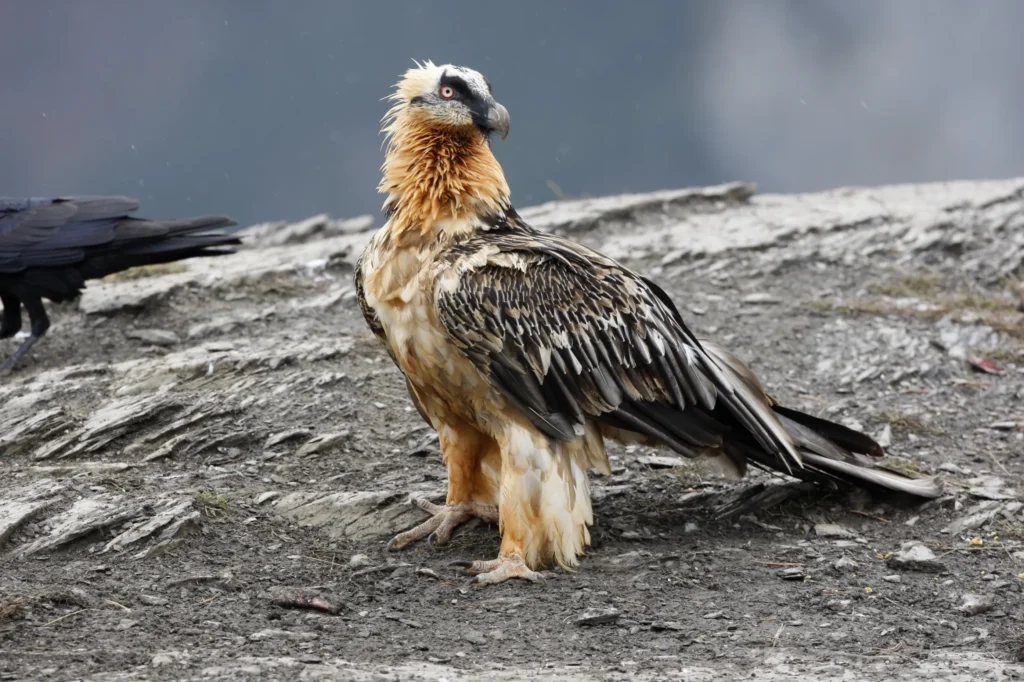
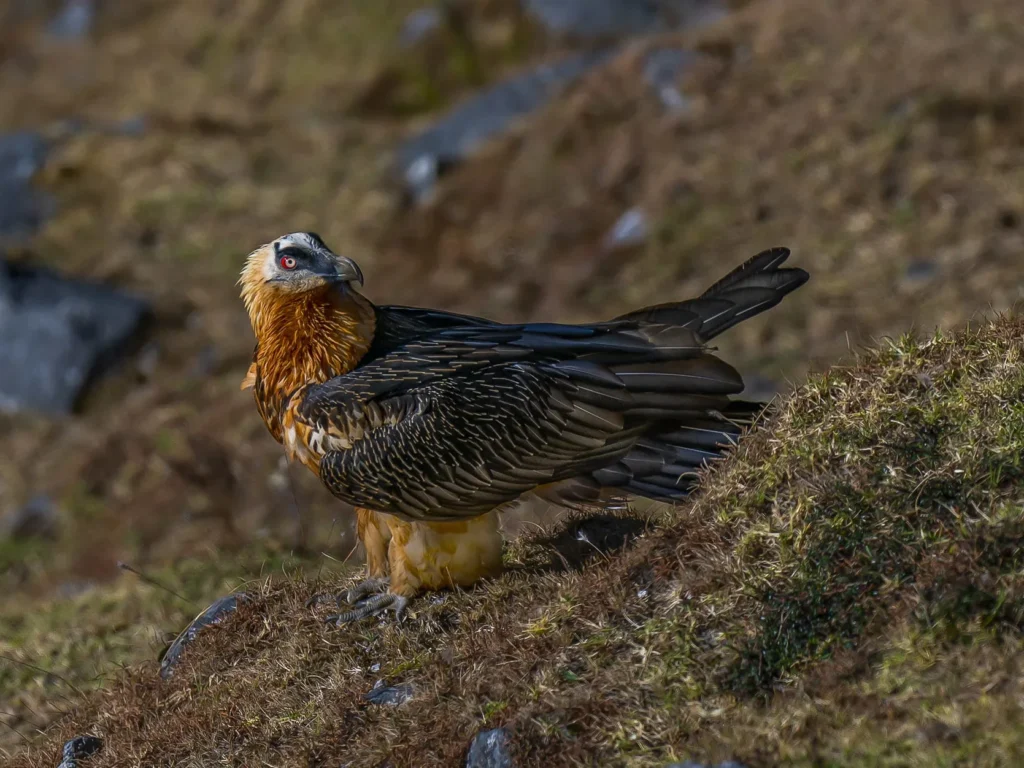
The lammergeier is instantly recognizable thanks to its dramatic appearance and enormous size.
Key Physical Characteristics
- Wingspan: 2.3–2.8 meters
- Body Color: Pale buff to rusty orange
- Distinctive “Beard”: Black bristly feathers beneath a hooked beak
- Eyes: Piercing red, outlined with black
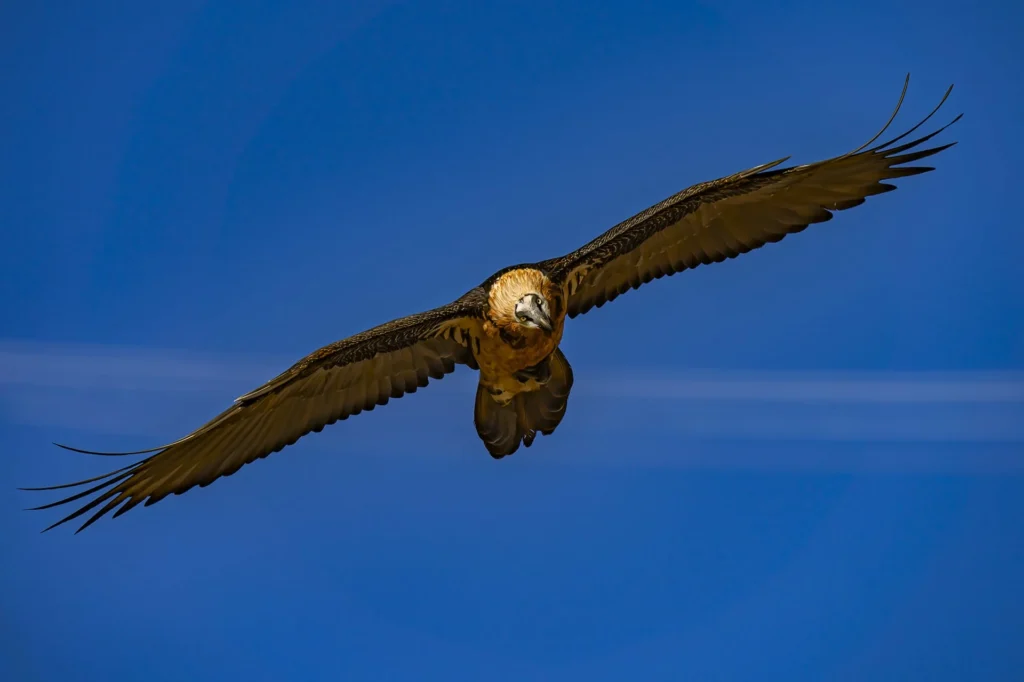
- Flight Style: Graceful, steady soaring with minimal wing flapping
Interestingly, the bird’s orange glow is often cosmetic rather than natural. Lammergeiers deliberately bathe in iron-rich mud, staining their feathers reddish—possibly to signal maturity, strength, or social status.
Built for Survival at Extreme Altitudes
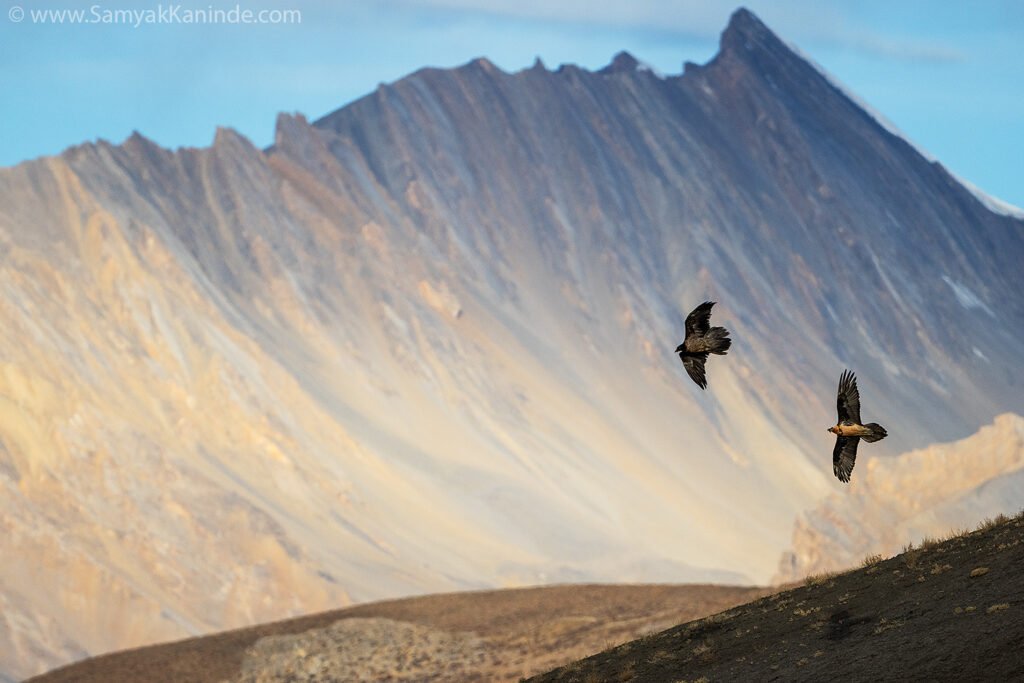
Few birds demonstrate the resilience of the lammergeier. Across Tibet and the greater Himalayan region, they inhabit elevations ranging from 1,300 to over 6,000 meters, with sightings recorded as high as 7,500 meters.
Their preferred habitats include:
- Sheer cliffs and rocky ledges
- Deep gorges and canyon walls
- Alpine pastures above the treeline
- Remote mountainous terrain near predator territories
By living close to wolves and large eagles, lammergeiers gain access to carcasses—an important food source in these sparse environments.
The Bone-Breaker: Nature’s Ultimate Recycler
The lammergeier is famously nicknamed the “ossifrage,” meaning bone-breaker. Unlike most vultures that feed primarily on soft tissue, this species obtains 70–90% of its diet from bones.
The Bone-Dropping Technique
When a bone is too large to swallow, the lammergeier carries it skyward and drops it from heights of 50–150 meters onto flat rocks known as ossuaries. The shattered fragments are then safely consumed.
Powerful Digestion
Lammergeiers possess extremely acidic stomachs—with a pH close to 1—allowing them to dissolve dense bone within hours and extract nutrient-rich marrow.
Their menu may also include:
- Carrion
- Tortoises (dropped from the air like bones)
- Small mammals such as hares
- Rarely, weak or young livestock
By consuming remains other scavengers cannot process, they play a crucial ecological role in keeping mountain ecosystems clean.
Masters of the Air
Despite their size, lammergeiers are remarkably efficient flyers.
Thermal Specialists
As morning sunlight warms cliff faces, rising air currents form thermals. Lammergeiers use these invisible highways to glide for hours while scanning valleys for the pale shimmer of sun-bleached bones.
Their lightweight yet strong skeletal structure allows them to conserve energy while covering vast territories—often 200–400 square kilometers.
Early Breeders of the Northern Hemisphere
One of the most fascinating traits of the lammergeier is its mid-winter nesting cycle, which defies the brutal conditions of the plateau.
Nesting Timeline
- Pre-laying: September–November
- Nest building: Early winter, sometimes beginning in January
- Incubation: December–February
- Chick rearing: Through late summer
By hatching chicks just as the spring thaw reveals animals that didn’t survive winter, parents ensure a steady food supply.
Architectural Marvels
Lammergeier nests are enormous structures:
- Up to 2.5 meters wide and 1 meter deep
- Built from branches, wool, dung, and debris
- Reused and expanded each year
- Positioned on nearly unreachable ledges or cave entrances
Pairs are typically monogamous, though rare trios have been observed. When two chicks hatch, sibling rivalry often results in only one survivor—a natural process known as siblicide.
The Mystery of the “Beard” and Rust-Colored Feathers
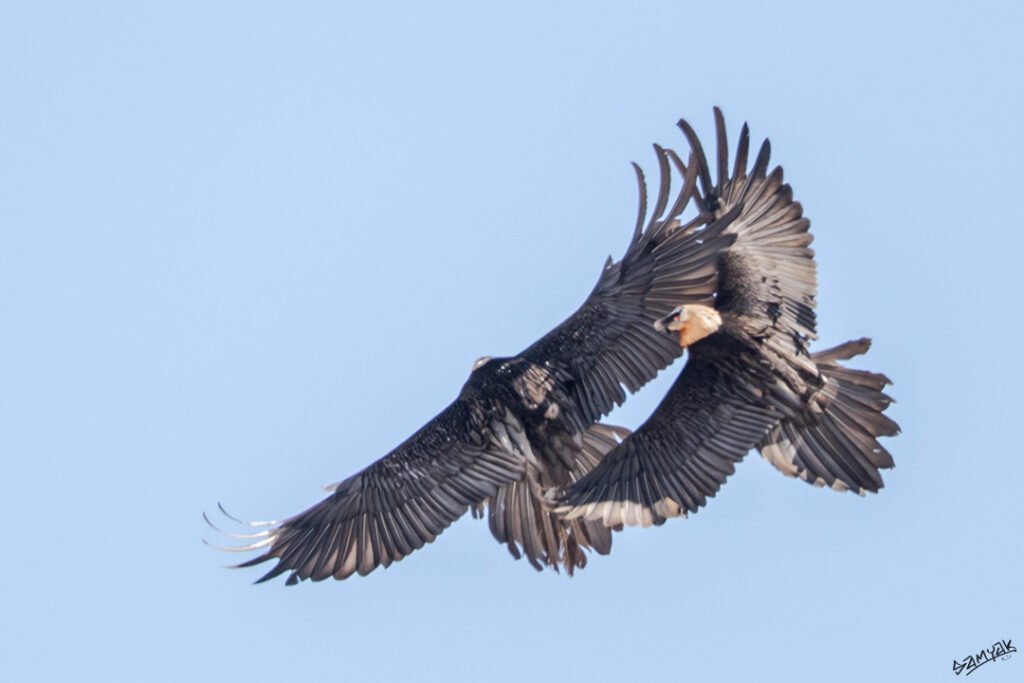
Two features give the lammergeier its mythical look.
The Black Beard
The tuft of bristles beneath the beak may function as a sensory aid while feeding deep inside carcasses or rocky crevices.
The Iron Bath
Rather than relying on natural pigmentation, lammergeiers intentionally rub iron oxide into their feathers. Scientists believe this behavior may:
- Signal dominance
- Indicate age
- Offer antibacterial protection
- Enhance attractiveness to mates
Few birds display such deliberate cosmetic behavior.
Sacred Status in Tibetan Culture
Across Tibet, lammergeiers are often regarded as protective and sacred birds. Their presence on remote cliffs contributes to an aura of spiritual guardianship, and they are rarely disturbed.
While sometimes mistaken as heralds of seasonal change, they are not traditional indicators of spring. Instead, they symbolize endurance and watchfulness over the mountains.
Lammergeier vs. Himalayan Griffon: How to Tell Them Apart
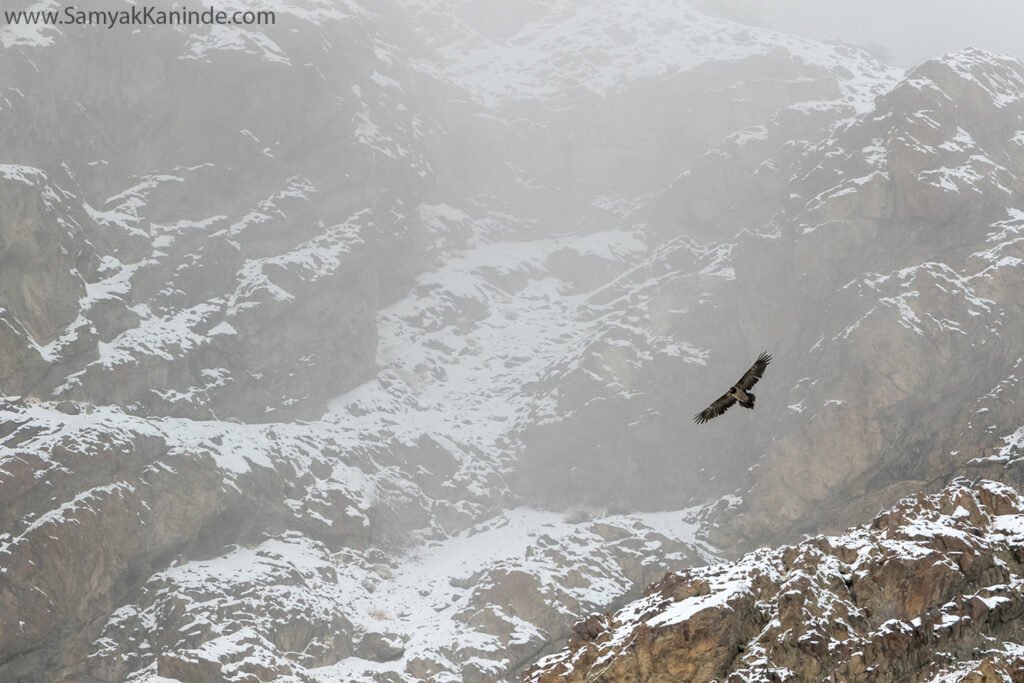
Travelers frequently confuse the lammergeier with the Himalayan Griffon vulture. A quick comparison makes identification easier:
| Feature | Lammergeier | Himalayan Griffon |
|---|---|---|
| Tail | Long, diamond-shaped | Short and squared |
| Wings | Narrow, pointed (almost falcon-like) | Broad with fingered tips |
| Head | Fully feathered with dark mask | Bald or downy |
| Diet | Bones and marrow | Mainly soft tissue |
If you see a vulture with a long wedge-shaped tail and sleek wings, you’re likely watching a lammergeier.
Where to Spot Lammergeiers in Tibet (Winter 2026 Guide)
These raptors can be seen year-round, but winter offers exceptional viewing opportunities, especially when early nesting activity begins on sunlit cliffs.
Watch for:
- Massive silhouettes gliding along canyon walls
- Birds carrying bones high into the air
- Occasional bone drops onto rocky platforms
- Rare, high-pitched whistling calls
Using a spotting scope greatly improves your chances of observing them safely from a distance.
Prime Locations for Sightings
Yarlung Tsangpo Grand Canyon
Known as the world’s deepest canyon, its dramatic cliffs provide ideal nesting habitats. Multi-day treks can bring you surprisingly close to soaring lammergeiers.
Mount Everest Base Camp Region
High passes and rocky slopes near Rongbuk Monastery are prime territory. Combining wildlife observation with an Everest journey creates an unforgettable high-altitude experience.
Namtso Lake Area
The steep shores and surrounding cliffs attract scavenging lammergeiers, particularly near grazing pastures.
High Mountain Passes Near Lhasa
Trails around areas such as Ganden Monastery offer accessible vantage points where early sunlight illuminates the birds’ glowing plumage.
Practical Birdwatching Tips
- Dress for extreme cold and sudden winds.
- Hire experienced local guides for safe navigation near cliffs.
- Never approach nesting sites.
- Avoid drones and feeding wildlife.
- Bring high-quality binoculars or a spotting scope.
International travelers should remember that Tibet Travel Permits are required and typically arranged through authorized tour operators. Many guided itineraries combine wildlife viewing with iconic destinations like the Potala Palace, creating a powerful blend of nature and culture.
Conservation Status and Future Outlook
Globally, the lammergeier is listed as Least Concern, with an estimated population between 10,000 and 100,000 individuals across Eurasia and Africa. Some regions, such as the Alps, have successfully reintroduced breeding pairs.
However, conservationists continue to monitor threats including:
- Poisoning from contaminated carcasses
- Habitat changes
- Power line collisions
- Climate impacts on mountain ecosystems
In Tibet and the Himalayas, populations remain relatively stable, benefiting from remote habitats and cultural respect.
Philosophers of the Sky
If the raven is often seen as the monk of the plateau, the lammergeier feels like its ancient philosopher—silent, observant, and commanding the highest realms of air.
Watching one glide along a sunlit cliff reveals a bird perfectly engineered for survival in extremes—an aerial recycler transforming death into life through one of nature’s most unusual feeding strategies.