
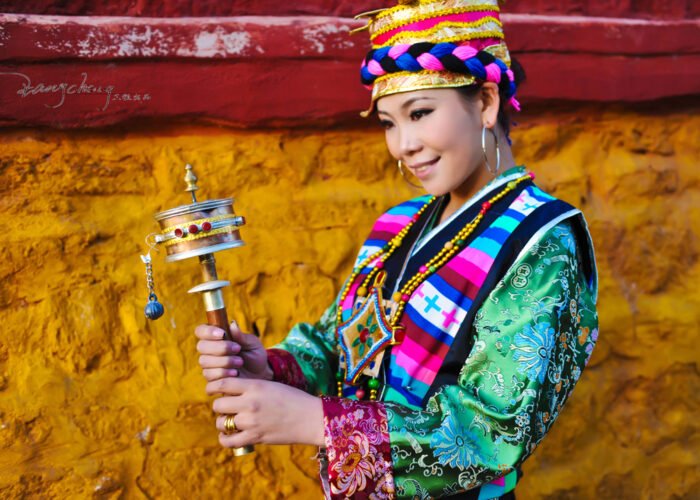
Tucked between Lhasa and Chamdo, the Niyang River Valley is one of the most lush and distinctive regions in Tibet. Before 1951, this forested land was known as Kongpo. Today, it is called Nyingchi — a place of towering mountains, dense forests, frequent rainfall, and rich biodiversity.
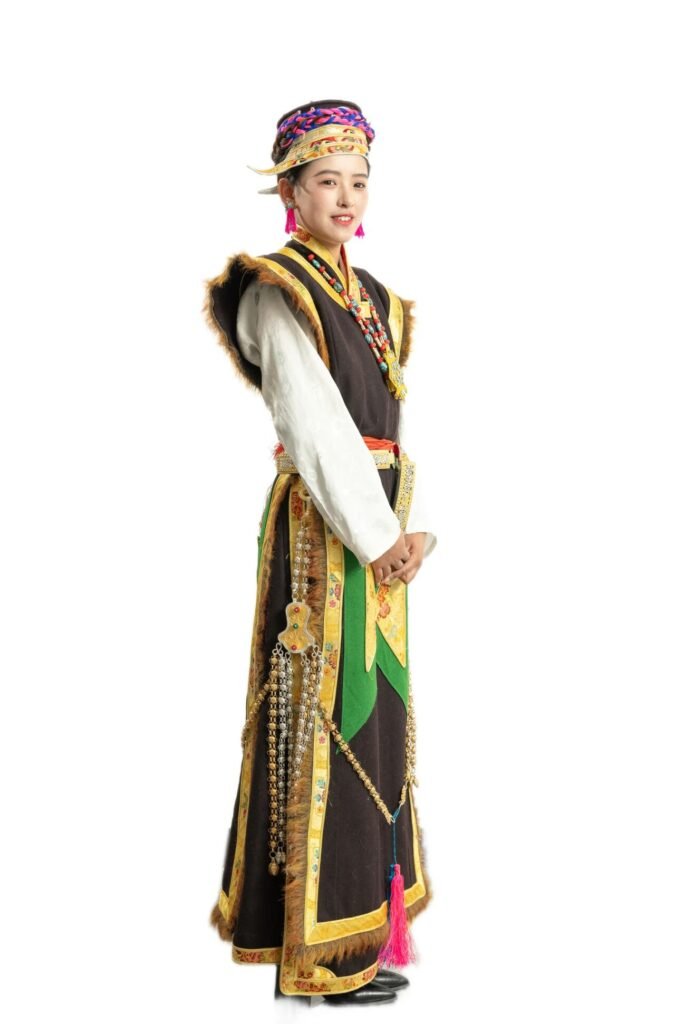
For centuries, the people here made their living through farming, gathering, logging, and hunting. This close relationship with the land shaped not only their way of life but also their clothing. Among the most recognizable garments of the region is a sleeveless pullover vest called Goshub (མགོ་ཤུབས)— worn by both men and women, and tied to a legend that still resonates in the valley today.
In 2008, Nyingchi Kongpo Tibetan clothing was included in second batch of National Intangible Cultural Heritage list, highlighting its cultural and historical importance.
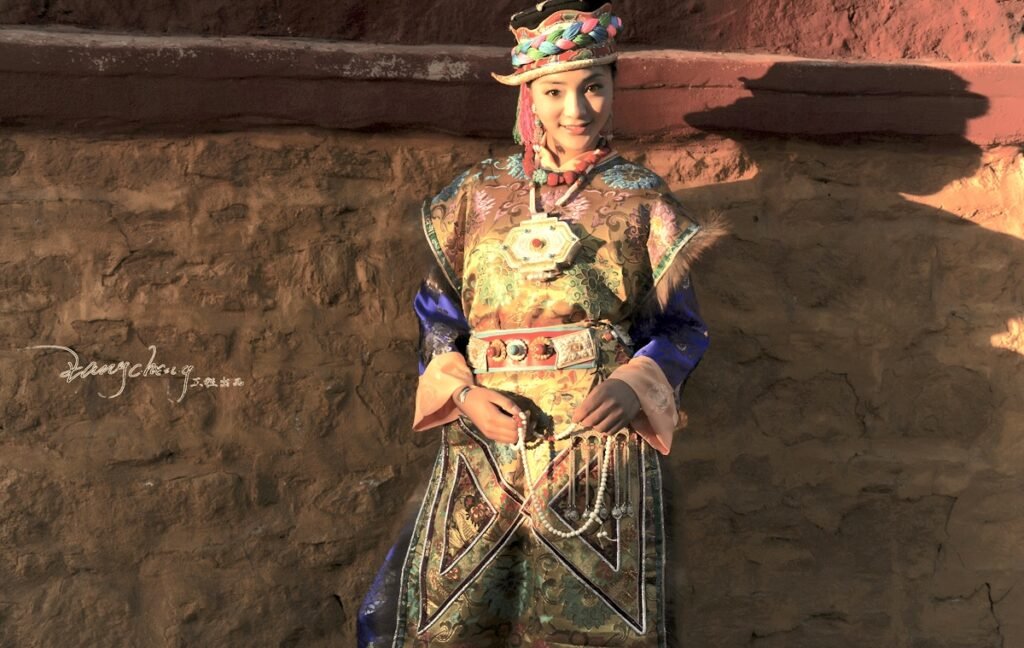
The Legend of Achung Gyalpo: How Goshub (Guxiu) Was Born
The origin of Goshub (Guxiu) is inseparable from the story of a local hero named Achung Gyalpo. According to oral tradition, a powerful foreign enemy once invaded the borders of Kongpo. Achung Gyalpo, known for his courage and deep love for his people, led the defense.
With the Tibetan New Year approaching and the enemy advancing fast, he made a bold decision — to celebrate the New Year early, on the first day of the tenth Tibetan month, so his people could mark the occasion before going to war. Villagers drank barley wine, ate roasted wild mountain pork, warmed themselves by oak fires, and danced to the rhythm of the traditional six-string lute. Then, carrying long Kongpo swords and strong bows, they marched to battle.
The invaders were driven out. But Achung Gyalpo was killed in combat, and the enemy cut off his hands to claim military reward. Risking their own lives, the villagers retrieved his body and brought him home. Because he had lost his hands, they sewed a sleeveless vest to clothe him for burial.
That garment became known as Goshub — a symbol of remembrance, sacrifice, and local pride that has been worn in the Niyang River Valley ever since.
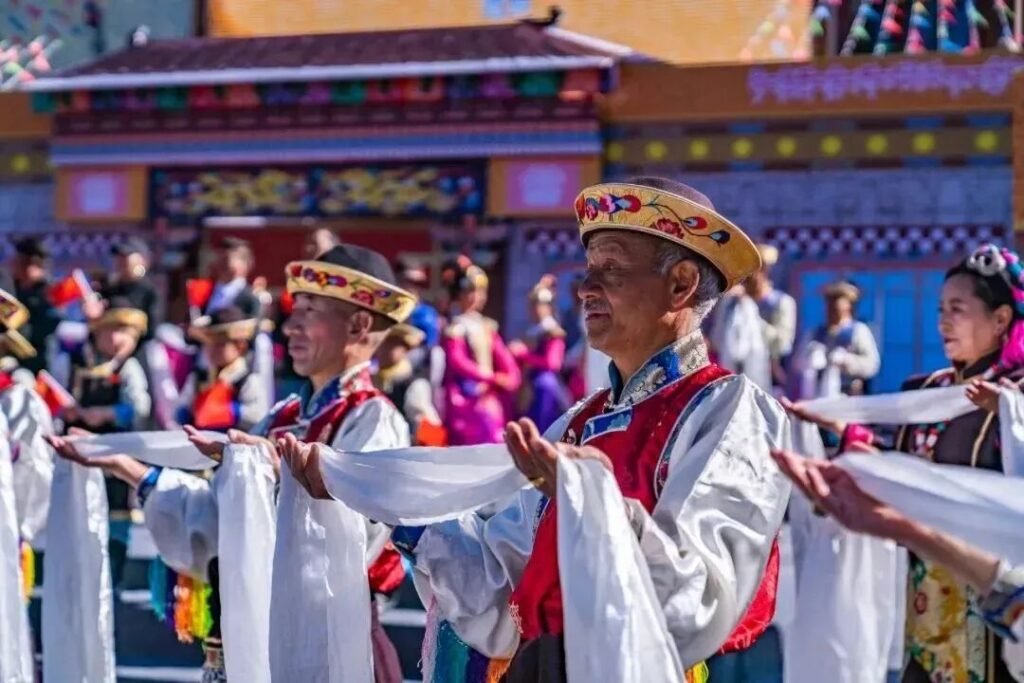
Why Goshub Became Everyday Wear in Nyingchi
The legend gives Goshub (Guxiu) its soul, but the geography of Nyingchi explains why it stayed in use. Nyingchi sits at a lower altitude than central Tibet, with a humid and rainy climate, thick forests, and steep cliffs and valleys. Local people spend much of the year in the mountains — hunting, logging, practicing slash-and-burn agriculture, and gathering medicinal herbs, wild fruits, and honey.
Daily life here means climbing steep slopes, crossing streams, and moving through thorny shrubs and dense undergrowth. The sleeveless, pullover design of Goshub is perfectly adapted to all of this. It allows full freedom of arm movement, is easy to put on and secure, and its thick material protects the torso from moisture, scratches, and rough terrain. In a region where practicality comes first, Goshub proved itself as the ideal garment.
Men’s Goshub: Seasonal Materials and Mountain Practicality
Men in Nyingchi wear different versions of Goshub (Guxiu) depending on the season. In summer and autumn, the vest is made from Pulu wool — traditional Tibetan woven wool that is lightweight yet durable, suited to forest labor in warmer months. In winter and spring, the vest switches to wild animal fur, worn over a Pulu or cloth robe for insulation during cold, wet conditions.
Common fur materials include wild sheepskin, black bear fur, and the skin of an animal locally known as Ramar — scientifically identified as the Red Goral, a rare wild ungulate native to the eastern Himalayas. Its reddish, glossy fur is the most prized material for Goshub production.
The Red Goral Fur: A Reversible Design
What makes Red Goral fur especially valuable is its versatility. In summer and autumn, the fur side is worn outward, providing rain resistance and airflow. In winter and spring, the fur side is turned inward to trap warmth. It also serves a practical purpose during hunting — the natural tones of the fur help camouflage the wearer in dense forest surroundings.
This reversible design is a perfect example of the adaptive intelligence built into Kongpo mountain clothing.
Women’s Goshub: Craft, Refinement, and Decoration
Women in Nyingchi also wear Goshub year-round, following the same seasonal pattern of Pulu wool in warmer months and fur in colder ones. However, women’s versions tend to be slightly longer, more finely tailored, and more delicately crafted. Common fur materials for women’s Goshub include calfskin, monkey fur, and other small animal pelts.
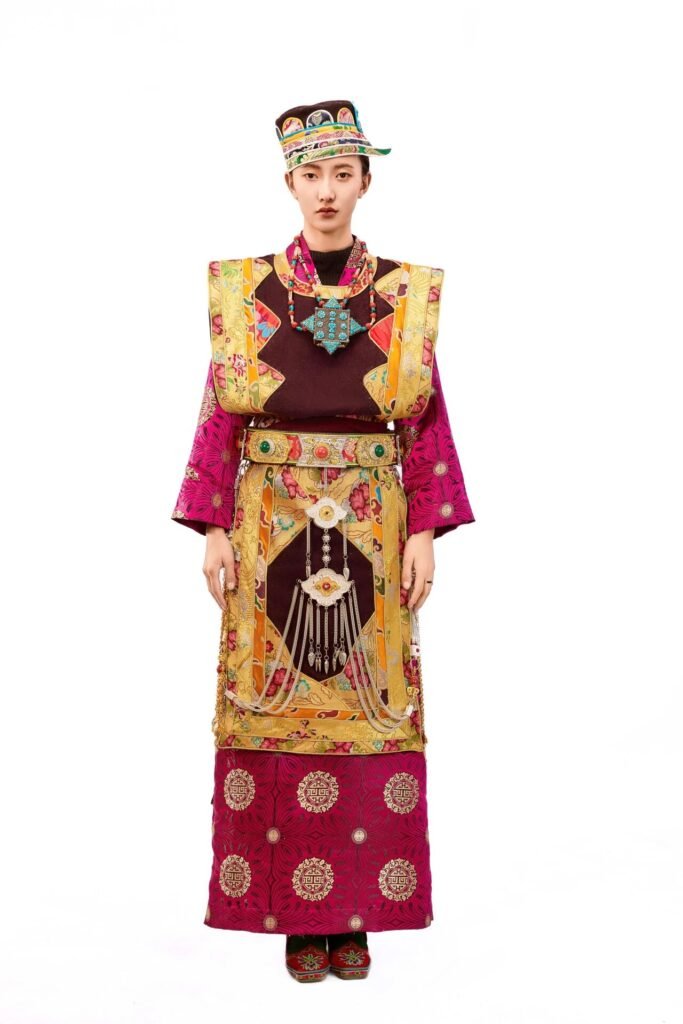
From the late 20th century onward, Kongpo women began adding decorative trims along the collar, sleeves, waist, and hemline. These trims often feature colored satin, brocade, gold-thread fabric, and precious animal fur. The result is a garment that has evolved from purely functional origins into something that also carries significant artistic and cultural value.
However, the women do not tie an apron. They adorn themselves with silver-beaten necklaces and chest ornaments, among other decorations.
The Distinctive Hats of Nyingchi
Headwear in Nyingchi is just as unique as the Goshub vest — and rarely seen elsewhere in Tibet. Men wear boat-shaped hats with brims that can be rolled or flipped depending on the occasion. Both styles are often decorated with silver satin edging and colorful satin appliqué patterns, reflecting the region’s strong sense of aesthetic craft.
Women’s Hat: A Silent Language of Identity
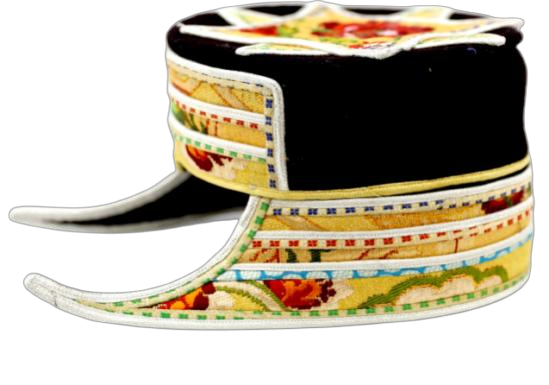
One of the most recognizable elements of Nyingchi Kongpo Tibetan clothing is the women’s hat. The hat is made of brocade-patterned pulu. It has a cylindrical shape and is decorated with silver satin trim and colorful brocade. Two slanted corners extend outward from the brim, creating a distinctive silhouette.
What makes this hat special is how it is worn:
- When the hat corners are positioned to the side, it means the woman is unmarried.
- When the hat corners are positioned at the back, it indicates she is married.
Without words, the hat communicates social status. This subtle visual code is part of the cultural richness of Kongpo Tibetan costume.
Tabshu: Braided Hair with Meaning
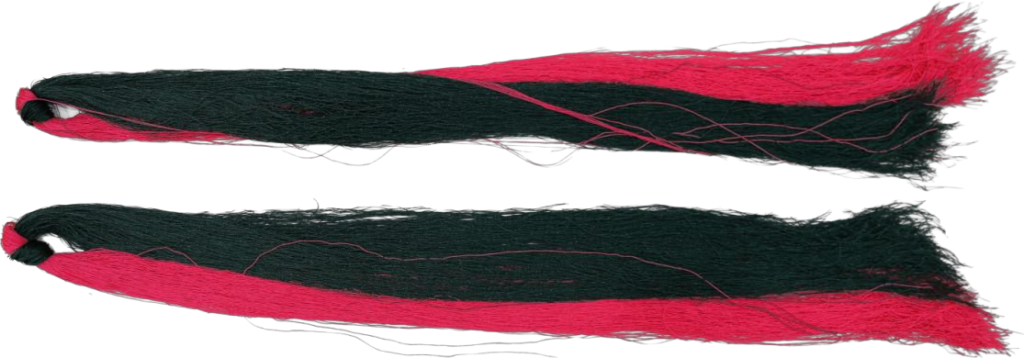
Another important feature of Gongbu women’s dress is Trabshu, a decorative braid woven into the hair.
The style of braiding reflects marital status:
- Unmarried women wear one braid and do not coil it on top of the head.
- Married women braid two plaits and coil them at the top of the head.
From the middle section of the braid, colorful silk threads are woven together with the hair. The braids are not only beautiful but also symbolic. They visually express a woman’s life stage within the community.
A Clothing Culture Rooted in Forest and Memory
The clothing traditions of Nyingchi stand apart from the pearl crowns of Shigatse and the turquoise ornaments of central Tibet. Nyingchi Kongpo Tibetan clothing tells stories about identity, belonging, and nature. Each detail carries meaning shaped by environment and tradition.
Today, designers draw inspiration from this intangible cultural heritage. The coded language of hat angles, the rhythm of braided ornaments, and the practical structure of the vest are being reinterpreted into new textures, silhouettes, and modern ways of wearing.