
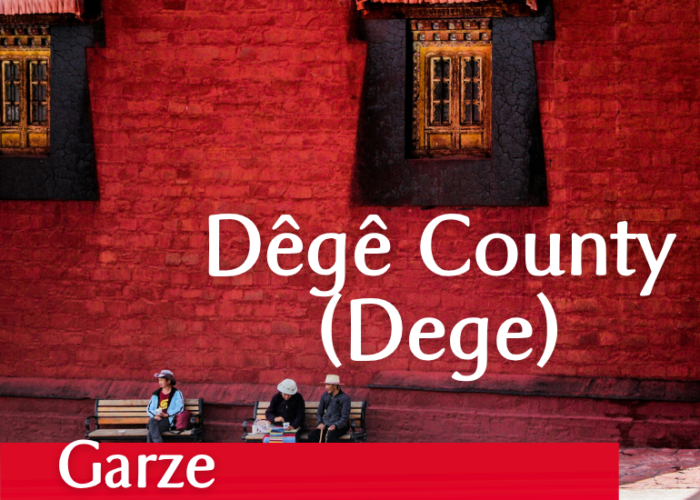
Known in Tibetan as Derge (སྡེ་དགེ་རྫོང་།), Degé County is often called the “Northern Gateway to Kham.” It is widely recognized as a source of Tibetan scriptures and the legendary homeland of King Gesar. Traveling here is not just a journey across distance, but a step into one of the most culturally preserved regions of the Tibetan Plateau.
Reaching Degé is an adventure. Travelers either cross the Jinsha River along the Sichuan–Tibet border or pass through Que’er Mountain at 4,889 meters on the famous G317 Sichuan–Tibet Highway.
- County Seat: Gengqing Town, Dexing Road No. 16
- Divisions: 10 towns and 13 townships
- Total Units: 162 administrative villages and 3 residential communities
- Elevation: 3,240 meters
- Area: 11,439.28 km²
- Population: 88,300 (end of 2024)
Terrain and Climate of Dege county
Located on the southeastern edge of the Tibetan Plateau within the Shaluli Mountains, divided by Que’er Mountain into northeastern and southwestern regions
- Northeast: High plateau with wide valleys, average elevation 4,325 m, highest peak Rongmai Ezha at 6,168 m
- Southwest: Deep river valleys and high mountains, lowest point at 2,980 m, elevation difference of 3,188 m
Continental plateau monsoon climate with long winters and short summers.
- Average temperature: 6.7°C
- Highest: 30°C, Lowest: -20.7°C
- Annual precipitation: 623 mm (mainly May–September)
- Frost-free period: ~115 days
- Sunshine: ~1,966 hours per year
A Remote Frontier Preserved in Time
Entering Degé feels like discovering a hidden world. Isolated valleys and rugged landscapes have protected its traditions, allowing Tibetan Buddhist culture to remain intact.
Once part of the powerful Degé Kingdom, today’s county is smaller but still rich in heritage. The county seat, Gongqing Town, may appear simple at first, with narrow streets and basic infrastructure. But walking through its hillside paths reveals traditional red Tibetan houses, natural scents in the air, and quiet scenes of everyday life.
Degé County History: A Complete Timeline of Kham’s Cultural Heartland
Located in the cultural heartland of Kham, Degé County is one of the most historically and spiritually significant regions on the Tibetan Plateau. Known for its powerful kingdom, rich religious traditions, and world-famous printing heritage, Degé has shaped Tibetan civilization for centuries.
Early Origins: Tribal Lands and Ancient Identity
In ancient times, the region of Degé was inhabited by tribal groups known as the Dong people. During the Western Han dynasty, it was recorded as the land of “Dongnian,” reflecting early classifications found in Chinese historical texts. Degé was divided among regional powers such as Balan and the Pulu Kingdom. This highlights its strategic position along the eastern frontier of the Tibetan Kingdom.
Tibetan Empire and Sakya Dynasty Administration
In 638 CE, Degé became part of the Tibetan Empire. It was administered under the Six Ridges of Dokham, marking its integration into the broader Tibetan political and cultural world.
During the Sakya dynasty, Degé came under imperial Tibetan administration. A pacification commission governed the region, along with military and civil offices that strengthened its role as a frontier administrative center.
Degé was incorporated into the Do-kham Regional Military Commission in 1373. Later, it was elevated within the administrative system, reflecting increasing imperial attention to Tibetan regions and frontier stability.
The Rise of the Degé Kingdom
A major turning point came in 1448, when Bota Tashi Sengge, the 36th-generation leader of the Degé family, worked with the Kagyu master Thangtong Gyalpo to establish a new political center at present-day Gongching.
From this moment, the Degé Kingdom emerged and developed into a powerful regional state. Over more than 1,300 years, it grew to govern between 12,000 and 15,000 households and controlled an area of about 45,000 square kilometers.
Between the 17th and 18th centuries, the kingdom expanded its influence across regions such as Shiqu, Baiyu, Garzê, and parts of Qinghai, becoming one of the strongest political powers in Kham.
Religious Flourishing and Cultural Legacy
During Ganden Phodrang period, Degé experienced a golden age of religious and cultural development. The construction of Gengching Monastery began under the 6th Degé Gyalpo and was completed under the 8th.
The 12th ruler, Choje Denpa Tsering, founded the renowned Degé Parkhang and completed during the reign of the 15th ruler, it became one of the most important centers for Tibetan Buddhist publishing.
By the late 18th century, the printing house held over 200,000 woodblocks. These preserved Buddhist scriptures, commentaries, and classical Tibetan texts, making Degé a cornerstone of Tibetan literary culture.
Ganden Phodrang Dynasty Reforms and the End of the Monarchy
The kingdom’s independence began to erode in the early 1900s:
- The Nyarong War: Internal strife and conflict with the neighboring Nyarong state weakened the monarchy.
- Zhao Erfeng’s Campaigns: In 1908, the Qing general Zhao Erfeng occupied Derge as part of an effort to bring Kham under direct Chinese administration.
- End of the Monarchy: Following the political shifts in the 1950s, the traditional kingdom was formally integrated into the modern administrative divisions of China (primarily the Garzê Tibetan Autonomous Prefecture).
Conflict and Transition
After 1913, Degé was officially renamed as a county. However, the region experienced instability during periods of regional conflict. At times, Tibetan forces regained control and briefly restored the Monarchy before it was again replaced. In 1932, Degé County was re-established under the Xikang Special Administrative Region.
During later conflicts, forces under Liu Wenhui took control, maintaining a dual system that combined county administration with traditional leadership. By 1939, Degé was governed under the Fourth Administrative Inspectorate of Xikang Province.
Modern Era: Integration and Administrative Development
- 1950, Degé became part of the Tibetan Autonomous Region of Xikang Province.
- 1955, it was incorporated into Sichuan Province under the Garzê Tibetan Autonomous Prefecture.
- In 1978, Dengke County was dissolved, and parts of its territory were merged into Degé.
- By 1990, the county administered multiple districts, townships, and one central town, with Gongqing serving as the county seat.
Contemporary Degé County
- In recent years, Degé County has continued to develop while preserving its cultural identity.
- In 2021, it was designated as a key county for rural revitalization.
- As of 2023, Degé administers several towns and townships, including Gongqing, Mani Gango, Zhugqing, and Axu.
Administrative Divisions of Degé County
Towns (10)
| Name | Simplified Chinese | Hanyu Pinyin | Tibetan |
|---|---|---|---|
| Goinqên Town (Gengqing) | 更庆镇 | Gēngqìng Zhèn | དགོན་ཆེན་ཀྲེན། |
| Manikaingo Town (Manigango) | 马尼干戈镇 | Mǎnígāngē Zhèn | མ་ཎི་གན་འགོ་ཀྲེན། |
| Zogqên Town (Zhuqing) | 竹庆镇 | Zhúqìng Zhèn | རྫོགས་ཆེན་ཀྲེན། |
| Aqug Town (Axu) | 阿须镇 | Āxū Zhèn | ཨ་ཕྱུག་ཀྲེན། |
| Chowa Town (Cuo’a) | 错阿镇 | Cuò’ā Zhèn | ཁྲོ་བ་ཀྲེན། |
| Mainxor Town (Maixiu) | 麦宿镇 | Màixiǔ Zhèn | སྨན་ཤོར་གྲོང་རྡལ། |
| Daggoin Town (Dagun) | 打滚镇 | Dǎgǔn Zhèn | སྟག་དགོན་གྲོང་རྡལ། |
| Jagra Town (Gongya) | 龚垭镇 | Gōngyā Zhèn | ལྕགས་ར་གྲོང་རྡལ། |
| Wointog Town (Wentuo) | 温拖镇 | Wēntuō Zhèn | དབོན་ཐོག་གྲོང་རྡལ། |
| Zawarma Town (Zhongzhake) | 中扎科镇 | Zhōngzhākē Zhèn | རྫ་བར་མ་གྲོང་རྡལ། |
Townships (13)
| Name | Simplified Chinese | Hanyu Pinyin | Tibetan |
|---|---|---|---|
| Hyoba Township (Yueba) | 岳巴乡 | Yuèbā Xiāng | ཧྱོ་པ་ཤང་། |
| Palpung Township (Babang) | 八帮乡 | Bābāng Xiāng | དབལ་སྤུངས་ཤང་། |
| Bêwar Township (Baiya) | 白垭乡 | Báiyā Xiāng | དཔེ་ཝར་ཤང་། |
| Woinbodoi Township (Wangbuding) | 汪布顶乡 | Wāngbùdǐng Xiāng | དབོན་པོ་སྟོད་ཤང་། |
| Korlodo Township (Keluodong) | 柯洛洞乡 | Kēluòdòng Xiāng | འཁོར་ལོ་མདོ་ཤང་། |
| Karsumdo Township (Kasongdu) | 卡松渡乡 | Kǎsōngdù Xiāng | མཁར་སུམ་མདོ་ཤང་། |
| Goloin Township (Enan) | 俄南乡 | Énán Xiāng | མགོ་ལོན་ཤང་། |
| Gusi Township (Ezhi) | 俄支乡 | Ézhī Xiāng | འགུ་ཟི་ཤང་། |
| Yilhung Township (Yulong) | 玉隆乡 | Yùlóng Xiāng | ཡིད་ལྷུང་ཤང་། |
| Ragor Township (Rangu) | 上燃姑乡 | Rángū Xiāng | ར་སྐོར་གོང་མ། |
| Nyagug Township (Niangu) | 年古乡 | Niángǔ Xiāng | ཉ་འགུག་ཤང་། |
| Lamdo Township (Langduo) | 浪多乡 | Làngduō Xiāng | ལམ་མདོ་ཤང་། |
| Yarting Township (Yading) | 亚丁乡 | Yàdīng Xiāng | ཡར་དིང་ཤང་། |
A Cultural Heart of Kham
Today, Degé County remains one of the most important cultural centers in Tibetan regions. Its legacy of printing, monastic traditions, and historical governance continues to shape its identity.
From ancient tribal lands to a powerful Himalayan kingdom and a modern administrative region, Degé reflects the depth and continuity of Tibetan culture in eastern Tibet.
Degé Parkhang: The Heart of Tibetan Printing
The 40th King, Tenpa Tsering (reigned 1714–1738), is regarded as the kingdom’s greatest ruler, founded the Derge Parkhang (The Derge Printing House) in 1729, which became the most important center for woodblock printing in the Tibetan world. He championed a non-sectarian (Rimé) approach to Buddhism, supporting the Sakya, Kagyu, and Nyingma schools equally.
It preserves more than 300,000 carved woodblocks and over 830 categories of texts. These include works on religion, history, medicine, astronomy, and literature. Among its rare treasures are ancient scriptures such as the Prajnaparamita Sutra and rare Indian Buddhist texts.
How Ancient Printing Still Lives On
Degé Parkhang continues to use traditional woodblock printing techniques that date back centuries. The work is carried out by skilled artisans, many from families who have practiced this craft for generations.
Each day, thousands of pages are printed using only natural light. Electricity is avoided to reduce fire risk. Visitors can walk through the halls, observe the process, and closely examine the woodblocks, although photography is not allowed.
The Craft Behind the Scriptures
The printing process follows a precise and careful method:
- Woodblocks are carved from prepared birch wood
- Texts are reviewed multiple times before carving
- Each block goes through repeated proofreading
- Herbal treatments protect the wood from damage
Even the paper is handmade using traditional plants, ensuring long-lasting durability.
Derge Gönchen: Spiritual Seat of the Degé Kingdom
Located above the printing house, Gengqing Monastery is the main monastery of the Sakya tradition in the region. Originally built as an assembly hall by Thangtong Gyalpo, it later became the family temple of the Degé rulers. This reflects the close link between religious and political life.
Each year, during the seventh month of the Tibetan calendar, traditional Tibetan opera performances are held here.
Jacha Fortress Ruins: Echoes of the Gesar Epic
The Jacha Fortress Ruins sit on a ridge overlooking a river valley. Dating back to the 11th century, they are connected to the legends of King Gesar.
The fortress is said to have been defended by Gesar’s brother. Surrounded by mountains and water, it holds a strategic position. Today, visitors can explore its remains, including stone walls and watchtowers, along with nearby caves and ancient stupas.
Palpung Monastery: The Little Potala of Kham
Palpung Monastery is a major center of the Kagyu tradition. It is famous for its artistic heritage, housing thousands of thangka paintings and serving as the birthplace of the Karma Gardri painting style. Its location among forested hills gives it a strong visual presence.
While Palpung is a stronghold of the Karma Kagyu lineage, it played a pivotal role in the Rimé (Non-Sectarian) movement of the 19th century.
- Jamgon Kongtrul Lodro Thaye: One of the most famous Tibetan scholars, he composed many of his “Five Treasuries” while living and teaching at Palpung.
- Inclusive Scholarship: The monastery historically welcomed masters from the Sakya and Nyingma traditions, fostering a unique period of intellectual and spiritual revival in Eastern Tibet.
Dzongsar Monastery and the Rimé Movement
Founded in 746 CE, Dzongsar Monastery later became an important center of the Rimé Movement. This movement promoted harmony among different schools of Tibetan Buddhism. It was led by Jamyang Khyentse Wangpo, who studied under many teachers and worked to preserve diverse teachings. Today, the monastery remains an active center for learning and practice.
Hidden Landscapes and Natural Wonders
Duopu Valley
Located near Que’er Mountain, Duopu Valley is a remote alpine area with glaciers, forests, and waterfalls. Its difficult access has kept it largely untouched.
Mani Gango and Yulong Lhatso
Mani Gango was once an important trade hub. Nearby, Yulong Lhatso is one of the highest glacial lakes in Sichuan. Surrounded by mountains and grasslands, it is also a habitat for wildlife such as white-lipped deer.
Zogchen Monastery
Founded in 1685, Zogchen Monastery is a major center of Dzogchen teachings. It has produced many respected masters and continues to play an important role in Tibetan Buddhism.
Axu Grassland: Land of King Gesar
Axu Grassland is believed to be the homeland of King Gesar. Local herders still preserve the Epic of King Gesar through oral storytelling, keeping this tradition alive.
Kasongduo Ecological Zone
Located along the Jinsha River, this area is known as one of the last primitive forests in the upper Yangtze region. It combines forests, glaciers, grasslands, and diverse wildlife.
Local Food Experience in Degé
In Gongqing Town, It offers dishes such as yak hotpot, clay pot beef, Tibetan-style pizza, and butter tea, ideal for restoring energy after high-altitude travel.
Local Specialties
- Degé Rhubarb (geographical indication product)
- Degé Yuan Root (highland vegetable)
- Yak butter and dairy products (butter tea, yogurt, cheese)
- Wild mushrooms (matsutake, tiger palm fungus)
- Tibetan incense (handmade with herbal ingredients)
- Wood carving and stone carving (traditional crafts from Maixiu)