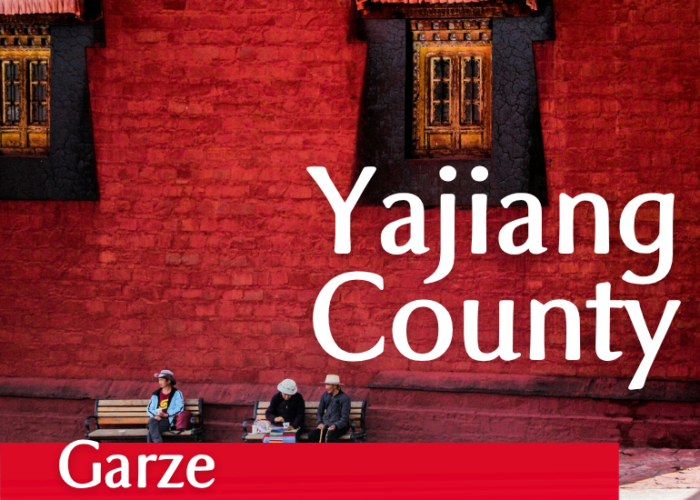
Yajiang (Nyagqu) – The Cliffside River Town on the G318
Perched deep within the rugged valleys of western Sichuan, Yajiang (Nyagchu) is one of the most authentic and lesser-known stops along the legendary Sichuan–Tibet Highway (G318). Its Tibetan name ཉག་ཆུ་རྫོང་། means “river mouth,” reflecting its historic position along the powerful Yalong River. A cliffside river town along the Sichuan–Tibet Highway, Yajiang (Nyagchu) has long served as an important crossing and post station along the historic Tea Horse Road.
Arriving through winding mountain roads, the county town of Hekou appears small and quiet. Yet beyond this modest entrance lies a vast landscape shaped by steep cliffs, high passes, and untouched valleys. Along the journey, travelers are often rewarded with distant views of Mount Gongga, the highest peak in Sichuan, rising above the clouds.
History of Yajiang County
Yajiang’s history reflects its role as a cultural and trade corridor between Tibetan and inland regions. Nyagchu is under Tibetan empire from Songtsen Gampo. In the Yuan Dynasty, it was administered under regional Tibetan military offices. In Phakmo Drukpa Era, areas east of the Yalong River were governed under regional administrative systems. During the Ganden Phodrang period, the region was divided among local chieftains, including Litang and Mingzheng authorities.
1719, a ferry crossing and military post were established at Hekou. 1908, administrative reforms replaced the chieftain system, and in 1911, Hekou County was formally established. 1914, the name was changed to Yajiang County. 1939, it became part of Xikang Province. 1955, it became part of Garzê Tibetan Autonomous Prefecture in Sichuan Province, where it remains today.
Administrative Divisions of Litang
As 2025, Yajiang County includes 4 regional divisions, 6 towns, and 10 townships, with the county government located in Hekou Town.
Towns
| Name | Simplified Chinese | Hanyu Pinyin | Tibetan |
|---|---|---|---|
| Quka Town (Hekou) | 河口镇 | Hékǒu Zhèn | ཆུ་ཁ་གྲོང་རྡལ། |
| Garra Town (Gala) | 呷拉镇 | Gālā Zhèn | མགར་ར་གྲོང་རྡལ། |
| Golog Town (Xi’eluo) | 西俄洛镇 | Xī’éluò Zhèn | མགོ་ལོག་གྲོང་རྡལ། |
| Horlung Town (Honglong) | 红龙镇 | Hónglóng Zhèn | ཧོར་ལུང་གྲོང་རྡལ། |
| Malhaco Town (Marlamco, Malangcuo) | 麻郎措镇 | Málángcuò Zhèn | མ་ལྷ་མཚོ་གྲོང་རྡལ། |
| Bosêrxoi Town (Bosihe) | 波斯河镇 | Bōsīhé Zhèn | སྤོ་སེར་ཤོད་གྲོང་རྡལ། |
Townships
| Name | Simplified Chinese | Hanyu Pinyin | Tibetan |
|---|---|---|---|
| Karringbo Township (Bajiaolou) | 八角楼乡 | Bājiǎolóu Xiāng | མཁར་རིང་པོ་ཤང་། |
| Pugbarong Township (Pubarong) | 普巴绒乡 | Pǔbāróng Xiāng | ཕུགས་པ་རོང་ཤང་། |
| Chongsum Township (Zhusang) | 祝桑乡 | Zhùsāng Xiāng | གྲོང་གསུམ་ཤང་། |
| Mignor Township (Milong) | 米龙乡 | Mǐlóng Xiāng | མིག་ནོར་ཤང་། |
| Banyugrong Township (Bayirong) | 八衣绒乡 | Bāyīróng Xiāng | སྤ་སྨྱུག་རོང་ཤང་། |
| Nyayüxab Township (Yayihe) | 牙衣河乡 | Yáyīhé Xiāng | ཉ་ཡུལ་ཞབས་ཤང་། |
| Dêca Township (Decha) | 德差乡 | Déchā Xiāng | སྡེ་ཚྭ་ཤང་། |
| Kogla Township (Kela) | 柯拉乡 | Kēlā Xiāng | ཁོག་ལ་ཤང་། |
| Chuka Township (Waduo) | 瓦多乡 | Wǎduō Xiāng | གྲུ་ཁ་ཤང་། |
| Misang Township (Murong) | 木绒乡 | Mùróng Xiāng | མི་བཟང་ཤང་། |
Location, Geography, Terrain and Climate
Yajiang County is located in the southern part of Garzê Prefecture, along the middle reaches of the Yalong River in western Sichuan. It lies between 100°19′–101°26′ east longitude and 29°03′–30°30′ north latitude, covering a total area of 7,569.53 square kilometers. The county town sits at an elevation of 2,632 meters. The landscape rises in the north and gradually descends toward the south, while the southwestern region features rugged mountain ranges with peaks exceeding 5,000 meters.
The terrain of Yajiang is defined by steep mountains and deep river valleys. The Yalong River flows through the region, carving impressive canyon systems that shape the natural scenery. Elevation changes are clearly visible, moving from lower river valleys to higher alpine meadows and eventually to snow-covered mountain peaks. This variation creates a diverse and dramatic highland environment.
Yajiang experiences a plateau continental monsoon climate. Winters and springs are cold and dry, while summers bring more rainfall. The area is known for strong sunlight, high levels of solar radiation, and large temperature differences between day and night. In 2022, the average annual temperature was 11.1°C, with total precipitation reaching 822.2 mm and sunshine totaling 1,700.7 hours. The frost-free period is relatively short, and the climate varies significantly depending on altitude.
Economy and Key Industries (2025)
Yajiang’s economy has developed into a balanced structure, with industry playing a leading role while tourism and agriculture provide strong support. In 2025, the county’s GDP reached 4.62 billion RMB, reflecting solid growth. Clean energy is a key pillar of this development. The region has hydropower potential exceeding 10 million kW, while planned solar capacity reaches 12 million kW. Currently, 5.3 million kW is already operational, with an additional 2.5 million kW under construction. The Kela photovoltaic station stands out as one of the major projects driving this sector forward.
Agriculture remains an important part of the local economy, especially highland specialties. Yajiang is widely known as the “Matsutake Capital of China,” producing around 1,000 tons of matsutake mushrooms each year, which accounts for about 15% of the national output. In addition to matsutake, yak breeding is common, and the cultivation of traditional medicinal plants such as cordyceps and fritillaria continues to grow. These industries provide steady income for local communities while supporting regional branding of high-altitude products.
Tourism is another growing sector, supported by Yajiang’s location along the Sichuan–Tibet Highway (G318). The county features well-known attractions such as Kangba Hanzi Village and Muya Tibetan Village, both rated as 4A scenic areas, along with Zhusang Grassland, a 3A site. In 2022, Yajiang received 1.63 million visitors and generated tourism revenue of 1.801 billion RMB. Cultural events like the Matsutake Festival and Kangba Culture Festival further enhance its appeal. Looking ahead, development plans focus on strengthening clean energy, expanding the matsutake industry through digital platforms, improving 5G coverage, and supporting major infrastructure projects, including railways and expressways, while preserving historical heritage routes.
Gongsa Monastery – The Ancient Guardian of Southern Kham
Located in Xieluo Town, Gongsa Monastery is one of the most important cultural landmarks in Yajiang. Built in 1358 during the Yuan Dynasty, this Sakya school monastery is often called the “First Ancient Monastery of Southern Kham.”
Set against the mountains and facing away from the river, the monastery feels calm and isolated. Its peaceful surroundings create a strong sense of spiritual depth.
Inside the monastery, visitors can explore:
- Massive wooden pillars preserved for centuries
- Rare thangkas and gilded statues from the Yuan Dynasty
- A sacred thangka stretching 30 meters, displayed only during special festivals
The atmosphere here is quiet and powerful, offering a deeper connection to Tibetan Buddhist traditions.
Guogangding Grassland & Twin Lakes
Hidden away from the main highway, Guogangding Grassland reveals a surprising alpine landscape at around 3,850 meters. Surrounded by lotus-shaped mountains, the area feels both remote and vibrant.
During summer, the grassland becomes a sea of wildflowers, while dense forests cover the hillsides in shades of green and gold.
At the center of this landscape lie two clear alpine lakes:
- Sun Lake
- Moon Lake
Together, they resemble a pair of eyes reflecting the sky, clouds, and distant peaks. The calm water and open space make this area perfect for photography and quiet moments in nature.
Gaoersi Mountain & Black Stone City
Once a challenging section of the Sichuan–Tibet route, Gaoersi Mountain Pass is now easier to bypass thanks to a modern tunnel. However, the old road still offers one of the most rewarding scenic routes in the region.
At the summit, travelers can stand above a sea of clouds. Nearby, the mysterious Black Stone City appears as a cluster of ancient mani stone formations, creating a unique and almost surreal landscape.
From this viewpoint, Mount Gongga becomes especially striking. At sunset, the snowy peaks glow in golden light, creating one of the most memorable scenes along the journey.
Pamuling – Sacred Mountain in the Clouds
At an altitude of around 4,100 meters, Pamuling is both a natural and spiritual destination. It is regarded as a sacred mountain in Tibetan Buddhism, associated with Vajravarahi (Dorje Phagmo).
Pilgrims visit this area to perform kora (circumambulation) and offer prayers. A small monastery sits quietly among the hills, blending into the surrounding landscape.
Viewing platforms provide wide views of rolling cloud seas and endless mountain ridges. The atmosphere here feels peaceful, remote, and deeply spiritual.
Zhusang Grassland – Untamed Highland Beauty
Stretching across the northern ridges of Yajiang, Zhusang Grassland sits at about 3,600 meters and remains largely untouched.
The landscape features:
- Wide meadows filled with wildflowers in summer
- Clear streams winding through open valleys
- Grazing yaks and traditional nomadic tents
This region is home to the Muya Tibetans, whose lifestyle remains closely connected to nature. During seasonal festivals and horse races, the grassland becomes lively with music, dance, and cultural gatherings.
Decha Pasture – A Glimpse of Nomadic Life
For travelers seeking quiet and authenticity, Decha Pasture offers a rare experience. There are no developed tourist facilities here—only open land, grazing herds, and traditional yak-hair tents.
Visitors may be welcomed by local families and invited to share butter tea. Stories of the land, mountain spirits, and daily life create a meaningful cultural exchange.
The simplicity of this place reflects the true rhythm of life on the plateau.
Local Specialties, Transportation, and Travel Experiences
Yajiang is best known for its high-quality matsutake mushrooms, prized for their rich aroma and firm texture. Popular dishes include matsutake chicken soup, grilled matsutake, and fresh sliced matsutake. Visitors can also find processed options such as dried and preserved matsutake. Yak-based foods are another essential part of local cuisine, with common dishes like dried yak meat, boiled yak meat, and yak hot pot. Traditional Tibetan foods such as tsampa, butter tea, barley wine, yogurt, and blood sausage are widely enjoyed. Other local products include highland honey, black fungus, morel mushrooms, walnuts, Sichuan pepper, apples, and medicinal herbs like cordyceps.
Transportation in Yajiang mainly relies on a growing road network. The county is connected by major routes including the G318 National Highway, the main Sichuan–Tibet corridor, as well as G227 and S217 regional roads. By 2024, the total road length exceeded 1,400 km, and the journey from Chengdu typically takes about 5 to 6 hours. Rail and air access are developing, with the Sichuan–Tibet Railway section under construction and Kangding Airport located about 150 km away. Future plans include the Yajiang section of the Ya’an–Yecheng Expressway, a proposed general aviation airport, and continued expansion of transport infrastructure to improve accessibility.