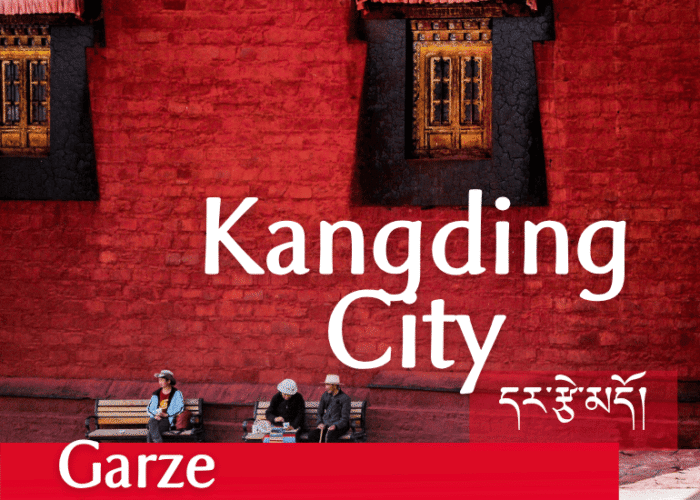
Kangding Overview – The Gateway Between Tibet and Sichuan
City of Kangding is one of the most iconic destinations in western Sichuan, widely known as the hometown of the famous Kangding Love Song. In Tibetan called Dartsedo (དར་རྩེ་མདོ།), it has long served as a strategic gateway between the Tibetan Plateau and the Sichuan Basin, as well as a key hub along the ancient Tea Horse Road.
History of Kangding and Chakla Gyalpo
From ancient times, Kangding was inhabited by Qiang peoples and later became part of Tibetan rule during the Tubo Empire. During the Sakya Dynasty and later, it was governed under regional administrative systems connecting Tibetan and independent authorities. In the mid-17th century, the rise of the Ganden Phodrang government in Lhasa (supported by the Khoshut Mongol leader Gushri Khan) extended influence over much of Kham, including Chakla Kingdom. A Lhasa-appointed commissioner was stationed in Dartsedo to collect taxes.
In 1908, the name “Kangding” was officially adopted, meaning “peace and stability in Tibetan regions.” In the 20th century, Kangding became the capital of Xikang Province, serving as a political, economic, and cultural center. Today, it is the capital of Garzê Tibetan Autonomous Prefecture and the first county-level city in Sichuan’s Tibetan areas.
The Kingdom of Chakla
Chakla (ལྕགས་ལ་), was a semi-autonomous Tibetan principality in the easternmost part of Kham, centered on the important trading town of Dartsedo. Its strategic location at the historical border between the Tibetan Plateau and the Sichuan Basin made it a vital hub on the Ancient Tea-Horse Road, where Sichuan brick tea was exchanged for Tibetan horses, wool, medicinal herbs, and other goods. The kingdom is also known in Chinese sources as the Mingzheng Tusi (明正土司), reflecting its status under the Chinese tusi (hereditary native chieftain) system.
The kingdom emerged by the late Yuan Dynasty. Its ruling lineage traced oral traditions to the Minyak region, located between the Dadu and Yalong rivers. The polity was situated west of the Dadu River amid grasslands and mountainous terrain. Chakla was one of the “four big native chieftains” (Kingdom) of Kham alongside Batang, Litang, and Dergé, highlighting its prominence in the region’s patchwork of polities.
Administrative Divisions and Geographic Location of Kangding
As of 2025, Kangding administers 2 subdistricts (Lucheng and Yulin), 8 towns (Guzan, Xinduqiao, Tagong, Shade, Jintang, Jiagenba, Gongga Mountain, and Yutong), and 7 townships (Yala, Maibeng, Pengta, Pusharong, Jijü, Xiaba, and Kongyu), with the municipal government located on Chama Road in Yulin Subdistrict.
Geographically, Kangding sits at the transition between the Qinghai–Tibet Plateau and the Sichuan Basin, covering a total area of 11,600 km² with coordinates of 101°00′–102°29′ E and 29°08′–30°46′ N. The elevation ranges from 1,390 meters to 7,556 meters, with Mount Gongga as the highest point, while the average elevation is 4,526 meters and the city itself lies at around 2,560 meters. Kangding borders Baoxing, Tianquan, Luding, Shimian, Jiulong, Muli, Yajiang, Xiaojin, Danba, and Daofu counties.
Administrative Divisions of Kangding
Subdistricts
| Name | Simplified Chinese | Hanyu Pinyin | Tibetan |
|---|---|---|---|
| Lucheng Subdistrict (Dochong) | 炉城街道 | Lúchéng Jiēdào | མདོ་གྲོང་ཁྲོམ་ལམ། |
| Yulin Subdistrict (Xalunggo) | 榆林街道 | Yúlín Jiēdào | གཞའ་ལུང་འགོ་ཁྲོམ་ལམ། |
Towns
| Name | Simplified Chinese | Hanyu Pinyin | Tibetan |
|---|---|---|---|
| Kuzhag Town (Goja, Guza) | 姑咱镇 | Gūzá Zhèn | གུ་བྲག་གྲོང་རྡལ། |
| Ra’ngaka Town (Xinduqiao) | 新都桥镇 | Xīndūqiáo Zhèn | ར་རྔ་ཁ་གྲོང་རྡལ། |
| Dagang Town (Tagong, Lhagang) | 塔公镇 | Tǎgōng Zhèn | ལྟ་སྒང་གྲོང་རྡལ། |
| Sadê Town (Shade) | 沙德镇 | Shādé Zhèn | ས་བདེ་གྲོང་རྡལ། |
| Gyitang Town (Jintang) | 金汤镇 | Jīntāng Zhèn | སྐྱིད་ཐང་གྲོང་རྡལ། |
| Jagkai Town (Jiagenba) | 甲根坝镇 | Jiǎgēnbà Zhèn | ལྕགས་གད་གྲོང་རྡལ། |
| Kanggar Town (Gonggashan) | 贡嘎山镇 | Gònggāshān Zhèn | གངས་ཀར་རི་བོ་གྲོང་རྡལ། |
| Gotang Town (Yutong) | 鱼通镇 | Yútōng Zhèn | མགོ་ཐང་གྲོང་རྡལ། |
Townships
| Name | Simplified Chinese | Hanyu Pinyin | Tibetan |
|---|---|---|---|
| Yagra Township (Yala) | 雅拉乡 | Yǎlā Xiāng | གཡག་རྭ་ཤང་། |
| Maiba Township (Naibung, Maibeng) | 麦崩乡 | Màibēng Xiāng | སྨད་པ་ཡུལ་ཚོ། |
| Pogtag Township (Pengta) | 捧塔乡 | Pěngtǎ Xiāng | ཕོག་ཐག་ཤང་། |
| Basêgrong Township (Pusharong) | 普沙绒乡 | Pǔshāróng Xiāng | དཔའ་སྲེག་རོང་ཤང་། |
| Ju’gyi Township (Jiju) | 吉居乡 | Jíjū Xiāng | ཅུ་དཀྱིལ་ཤང་། |
| Gagba Township (Gaba) | 呷巴乡 | Gābā Xiāng | འགག་པ་ཤང་། |
| Kobyü Township (Kongyu) | 孔玉乡 | Kǒngyù Xiāng | འཁོབ་ཡུལ་ཤང་། |
Terrain and Climate
Kangding’s landscape is defined by complex mountain terrain that slopes from southwest to northeast, with Zheduo Mountain forming a natural boundary between its eastern and western regions. The area features a striking mix of deep river valleys, high alpine mountains, plateau hills, and glacial lakes, with more than 180 lakes created by past glacial activity. Major rivers such as the Dadu, Yalong, and Zheduo rivers cut through the region, shaping dramatic valleys and diverse natural scenery.
The climate in Kangding combines both plateau and mountain characteristics. The eastern region is generally warmer and wetter due to monsoon influence, while the western region is cooler, drier, and receives stronger sunlight. Overall, the area has mild winters and cool summers, with noticeable temperature differences between day and night. The varied elevation also creates distinct vertical climate zones across the region.
Local Food and Special Products
Kangding’s local food reflects a blend of Tibetan and Sichuan flavors, offering dishes such as Kangding Liangfen, a spicy and refreshing jelly dish, along with yak meat specialties like dried yak meat, hot pot, and hand-grabbed beef. Traditional drinks such as butter tea and barley wine are also widely enjoyed. In addition, the region is known for its natural products, including wild mushrooms like matsutake and morels, highland honey, walnuts, apples, and a variety of traditional Tibetan medicinal herbs.
Culture and Significance
Kangding is widely known as the “hometown of love songs,” inspired by the famous folk song Kangding Love Song (Kangding Qingge), which celebrates the region’s natural beauty and romantic charm, especially around Paoma Mountain. The city is also recognized as an important cultural center where Guozhuang, a traditional Tibetan circle dance, is believed to have originated. This lively dance remains a key part of local festivals and daily cultural life.
Kangding reflects a unique blend of Tibetan and Han cultures, seen in its religion, language, and cuisine. Tibetan Buddhist monasteries stand alongside influences from historical trade routes, and bilingual communication is common. Local food combines Sichuan-style spice with Tibetan yak-based dishes.
Kangding Travel Guide: Top Attractions and Cultural Experiences
Kangding is one of the most popular travel destinations on the Sichuan–Tibet route, known for its stunning landscapes and rich cultural heritage. Located at the gateway to eastern Tibet, the city offers a perfect mix of natural beauty and traditional culture. From snow-capped mountains to wide grasslands, Kangding attracts travelers looking for both scenic views and authentic local experiences.
Natural Highlights in Kangding
Kangding is surrounded by some of the most impressive natural attractions in the region. Mount Gongga, the highest peak in Sichuan, is a paradise for climbers and photographers, offering dramatic mountain views. The Mugecuo Scenic Area is a national-level attraction known for its alpine lakes, forests, hot springs, and snowy peaks. Xinduqiao is famous for its golden landscapes, especially during sunrise and sunset, making it a favorite spot for photography.
Other must-visit places include Tagong Grassland, where vast open plains stretch beneath clear blue skies, and Zheduo Mountain, often called the “First Pass of the Tibet Route,” known for its breathtaking high-altitude scenery. Yajiageng Red Beach and areas around Mount Gongga add even more variety to Kangding’s natural beauty.
Cultural Experiences and Heritage
Kangding is not only about nature; it is also rich in culture and history. Paoma Mountain, linked to the famous love song, offers scenic viewpoints and cable car rides. The old town streets reflect a blend of Tibetan and Chinese architectural styles, creating a unique atmosphere. Tea Horse Road heritage sites highlight the region’s historical role as a key trading route between Tibet and inland China.
Visitors can also enjoy everyday life through riverside walks, local markets, and public squares, where the mix of cultures is clearly visible. Kangding provides an easy introduction to the traditions of eastern Tibet while remaining accessible and comfortable for travelers.
Monasteries and Religious Sites
Kangding is home to several important Tibetan Buddhist monasteries that reflect the region’s deep spiritual traditions. Nanwu Monastery is known for its history and artistic value, while Jingang Monastery features a unique architectural style. Tagong Monastery, often called the “Little Jokhang Temple,” is a significant religious site, and Muya Monastery on Tagong Grassland offers a peaceful setting surrounded by nature.
These monasteries are important cultural landmarks where visitors can experience local beliefs, rituals, and daily religious life. They also provide a deeper understanding of Tibetan culture and spirituality in the region.
Why Visit Kangding
Kangding combines dramatic landscapes, cultural diversity, and historical importance in one destination. As a historic town along the Tea Horse Road and a modern gateway to eastern Tibet, it offers a unique travel experience. With its mix of natural attractions, cultural sites, and accessible location, Kangding is an ideal starting point for exploring the wider Tibetan region.
Transportation and Accessibility
Kangding serves as an important transportation hub linking Sichuan and Tibet, with a well-developed road network centered on China National Highway 318 and G248. These major routes, along with expressways, provide convenient access to Chengdu, with a driving time of around 4.5 hours. The road system plays a key role in regional travel and trade, especially along the popular Sichuan–Tibet route.
In addition to road transport, Kangding is improving its connectivity through rail and air travel. The Sichuan–Tibet Railway is currently under construction and is expected to be completed around 2026, which will significantly enhance access to the region. Kangding Airport, a high-altitude 4C airport, offers flights to Chengdu in about 55 minutes. Ongoing infrastructure projects are set to further strengthen transportation links and accessibility.