Namdruk Monastery: The Heavenly Dragon Sanctuary of Qushui County
Namdruk Monastery, formally known as གནམ་འབྲུག་སེ་བ་བྱང་ཆུབ་ཆོས་གླིང་དགོན, is quietly nestled in Namdruk Township of Qushui County, not far from Lhasa. The Tibetan name Namdruk translates as “Heavenly Township” or “Realm of the Sky,” a fitting description for this sacred site surrounded by open valleys and expansive skies.
Founded in 1189, Namdruk Monastery is one of the most important early centers of the Drukpa Kagyu lineage of Tibetan Buddhism. Its history, legends, and spiritual influence extend far beyond its modest setting, making it a meaningful destination for travelers interested in Tibetan religious heritage.
Foundation and the Legacy of Tsangpa Gyare
Namdruk Monastery was founded by the great Kagyu master Tsangpa Gyare Yeshe Dorje (འགྲོ་མགོན་གཙང་པ་རྒྱ་རས་), a pivotal figure in Tibetan Buddhist history. The monastery was originally established in the beautiful Namdruk Valley, a place long associated with spiritual signs and auspicious events.
The word “Druk” in Tibetan means dragon or refers to the sound of thunder, which ancient Tibetans believed to be the roar of dragons in the sky. According to tradition, the founding of Namdruk Monastery was marked by either three resounding peals of thunder or the appearance of a dragoness. Inspired by this powerful omen, Tsangpa Gyare named his lineage Drukpa Kagyu, or “Dragon Lineage.”
The Spread of the Drukpa Kagyu Lineage
Over time, the Drukpa Kagyu tradition developed into three major branches:
- Upper Drukpa
- Lower Drukpa
- Southern Drukpa
These branches spread widely across Tibet and the Himalayan region. The Southern Drukpa lineage eventually became the state religion of Bhutan, giving rise to Bhutan’s enduring title as the “Land of the Thunder Dragon.” Namdruk Monastery thus holds a foundational place in the spiritual history not only of Tibet, but of the entire Himalayan Buddhist world.
Setting and Architectural Features of Namdruk Monastery
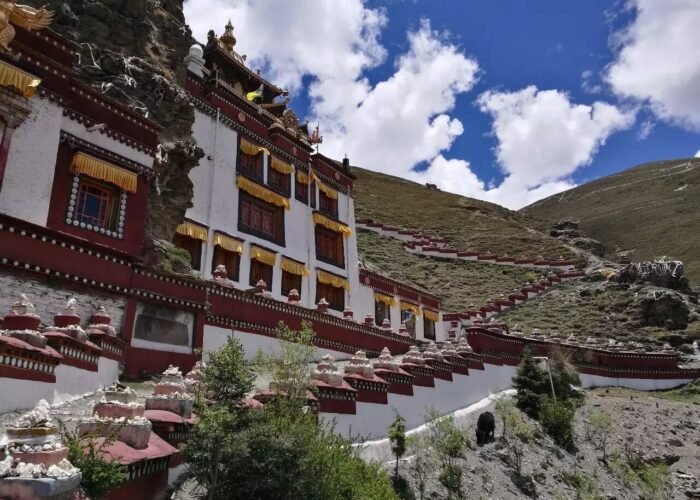
Namdruk Monastery sits at the foothills of Namdruk Mountain, beside the gently flowing Namdruk River. The surrounding valley is relatively stark, which makes the monastery’s architecture stand out even more vividly.
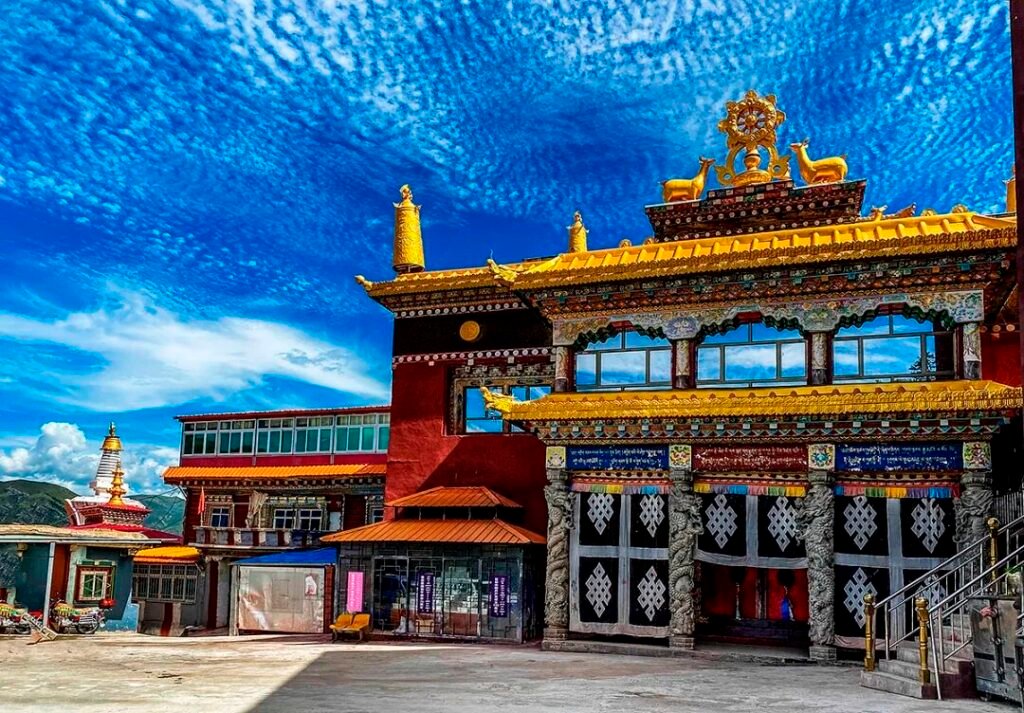
The complex is characterized by whitewashed walls, deep red eaves, and golden roof tiles, creating a striking contrast against the muted tones of the landscape. At its height, Tsangpa Gyare’s teachings attracted thousands of disciples. More than a thousand simple monk dwellings once surrounded the monastery, and historical records suggest that over ten thousand monks lived and practiced here during its peak period.
A Spiritual Link Between Sacred Mountains
Namdruk Monastery is also known for its symbolic connection between the sacred Tibetan mountains Tsering and Gang Rinpoche (Mount Kailash). Through the pioneering teachings of Tsangpa Gyare and his principal disciple Goe Tsangpa, the founder of the Upper Drukpa lineage, the monastery became a vital spiritual bridge linking these revered pilgrimage landscapes within the Kagyu tradition.
Sacred Relics and Hidden Treasures
One of the most fascinating aspects of Namdruk Monastery is its collection of sacred relics associated with Tsangpa Gyare. These include everyday items once used by the master, such as butter tea bowls, barley tea cups, boots, and hats, which are deeply venerated by followers of the Drukpa Kagyu school.
Among the most remarkable treasures is a large bow and arrow, housed in the Dashu Lhakang (Bow and Arrow Shrine). These were donated by a local hunter, Yangdro Daromba, and his seven sons, who abandoned hunting after encountering Tsangpa Gyare and chose to follow the Buddhist path instead.
The monastery’s Treasure Room preserves three sacred stones bearing deep imprints. One stone is believed to carry Tsangpa Gyare’s footprints, left when he emerged at birth from a meatball under the protection of dakinis manifested as an eagle, a powerful and symbolic legend within Tibetan Buddhism.
Golden-Red Stupas and Protector Deities
On the hillside near Namdruk Monastery stand three golden-red stupas, dedicated to the Crow Protector Spirits of the Kagyu tradition. These protectors are manifestations of Mahakala, one of the most important wrathful deities in Tibetan Buddhism. The stupas add a strong protective and ritual dimension to the monastery’s sacred landscape.
Niangmu Nang: The Subsidiary Meditation Site
Along the route to Namdruk Monastery lies a quiet valley that houses its subsidiary retreat center, Nyangmu Nang, meaning “Place of Good Practice.” This secluded site is historically significant as a meditation place for both Tsangpa Gyare and the legendary yogi Drukpa Gönley, widely known as the “Divine Madman of the Drukpa tradition.”
Niangmu Nang offers insight into the meditative and unconventional practices that helped define the Drukpa Kagyu lineage.
Restoration and Artistic Highlights
Namdruk Monastery suffered damage during the 2008 Dangxiong earthquake, but careful restoration has since returned it to active use. The newly repaired main assembly hall is adorned with finely detailed murals depicting the founders and lineage masters of the Kagyu tradition, including Tsangpa Gyare himself. These paintings enhance both the artistic and spiritual atmosphere of the monastery.
Practical Visitor Information
Cultural and Religious Importance
Visitors to Namdruk Monastery can engage directly with the history and living practices of the Drukpa Kagyu school, gaining a deeper appreciation of Tibetan Buddhist philosophy and ritual life.
Location and Access
The monastery is located about 69 kilometers from central Lhasa and can be reached by self-driving or by hiring a private vehicle, making it a feasible day trip or overnight visit.
Accommodation Options
Basic accommodation is available within the monastery for travelers who wish to experience monastic life more closely. While simple, staying on-site allows for deeper immersion in the daily rhythm of prayer and practice.
Nearby Religious Sites
Visitors may also explore Sama Zha Temple, an ancient nunnery in Qushui County dating back to the 9th century, offering additional insight into the region’s long-standing religious traditions.