

Biru County in northern Tibet is renowned not only for its vast grasslands and ancient history, but also for its rich folk music and dance traditions. Among the most celebrated forms of Tibetan performing arts in the region are Dabu Axié and Dinga Reba—two vibrant folk dances that have been officially listed as National Intangible Cultural Heritage of China. These dances are living expressions of Biru’s cultural soul, passed down through generations and still performed with passion today.
Dabu Axié: A Dance Born from Labor and Happiness
Dabu Axié (达布阿谐) is one of the most representative folk dances of Biru County. Recognized in the first batch of National Intangible Cultural Heritage, this dance holds exceptional artistic and cultural value.
What makes Dabu Axié unique is its close connection to daily labor and communal life. The dance transforms scenes of work—such as farming, herding, and harvesting—into rhythmic movement and song. With cheerful melodies and coordinated steps, performers express joy, unity, and optimism, reflecting the Tibetan people’s deep love for life and work.
The choreography is lively and expressive. Dancers often move in circles, holding hands or matching steps, symbolizing solidarity and harmony within the community. Accompanied by traditional instruments such as drums and Tibetan lutes, Dabu Axié is commonly performed during festivals, harvest celebrations, and public gatherings.
Through song and movement, Dabu Axié showcases the resilient, open-hearted, and joyful spirit of Biru’s people, celebrating tradition while reflecting the vitality of modern life.
Dinga Reba: A Living Legacy of Tibetan Dance
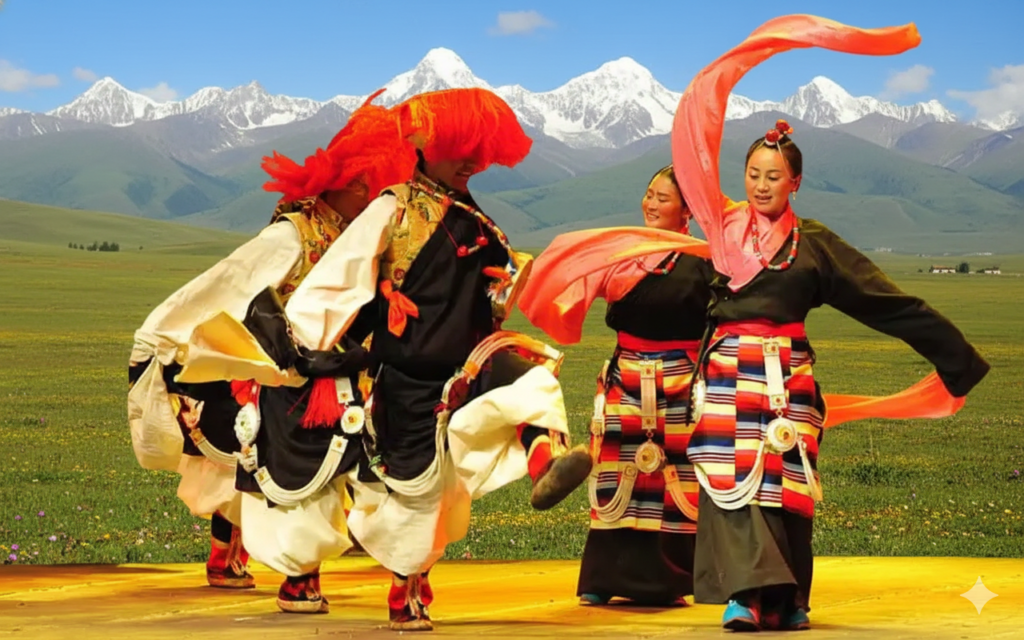
Another cultural treasure of Biru County is Dinga Reba (丁嘎热巴), which originated in Dinga Village of Xiaqü Township. This dance is deeply rooted in Tibetan spiritual and artistic history, with origins tracing back to 1040 CE.
According to tradition, Dinga Reba was developed by the great Kagyüpa masters Milarepa and Rechungpa. Drawing inspiration from the classical Tibetan Reba dance, they refined it with spiritual symbolism, rhythmic chanting, and expressive movement. Over centuries, the dance traveled an extraordinary path—from village life to monasteries and back to the people—blending religious devotion with folk creativity.
Dinga Reba is known for its dynamic combination of chanting, drumming, storytelling, and humor. The movements are graceful yet energetic, and performers wear colorful costumes, long-sleeved robes, and traditional ornaments that create a striking visual effect. Each performance reflects both the sacred and joyful dimensions of Tibetan culture.
In recognition of its historical depth and artistic excellence, Dinga Reba was officially listed as a National Intangible Cultural Heritage on June 19, 2007.
Preserving Biru’s Intangible Cultural Heritage
Together, Dabu Axié and Dinga Reba represent the heart of Biru County’s cultural identity. They embody centuries of collective memory, artistic creativity, and spiritual vitality. These dances are not museum artifacts—they remain living traditions, actively performed and lovingly preserved by local communities.
Visitors to Biru County often have the chance to witness these dances during local festivals and community celebrations. Against a backdrop of fluttering prayer flags, open grasslands, and the vast northern Tibetan sky, villagers of all ages dance together—offering a powerful glimpse into Tibet’s enduring folk heritage.