The Butter Lamp Festival, known in Tibetan as Ganden Ngachoe (དགའ་ལྡན་ལྔ་མཆོད།). It is one of the most important annual commemorative religious rites of the Gelug school of Tibetan Buddhism. The name “Ganden Ngachoe” translates to “Five Offerings of Ganden.”
Held on the 25th day of the tenth month of the Tibetan calendar, this festival centers around Ganden Monastery (the seat of the Gelug tradition). It is dedicated to the memory of the school’s founder, Lama Tsongkhapa (ཙོང་ཁ་པ་), on the anniversary of his parinirvana.
The Tradition of Light: A Night of Remembrance
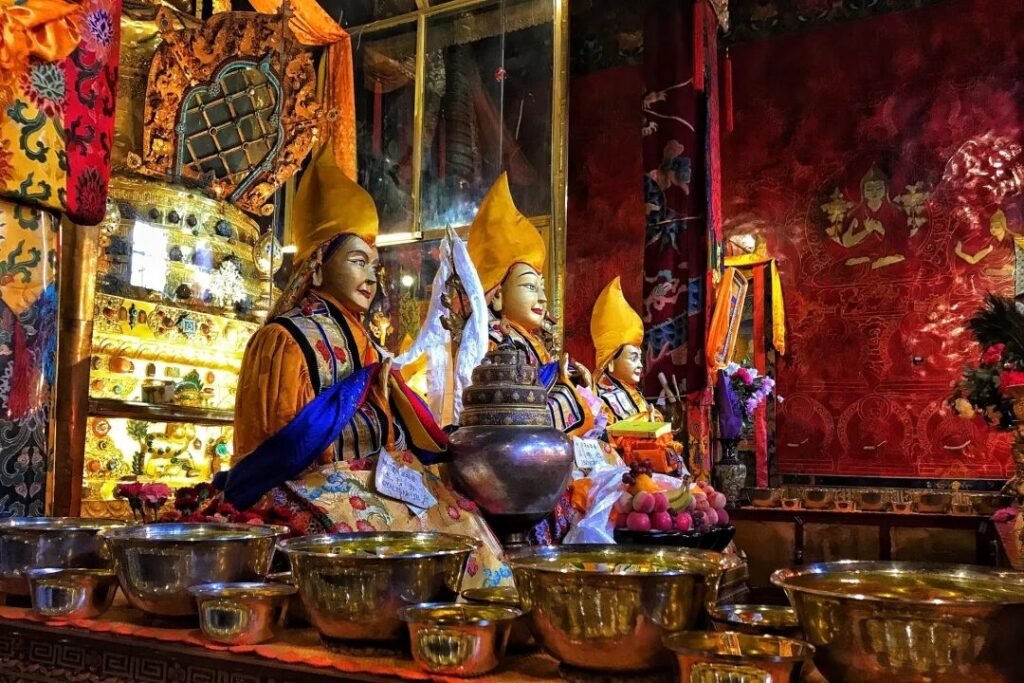
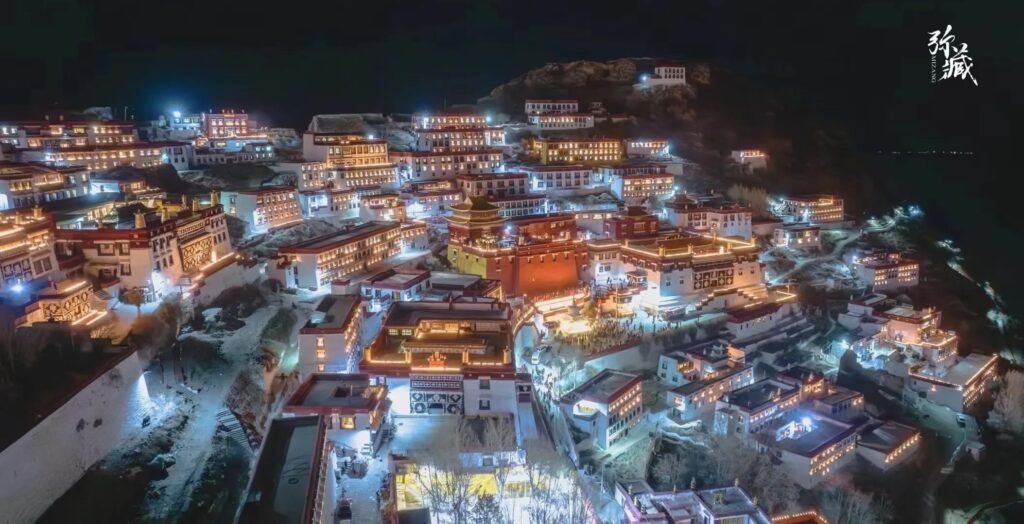
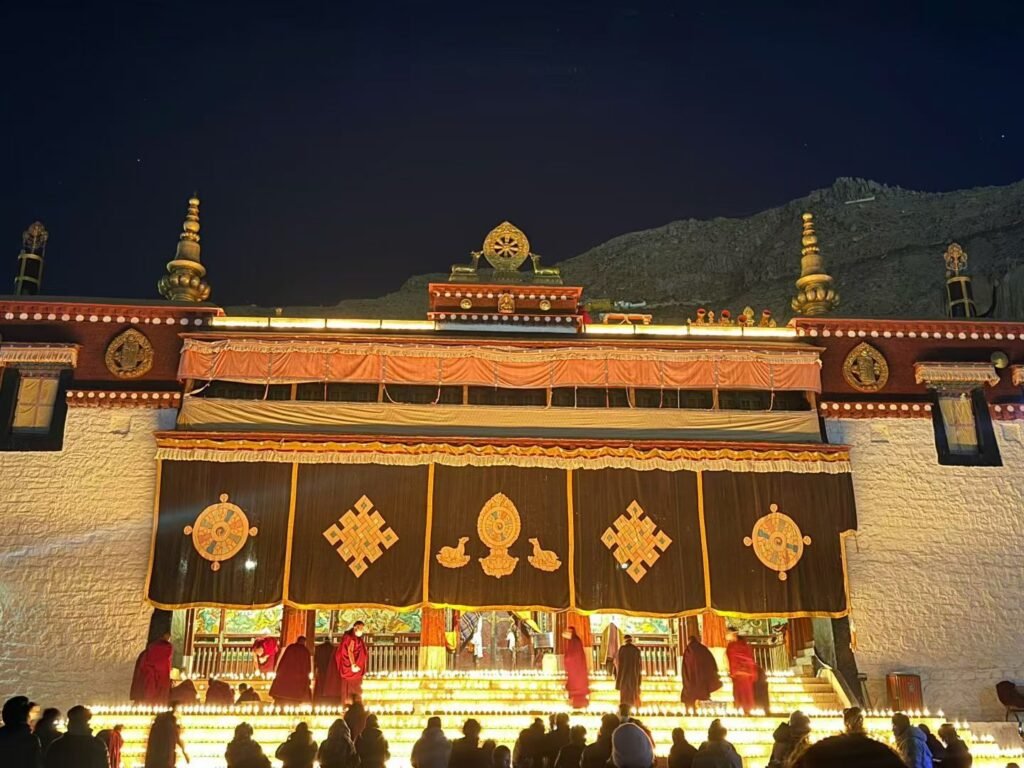
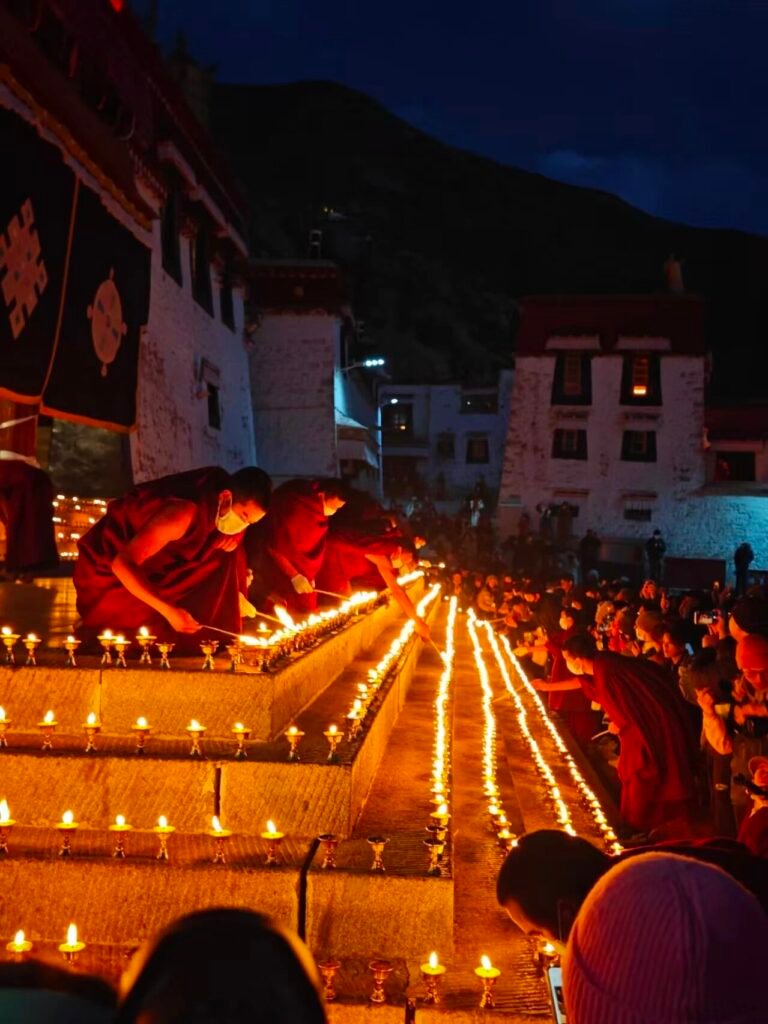
Due to the central role of light offerings, the festival is popularly known in English as the Butter Lamp Festival. On the night of the festival, Gelug monasteries and the homes of devotees throughout the Tibetan regions are illuminated by countless rows of butter lamps. These lamps are placed along rooftops, window sills, and shrines, creating a spectacular display of light that symbolizes the illumination of wisdom and serves as an expression of profound respect and remembrance for Je Tsongkhapa.
Rituals and Offerings at Ganden Monastery
The epicenter of the observance is Ganden Monastery. During the festival, monks traditionally engage in elaborate ritual preparations:
- Mandala Creation: Intricate mandalas are drawn within the main assembly hall using colored mineral pigments.
- Torma Offerings: Offerings known as torma are crafted from butter, wood, and tsampa (roasted barley flour). These are sculpted into vivid representations of deities, animals, flowers, and fruits, then painted in bright colors and presented as offerings for blessing and merit.
Across all Gelug monasteries, continuous prayers, circumambulations, and prostrations are performed throughout the night. Devotees pray for the blessings of Je Tsongkhapa, wishing for the increase of wisdom (prajna) and merit (punya) for all sentient beings.
The Life and Legacy of Je Tsongkhapa
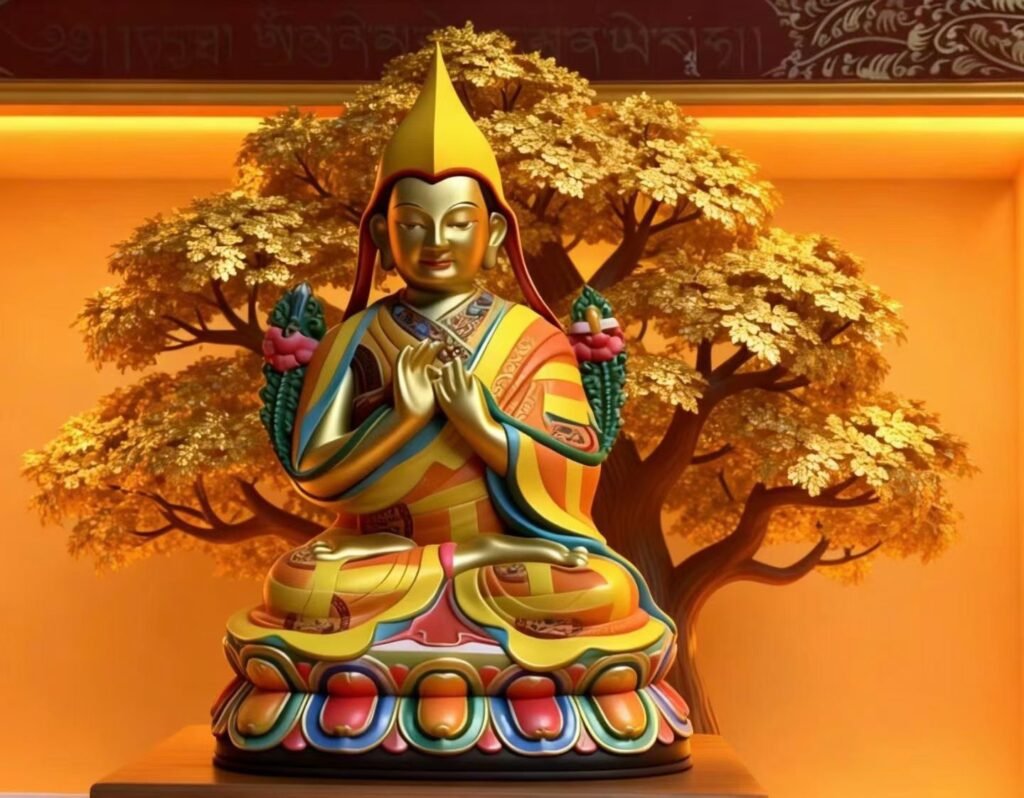
Je Tsongkhapa was born in 1357 in Tsongkha (the location of what is now Kumbum Monastery in present-day Qinghai). He went on to found the Gelug school, one of the four major traditions of Tibetan Buddhism.
The Foundation of Tsongkhapa’s Philosophy
Tsongkhapa’s philosophical genius reached its peak around 1399 when he obtained Buddhapālita’s commentary on Nāgārjuna’s Mūlamadhyamakakārikā. This allowed him to reconcile the views of the Prāsaṅgika and Svātantrika schools. It lead to his profound insight into the core Madhyamaka doctrine of dependent arising and emptiness (pratītyasamutpāda and śūnyatā).
He strongly advocated for the Prāsaṅgika Madhyamaka position, critiquing various interpretations of Madhyamaka prevalent in Tibet at the time. His central assertion, that “all phenomena are established merely by conceptual designation (or name),” led to the formation of his highly systematic and unique Madhyamaka thought.
Key Disciples and Lineages
Tsongkhapa’s influence extended through his principal disciples, who went on to establish the major spiritual lineages of Tibet:
- Khedrup Je (མཁས་གྲུབ་རྗེ།, 1385–1438): He is recognized as initiating the lineage of the Panchen Lamas (པན་ཆེན་བླ་མ་).
- Gedun Drub (དགེ་འདུན་གྲུབ་པ།): He was posthumously recognized as the First in the lineage of the Dalai Lamas (ཏཱ་འི་ལ་མ་).
Tsongkhapa is widely revered as an emanation of the Bodhisattva Manjushri (the embodiment of wisdom) and remains one of the most important masters in the history of Tibetan Buddhism. His prolific writings have had a profound impact, including foundational texts such as:
- The Great Treatise on the Stages of the Path to Enlightenment (Lamrim Chenmo, ལམ་རིམ་ཆེན་མོ།)
- The Foundation of All Good Qualities (Yonten Zhigyuema, ཡོན་ཏན་གཞིར་གྱུར་མ་)
- The Three Principal Aspects of the Path (Lam Tso Nam Sum, ལམ་གཙོ་རྣམ་གསུམ་)
- Eighteen volumes of commentaries on sutras and tantras.
The Date of Remembrance
Je Tsongkhapa passed into parinirvana at Ganden Monastery on the 25th day of the tenth month in 1419, at the age of 63. Since then, most Tibetan regions have commemorated the anniversary on this date. Due to the limited spread of information at the time, however, the exact date of observance could vary slightly in different areas depending on when news of his passing was received.
Gaden Ngachoe and Shichoe
Adding to the significance of the season, Jamyang Choeje Shakya Yeshe (བྱམས་ཆེན་ཆོས་རྗེ་ཤཱཀྱ་ཡེ་ཤེས), the founder of Sera Monastery (སེ་ར་དགོན་པ) and another key disciple of Tsongkhapa, passed away on the 24th day of the tenth month (either in 1439 or 1443).
Consequently, the “Ganden Ngachoe” (commemorating Tsongkhapa on the 25th) and the “Shichoe” ( commemorating Shakya Yeshe on the 24th) are observed as closely linked. Many Highly important religious occasions, with widespread prayer ceremonies held during both days.
Spiritual Practice and Merit on Ganden Ngachoe
The Butter Lamp Festival is considered an extremely auspicious day for spiritual practice. Devotees dedicate this day to purifying negative karma, accumulating merit, reciting scriptures, and making heartfelt aspirations. Most important making extensive offerings to all Buddhas and Bodhisattvas.
The merit generated from virtuous activities on this specific day is traditionally believed to be multiplied up to 100,000 times. Engaging in purification, accumulating merit (tshogs), and making prayers (smon lam) on such a special occasion is considered particularly powerful. These practices are believed to effectively purify misdeeds, mend breaches of vows, and generate vast quantities of positive karma.
Diverse Observances Across Regions
While the festival originates from the Gelug school, its influence has expanded across various regions and traditions:
- Adaptation of Dates: In some parts of inland China and among Mongolian communities, due to the lack of familiarity with the Tibetan calendar, the festival is often observed on the 25th day of the 10th month of the Lunar Calendar (Nongli), as a popular adaptation of the date.
- Wider Acceptance: As the influence of the Gelug school grew throughout the Tibetan cultural sphere, the butter lamp offering ritual of Ganden Ngachoe was gradually incorporated into the local folk traditions of other Tibetan Buddhist schools, including Nyingma, Kagyu, and Sakya, in certain areas.
Core Unity in Rituals
Despite regional variations in custom, the central essence of the Butter Lamp Festival remains consistent:
- Illumination: Gelug monasteries and the homes of both monastic and lay communities light up rows of butter lamps on rooftops, window sills, and shrine rooms.
- Offerings and Prayer: A single bowl of water is typically offered before the shrine, and devotees universally recite scriptures and make fervent prayers. The fundamental aspiration is to be freed from rebirth in the lower realms (evil destinies) and to gain the good fortune of the “Three Good Destinies” (rebirth as a god, human, or asura).
Regional Grandeur: Festivals at Major Monasteries
The celebration of Ganden Ngachoe takes on unique and grand forms in historically significant locations:
Kumbum Monastery (Qinghai)
The festival is particularly significant and grand at Kumbum Monastery (塔尔寺), the birthplace of Je Tsongkhapa.
- Solemn Atmosphere: On the night of the festival, monks and lay devotees climb onto the rooftops to chant scriptures. Rows of butter lamps are meticulously arranged across courtyards and rooftops, creating an atmosphere of deep solemnity and reverence.
Labrang Monastery (Gansu)
Labrang Monastery (拉卜楞寺) in Gansu also hosts a major observance, notable for its accessibility:
- Open Access: During the festival, the monastery is fully opened to the public. Offerings are displayed in all main halls, and devotees are permitted to prostrate and make offerings before the statues with relative freedom. This open-house approach is a distinctive feature of the local tradition.
Mongolian “Thousand Lamp Festival”
In Mongolian regions, some monasteries hold a grand “Thousand Lamp Festival”: Züülgiin Bayar (Зүргийн баяр)
- Mass Gathering: Monastic assemblies gather to chant scriptures, lighting hundreds, or even thousands, of Buddha lamps. Many families also light lamps at their home shrines at night, giving the festival a strong folk character.
- Evolving Customs: In recent years, while the traditional lamp-lighting ritual may have lessened in some areas. The festival’s celebratory form has sometimes shifted to include more vibrant folk activities such as horse racing, wrestling, and singing and dancing.
- The Mongolian Gandan Tegchenling Monastery shares its name with Tibet’s Ganden Monastery, both derived from the Tibetan word for “Tushita Heaven” (Maitreya’s abode).
Ritual Focus: Lhasa and Beyond
In the heart of Tibet, the ceremonial focus of the Butter Lamp Festival is centered around the Jokhang Temple in Lhasa.
- Lhasa Illumination: Before and during the festival, the Barkhor Street and the square in front of the Jokhang Temple are covered with arrays of butter lamps. Lamps are also meticulously placed along the exterior walls of the monastery.
- Pilgrimage and Prayer: Local residents dress in their finest festive attire to perform the clockwise circumambulation (kora or Tsekor) around the Barkhor. They also burn sâng, the burning of fragrant juniper and aromatic herbs in incense burner. People pray for good fortune and peace in the coming year.
A Unique Tradition in Kangding
In the Kangding area of Sichuan, the Butter Lamp Festival is known uniquely as the “Turnip Lamp Festival”.
- The Legend of the Turnip: According to local legend, when Anjue Monastery was completed, there was an insufficient supply of materials for traditional butter lamp offerings. The residents, utilizing the abundant local turnips, hollowed them out to serve as lamp vessels for offering to the Buddhas. This gave rise to the distinct local tradition known as the “Turnip Lamp Fair” (元根灯会).
Ganden Ngachoe in the Himalayan World
The Butter Lamp Festival is a hugely important occasion across Tibet, Mongolia, Nepal, and the entire Himalayan region, and it holds particular significance in Ladakh (India).
Dual Commemoration and New Year’s Prelude
The fundamental meaning of the festival is the commemoration of Je Tsongkhapa’s parinirvana. However, in some regions, it also serves to commemorate the anniversary of his birth.
Crucially, in Ladakh, Ganden Ngachoe is also regarded as the beginning of the local New Year’s celebrations (Losar). The festive atmosphere often extends until the Dosmoche Festival in the second month of the subsequent year.
- Historical Calendar Shift: The people of Ladakh follow the Tibetan calendar (Lo Tho). Historically, the Tibetan New Year was originally celebrated in the twelfth month of the Tibetan calendar, placing the Butter Lamp Festival in the same month.
- The Oral Tradition of Advancement: Local folklore in Ladakh suggests that during the reign of King Jamyang Namgyal (འཇམ་དབྱངས་རྣམ་རྒྱལ) (1595–1616), due to wars in the Skardu region and regional political changes, Ladakh began the practice of observing the Tibetan New Year (Losar) and the Butter Lamp Festival earlier, in the tenth month of the Tibetan calendar. However, this account is primarily found in local oral tradition and has not been definitively confirmed by written historical records.
Ladakhi Festivities
During the festival period in Ladakh:
- General Illumination: Monasteries, public buildings, and private homes are lit with butter lamps, symbolizing the dispelling of darkness and ignorance.
- Family Feast: Families prepare traditional foods such as thukpa (Tibetan noodles, ཐུག་པ), momos (dumplings, མོག་མོག་), and butter tea (བོད་ཇ་).
- Custom of Greeting: The presentation of a khata (ceremonial scarf, ཁ་བཏགས་) is the standard etiquette for expressing greetings and blessings.
Since the Ladakhi celebration follows the Tibetan calendar, the date of the festival (the 25th day of the tenth month).
The Timeless Symbolism of Light
Regardless of how local customs have evolved, the symbolic meaning of the Butter Lamp Festival remains universally consistent:
- Light as Wisdom: The lamp symbolizes wisdom (prajna), and the light symbolizes the dispelling of ignorance (avidyā).
- A Shared Aspiration: From the sea of lamps in the Ganden Monastery mandala to the arrays of butter lamps along the Barkhor Street, and the soft yellow glow lighting up rooftops on winter nights in Ladakh, the act of “lighting the lamp” itself is a practice of dedicating virtuous wishes to all sentient beings, illuminating the world with light and wisdom.
In the modern era, Ganden Ngachoe is not just a religious rite but has evolved into an important cultural festival—a shared occasion for remembrance, prayer, and offering blessings that connects a common spiritual tradition across different regions and even different sects of Tibetan Buddhism.