
Gar Trinring Tsendro (d. 699) was one of the most powerful military and political figures in early Tibetan history. In Tibetan sources, the title “Lön” means prime minister, which is why he is sometimes referred to by that designation in Chinese records. Born into the elite Gar clan of the Tibetan Empire, he was the son of Gar Tongtsen Yülsung, the legendary statesman who served under Songtsen Gampo.
For nearly 30 years, Gar Trinring Tsendro controlled Tibet’s military and political affairs. During the reigns of Emperor Gaozong of Tang and Wu Zetian, he emerged as the Tang dynasty’s most formidable rival on the western frontier. His life was dramatic—marked by decisive victories, territorial expansion, political dominance, and ultimately a tragic downfall that led to the destruction of his powerful clan.
Noble Origins and Rise to Power
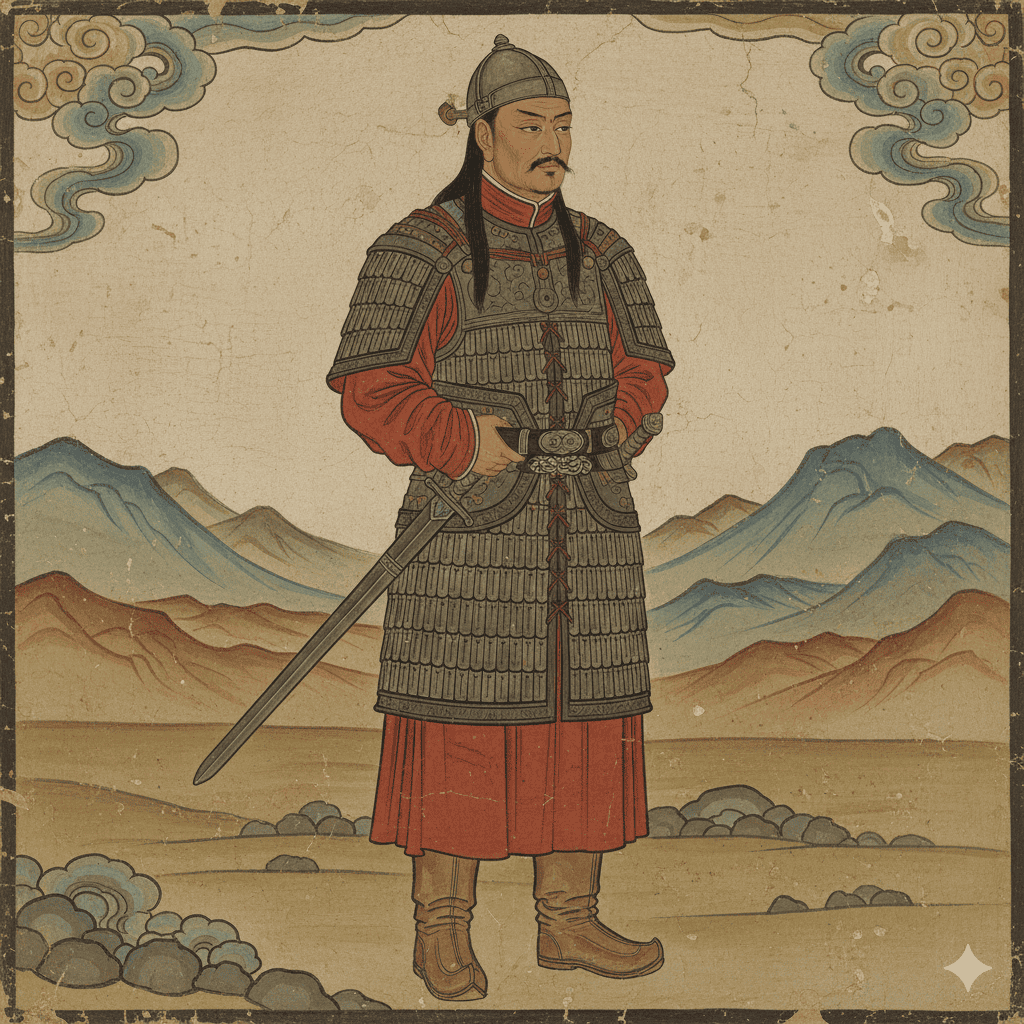
After the death of Songtsen Gampo in 650, the young emperor Mangsong Mangtsen ascended the throne. Gar Trinring Tsendro’s father, Gar Tongtsen, acted as regent and managed state affairs. During this time, Gar Trinring Tsendro and his brothers entered the center of imperial politics, gaining firsthand experience in governance and military command.
Following his father’s death, his elder brother became Great Minister, while Gar Trinring Tsendro focused primarily on military leadership. The brothers worked in close coordination—one in civil administration, the other in warfare—strengthening both the Gar family’s authority and the Tibetan Empire’s overall power.
Conquest of Tuyuhun and the Western Regions (663 AD)
In 663 AD, Gar Trinring Tsendro led a massive northern campaign. Tibetan forces captured the Tuyuhun region, a strategic territory long contested between Tibet and Tang China. This victory strengthened Tibet’s grip over Qinghai and disrupted Tang influence in the northwest.
Soon after, Tibetan forces extended their control into key Silk Road centers, including the Anxi Four Garrisons—Shule, Kucha (Guizi), Yanqi, and Karashahr. These oasis cities were vital trade hubs linking China with Central Asia.
By controlling these regions, Gar Trinring Tsendro positioned Tibet at the heart of transcontinental trade routes.
Death of Tsenpo Mangsong Mangsten
In 676, Emperor Mangsong Mangtsen died suddenly, triggering internal instability. Regional rebellions erupted, and the Tang dynasty sought to exploit Tibet’s vulnerability. At this critical moment, Gar Trinring Tsendro successfully defended Qinghai and stabilized the empire’s western frontier.
In 685, after internal struggles led to his brother’s death, Gar Trinring Tsendro marched rapidly to Lhasa, crushed the rebellion, and secured control of the government. With royal endorsement, he assumed the position of Great Minister, consolidating supreme authority over Tibet’s civil and military systems. Historians often describe this period as the height of Gar clan dominance.
The Tang–Tibet Wars: Defining Battles of an Era
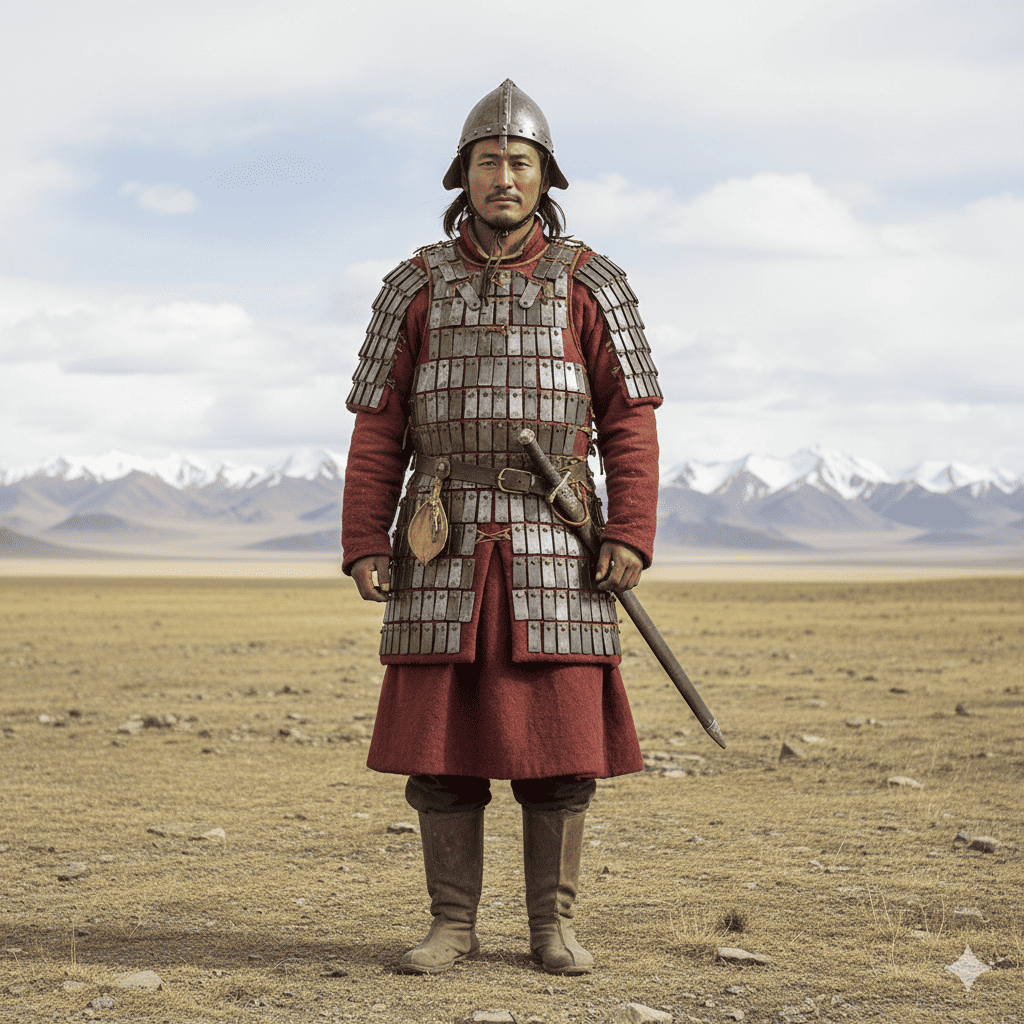
Gar Trinring Tsendro’s legacy is inseparable from the long and intense wars between the Tibetan Empire and the Tang dynasty. He mastered plateau warfare, skillfully used cavalry, disrupted supply lines, and executed large-scale encirclement tactics. His calm judgment and strategic precision allowed him to defeat several of the Tang’s most respected generals.
1. The Battle of Dafeichuan (670 AD): A Crushing Defeat for Tang
By 670, Tibet had absorbed the Tuyuhun kingdom and seized control of the Anxi Four Garrisons, posing a direct threat to Tang dominance over the Silk Road.
The Tang court appointed the celebrated general Xue Rengui, a hero of earlier campaigns in Korea, to lead 50,000 elite troops against Tibet. His mission was to reclaim lost territory and restore Tang authority in the west.
However, Gar Trinring Tsendro commanded a larger and better-positioned force. Using superior knowledge of plateau terrain, he cut off Tang supply lines and seized their provisions. The Tang army, stranded and undersupplied, was forced into a desperate engagement.
The result was one of the Tang dynasty’s most devastating foreign defeats. The army suffered catastrophic losses, and Xue Rengui was forced into negotiations to survive. This battle dramatically shifted the strategic balance in favor of Tibet and cemented Gar Trinring Tsendro’s military reputation across Central Asia.
Blocking Tang Expansion Under Emperor Gaozong
During the reign of Emperor Gaozong of Tang (Li Zhi), the Tang dynasty had expanded across East Asia and Central Asia. Yet Tibet remained the one power capable of halting its western ambitions.
Gar Trinring Tsendro’s control over Qinghai and the Western Regions effectively blocked Tang expansion routes. His authority stretched across Central Asia, transforming Tibet into a serious geopolitical rival.
Even respected Tang officials acknowledged his strength. In 679 AD, when Tang strategists considered attacking Tibet following the death of the Tibetan emperor Mangsong Mangtsen, the famous Tang general Pei Xingjian reportedly warned the court:
“Gar Trinring Tsendro holds power, and his brothers command the armies. Now is not the time to attack.”
2. The Qinghai Campaign (678): Crushing a Counterattack
Determined to recover from defeat, the Tang launched another massive campaign in 678 under Li Jingxuan. Anticipating the move, Gar Trinring Tsendro prepared defensive positions across the Qinghai region.
He identified internal divisions within the Tang command structure and launched a precise counteroffensive. The Tang forces collapsed under pressure, suffering heavy casualties. Although a nighttime counterstrike prevented total destruction, the campaign ended in another major setback for the Tang dynasty.
Following this conflict, diplomatic negotiations reduced open hostilities, and Tibet solidified its dominance in the region.
3. The Battle of Suoluohan Mountain (696): Shockwaves Across the Frontier
In 692, under Wu Zetian’s rule, the Tang temporarily regained the Anxi Four Garrisons, reigniting tensions. In 696, Gar Trinring Tsendro led Tibetan forces against Tang armies commanded by Wang Xiaojie and Lou Shide near Suoluohan Mountain in present-day Gansu.
Using coordinated flanking and encirclement tactics, Gar Trinring Tsendro shattered the Tang forces. Thousands were killed, high-ranking officials were captured or demoted, and Tibetan troops advanced toward the Hexi Corridor. Even the Guanzhong heartland felt threatened.
Although peace talks followed, the battle reinforced Tibet’s military strength and forced the Tang court to rethink its western frontier strategy.
Governance and Imperial Expansion
Gar Trinring Tsendro was not only a battlefield commander but also a capable administrator. During his leadership:
- Land and tax systems were reorganized.
- Household registration and population surveys were conducted.
- Military recruitment systems were strengthened.
- Central authority was consolidated.
Under his direction, the Tibetan Empire reached one of its territorial peaks, extending influence into the Tarim Basin, Central Asia, and regions bordering India and Turkic lands.
He also secured vital trade and military routes linking Tibet to Central Asia, reinforcing control over Silk Road corridors. Tibetan manuscripts from Dunhuang suggest that Gar Trinring Tsendro remained undefeated in major campaigns—a rare achievement in ancient military history.
The Peak of Tibetan Power
Under Gar Trinring Tsendro’s leadership, Tibet reached unprecedented national strength. Its military influence stretched across Qinghai, the Hexi Corridor, and deep into Central Asia.
Chinese historical records noted that since the Han and Wei dynasties, Tibet had never posed such a serious threat—until the rise of Gar Trinring Tsendro.
He was not merely a general; he was the architect of Tibet’s transformation into an empire capable of challenging one of the greatest dynasties in Chinese history.
Power Struggles and the Fall of the Gar Clan
Despite his accomplishments, Gar Trinring Tsendro’s dominance alarmed the Tibetan royal house. As Emperor Tridu Songtsen matured, he grew increasingly wary of the Gar family’s overwhelming power.
The Tang court recognized these tensions and attempted to deepen divisions. After a military setback involving one of Gar Trinring Tsendro’s brothers, suspicion intensified. The emperor began systematically purging Gar clan members.
In 699, during what appeared to be a royal hunting expedition, thousands of Gar supporters were arrested and executed. Realizing he faced certain death if he returned to court, Gar Trinring Tsendro chose rebellion. However, with his power base already weakened, he was defeated and ultimately took his own life.
Following his death, surviving family members surrendered to the Tang dynasty and were granted official positions. The once-dominant Gar clan was dismantled, ending an era of near-autonomous political control.
Legacy: A Defining Figure in Tang–Tibet Rivalry
Gar Trinring Tsendro reshaped the balance of power between Tibet and the Tang dynasty. For nearly three decades, he forced one of the world’s most powerful empires to defend its western frontier under relentless pressure.
His military brilliance at Dafeichuan and Suoluohan Mountain stands as classic examples of strategic encirclement and terrain-based warfare. At the same time, his downfall highlights a timeless political reality—the tension between imperial authority and powerful ministers.
After his death, the Tang gradually stabilized control over the Anxi Four Garrisons, and Tang–Tibet relations shifted from sustained warfare to alternating cycles of negotiation and conflict.
Gar Trinring Tsendro remains one of the greatest military commanders in Tibetan history, a central figure in the story of frontier warfare, Silk Road geopolitics, and the rise and fall of elite clans in early medieval Asia.