
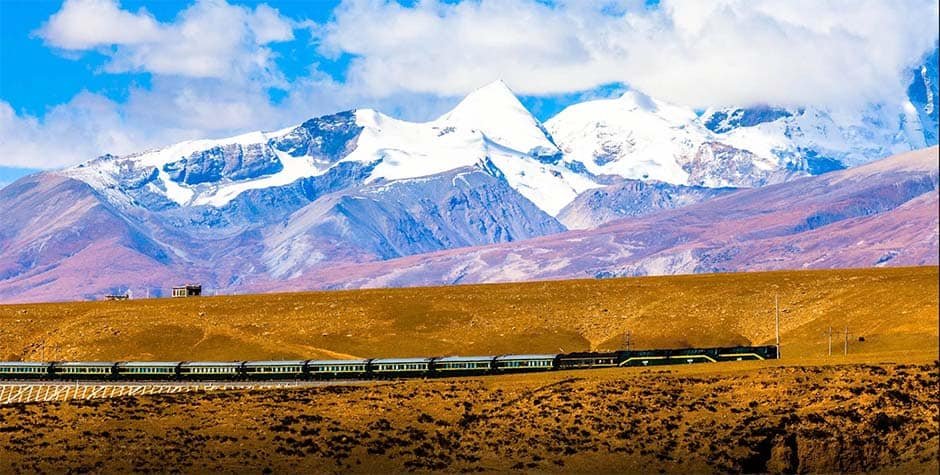
Traveling from Lanzhou to Lhasa by train is one of the most iconic rail journeys in China and a dream route for many travelers heading to Tibet. This unforgettable trip follows part of the legendary Qinghai-Tibet Railway (Qingzang Railway), the world’s highest railway line, offering breathtaking scenery and a smooth way to acclimatize to the Tibetan Plateau.
Opened in 2006, the Qinghai-Tibet Railway revolutionized travel to Tibet, connecting remote high-altitude regions with inland China. The Lanzhou–Lhasa train journey perfectly blends natural beauty, engineering marvels, cultural transitions, and historical depth, making it one of the most scenic train rides on Earth.
Overview of the Lanzhou to Lhasa Train Route
The train journey from Lanzhou to Lhasa covers approximately 2,188 kilometers (1,360 miles) and typically takes 23–24 hours, depending on the train number and schedule.
Although there are no trains that originate exclusively in Lanzhou, several long-distance trains from eastern and central China stop at Lanzhou Railway Station before continuing onward to Lhasa. This makes Lanzhou a convenient boarding city for travelers coming from different parts of China.
Brief History and Introduction of Lanzhou
Lanzhou, the capital of Gansu Province, sits along the upper reaches of the Yellow River (Huang He) and has a history spanning more than 2,000 years. Historically, Lanzhou was a vital gateway on the ancient Northern Silk Road, linking Central China with Central Asia. As early as the first millennium BC, it served as a strategic crossing point for merchants, armies, and cultural exchange. During the Han Dynasty, it was known as the “Golden City”, functioning as a military stronghold and trade hub.
The city officially became the provincial capital of Gansu in 1666 during the Qing Dynasty. Today, Lanzhou is a major transportation hub in northwest China and a melting pot of Han, Hui Muslim, and other ethnic cultures. It is especially famous for Lanzhou hand-pulled beef noodles, considered one of China’s most iconic local dishes. Geographically, Lanzhou is unique—nestled in a narrow valley between mountains, with the Yellow River flowing directly through the city center.
Lanzhou Railway Station: Gateway to Tibet
Lanzhou Railway Station (兰州站) is the main station for regular-speed trains, including all trains heading to Lhasa via the Qinghai-Tibet Railway.
Station Location and Layout
- Address: No. 393 East Huochezhan Road, Chengguan District
- Located in the city center with a large public square
- Traditional three-story station building facing north
This station handles conventional long-distance trains across northwest China and remains the primary departure point for Tibet-bound services (not Lanzhou West).
How to Get to Lanzhou Railway Station
Reaching Lanzhou Railway Station is straightforward due to its central location.
Best options:
- Intercity high-speed train:
- Travel time: 40–50 minutes
- Cost: CNY 21–26 (second class)
- Frequent departures from early morning to late evening
- Taxi:
- Travel time: about 1 hour
- Cost: CNY 250–300
- Airport shuttle bus:
- Travel time: 1+ hour
- Bus routes include:
- No. 1, 6, 7, 9, 10, 16, 31, 110, 114, 124, 126, 131, 302, 601, 801, K102
- (Fare usually CNY 2–3)
Taxis are also affordable and convenient for short distances.
From Lanzhou West Railway Station
- Lanzhou West is the high-speed rail hub, located 8–12 km west of the main station.
- Direct buses such as No. 1, 31, or K102 connect the two stations efficiently.
Important Travel Notes for Tibet-Bound Trains
Foreign travelers heading to Lhasa must arrange the necessary documents in advance.
- Tibet Travel Permit is required in addition to Passport, Valid Chinese visa, Tickets. Tickets for the Lanzhou–Lhasa route are in high demand, especially during peak travel seasons from May to October, so early booking is strongly recommended.
Why Take the Train from Lanzhou to Lhasa?
Choosing the train to Lhasa from Lanzhou is not just about transportation—it’s an experience in itself.
- Gradual Altitude Acclimatization: The slow ascent helps travelers adjust naturally to high altitudes, reducing the risk of altitude sickness compared to flying directly into Lhasa.
- Stunning Scenery: Large panoramic windows reveal ever-changing landscapes, including glaciers, salt lakes, nomadic grasslands, and wildlife such as yaks and Tibetan antelopes.
High-Altitude Train Technology and Comfort
All trains running on the Lanzhou to Lhasa route are specially designed for high-altitude travel, ensuring passenger safety and comfort as the train climbs above 4,000 meters.
Key onboard features include:
- Pressurized train carriages to reduce altitude stress
- Oxygen supply systems (diffused oxygen released into the air after Golmud)
- Individual oxygen outlets available in sleeper compartments
- Altitude display monitors showing real-time elevation
- Medical support and trained staff onboard
These systems help most travelers adapt gradually to the altitude, making the train a preferred option over flying directly into Lhasa.
Scenic Highlights Along the Qinghai-Tibet Railway
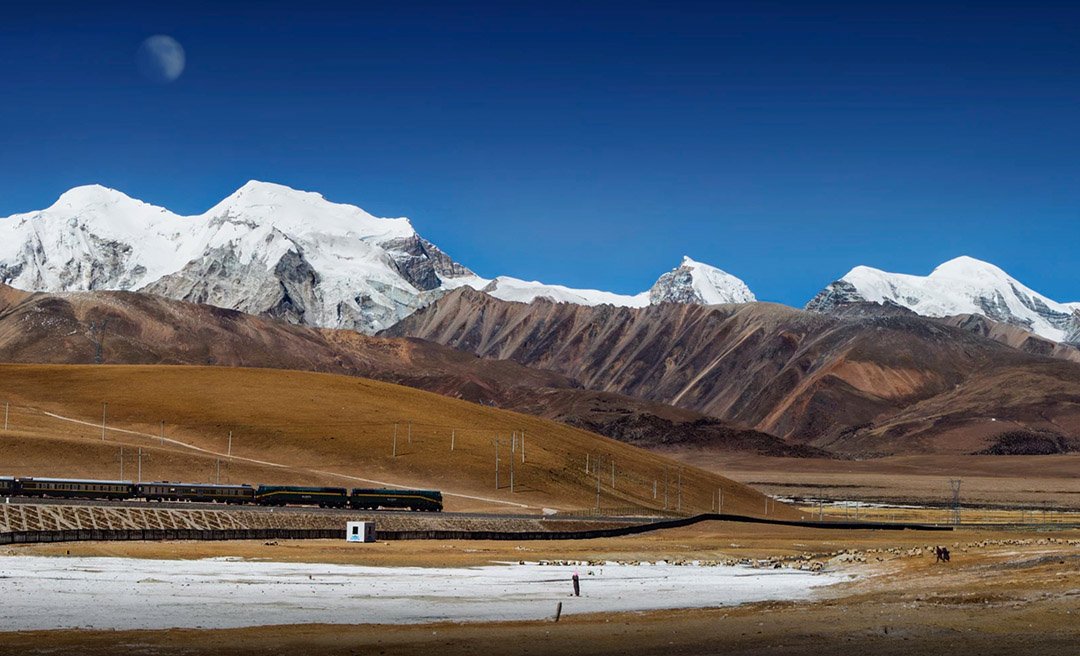
As the train travels westward from Lanzhou, the scenery becomes increasingly dramatic and remote.
- Qinghai Lake: China’s largest saltwater lake appears like a vast blue mirror set against rolling grasslands and distant mountains. It is especially stunning during sunrise and sunset.
- Kunlun Mountains: This ancient mountain range marks the symbolic gateway to the Tibetan Plateau, with rugged peaks and endless horizons.
- Hoh Xil Nature Reserve: A UNESCO World Heritage Site, Hoh Xil is one of the most pristine wilderness areas in China. Passengers may spot Tibetan antelope, wild yaks, or kiangs roaming freely.
- Tanggula Pass: At over 5,000 meters above sea level, Tanggula Pass is the highest point on the entire railway, representing the pinnacle of modern engineering and a milestone of the journey.
Lanzhou to Lhasa Train Schedule
There are no trains that originate exclusively in Lanzhou. Instead, 4–5 long-distance trains daily from major Chinese cities pass through Lanzhou Railway Station and continue to Lhasa.
Schedules may vary slightly by season, but typical departure and arrival patterns are as follows:
Common Departure Times from Lanzhou
| Approx. Departure from Lanzhou | Train Number (Origin City) | Approx. Arrival in Lhasa | Travel Duration |
|---|---|---|---|
| Around 08:40 | Z323 / Z223 (from Chengdu or Chongqing) | Around 07:41 (next day) | ~23 hours |
| Around 12:31 | Z21 (from Beijing) | Around 11:42 (next day) | ~23 hours |
| Around 15:05 – 16:36 | Z265 (from Guangzhou) / Z165 (from Shanghai) | Around 14:00 – 15:05 (next day) | ~22.5–23.5 hours |
Note for readers:
Train schedules may vary by season and operating day (daily or every other day). Soft sleeper tickets sell out quickly during peak travel months (June–October), so booking in advance is strongly recommended. Train frequency may be daily or every other day, depending on the route.
Ticket Booking Tips and Permit Requirements
Tickets for the Lanzhou–Lhasa train are in high demand, especially during the peak travel season from June to October.
Important points to note:
- Soft sleeper tickets sell out fastest
- Booking 15 days or more in advance is strongly recommended
- Foreign travelers must obtain a Tibet Travel Permit before boarding
- A licensed Tibet travel agency is required to arrange the permit and ticket together
For real-time schedules and availability, travelers commonly check platforms like Trip.com or consult a Tibet specialist agency for confirmed dates.
Train Seat Classes on the Lanzhou–Lhasa Route
Choosing the right seat class greatly affects comfort on this long, high-altitude journey.
| Departure from Lanzhou | Train No. & Origin City | Arrival in Lhasa | Duration |
|---|---|---|---|
| Around 08:40 | Z323 / Z223 (Chengdu / Chongqing) | Around 07:41 (Next Day) | ~23 hrs |
| Around 12:31 | Z21 (Beijing) | Around 11:42 (Next Day) | ~23 hrs |
| Around 15:05–16:36 | Z265 (Guangzhou) / Z165 (Shanghai) | Around 14:00–15:05 (Next Day) | ~22.5–23.5 hrs |
Most travelers agree that soft sleeper cabins offer the best balance of comfort, rest, and altitude adjustment.
Lanzhou as a Stopover City: Attractions Worth Visiting
Lanzhou lies in a dramatic valley carved by the Yellow River, combining ancient Silk Road heritage with a modern urban atmosphere. Many travelers choose to spend one or two days here before continuing to Tibet.
Top Attractions in Lanzhou
- Zhongshan Bridge (First Bridge over the Yellow River): Built in 1907, this iconic iron bridge is one of Lanzhou’s most recognizable landmarks and a popular spot for riverside walks and photography.
- White Pagoda Mountain Park: Offering sweeping views of the Yellow River and city skyline, visitors can hike or take a cable car to temples and pagodas overlooking Lanzhou.
- Gansu Provincial Museum: One of northwest China’s best museums, featuring Silk Road relics and the famous Flying Horse of Gansu, a national symbol of Chinese archaeology.
- Yellow River Mother Statue & Waterwheel Park: Symbolic riverside sculptures and historic waterwheels highlight Lanzhou’s deep connection to the Yellow River.
- Five-Spring Mountain Park: A peaceful green area with springs, temples, and panoramic city viewpoints.
- Bingling Thousand-Buddha Caves (Day Trip): Located along the Yellow River, these ancient grottoes house remarkable Buddhist carvings and murals dating back over 1,600 years.