Traveling from Lhasa to Kathmandu is one of the most spectacular journeys in the Himalayas. This route connects the heart of Tibet with the vibrant valleys of Nepal, offering dramatic scenery, rich culture, and unforgettable adventure.
The journey crosses the vast Tibetan Plateau before descending into Nepal’s lower elevations. Along the way, travelers experience a remarkable shift in altitude, landscape, and cultural atmosphere.
There are two main ways to travel:
- Overland by road
- Direct flight
There is no direct railway connection between Lhasa and Kathmandu. However, some tours include train travel within Tibet before continuing overland. Bicycle tours are also possible but require strong physical fitness and careful planning.
Distance and Travel Time
- Road Distance: Approximately 1,100 km (680 miles)
- Flight Distance (straight line): Around 600 km
- Overland Travel Time: 7–9 days
- Flight Duration: 1.5–2 hours
The best travel season is April to October, when weather conditions are more stable. During this period, roads are generally clearer in Tibet, and travelers can avoid Nepal’s heavy monsoon rains and winter snow in high-altitude areas.
Permits and Travel Requirements
Before planning your trip, it’s essential to understand the required documents:
- Tibet Travel Permit (mandatory for all non-Chinese travelers entering Tibet)
- Chinese Visa
- Nepal Visa (available on arrival or obtained in advance)
Since Lhasa sits at 3,650 meters (11,975 ft) above sea level, altitude sickness can affect many travelers. Proper acclimatization in Lhasa before starting the overland journey is highly recommended.
Choosing the Best Route from Lhasa to Kathmandu
The best travel option depends on your time, budget, comfort level, and interest in scenery or adventure.
Route Comparison Overview
| Route Option | Pros | Cons | Estimated Cost (USD per person) | Ideal For |
|---|---|---|---|---|
| Overland (Road) | Stunning mountain views, lakes, monasteries; cultural immersion; gradual altitude descent; optional detours like Everest Base Camp | 7–9 days; some rough road sections; weather-dependent; border procedures | $800–1,500 (group tours, includes transport, permits, guides) | Adventure seekers, photographers, cultural explorers |
| Flight | Fast and convenient; avoids long road travel; daily direct options | Misses scenic landscapes; possible weather delays; sudden altitude change | $200–400 (one-way) | Time-limited travelers, business trips, health concerns |
| Bicycle | Ultimate adventure; eco-friendly; close interaction with locals and nature | Physically demanding; 10–20 days; permit requirements; altitude risks | $1,000–2,000 (including bike rental, guides) | Experienced cyclists |
Overland Travel via the Friendship Highway
The overland route is the most popular option for international travelers. It typically follows the Sino-Nepal Friendship Highway, which forms part of G318 National Highway.
This scenic highway passes through:
- High mountain passes
- Vast Tibetan grasslands
- Sacred lakes
- Historic monasteries
It also offers opportunities for side trips, including visits to Everest Base Camp in Tibet.
After earthquake repairs in previous years, the highway is now fully reopened and well maintained in most sections. However, weather conditions can still affect travel schedules, especially during heavy rainfall or snowfall.
Overland tours are usually organized as guided group trips. This arrangement simplifies logistics, including:
- Permit processing
- Border crossing procedures
- Transportation arrangements
- Local guides
The gradual descent from Tibet into Nepal also helps reduce the risk of severe altitude sickness compared to rapid changes.
Flying from Lhasa to Kathmandu
For travelers short on time, flying is the fastest and most convenient option. Direct flights operate regularly between Lhasa and Kathmandu, taking approximately two hours.
Advantages include:
- Comfortable and efficient travel
- No long road journey
- Ideal for tight schedules
However, flights may be delayed due to mountain weather conditions. In addition, flying means missing the iconic landscapes of the Tibetan Plateau and Himalayan border region.
Bicycle Tours for Extreme Adventure
Cycling from Lhasa to Kathmandu is one of the most challenging Himalayan adventures. The journey can take 10 to 20 days depending on pace and route planning.
This option offers:
- Close connection with local communities
- Immersive natural scenery
- Eco-friendly travel experience
However, it requires:
- Excellent physical fitness
- Careful altitude management
- Support vehicles and proper permits
Cyclists must prepare thoroughly due to high elevation, remote stretches, and unpredictable weather.
Best Time to Travel from Lhasa to Kathmandu
The ideal travel window is April to October. During this period:
- Roads are generally accessible
- Mountain views are clearer
- Weather is milder
Travelers should avoid:
- Peak monsoon season in Nepal
- Heavy winter snowfall in Tibet
Weather conditions play a significant role, especially for overland and cycling routes.
Quick Summary Chart
| Factor | Overland | Flight | Bicycle |
|---|---|---|---|
| Duration | 7–9 days | 1.5–2 hours | 10–20 days |
| Scenic Value | Very High | Limited | Extremely High |
| Physical Demand | Moderate | Low | Very High |
| Budget Range | Medium | Low–Medium | Medium–High |
| Adventure Level | High | Low | Extreme |
Traveling from Lhasa to Kathmandu is more than just transportation between two capitals. It is a journey across landscapes shaped by the Himalayas and cultures rooted in centuries of history, offering travelers different ways to experience one of Asia’s most dramatic cross-border routes.
Popular Tourist Attractions Along the Lhasa to Kathmandu Overland Route
The overland journey from Lhasa to Kathmandu follows the legendary Sino-Nepal Friendship Highway westward to Gyirong Port (China side) and continues through Rasuwagadhi into Nepal.
This 7–8 day journey combines sacred lakes, ancient monasteries, Himalayan passes, and the world’s highest peaks. Below is a standard itinerary with major stopovers and highlights.
Day 1–2: Lhasa (0 km)
Most tours begin with 1–2 days in Lhasa for acclimatization at 3,650 meters.
Key Attractions
- Potala Palace
The iconic former residence of the Dalai Lama. This UNESCO World Heritage Site dominates the skyline with its red-and-white structure and panoramic city views. - Jokhang Temple
The holiest temple in Tibet, surrounded by pilgrims along Barkhor Street, known for traditional markets and local life. - Sera Monastery and Drepung Monastery
Large monastic complexes famous for monk debates and rich history. - Norbulingka
The former summer palace of the Dalai Lamas, set within peaceful gardens.
Why stop here?
Proper acclimatization reduces altitude sickness risk before heading toward higher passes.
Day 3: Lhasa to Gyantse (260 km, 6–7 hours)
A scenic drive filled with high passes and sacred lakes.
Highlights
- Yamdrok Lake (4,441m)
A brilliant turquoise lake and one of Tibet’s three holy lakes. - Karola Glacier
Massive ice formations visible directly from the highway. - Kamba La Pass (4,794m)
- Karo La Pass (5,010m)
Stunning panoramic views of snow peaks and valleys. - Gyantse Dzong
A historic hilltop fortress overlooking the valley. - Pelkor Chode Monastery and Kumbum Stupa
Known for detailed murals and multiple chapel levels.
Overnight: Gyantse
Day 4: Gyantse to Shigatse (90 km, 2 hours)
A short drive allows more exploration time.
Key Attraction
- Tashilhunpo Monastery
The traditional seat of the Panchen Lama, featuring golden rooftops and giant Buddha statues.
Optional stop:
- Shalu Monastery
Noted for its blend of Tibetan and Nepalese architectural styles.
Overnight: Shigatse (Tibet’s second-largest city)
Day 5: Shigatse to Tingri or Everest Base Camp (300–350 km, 6–8 hours)
This is one of the most dramatic days of the journey.
Highlights
- Sakya Monastery
Distinct gray-walled monastery with rare scriptures. - Gyatso La Pass (5,220m)
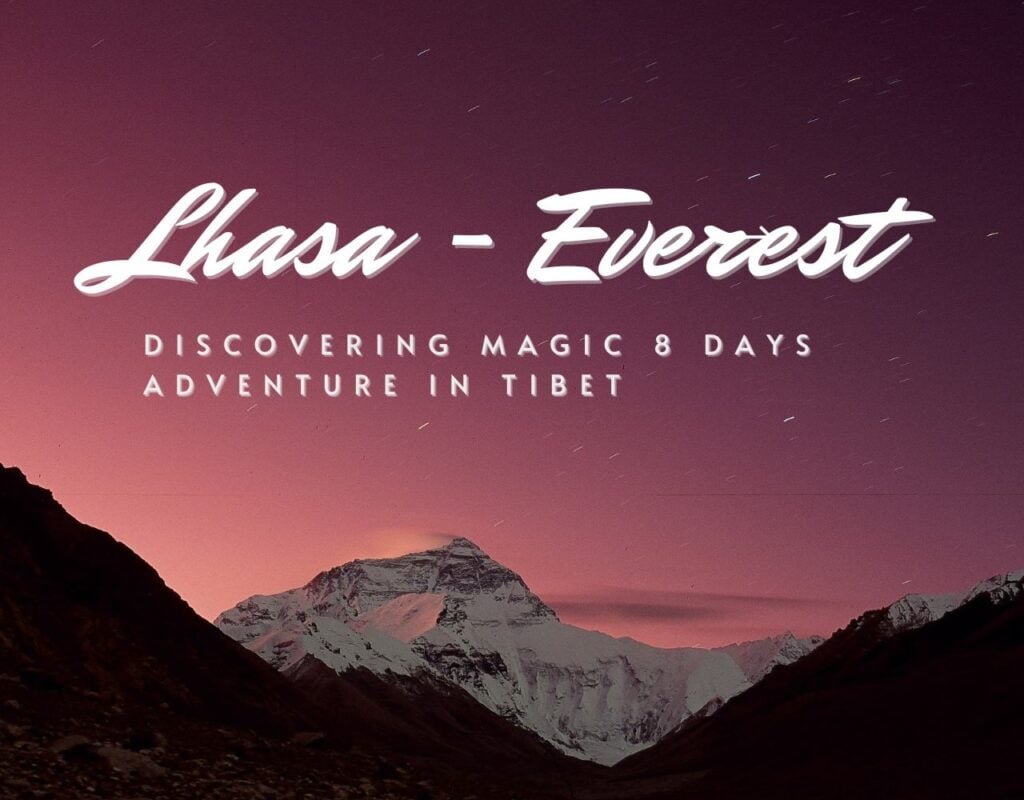
Panoramic Himalayan views. - Everest Base Camp (5,200m)
The north face view of Mount Everest (8,848m). - Rongbuk Monastery
The world’s highest monastery, near the base camp.
Visible peaks may include:
- Cho Oyu (8,201m)
- Shishapangma (8,027m)
Overnight: Everest Base Camp or Tingri
Ideal for sunrise and stargazing.
Day 6: Tingri/EBC to Gyirong Town (250 km, 5–6 hours)
The landscape gradually changes from dry plateau to green valleys.
Highlights
- Old Tingri viewpoints with Himalayan panoramas
- Gyirong Valley
Known as “Tibet’s backyard garden,” featuring forests, waterfalls, and lower altitude surroundings.
Overnight: Gyirong Town
Day 7–8: Gyirong to Kathmandu (160 km, 6–8 hours)
Border Crossing
Immigration procedures take place at:
- Gyirong Port (China side)
- Rasuwagadhi (Nepal side)
Border hours are typically 9 AM to 5 PM. Travelers may switch vehicles after crossing.
Nepal Side Highlights
- Drive through Langtang National Park, known for forests, rivers, and wildlife.
- Travel along the Pasang Lhamu Highway, passing Dhunche town.
- Arrive in Kathmandu, where visitors often explore Kathmandu Durbar Square, Swayambhunath, or shop in Thamel.
Route Overview Chart
| Day | Route | Distance | Driving Time | Overnight |
|---|---|---|---|---|
| 1–2 | Lhasa | – | – | Lhasa |
| 3 | Lhasa → Gyantse | 260 km | 6–7 hrs | Gyantse |
| 4 | Gyantse → Shigatse | 90 km | 2 hrs | Shigatse |
| 5 | Shigatse → EBC/Tingri | 300–350 km | 6–8 hrs | EBC/Tingri |
| 6 | Tingri → Gyirong | 250 km | 5–6 hrs | Gyirong |
| 7–8 | Gyirong → Kathmandu | 160 km | 6–8 hrs | Kathmandu |
Practical Travel Tips
Transportation
Most travelers join organized group tours for easier permit processing and logistics. Independent driving is restricted in Tibet.
Health & Safety
- Carry altitude sickness medication
- Stay hydrated
- Secure travel insurance
Estimated Budget
Expect to spend approximately $1,000–2,000 for a complete overland tour, including transport, accommodation, meals, permits, and guide services.
Extensions
Some itineraries extend toward Mount Kailash or include trekking options, adding several extra days to the journey.
This overland route from Lhasa to Kathmandu showcases high Himalayan passes, sacred monasteries, and dramatic landscape transitions from the Tibetan Plateau into Nepal’s lush valleys, making it one of the most scenic cross-border journeys in Asia.