

Luhuo County, known in Tibetan as Draggo (བྲག་འགོ་རྫོང་།), is a quiet yet culturally rich destination along the northern Sichuan–Tibet route. It is under the administration of the Garzê Tibetan Autonomous Prefecture. Often overlooked by travelers, this highland county reveals a different side of Kham Tibet—where vast grasslands meet sacred mountains, and history lives quietly within everyday life.
Luhuo was historically called Hor Draggo. In Tibetan, “Hor” refers to people of Mongolian origin, while “Draggo” means “above the rocky mountain,” highlighting both its cultural roots and rugged terrain. As a core area of Hor culture in northern Kham, Luhuo has long been a crossroads of ethnic interaction and regional power.
A Land Shaped by Nomads and History
Luhuo’s story is closely tied to the legacy of the Hor chieftains. This heritage still echoes across the landscape, where nomadic traditions remain an essential part of local identity.
Among the counties of northern Kham, Luhuo has also faced significant hardship. In 1973, a powerful earthquake measuring 7.9 on the Richter scale struck the region, causing widespread destruction and claiming over 2,000 lives. The rebuilt county town today stands as a quiet symbol of resilience—simple, sparsely populated, and often passed through rather than explored.
Historical Timeline of Luhuo County
In 638 AD, Luhuo was incorporated into the Tibetan Empire, marking a significant shift in its cultural and political alignment. Through Sakya dynasty, the region was governed under the Gyalpo system, where local chieftains held authority under imperial recognition.
A major administrative change came in 1897, during the Qing dynasty, when “Luhuo Tun” was officially established. The name “Luhuo” combined the first character of “Dajianlu” (Kangding) and “Hor,” reflecting its geographic and cultural identity. In 1911, the Zhanggu Administrative Committee was formed, further formalizing governance in the area.
Republican Era and Red Army History
In 1914, Luhuo County was formally established under the Sichuan Frontier Special Administrative Region during the Republic of China period.
Luhuo also holds an important place in modern Chinese history. In 1936, the Red Army passed through the region during the Long March. This period left a lasting historical imprint, contributing to Luhuo’s “red heritage.”
Modern Administrative Development
After 1949, Luhuo entered a new phase of governance and development. In 1950, the People’s Government of Luhuo County was officially established. By 1955, it became part of Garzê Tibetan Autonomous Prefecture in Sichuan Province, where it remains today.
A significant administrative restructuring took place in 2020, when township-level divisions were adjusted and consolidated, forming the foundation of the current administrative system.
Zhaggo (Luhuo) County Administrative Divisions
Luhuo County is administered from Xindu Town, which serves as the political and economic center of the region. The county covers a total area of 4,477.13 square kilometers and is divided into towns, townships, communities, and 139 administrative villages, reflecting both its vast territory and dispersed population.
Towns
| Name (English) | Simplified Chinese | Hanyu Pinyin | Tibetan | Area Type |
|---|---|---|---|---|
| Xindo Town (Xindu) | 新都镇 | Xīndū Zhèn | ཤིས་མདོ་གྲོང་རྡལ། | Agricultural |
| Zhêhor Town (Zhuwo) | 朱倭镇 | Zhūwō Zhèn | ཏྲེ་ཧོར་གྲོང་རྡལ། | Agricultural |
| Xaratang Town (Xialatuo) | 虾拉沱镇 | Xiālātuó Zhèn | ཤ་རྭ་ཐང་གྲོང་རྡལ། | Agricultural |
| Ligogdoima Town (Shangluokema) | 上罗柯马镇 | Shàngluókēmǎ Zhèn | ལི་ཀོག་སྟོད་མ་གྲོང་རྡལ། | Pastoral |
Townships
| Name (English) | Simplified Chinese | Hanyu Pinyin | Tibetan | Area Type |
|---|---|---|---|---|
| Nyiba Township (Niba) | 泥巴乡 | Níbā Xiāng | སྙ་པ་ཤང་། | Agricultural |
| Yardê Township (Yade) | 雅德乡 | Yǎdé Xiāng | ཡར་སྡེ་ཤང་། | Agricultural |
| Norqung Township (Luoqiu) | 洛秋乡 | Luòqiū Xiāng | ནོར་ཆུང་ཤང་། | Pastoral |
| Xinda Township (Renda) | 仁达乡 | Réndá Xiāng | གཞི་མདའ་ཤང་། | Agricultural |
| Dando Township (Dandu) | 旦都乡 | Dàndū Xiāng | མདའ་མདོ་ཤང་། | Agricultural |
| Conggo Township (Chonggu) | 充古乡 | Chōnggǔ Xiāng | མཚོ་འགོ་ཤང་། | Agricultural |
| Gêzê Township (Gengzhi) | 更知乡 | Gēngzhī Xiāng | དགེ་རྩེ་ཤང་། | Pastoral |
| Karnya Township (Kaniang) | 卡娘乡 | Kǎniáng Xiāng | མཁར་གཉའ་ཤང་། | Semi-Agricultural & Pastoral |
| Zangdoi Township (Zongta) | 宗塔乡 | Zōngtǎ Xiāng | གཙང་སྟོད་ཤང་། | Pastoral |
| Zangmai Township (Zongmai) | 宗麦乡 | Zōngmài Xiāng | གཙང་སྨད་ཤང་། | Pastoral |
| Likogma Maima Township (Xialuokema) | 下罗柯马乡 | Xiàluókēmǎ Xiāng | ལི་ཁོག་མ་སྨད་མ་ཤང་། | Pastoral |
Terrain and Climate
The landscape of Luhuo is defined by a gradual slope from northwest to southeast. Mountain ranges stretch across the region, while the Xianshui River flows through the county, shaping valleys and settlements along its course.
The highest point reaches 5,484 meters at Dandu Ka Snow Mountain, while the lowest elevation drops to 3,050 meters in Bali Village of Renda Township. The terrain is diverse, including wide valley basins, mountain plateaus, hilly highlands, and extreme alpine glacial zones.
Luhuo experiences a plateau cold temperate continental monsoon climate. The average annual temperature between 2024 and 2025 is around 6.4°C, with recorded extremes ranging from 29.1°C to -18.5°C. Annual precipitation is about 696 millimeters, mainly concentrated between May and September.
The region receives approximately 2,300 hours of sunshine each year, while the frost-free period remains short at around 90 days. Large temperature differences between day and night are common, along with frequent thunderstorms, strong winds, and occasional snow.
Economic Profile and Key Industries
In 2024, Luhuo County recorded a GDP of 1.884 billion RMB, reflecting a steady growth rate of 5.1%. The economic structure is led by the service sector, supported by agriculture and limited industrial development.
The primary industry, based on a semi-agricultural and semi-pastoral system, generated an output value of 500 million RMB. Key products include highland barley—especially black barley with geographical indication status—and Rusai tea. Yak husbandry remains central, with a population of approximately 124,000 yaks.
The secondary industry contributed 212 million RMB, focusing mainly on hydropower and the processing of agricultural and livestock products. Items such as dried yak meat, butter, and Rusai tea dominate this sector, although the overall industrial base remains relatively small.
The tertiary industry plays the leading role, with an output value of 1.172 billion RMB. Tourism is at the core of this growth, driven by the G317 highway corridor, Kasa Lake, Shouling Monastery, and Hor cultural heritage. Experiences such as Thangka art and Red Army historical sites further enrich the tourism offering.
Monasteries and Religious Heritage of Luhuo county
Mibale Monastery in Renda Township is a tantric practice site associated with both Nyingma and Bon traditions. Surrounded by forests and caves, it offers a quiet and spiritual setting.
Domang Monastery, located in Xia Luokema Township, sits near the Duomang River and is backed by Vajra Mountain. It is known for rare stone-carved editions of the Kangyur scriptures.
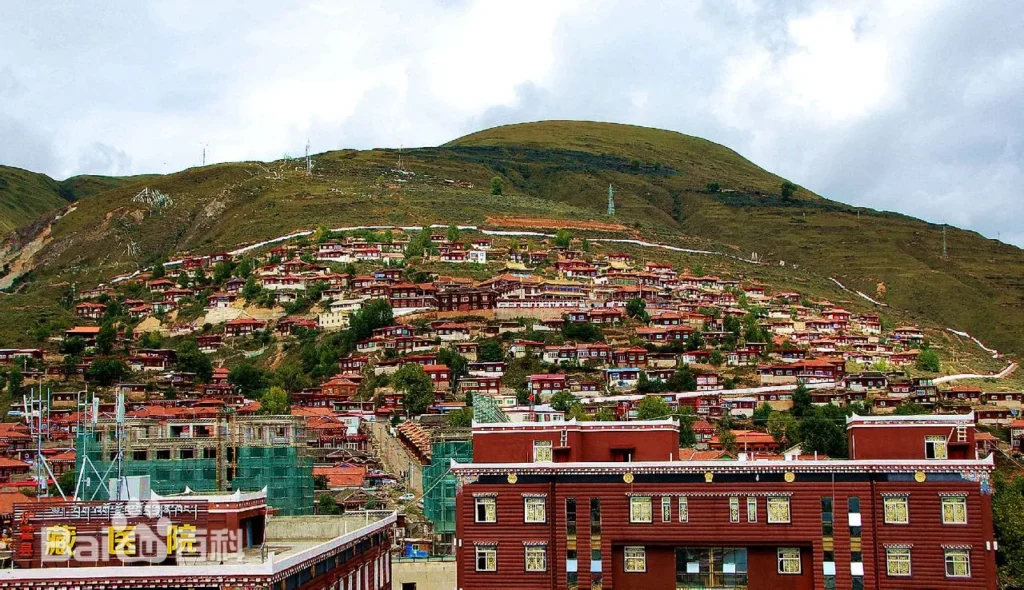
Shouling Monastery: A Millennium of Faith
At the northern edge of the county town stands Shouling Monastery, the most important cultural and spiritual site in Luhuo.
With a history spanning more than 1,000 years, the monastery has witnessed several transitions in religious tradition. It was originally associated with the Bon tradition, later became part of the Nyingma school, and by the 17th century, it had transitioned into a Gelug monastery. It was also recognized as one of the “Hor Thirteen Monasteries.”
Inside the main assembly hall, visitors can see a finely crafted statue of Shakyamuni Buddha. Another highlight is a gilded bronze statue brought from India in 1995, adding to the monastery’s spiritual and artistic value.
Kasa Lake: A Tranquil Highland Sanctuary
Around 70 kilometers west of the county town lies Kasa Lake, a peaceful freshwater lake set at an altitude of 3,510 meters.
Known as the largest habitat for waterbirds along the northern Sichuan–Tibet route, Kasa Lake offers a calm and open landscape. The still waters reflect the sky, creating a quiet and meditative atmosphere. Nearby monasteries provide simple accommodation, making it a convenient and serene stop for self-drive travelers.
Zongta Grassland & Fox-Lion Sacred Mountain
To the northeast of Luhuo stretches the wide expanse of Zongta Grassland, located in the upper reaches of the Dadu River.
At the center of this grassland rises the Fox-Lion Sacred Mountain, a place deeply rooted in local belief and spiritual significance. The surrounding scenery changes dramatically with the seasons. In summer, especially from July to August, the grassland becomes a vibrant field of wildflowers.
Yaks and sheep graze across the green plains, while nomadic tents dot the landscape. The scene offers one of the most visually striking experiences in northern Kham, combining natural beauty with traditional pastoral life.
Local Specialties and Highland Products
Luhuo is known for its distinctive high-altitude products, shaped by its natural environment and traditional practices.
Snowland Rusai tea, a geographical indication product, is made from wild leaves growing at elevations between 3,000 and 3,800 meters. It is valued for its clear taste and gentle sweetness.
Black highland barley is another important product, often processed into tsampa, barley wine, and noodles. These foods are highly nutritious and form a staple of local diets.
Yak-based products are widely available, including air-dried yak meat, butter, cheese, and yogurt, all offering rich flavors unique to the plateau.
Traditional water-milled tsampa from Luhuo is especially prized for its smooth texture and is a daily staple food. In addition, the region produces wild mushrooms such as matsutake and medicinal herbs like rhubarb and Qinjiao, known for their quality.
Transportation and Accessibility
Road travel is the primary means of reaching Luhuo. The G317 highway, also known as the northern Sichuan–Tibet route, runs directly through the county and connects it with surrounding regions.
The distance from Luhuo to Daofu is 70 kilometers, and about 90 kilometers to Ganzi County. Provincial roads such as S454 and S215 link smaller towns and townships. Luhuo does not have a railway or civil airport. The nearest airport is Gesar Airport, located 120 kilometers away, requiring a road transfer. Although the Sichuan–Tibet Railway is planned, it does not pass directly through the county.