Mount Kailash: The Holiest Mountain in Four Religions
Mount Kailash, located deep in the Tibetan Plateau, is one of the most sacred mountains in the world. It is revered simultaneously in Hinduism, Buddhism, Jainism, and Bon, making it a rare spiritual convergence point across civilizations.
In Hindu belief, Mount Kailash is the eternal abode of Lord Shiva. Buddhists regard it as the home of Demchok (Chakrasamvara), Jains associate it with the liberation of Rishabhadeva, and Bon followers believe it to be the seat of Sipaimen, the sky goddess. Because of this universal sanctity, trekking around Mount Kailash is considered far more than a physical adventure—it is a deeply transformative spiritual pilgrimage.
The Spiritual Meaning of the Mount Kailash Kora
The Mount Kailash trek, also known as the Kailash Kora or Parikrama, involves a sacred circumambulation around the mountain. Completing one full circuit is believed to purify negative karma, remove spiritual obstacles, and bring blessings and enlightenment.
For many pilgrims, each step around Mount Kailash is an act of devotion. Some perform the kora walking, while others undertake full-body prostrations, which can take weeks or even months to complete.
Starting Point: Journey to Darchen
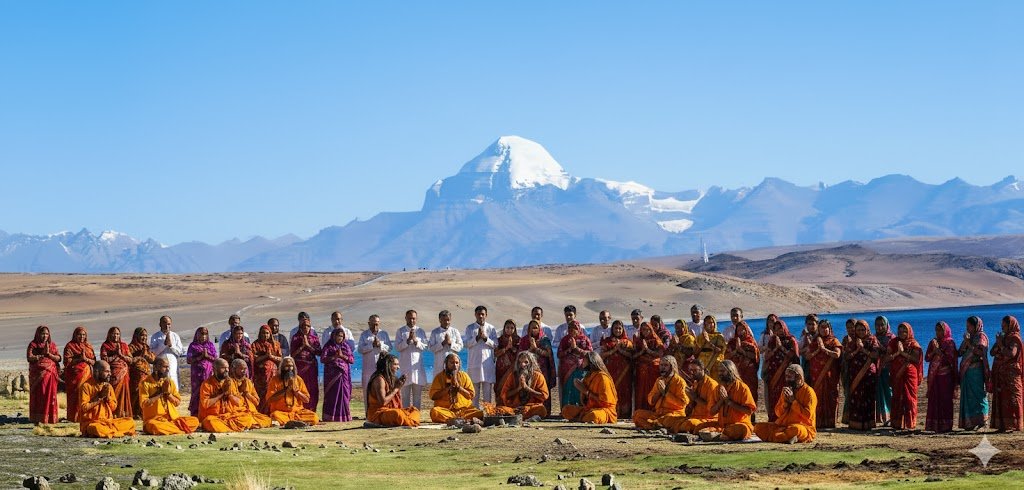
The trek begins at Darchen, a small settlement located at the foot of Mount Kailash. Darchen serves as the official starting and ending point of the kora and offers basic guesthouses, shops, and monasteries.
Before beginning the trek, pilgrims usually spend time acclimatizing to the high altitude, as Darchen sits at approximately 4,670 meters above sea level. Proper acclimatization is essential for a safe and meaningful journey.
Mount Kailash Trek Route Overview
The traditional Mount Kailash trek is a 53-kilometer clockwise circuit, usually completed in three days, though some travelers take longer for acclimatization and spiritual practice.
Day-by-Day Trek Overview
- 1 Day: Darchen to Dirapuk Monastery
- 2 Day: Dirapuk to Zutulphuk Monastery via Dolma La Pass
- 3 Day: Zutulphuk back to Darchen
Along the route, trekkers are surrounded by glaciers, alpine valleys, sacred rivers, and dramatic Himalayan landscapes, with Mount Kailash dominating the horizon throughout the journey.
The Inner Journey: Physical and Spiritual Challenges
Beyond its breathtaking scenery, the Mount Kailash trek is a powerful inner journey. High altitude, thin air, steep ascents, and unpredictable weather test both physical endurance and mental strength.
These hardships are often viewed symbolically—as reflections of the obstacles one must overcome on the spiritual path. Many pilgrims report profound moments of introspection, emotional release, and clarity during the trek, making the journey as transformative internally as it is externally.
Sacred Sites Along the Mount Kailash Trek
The Kailash Parikrama passes several highly revered spiritual landmarks, each offering unique religious significance.
Tarboche Monastery and Flagpole
Located near the start of the trek, Tarboche Monastery is famous for its annual Saga Dawa Festival. Pilgrims pray here for a safe and successful kora before continuing onward.
Gauri Kund (Parvati Lake)
Gauri Kund is a sacred turquoise lake associated with Goddess Parvati. It is believed to represent purification and feminine divine energy. Many pilgrims pause here for meditation and prayer.
Zutulphuk Monastery
One of the most important stops on the trek, Zutulphuk Gompa is associated with the great yogi Milarepa. The monastery houses meditation caves and offers pilgrims a place for rest, reflection, and spiritual renewal.
Khandroma Lake
This sacred lake is linked with dakinis and feminine wisdom in Tibetan Buddhism. It is considered a powerful site for meditation and inner transformation.
The Dolma La Pass: The Highest Point of the Trek
The most challenging and spiritually significant section of the Mount Kailash trek is crossing Dolma La Pass, which stands at 5,630 meters. This ascent is regarded as a symbolic death and rebirth.
Pilgrims often leave personal items—such as clothing, hair, or prayer flags—at the pass, representing the release of ego, suffering, and past karma. From the summit, breathtaking views of the surrounding peaks reward the effort and devotion.
The descent from Dolma La leads toward Zutulphuk Monastery, marking a spiritual transition from struggle to renewal.
Completing the Kailash Parikrama
The final stretch of the trek brings pilgrims back to Darchen, completing the sacred circle around Mount Kailash. Many travelers describe a profound sense of peace, accomplishment, and spiritual fulfillment upon completion.
Whether undertaken for religious devotion, personal transformation, or spiritual curiosity, the Mount Kailash trek leaves a deep and lasting impression on all who walk its sacred path.
Mount Kailash Manasarovar Trek Experience
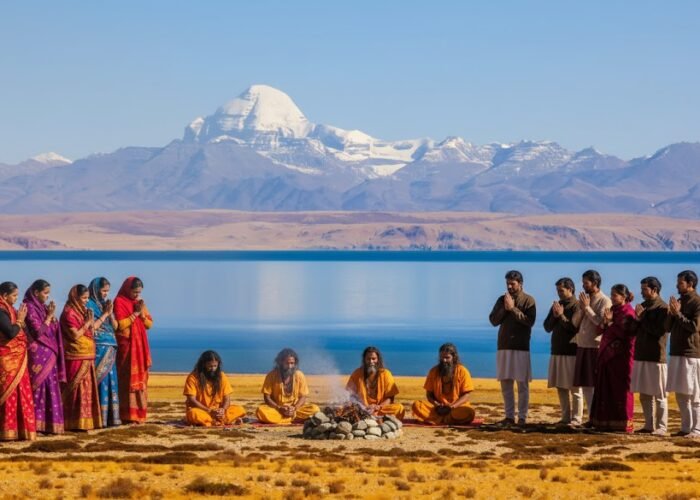
Most pilgrims combine the Mount Kailash trek with a visit to Lake Manasarovar, one of the highest freshwater lakes in the world. Bathing in or praying beside the lake is believed to cleanse sins accumulated over lifetimes and prepare the soul for the Kailash Parikrama.
The combined Mount Kailash–Manasarovar Trek is regarded as one of the most complete spiritual pilgrimages in the Himalayas.
Difficulty Level and Preparation
The Mount Kailash trek is considered moderately to highly challenging due to altitude, weather conditions, and terrain. While technical climbing skills are not required, good physical fitness, mental resilience, and proper preparation are essential.
Pilgrims are encouraged to:
- Acclimatize properly
- Walk at a steady pace
- Respect local customs and spiritual traditions
- Travel with experienced guides and support teams
Why Mount Kailash Trek Is a Once-in-a-Lifetime Journey
The Mount Kailash trek is not about reaching a summit but about walking around the center of the spiritual universe. It is a journey where nature, faith, culture, and inner transformation come together in one of the most remote and sacred landscapes on Earth.
For centuries, seekers from across the world have followed this ancient path, carrying prayers, hopes, and devotion—making Mount Kailash a timeless symbol of spiritual awakening.