Princess Bhrikuti Devi: The Nepalese Queen in Early Tibetan History
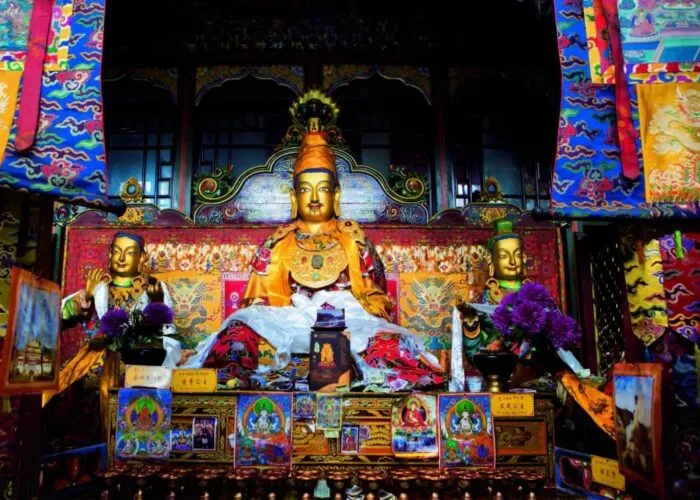
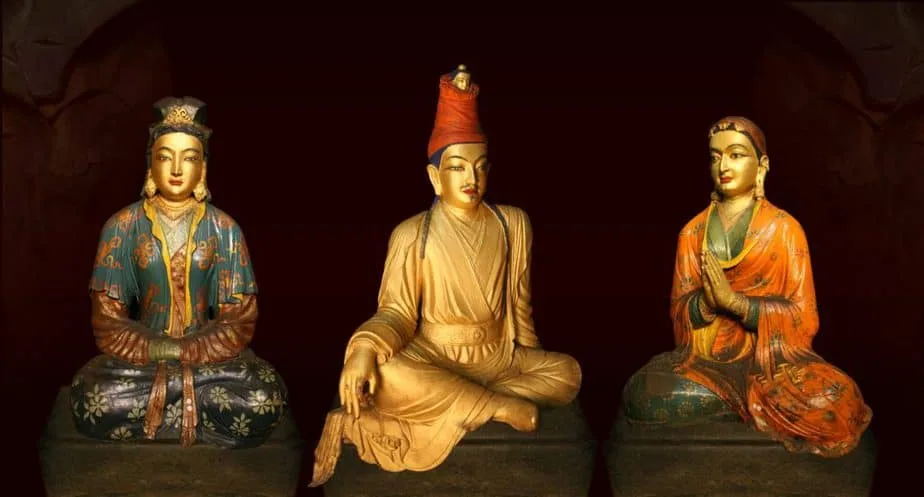
Princess Bhrikuti Devi (Sanskrit: भृकुटी देवी), known in Tibetan sources as Bal-mo-bza’ Khri-btsun or Bhelsa Tritsun, was a 7th-century Nepalese princess of the Licchavi dynasty. She became one of the queens of Songtsän Gampo, the first emperor of a unified Tibet.
Her story appears in Tibetan records and later traditions, where she is remembered as an important link between Nepal and Tibet during the early development of the Tibetan Empire.
Historical Uncertainty and Interpretations
The historical existence of Bhrikuti Devi is not fully certain. No direct reference to her has been found among the manuscripts discovered at Dunhuang. However, scholars note that there are increasing indications supporting the possibility of her existence.
During this period, Tibet and Nepal shared close political and cultural relationships. Even if some elements of her story are shaped by legend, such interpretations do not weaken the historical likelihood of a royal marriage between the two regions.
Birth and Lineage: Nepalese and Tibetan Perspectives
The exact parentage of Bhrikuti Devi remains a subject of debate due to the lack of clear contemporary Nepalese records. Tibetan sources, including the important text Mani bKa’-‘bum, describe her as the daughter of a Nepalese king.
Common identifications include:
- King Amshuvarma (r. c. 605–621 CE), a powerful Licchavi-era ruler known for supporting Buddhism
- King Udayadeva (also referred to as Udayavarman or Go Cha in Tibetan sources), with Queen Bhadrawati Devi as her mother
Nepalese inscriptions from the Licchavi period do not directly mention her, leading some scholars to question her historicity. However, Min Bahadur Shakya, in his book The Life and Contribution of the Nepalese Princess Bhrikuti Devi to Tibetan History (1997), strongly supports her historical existence.
He argues that the absence of records does not disprove her role, as many historical documents were lost due to invasions, natural disasters, and time. Tibetan oral traditions and historical narratives, along with the political context of the period, support the likelihood of her existence and influence. She is identify as the daughter of a Nepali king named Waser Gocha.
Marriage to Songtsän Gampo
Bhrikuti Devi’s marriage to Songtsän Gampo is believed to have taken place between 622 and 639 CE, often cited around 632 CE. This union served as a political alliance between Nepal and Tibet.
Tibetan accounts describe how the Tibetan king sent envoys, including Thonmi Sambhota, to Nepal with gifts and formal requests for marriage.
According to traditional narratives, the Nepalese king initially hesitated, but later agreed and sent Bhrikuti to Tibet with a grand dowry. Her journey across the Himalayas was accompanied by attendants, treasures, and sacred objects.
Her dowry is said to have included:
- Sacred Buddhist statues, including the image of Akshobhya Buddha (Jowo Mikyo Dorje)
- Religious scriptures
- Skilled Newar artisans and craftsmen
- Valuable cultural and religious items
Alternative Traditions and Lineage
Some Tibetan legends refer to a Nepali king named Woeser Gocha, identified by scholars as Udayavarman. This figure is often linked to Udayadeva, the son of Śivadeva I and the adopted heir of Amshuvarma.
According to this interpretation, Udayadeva was also the father of Narendradeva. If this lineage is accepted, it suggests that Bhrikuti Devi and Narendradeva may have been brother and sister.
Records from the Tang Annals
Historical information about this period is also preserved in the Chinese chronicle Old Book of Tang. These records provide details about Narendradeva, a Licchavi king of Nepal.
According to the chronicle, after the death of his father, Narendradeva lost the throne when his uncle Vishnagupta seized power. He then sought refuge in Tibet. The Tibetans later supported him and helped restore him to the throne in 641, strengthening ties between the two regions.
Timing of the Royal Marriage
The exact date of Bhrikuti Devi’s marriage to Songtsän Gampo is not clearly recorded. However, it is generally believed to have taken place around the time Narendradeva fled to Tibet, approximately in 621 CE.
This period followed political changes in Nepal, including the rise of Dhruvadeva, who is recorded in inscriptions dated to 623 as ruling alongside Jiṣṇugupta.
These historical connections reflect a time of strong interaction between Tibet and Nepal, with royal alliances playing a key role in shaping regional relations.
Bhrikuti Devi in Tibet: Early Buddhist Influence and Cultural Legacy
The presence of Princess Bhrikuti Devi in Tibet is closely connected with some of the earliest developments of Buddhism and temple construction in the region. Tibetan historical traditions, including the ancient chronicle dBa’ bzhed (སྦ་བཞེད), provide important insights into her role during the reign of Songtsän Gampo.
According to this text, after the king’s marriage to Bhrikuti, the daughter of the Nepalese ruler, significant religious construction began in Ra-sa, now known as Lhasa. The temple known as Tsulag Khang was established, along with a network of forty-two temples across different regions. The text also records that Thonmi Sambhota was sent to India to study Buddhist teachings and bring back a model for the Tibetan writing system.
Arrival of Sacred Images and Newari Craftsmanship
Tibetan traditions describe Bhrikuti Devi as a devoted Buddhist who brought sacred images, scriptures, and skilled Newari craftsmen from Nepal as part of her dowry. These artisans played a key role in shaping early Tibetan religious architecture and artistic traditions.
One of the major constructions associated with her is the Red Palace (Mar-po-ri Pho-drang) on Marpo Ri in Lhasa. This structure was later expanded into the famous Potala Palace by the Fifth Dalai Lama.
Bhrikuti is also credited with commissioning important statues and religious works. Among them are statues created at Samye and the renowned image of Chenresig, crafted by the Nepali artist Thro-wo.
The Ramoche Jowo and Its Restoration
A significant statue associated with Bhrikuti is the Ramoche Jowo, also known as Jowo Chungpa or the image of Mikyo Dorje (Manuvajra), which was housed in the Ramoche Temple.
Over time, the temple faced destruction, including damage during the Mongol invasions and later events in the 1960s. It is believed that the original statue was broken apart during this period. The lower half was reportedly found in a rubbish dump in Lhasa, while the upper part was discovered in Beijing.
These parts were later reunited, and the restored statue is now displayed surrounded by the Eight Bodhisattvas, continuing its religious significance.
Jokhang Temple and the Rise of Lhasa
Songtsän Gampo and Bhrikuti Devi are traditionally credited with building the Tsulag Khang, meaning the “House of Wisdom.” This temple later became the Jokhang Temple, which remains the most sacred temple in Tibet.
In addition, they constructed the white palace on dMar-po-ri (Red Mountain), which contributed to shifting the political center from the Yarlung Valley to Lhasa. This marked the beginning of Lhasa’s importance as both a political and spiritual center.
Bhrikuti as Green Tara and Her Shared Legacy
In Tibetan Buddhist tradition, Bhrikuti Devi is often regarded as an embodiment of Green Tara, symbolizing compassion and protection.
Songtsän Gampo later married Princess Wencheng in 641 CE, who is associated with White Tara. Tibetan traditions describe both queens as playing important roles in establishing temples and promoting Buddhism throughout Tibet.
Their combined influence is deeply connected with the early foundation of Tibetan Buddhist culture, especially in and around Lhasa.