

Lithium Mining in Tibet: The Hidden Force Powering the Global Green Energy Revolution
Tibet has quietly become one of the most strategically important regions in the global energy transition. Sitting atop vast reserves of lithium — the metal at the heart of every electric vehicle battery and renewable energy storage system — the Tibetan plateau is no longer just “the Roof of the World.” It is shaping up to be a cornerstone of the world’s clean energy future.
As demand for lithium surges, China has moved aggressively to develop Tibet’s mineral wealth. The scale of investment, the speed of expansion, and the geopolitical ripple effects are all growing fast. Here is a comprehensive look at what is happening on the Tibetan plateau, why it matters, and what the road ahead looks like.
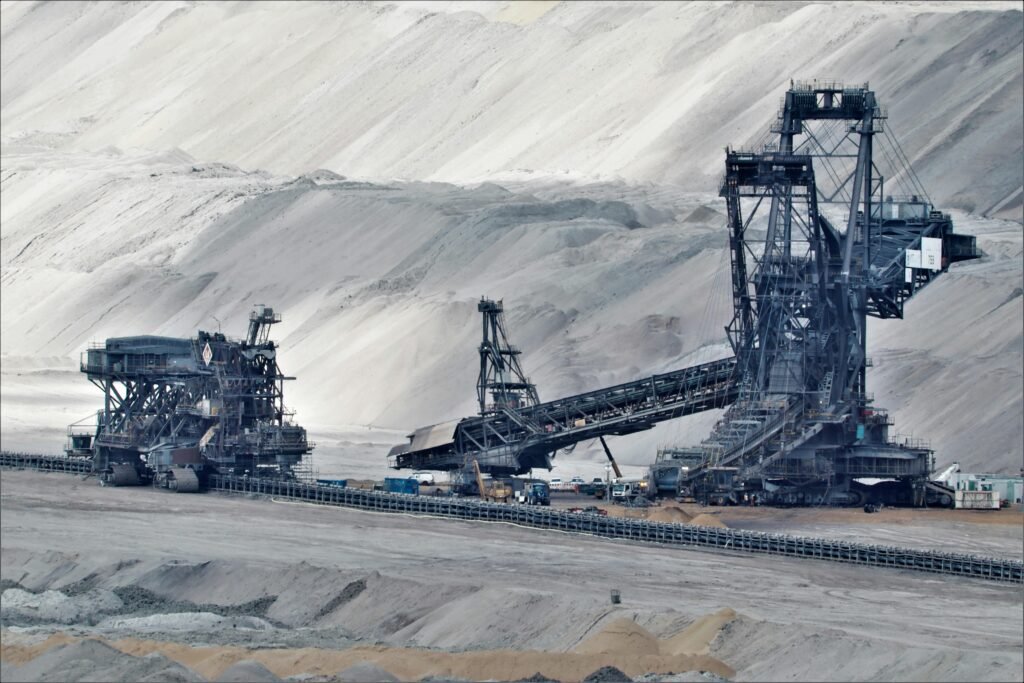
Why Tibet Is So Rich in Lithium
The Tibetan plateau is geologically unique. Millions of years of tectonic activity, combined with extreme altitude and arid conditions, have produced highly concentrated deposits of lithium in two primary forms: brine deposits locked inside salt lakes, and hard-rock formations known as pegmatites, which contain lithium-bearing minerals such as spodumene.
This combination of deposit types is rare and valuable. Brine-based extraction is generally lower in cost because it relies on natural evaporation rather than energy-intensive processing. Hard-rock mining, on the other hand, offers high-grade lithium that can be processed quickly. Tibet has both, making it an exceptionally attractive destination for mining investment.
Three sites stand out as the most significant. The Zabuye Salt Lake in southwestern Tibet holds an estimated 1.5 million tonnes of lithium carbonate equivalent and has already moved into large-scale production. The Mamicuo Salt Lake holds approximately 2 million tonnes of lithium carbonate equivalent, with major construction now underway. And Lakkor Tso offers a smaller but still meaningful reserve base, with major Chinese mining firms now holding operational stakes there.
China’s Strategic Push: Lithium as a National Priority
China’s interest in Tibetan lithium is not simply commercial — it is deeply strategic. Under China’s 14th Five-Year Plan, lithium has been formally classified as a “strategic mineral,” placing it in the same category as resources critical to national security and long-term economic growth.
This classification reflects China’s ambitions in the electric vehicle market. As Chinese automakers accelerate EV production and compete on the global stage, a stable domestic lithium supply is not just helpful — it is essential. Relying on imported lithium leaves China exposed to geopolitical disruptions and price volatility. Developing Tibet’s reserves reduces that vulnerability significantly.
The government has backed this strategy with enormous capital. Billions in investment have flowed into extraction infrastructure, processing facilities, and transport links. The economic logic is straightforward: by securing its own lithium supply, China can support domestic battery manufacturing, lower production costs, and strengthen its grip on the global EV supply chain.
The Major Projects Reshaping Tibet’s Mining Landscape
The year 2025 marked a turning point for Tibetan lithium mining, with several landmark projects reaching operational status or receiving final approval.
Zabuye Salt Lake Phase II, operated by Tibet Mineral Development under the China Baowu state-owned enterprise umbrella, reached full operational status in September 2025 following a successful 120-hour production trial. The facility produces 10,000 tonnes per year of battery-grade lithium carbonate and is designed for a 33-year operational life, with a total investment of approximately RMB 2 billion.
On an even larger scale, Nagormo Integrated Plants in Golmud, operated by China Salt Lake Industry Group, came online on September 28, 2025. This dual-facility complex has a combined capacity of 40,000 tonnes per year of primary lithium salts and 20,000 tonnes per year of lithium carbonate, with a direct connection to high-speed rail for efficient transport.
The Mamicuo Salt Lake project, led by Zangge Mining, received project approval in June 2025. With an investment of approximately RMB 4.5 billion (around USD 637 million), the facility is designed to produce 50,000 tonnes per year of lithium carbonate alongside 17,000 tonnes per year of borax. Adsorption technology has been chosen for the extraction process, specifically to reduce water consumption. Construction is expected to take two years, after which the project will run for 33 years at a production cost of under RMB 25,000 per tonne.
Finally, Zijin Mining completed its acquisition of a 70% stake in the Lakkor Tso project in April 2025, paying RMB 4.9 billion. The acquisition adds 9 million tonnes of lithium resources to Zijin’s portfolio, and the company is targeting a production ramp-up before the end of 2025, with a group-wide output target exceeding 50,000 tonnes per year of lithium carbonate equivalent.
Taken together, total Tibetan lithium output for 2025 is estimated in the range of 120,000 to 150,000 tonnes of lithium carbonate equivalent — a dramatic leap from just a few years prior.
Infrastructure: The Rails That Will Move Tibet’s Lithium to the World
Raw lithium reserves mean little without the infrastructure to transport them. China has invested heavily in this dimension as well. The existing Qinghai–Tibet Railway already connects the plateau to China’s broader rail network, enabling bulk mineral shipments. A planned Xinjiang–Tibet high-speed railway, expected to be completed around 2035, will further open the region to large-scale logistics.
These rail links serve a dual purpose. On the economic side, they reduce transport costs for lithium products heading to processing facilities and battery manufacturers elsewhere in China or destined for export. On the strategic side, improved connectivity in a region bordering India has not gone unnoticed by regional neighbors and international observers.
Environmental Concerns: A Fragile Ecosystem Under Pressure
The rapid expansion of lithium mining on the Tibetan plateau raises serious environmental questions that cannot be dismissed. The high-altitude ecosystem of Tibet is among the most fragile on Earth, home to species found nowhere else and shaped by conditions that took millions of years to establish.
Lithium mining — whether from brines or hard rock — involves land clearing, water consumption, and chemical processing. Each of these activities carries environmental risks. In the context of Tibet, the risks are amplified by the region’s already limited freshwater resources. Mining operations that draw heavily from local water sources can deprive communities and wildlife of water they depend on. Runoff from mining operations, if not carefully managed, can contaminate both surface water and groundwater.
The newer extraction technologies being deployed at sites like Mamicuo — particularly adsorption and electrochemical methods — are designed to reduce water use compared to traditional evaporation ponds. This is an important step forward. However, these methods are energy-intensive, and their long-term environmental performance will depend heavily on how rigorously they are monitored and regulated.
Biodiversity is another area of concern. Many plant and animal species on the Tibetan plateau are adapted to very specific environmental conditions. Industrial activity that alters soil composition, water availability, or land cover can push vulnerable species toward local extinction. The cumulative effect of multiple large-scale mining operations across the plateau compounds these risks considerably.
Cultural and Social Impacts on Tibetan Communities
Beyond the environmental dimension, the mining boom is having deep effects on the people who have lived on the Tibetan plateau for generations. Lithium mining requires large tracts of land, and in some areas, communities have been displaced to make way for industrial operations. For Tibetan people, whose cultural identity is closely tied to the land, specific landscapes, and traditional livelihoods, relocation is not a neutral event. It disrupts daily life, breaks social networks, and threatens the transmission of cultural practices from one generation to the next.
The economic transformation brought by mining also introduces new pressures. As large numbers of workers from outside Tibet arrive to staff mining operations, the cultural composition of local areas can shift. Younger Tibetans may be drawn toward the wage economy and away from traditional occupations, gradually loosening their connection to cultural heritage.
These are not hypothetical concerns. They are well-documented patterns that occur wherever large-scale extractive industry moves into traditionally inhabited territories without adequate community consultation and benefit-sharing mechanisms. The key question for Tibet is whether the economic benefits of lithium mining will meaningfully reach local Tibetan communities, or whether the gains will primarily flow to distant corporations and the central government.
Geopolitical Dimensions: Lithium, Borders, and Regional Tensions
Lithium mining in Tibet is not just an economic or environmental story — it is also a geopolitical one. The region sits at the intersection of Chinese, Indian, and Nepalese interests, and the expansion of Chinese industrial infrastructure in Tibet is being watched closely across the border.
India’s concerns are particularly acute. Ongoing territorial disputes along the Himalayan border mean that Chinese infrastructure development — including mining operations and the rail links that support them — carries strategic implications beyond resource extraction. Enhanced Chinese logistics capacity near the Indian border is a military consideration as much as a commercial one.
Nepal, too, has reasons to pay attention. Large-scale water extraction and environmental changes on the Tibetan plateau have the potential to affect river systems that flow into Nepal and beyond. The ecological interconnectedness of the Himalayan region means that what happens in Tibet’s salt lakes and river basins does not stay in Tibet.
At the international level, Western governments and human rights organizations have raised concerns about transparency and accountability in China’s mining practices in Tibet, citing both environmental degradation and the rights of local communities. These criticisms have not slowed the pace of development significantly, but they have added to the diplomatic complexity surrounding Tibetan lithium.
Key Corporate Players Driving Tibetan Lithium Development
A handful of major companies have emerged as the dominant forces in Tibet’s lithium sector.
Zijin Mining is one of China’s largest mining conglomerates, and its acquisition of the Lakkor Tso project places it squarely at the center of the Tibetan lithium story. The company emphasizes technological innovation and environmental responsibility in its public statements, and its scale gives it significant influence over how the industry develops.
Zangge Mining has built a focused position in lithium extraction, particularly at the Mamicuo Salt Lake. Its partnership structures — including cooperation with Jiangsu-based investment funds — reflect a broader pattern of capital mobilization around Tibetan lithium, bringing in institutional investors alongside operational mining companies.
Both companies operate within a policy environment shaped by China’s state-owned enterprise framework and national industrial planning, meaning their decisions are never purely commercial. They are also expressions of Chinese state strategy.
The Road Ahead: Opportunities, Challenges, and What to Watch
The trajectory for lithium mining in Tibet points strongly upward. Global demand for lithium-ion batteries continues to grow, driven by the electrification of transport and the scaling of renewable energy storage. Analysts project compound annual growth rates exceeding 20% for the lithium-ion battery market over the next decade. Tibet’s reserves — both known and potentially undiscovered — place the region at the heart of efforts to meet that demand.
The geological promise extends even beyond the currently mapped deposits. Exploration in lesser-studied parts of the plateau, including areas near major geographical landmarks, suggests that known reserves may represent only a fraction of what is actually present underground.
At the same time, the challenges are real and growing. Environmental regulation, community rights, international scrutiny, and the technical demands of operating in extreme high-altitude conditions all create friction and cost. Whether the companies and government bodies driving Tibetan lithium development can manage these pressures while maintaining production growth will be one of the defining resource stories of the coming decade.
Sustainable mining practices — genuine ones, not just in corporate communications — will be essential to ensuring that the Tibetan plateau can sustain extraction over the long 33-year operational lifetimes built into current project designs. Water management, waste handling, biodiversity protection, and meaningful community inclusion are not optional extras. They are preconditions for the long-term viability of the industry.
The infrastructure investments now underway, particularly the rail connections that will make large-scale exports possible, signal that China is planning for a multi-decade lithium extraction era in Tibet. How that era unfolds — and whether it manages to balance the extraordinary economic opportunity with the equally extraordinary ecological and human stakes — will matter far beyond the plateau itself.
Tibet’s lithium is helping to power the electric vehicles, smartphones, and energy storage systems reshaping daily life across the globe. Understanding where that lithium comes from, and what its extraction costs, is an essential part of understanding the true price of the green energy transition.