

Picrorhiza: The Hidden Gem of Tibetan Herbal Medicine
Among the many treasured medicinal plants found on the Tibetan Plateau, Picrorhiza (Picrorhiza scrophulariiflora) stands out as a quiet yet powerful healer. Native to the high-altitude regions of Biru County in Nagqu, Tibet, this rare herb has long been valued in traditional Tibetan medicine for its cooling, detoxifying, and liver-protective properties.
Known locally in Tibetan as “Sha Huang lian”, Picrorhiza is often compared to gold among herbs—scarce, potent, and deeply respected by local healers.
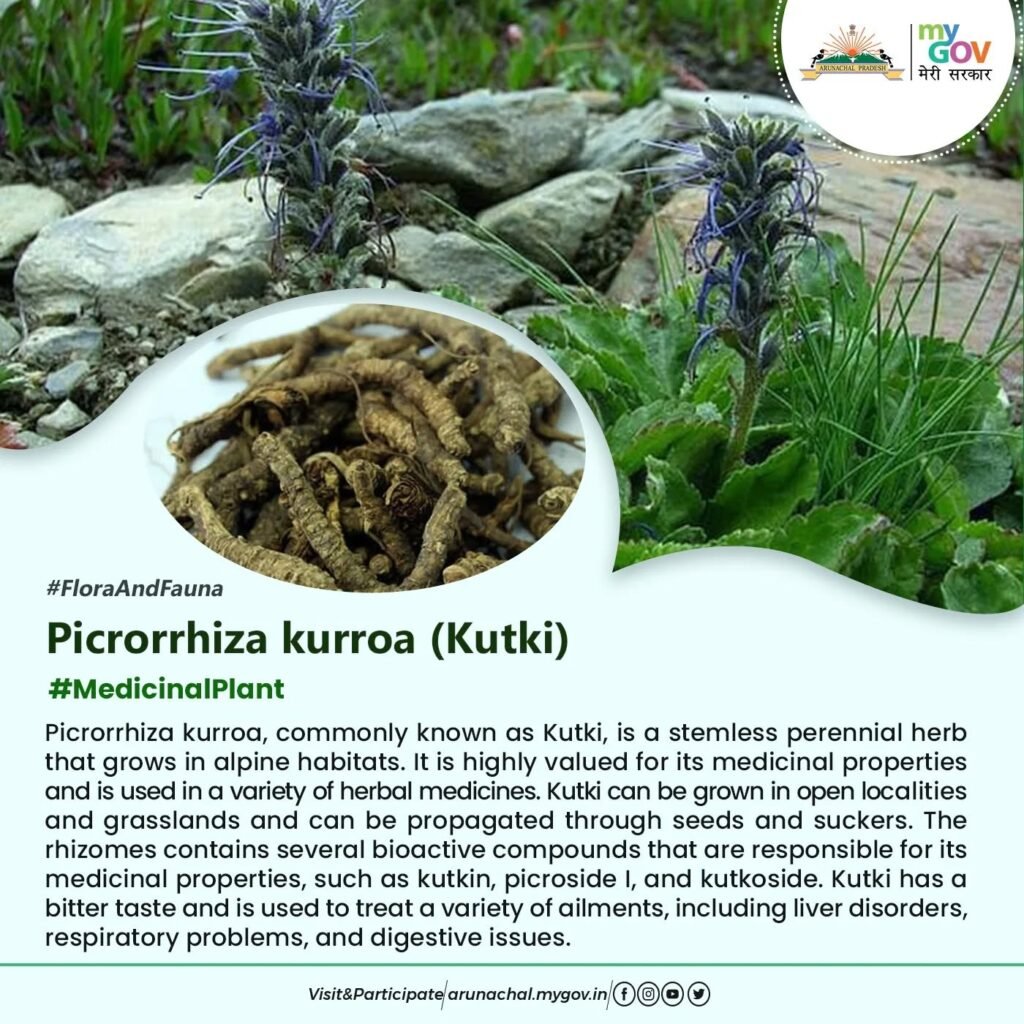
Botanical Profile of Picrorhiza
Picrorhiza belongs to the Scrophulariaceae family and is a low-growing perennial herb adapted to harsh alpine environments.
Key Physical Characteristics
- Plant height: Approximately 6–8 cm
- Rhizome: Thick, yellowish-brown, up to 20 cm long, covered with dense fibrous roots
- Leaves: Basal clusters, oblong to spoon-shaped, with serrated edges and distinctive purple-red veins
- Flowers: Small, purple blossoms densely arranged on a terminal spike
The rhizome is the most valuable medicinal part of the plant and is carefully harvested, dried, and processed for therapeutic use.
Distribution and Natural Habitat in Biru County
Core Growing Areas
Biru County, located in eastern Nagqu, is often called the “Jiangnan of Northern Tibet” because of its relatively rich ecology. With an average altitude of around 4,500 meters, Biru provides ideal conditions for Picrorhiza, especially in areas between 3,600 and 4,400 meters above sea level.
Key distribution zones include:
- Yangxiu Township (Sapuk Sacred Mountain area): Areas such as Puzong Valley and Yangda Valley, surrounded by glaciers and sacred lakes, with exceptionally pure ecological conditions
- Yagong Grassland: A major Cordyceps-producing area and an important habitat for Picrorhiza and other alpine medicinal plants
- Kangqila Mountain region: Including Sixiu Valley and Zhala Valley, known for world-class medicinal plant quality
- Baiga Township, Xiaqu Town, and others: Picrorhiza is scattered across all 8 townships and 2 towns in Biru County, integrated into alpine meadow ecosystems
Natural Growth Advantages of Biru County
| Environmental Factor | Key Features | Impact on Picrorhiza |
|---|---|---|
| Altitude | 3,600–4,400 meters | Creates cold alpine ecology, enhances active compound accumulation |
| Climate | Avg. temperature below 0°C, day–night difference up to 30°C, strong UV, low oxygen | Long growth cycle (3–5 years), richer medicinal content |
| Soil | Selenium-rich permafrost nourished by glacier meltwater | Clean substrate, minimal heavy metal contamination |
| Vegetation | Alpine meadows, shrubs, rocky slopes | Natural protection and reduced human disturbance |
| Phenology | Flowering July–August, fruiting August–September | Perfectly aligned with local climate rhythm |
Role of Picrorhiza in Tibetan Medicine
In traditional Tibetan medical theory, Picrorhiza is classified as a cooling and detoxifying herb. It is commonly used to balance internal heat and purify the body.
Traditional Therapeutic Uses
The rhizome of Picrorhiza is prescribed to:
- Clear internal heat and toxins
- Improve eyesight and reduce eye inflammation
- Strengthen the liver and gallbladder
- Expel intestinal parasites
- Support digestion and metabolic balance
Common Ailments Treated
Picrorhiza is traditionally used in the treatment of:
- Tuberculosis-related fever
- Dysentery and cholera
- Jaundice and liver disorders
- Red, swollen, or irritated eyes
- Childhood malnutrition
- Hemorrhoids
Its broad application highlights its importance in classical Tibetan herbal formulas.
Modern Pharmacological Research and Active Compounds
| Component Type | Key Compounds | Main Benefits |
|---|---|---|
| Active ingredients | Picroside, Picrorhizin | Liver protection, anti-inflammatory |
| Supporting compounds | D-mannitol, Vanillic acid | Detoxifying, antioxidant |
| Plant sterols | Picrorhiza sterols | Immune and liver support |
| Fruit nutrients | Vitamin C, sugars, starch, proteins | Immunity, energy, nourishment |
These components contribute to Picrorhiza’s anti-inflammatory, liver-protective, antioxidant, and detoxifying effects, making it a subject of growing interest in modern herbal medicine and pharmaceutical research.
Medicinal Value and Rarity
Due to its slow growth cycle, limited distribution, and increasing demand, Picrorhiza is considered one of the most valuable and rare Tibetan medicinal plants. Sustainable harvesting and ecological protection are essential to preserve this herbal resource for future generations.
Closely tied to Tibet’s traditional medical heritage, Picrorhiza represents the deep connection between high-altitude ecology and natural healing wisdom, quietly reinforcing Tibet’s reputation as a living pharmacy of the Himalayas.