

The Qinghai–Tibet Railway, often praised as the legendary “Sky Railway”, is the world’s highest-altitude, longest, and longest-permafrost-crossing plateau railway. As one of China’s four major national projects of the new century, it completely broke Tibet’s long-standing transportation bottleneck and profoundly reshaped the development of Qinghai and Tibet.
More than just a railway, the Qinghai–Tibet Railway has become a global benchmark for high-altitude railway construction, influencing engineering, ecology, tourism, and regional economies on multiple levels.
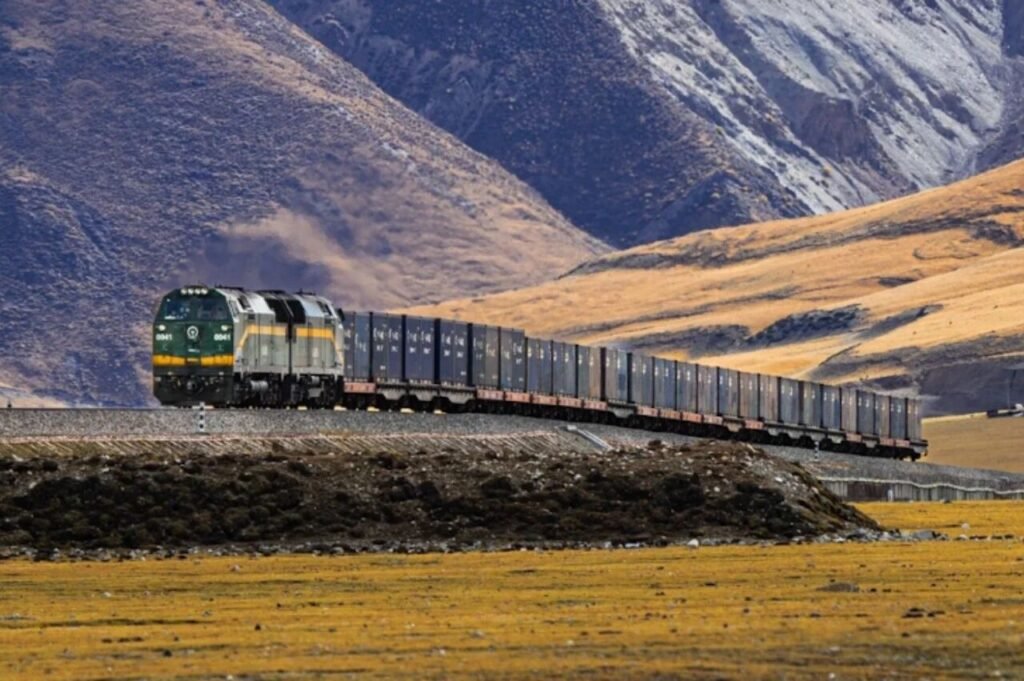
Historical Evolution: From a Century-Old Dream to the Sky Railway
The construction of the Qinghai–Tibet Railway spans nearly a century and is widely regarded as a miracle in modern engineering history. Its development can be divided into three major stages: early surveys and planning, phased construction, and full operation.
Early Surveys and Feasibility Studies (1950s–1990s)
In 1955, Ministry of Railways officially launched surveys for the Qinghai–Tibet Railway. Three years later, in 1958, construction began on the Xining–Golmud section. However, progress was halted due to extreme technical challenges, limited funding, and unresolved permafrost issues.
In 1974, construction resumed on the same section. By 1984, the first phase—Xining to Golmud (814 kilometers)—was completed and opened to traffic, becoming a vital transport artery for the Qaidam Basin in Qinghai.
During the 1990s, engineers and scientists focused on overcoming three world-class challenges: permafrost instability, extreme cold and oxygen deficiency, and fragile plateau ecology. After years of research and testing, full technical feasibility was achieved. In 2001, the second phase—Golmud to Lhasa (1,142 kilometers)—officially began.
Full Completion and Operation (2001–2006 to Present)
On July 1, 2006, the Qinghai–Tibet Railway was fully opened, connecting Xining to Lhasa over 1,956 kilometers and ending Tibet’s history as the only provincial-level region in China without railway access.
Key milestones followed:
- August 2014: The Lhasa–Shigatse Railway (253 km) opened, becoming the first extension of the Qinghai–Tibet Railway.
- June 2021: The Lhasa–Nyingchi Railway (435 km) entered service, forming the core railway framework of Tibet together with the main line.
By the end of 2025, the Qinghai–Tibet Railway had transported over 200 million passengers and more than 800 million tons of freight, earning its reputation as the “lifeline” of Qinghai and Tibet.
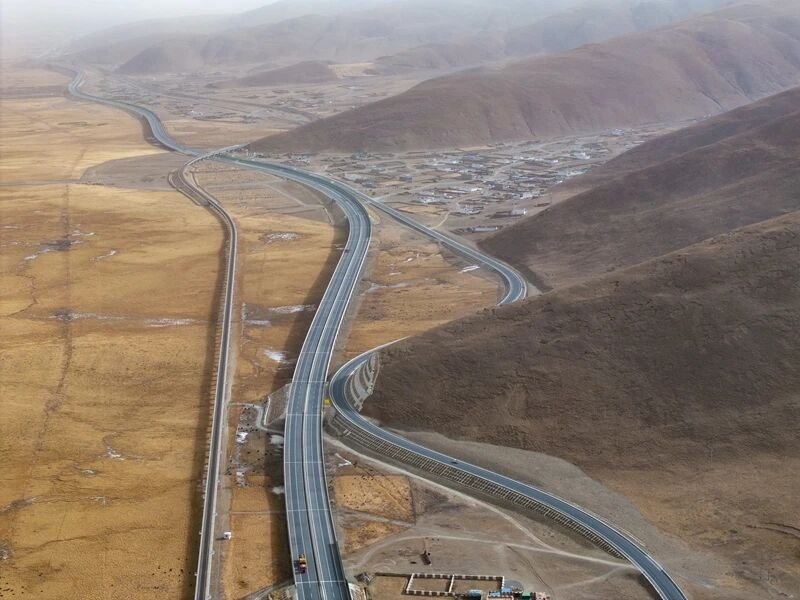
Engineering Marvel: Solving Three World-Class Challenges
The defining feature of the Qinghai–Tibet Railway lies in its ability to overcome permafrost, high-altitude hypoxia, and ecological vulnerability. Its construction introduced multiple world-first technologies and is widely regarded as a textbook example of plateau railway engineering.
Permafrost Engineering: A Global First
The railway crosses 550 kilometers of continuous permafrost, accounting for 48% of the Golmud–Lhasa section. Engineers adopted four pioneering technologies to stabilize the frozen ground:
- Crushed-stone ventilation embankments
- Thermosyphons (heat pipes) for ground cooling
- Ventilated pipe embankments
- Insulation layers to reduce heat absorption
Among these, thermosyphons play a crucial role by transferring heat away from the railway base, keeping the permafrost permanently frozen and preventing frost heave and thaw settlement.
Coping with Extreme Cold and Oxygen Deficiency
The railway runs at altitudes ranging from 2,000 to 5,072 meters, with Tanggula Pass being the highest railway point in the world. Construction teams used pressurized oxygen chambers, plateau oxygen stations, and rotational work schedules, achieving the remarkable record of zero fatalities during construction.
Passenger trains are equipped with diffused oxygen supply systems, allowing travelers to receive supplemental oxygen throughout the journey, greatly reducing the risk of altitude sickness.
Bridges, Tunnels, and Station Design
The Qinghai–Tibet Railway features numerous engineering landmarks:
- Qingshuihe Bridge (11.7 km): the world’s longest high-altitude permafrost railway bridge
- Sanchakou Bridge: the highest bridge on the Qinghai–Tibet Railway, with piers reaching 54.1 meters
- Fenghuoshan Tunnel (1,338 m): the world’s highest-altitude permafrost tunnel at 4,905 meters
- Kunlun Mountain Tunnel (1,686 m): a model of high-plateau tunnel construction
Iconic stations blend traditional Tibetan architectural elements with modern engineering, including Lhasa Station, Nagqu Station, Tanggula Station (5,068 m, the world’s highest railway station), and Golmud Station, the railway’s key hub.
Project Scale and Investment
- Total investment: 33.09 billion RMB
- Phase I: 5.65 billion RMB
- Phase II: 27.44 billion RMB
- Railway standard: Single-track electrified railway (with reserved space for double track in some sections)
- Design speed:
- Xining–Golmud: 160 km/h
- Golmud–Lhasa: 100 km/h
- Construction period: The second phase was completed in just five years, setting a speed record for plateau railway construction.
Ecological Protection: A Green Railway Across the Plateau
The Qinghai–Tibet Railway passes through three national-level nature reserves: Hoh Xil, Sanjiangyuan, and Qiangtang. From planning to operation, ecological protection has been integrated throughout the entire project, achieving a rare balance between infrastructure development and environmental preservation.
Environmental Measures During Construction
- Wildlife corridors:
A total of 33 wildlife passages were built along the route, including under-bridge crossings, overpasses, and gentle-slope embankments. In the Hoh Xil section alone, 13 corridors ensure safe migration routes for Tibetan antelopes, wild yaks, and Tibetan wild asses. Tibetan antelope migration success has reached 100% utilization of these passages. - Vegetation restoration:
More than 1 million square meters of alpine meadow were transplanted. Dedicated nurseries were established, and post-construction revegetation restored plant coverage to over 90%. - Pollution control:
Sewage treatment facilities and waste disposal sites were built along the route. Trains use sealed toilet systems, with wastewater and garbage centrally processed to prevent pollution of fragile plateau water sources.
Ecological Monitoring During Operation
An integrated ecological monitoring network continuously tracks permafrost stability, vegetation recovery, and wildlife movement along the railway. Strict regulations prohibit illegal construction or grazing within protected areas, and trains are required to reduce speed when passing through nature reserves to minimize noise and disturbance.
Economic Impact: Powering Growth in Qinghai and Tibet
The Qinghai–Tibet Railway has completely broken the long-standing transportation bottleneck of “hard to enter Tibet, even harder to leave.” It has become a golden economic corridor, serving as a powerful engine for development in both Qinghai and Tibet.
Driving Economic Growth in Qinghai
Resource Development in the Qaidam Basin
The railway significantly accelerated the exploitation of rich resources in the Qaidam Basin, including salt lakes (potash fertilizer and lithium), minerals, oil, and natural gas. Qinghai has become China’s largest potash fertilizer production base, and by 2024, industrial output in the Qaidam Basin exceeded 300 billion RMB.
Upgraded Regional Logistics
The Xining–Golmud section has evolved into a logistics hub for western Qinghai, reducing transportation costs by more than 30% and strengthening trade links between Qinghai, Tibet, and Xinjiang.
Economic Transformation in Tibet
Breaking the Transportation Barrier
The railway reduced Tibet’s logistics costs by more than 40%, ensuring stable supplies of grain, building materials, and daily necessities. As a result, consumer prices have dropped significantly, improving overall living standards.
Modernizing Agriculture and Animal Husbandry
The Qinghai–Tibet Railway enabled large-scale outbound transport of highland barley, yak products, and Tibetan pork. By 2024, Tibet’s rural per capita disposable income exceeded 18,000 RMB, nearly five times higher than in 2006.
Border Trade and Industrial Upgrading
Supported by the Qinghai–Tibet Railway plus the Lhasa–Shigatse Railway, border trade between Tibet and Nepal surpassed 5 billion RMB in 2024. This growth has boosted industries such as Tibetan medicine, carpets, handicrafts, and cultural products.
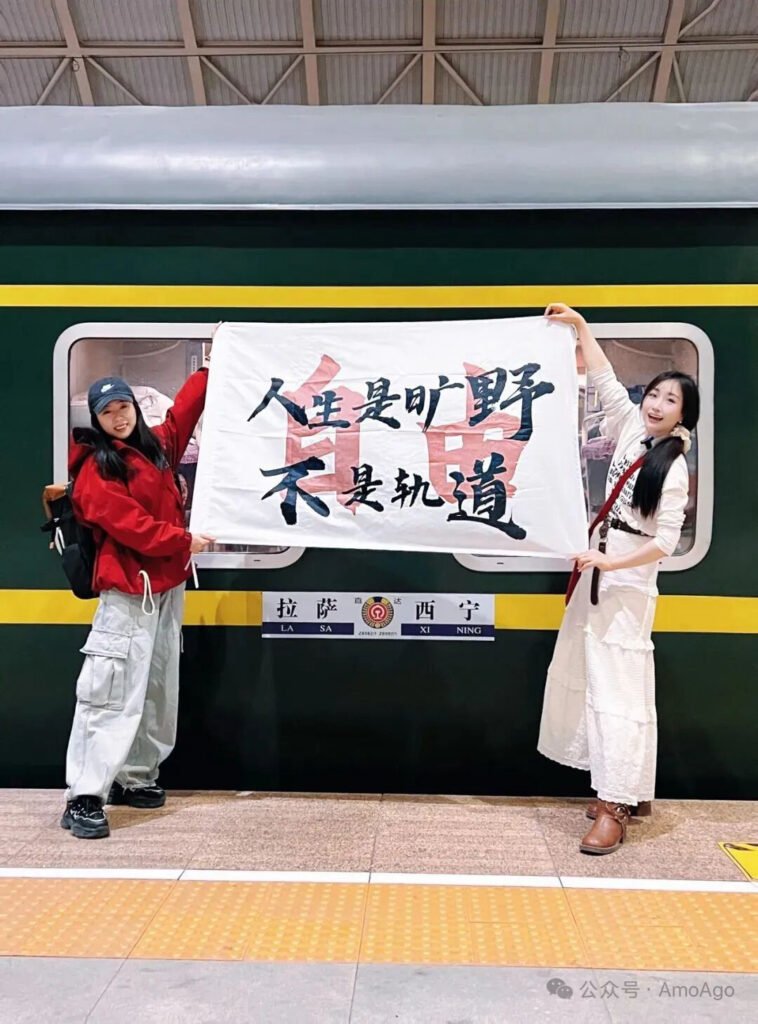
Tourism Impact: The Sky Railway as a Moving Gallery of Tibetan Landscapes
Recognized by National Geographic as “Most Beautiful Railway in the world” the Qinghai–Tibet Railway is one of the world’s top scenic train routes. It has fundamentally reshaped Tibet’s tourism landscape.
Enhanced Travel Convenience
Multiple Ways to Enter Tibet
The railway offers a safer, more comfortable, and cost-effective alternative to long-distance road travel. A hard seat journey from Xining to Lhasa takes about 21 hours, while a sleeper takes around 30 hours.
Explosive Growth in Visitor Numbers
In 2006, Tibet received only 2.5 million tourists. By 2024, this number exceeded 30 million, with the railway contributing over 40% of total tourist arrivals.
Innovative Tourism Routes
Special routes such as the “Sky Railway Journey” (Xining–Lhasa–Shigatse–Nyingchi) and combined Qinghai–Tibet plus Sichuan–Tibet itineraries now connect iconic sites like Qinghai Lake, Hoh Xil, Namtso Lake, and the Potala Palace.
Scenic Highlights Along the Route
Xining–Golmud (Qinghai Section)
Key attractions include Ta’er Monastery, Qinghai Lake, Chaka Salt Lake, the Qaidam Basin, and the Kunlun Mountains.
Best viewing time: June–August for flower fields, September–October for autumn salt-lake scenery.
Golmud–Lhasa (Tibet Section)
Highlights feature Hoh Xil wildlife, the Tuotuo River (Yangtze River source), Tanggula Pass, Nyenchen Tanglha Mountains, Namtso Lake, Yangbajing hot springs, and the Lhasa River Valley.
Best viewing time: July–August for green grasslands, October–November for clear snow mountain views.
Tourism Facilities and Travel Etiquette
- Foreign travelers must obtain a Tibet Travel Permit and travel with a licensed guide.
- Altitude sickness: Trains provide oxygen; travelers should avoid strenuous activity and consider preventive medication.
- Eco-friendly travel: Do not litter, avoid disturbing wildlife, and respect Tibetan Buddhist traditions.
Cost Overview: Construction, Operation, and Travel Expenses
Construction and Operating Costs
- Total construction cost: 33.09 billion RMB (over 2 billion RMB dedicated to environmental protection)
- Annual operating cost: About 2 billion RMB, far higher than ordinary railways due to permafrost maintenance and oxygen supply
- Ticket subsidies: Government subsidies keep fares affordable while ensuring public service value
Passenger Ticket Prices (Xining–Lhasa, 2026 reference)
- Hard seat: 220 RMB
- Hard sleeper: 490–530 RMB
- Soft sleeper: 780–820 RMB
- Oxygen-enhanced tourist trains: 10–20% higher, designed for altitude comfort
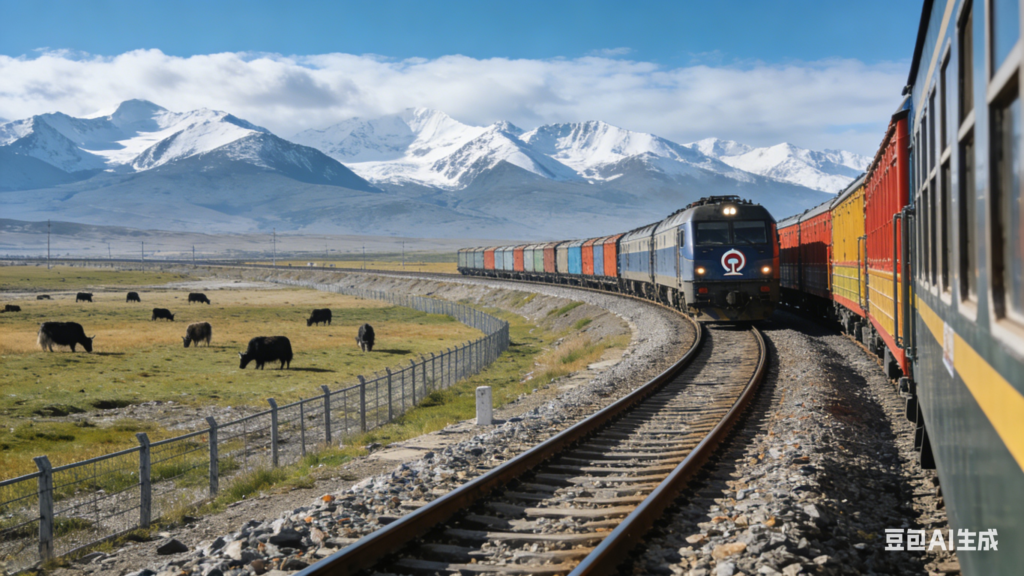
Pros and Cons: The Dual Impact of the Sky Railway
Key Benefits
- Strategic value: Strengthens unity and connectivity between Tibet and China
- Improved livelihoods: Healthcare, education, and supply chains have improved dramatically
- Cultural exchange: Tibetan culture reaches the world, while intercultural integration deepens
- Ecological research: Established the world’s first plateau permafrost monitoring system
- Technological breakthroughs: Provides global solutions for high-altitude and polar railways
Challenges and Drawbacks
- Environmental pressure: Increased human activity has caused localized pollution and habitat disturbance
- Tourism overload: Peak seasons strain major attractions like the Potala Palace and Namtso Lake
- Cultural impact: Commercialization and external influences challenge traditional lifestyles
- High operating costs: Long-term reliance on government subsidies
- Safety risks: Geological hazards and complex rescue conditions remain ongoing concerns
Future Development: Expansion, Innovation, and Global Connectivity
Railway Extensions
- China–Nepal Railway (Shigatse–Gyirong–Kathmandu): Survey completed, planned operation before 2030
- Western Tibet Railway (Lhasa–Ngari): Proposed to boost development in western Tibet
- Double-track and electrification upgrades to enhance capacity
Technology and Service Upgrades
- Smart railway systems using 5G, BeiDou navigation, and AI-based permafrost monitoring
- Premium sightseeing trains with panoramic cars and Tibetan culture experience cabins
- Advanced freight systems supporting cold-chain logistics and mineral transport
Enhanced Ecological Protection
- Expansion of wildlife corridors and alpine vegetation restoration
- Integration of railway + eco-tourism, creating research and education bases in Hoh Xil and Sanjiangyuan
International Cooperation
- Sharing plateau railway technology with South Asian countries
- Strengthening Belt and Road connectivity between China and South Asia